Aperçu en situation
 Envoyer
 Partager
 Détails de l'œuvre

 Télécharger
 Articles similaires
 Radiographie
 Diaporama
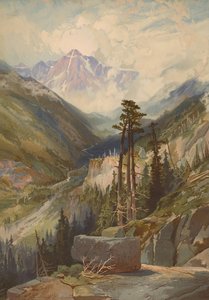
The Teton Range


 Lire la suite
Giclées et impressions d'art
Impressions giclées ou sur toile de qualité musée, avec une production rapide et des finitions au choix. ( Commander la reproduction peinte à la main Acheter l'image haute résolution)




P118B $10

P118H $10

P118W $10

P438Z $10

P508JH $12

P508YH $12

P805H $10

P805Z $10

P919BZ $10

P919G $10

P919XJ $10

P959ZH $10

P968JZ $12

W106C $8

W218G $10

W218JH $8

W218Y $10

W307PJ $10

W316G $10

W316PJ $8

W316Y $10

W398PJ $8

W4111J $10

W500HY $15

W500JH $15

W692G $12

W849H $8

W940BG $15

W953PJ $8




Choisissez parmi nos formats prédéfinis qui respectent les proportions originales de l’œuvre.

Vous pouvez saisir vos propres dimensions pour vous adapter à un cadre ou à un espace spécifique. Si la taille sélectionnée ne correspond pas aux proportions de l'image originale, nous recadrerons l'œuvre ou étendrons l'image avec une bordure en miroir ou une couleur unie. Une maquette numérique vous sera envoyée pour approbation avant le début de la production.
Veuillez noter que l'aperçu à l'écran ne reflète pas le recadrage ou l'extension réelle. Seule la maquette montrera avec précision la composition finale.
Bien que des tailles personnalisées soient disponibles, nous vous recommandons de choisir une dimension dans la liste prédéfinie afin de préserver les proportions originales.
Livraison dans le monde entier () en 2 semaines au lieu des 4/5 semaines habituelles. (6 septembre)

Livraison express gratuite dans le monde entier

Toile de lin de qualité supérieure

Assurance transport complète

Garantie de remboursement des droits de douane

Garantie de fidélité des couleurs

Politique de retour de 100 jours (uniquement en cas de défaut)

Garantie de remboursement à 100%

Offre de tarifs dégressifs
 L'option verre n'est disponible que pour les dimensions inférieures à 110 cm.

The Teton Range
Giclées et impressions d'art
Format de la reproduction
-


Prix total
$ 80
A Vision of the Sublime: The Majesty of the Teton Range
In the late nineteenth century, as the American frontier began to yield to the encroaching shadows of industrialization, Thomas Moran captured a world that felt both eternal and untouched. The Teton Range, executed in 1897, is far more than a mere topographical record of the Wyoming wilderness; it is a profound window into the soul of the American West. Through his masterful use of oil on canvas, Moran invites the viewer to stand upon a precipice, looking out over a landscape where the earth meets the heavens in a dramatic display of natural grandeur. The painting serves as a cornerstone of the Hudson River School tradition, embodying the Romantic ideal of the sublime—that breathtaking, almost overwhelming sensation of encountering a beauty so vast it inspires both awe and a touch of reverence.
The composition is a masterclass in layered storytelling, guiding the eye through a panoramic journey that begins in the rugged foreground. Here, the textures of weathered rocks and resilient vegetation ground the viewer in the physical reality of the mountains. As the gaze ascends, it meets the rushing vitality of a river carving its way through the valley, its movement mirrored by the rhythmic contours of rolling hills. The true protagonist, however, remains the towering, snow-capped peaks that dominate the horizon. These giants, rendered with meticulous precision, command the sky, their jagged silhouettes etched against a luminous atmosphere that suggests the infinite scale of the natural world.
Technique and the Alchemy of Light
Moran’s technical prowess lies in his ability to balance scientific accuracy with poetic expression. While his training as an engraver gifted him with an extraordinary eye for detail—allowing him to render every ridge, crevice, and alpine shadow with startling clarity—he was never a prisoner of mere realism. Instead, he utilized atmospheric perspective to breathe life into the distance. By subtly layering cool blues, soft violets, and hazy whites, he creates a convincing illusion of depth, making the far-off peaks appear to recede into a dreamlike mist. This technique ensures that the painting possesses a palpable sense of air and light, as if a mountain breeze might sweep through the room where it hangs.
The color palette is a sophisticated dialogue between warmth and coolness. The crisp, brilliant whites of the glacial snow and the ethereal blue of the sky provide a stark, refreshing contrast to the earthy ochres, deep greens, and rich browns of the valley floor. This interplay of light and shadow does more than define form; it evokes the shifting moods of the wilderness. One can almost feel the warmth of sunlight hitting a granite face or the sudden chill of a cloud passing over the summit. For the collector or interior designer, this dynamic range of color offers an unparalleled versatility, capable of anchoring a room with its quiet strength or serving as a vibrant focal point in a contemporary space.
A Legacy for the Modern Collector
To possess a reproduction of The Teton Range is to bring a piece of American history and natural philosophy into one's home. Beyond its aesthetic brilliance, the work carries a heavy historical weight, reflecting an era of westward expansion and the burgeoning movement to preserve these sacred landscapes as national treasures. While Moran’s work often presented the West as a pristine paradise, modern viewers can appreciate the painting as a poignant meditation on the relationship between humanity and the wild. It is a work that evokes tranquility, strength, and a deep-seated longing for the untouched.
For those seeking to curate an environment of sophistication and inspiration, this piece offers much more than decoration. It provides a sense of scale and a window to the infinite. Whether placed in a grand library, a serene study, or a modern living area, Moran’s vision of the Tetons continues to resonate, offering a timeless escape into the heart of the sublime. It is an investment in beauty, a tribute to the enduring power of nature, and a magnificent addition to any collection dedicated to the heights of American Romanticism.
Biographie de l'artiste
Premières années et carrière
Thomas Moran, un peintre et graveur américain renommé, est né le 12 février 1837 à Bolton, en Angleterre. Sa famille a déménagé aux États-Unis, s'installant à New York, où Moran trouverait sa voie artistique. En tant que frère cadet du peintre maritime Edward Moran, Thomas partageait un atelier avec lui, marquant le début de son parcours artistique.Style artistique et influences
Le travail de Moran était fortement influencé par l'artiste britannique J. M. W. Turner, dont l'utilisation de la couleur et le choix des paysages ont inspiré Moran à explorer des thèmes similaires dans ses propres œuvres. Cela se voit dans ses peintures, qui présentent souvent les Rocheuses et l'ouest américain. Son style, caractérisé par un souci du détail méticuleux et un mélange de réalisme et de romantisme, lui a valu une place importante au sein du mouvement de l'école de la rivière Hudson.Œuvres notables et réalisations
- Le canyon de la Yellowstone (1872) : Cette peinture monumentale a été achetée par le gouvernement pour 10 000 $, marquant la première reconnaissance significative de Moran en tant qu'artiste.
- Parc national de Yellowstone : Les croquis et les peintures de Moran ont joué un rôle crucial dans l'établissement du Yellowstone comme premier parc national en 1872.
Héritage et impact
Les contributions de Moran à la peinture de paysage américain sont indéniables. Son travail n'a pas seulement reflété la beauté de l'ouest américain, mais a également inspiré une nouvelle génération d'artistes. Aujourd'hui, ses peintures se trouvent dans divers musées, dont le Smithsonian American Art Museum, témoignant de son héritage durable.- Voir les œuvres de Thomas Moran sur OriginalUniqueArt.com
- En savoir plus sur Thomas Moran sur Wikipédia
- Explorer le mouvement artistique de l'école de la rivière Hudson sur OriginalUniqueArt.com
Dates clés
- 12 février 1837 : Né à Bolton, en Angleterre
- 25 août 1926 : Décédé à Santa Barbara, Californie

Thomas Moran
1837 - 1926 , Royaume-Uni
L'essentiel de l'artiste
- Artistes Influents: ['J. M. W. Turner']
- Date De Décès: 25 août 1926
- Date De Naissance: 12 février 1837
- Influences Artistiques: ['Hudson River School']
- Lieu De Naissance: Bolton, Royaume-Uni
- Mouvement Artistique: Hudson River School
- Nationalité: Américaine (d'origine anglaise)
- Nom Complet: Thomas Moran
- Œuvres Notables:
- Le Grand Canyon du Yellowstone
- Yellowstone National Park
Articles connexes

L'École du fleuve Hudson : 10 chefs-d'œuvre incontournables pour sublimer votre intérieur
Plongez dans l'univers grandiose de l'École du fleuve Hudson ! Découvrez 10 chefs-d'œuvre emblématiques de Thomas Cole, Frederic Church et Albert Bierstadt. Inspirez votre décoration intérieure avec ces paysages américains romantiques. Explorez la collection complète sur OriginalUniqueArt.com.

L'École du fleuve Hudson : Romantisme américain et exploration d'un paysage national
Explorez l'École du fleuve Hudson : un mouvement artistique américain majeur célébrant la nature et le sublime. Découvrez ses peintres emblématiques, son histoire et son héritage durable avec OriginalUniqueArt.
Wild & Untamed: The High-Impact Energy of American Romanticism and the Hudson River School
Experience the raw power of American Romanticism. Explore the high-impact energy of the Hudson River School through premium, hand-painted oil reproductions that capture the sublime beauty and untamed spirit of the American wilderness for discerning collectors.
Capturing the American Spirit: A Journey Through Iconic Landscapes and the Legacy of the Hudson River School
Explore the profound beauty of American art history. From the Hudson River School to iconic landscapes, discover a curated journey through the masterpieces that defined a nation's spirit and the enduring legacy of American Romanticism.
Epic Landscapes & Wild Nature: The Power of the Hudson River School's Sublime Artistry
Explore the breathtaking power of the Hudson River School. Journey through epic American landscapes, from Thomas Cole's sublime vistas to Luminist light, and discover how these timeless masterpieces continue to inspire modern collectors and art lovers worldwide.