Aperçu en situation
 Partager
 Partager
 Détails

 Télécharger
 Articles similaires
 Radiographie
 Voir le diaporama
 Statistiques
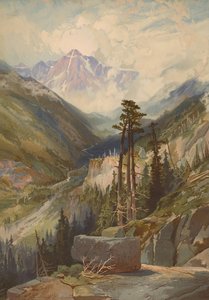
Grand Canyon with Rainbows


 Afficher la suite
Giclées et impressions d'art
Impressions giclées ou sur toile de qualité musée, avec une production rapide et des finitions au choix. ( Acheter la peinture faite à la main Passer au format image numérique)




P118B $10

P118H $10

P118W $10

P438Z $10

P508JH $12

P508YH $12

P805H $10

P805Z $10

P919BZ $10

P919G $10

P919XJ $10

P959ZH $10

P968JZ $12

W106C $8

W218G $10

W218JH $8

W218Y $10

W307PJ $10

W316G $10

W316PJ $8

W316Y $10

W398PJ $8

W4111J $10

W500HY $15

W500JH $15

W692G $12

W849H $8

W940BG $15

W953PJ $8




Choisissez parmi nos formats prédéfinis qui respectent les proportions originales de l’œuvre.

Vous pouvez saisir vos propres dimensions pour vous adapter à un cadre ou à un espace spécifique. Si la taille sélectionnée ne correspond pas aux proportions de l'image originale, nous recadrerons l'œuvre ou étendrons l'image avec une bordure en miroir ou une couleur unie. Une maquette numérique vous sera envoyée pour approbation avant le début de la production.
Veuillez noter que l'aperçu à l'écran ne reflète pas le recadrage ou l'extension réelle. Seule la maquette montrera avec précision la composition finale.
Bien que des tailles personnalisées soient disponibles, nous vous recommandons de choisir une dimension dans la liste prédéfinie afin de préserver les proportions originales.
Livraison dans le monde entier () en 2 semaines au lieu des 4/5 semaines habituelles. (16 septembre)

Livraison express gratuite dans le monde entier

Toile de lin de haute qualité

Assurance transport complète

Garantie de remboursement des droits de douane

Garantie de fidélité des couleurs

Garantie de retour de 100 jours (uniquement en cas de défaut)

Garantie de remboursement à 100%

Tarifs dégressifs sur quantité
 L'option verre n'est disponible que pour les dimensions inférieures à 110 cm.

Grand Canyon with Rainbows
Giclées et impressions d'art
Format de la reproduction
-


Prix total final
$ 80
Grand Canyon with Rainbows: A Symphony of Light and Majesty
The Grand Canyon with Rainbows, executed by Thomas Moran in 1912, transcends mere landscape painting; it’s a visceral embodiment of the American West's grandeur and a testament to Moran’s unparalleled ability to capture the sublime. Currently residing within the Fine Arts Museums of San Francisco, this monumental canvas isn’t simply depicting scenery—it’s conveying an experience, transporting viewers into the heart of Yosemite National Park during its formative years as a protected wilderness area. Moran's contribution to the Hudson River School cemented his reputation as one of America’s foremost artists, prioritizing meticulous observation and translating geological formations into emotionally resonant compositions.Composition and Technique: Mastering Atmospheric Perspective
Moran’s masterful technique—primarily oil on canvas—employs atmospheric perspective with breathtaking precision. Layers upon layers of pigment build up to create a palpable sense of depth, mirroring the canyon's immense scale. Notice how Moran skillfully utilizes tonal gradations to simulate the diffuse sunlight filtering through towering clouds, casting ethereal hues across the rock faces and illuminating patches of vibrant foliage. The artist’s meticulous brushstrokes capture the texture of granite and sandstone alike, conveying both solidity and vulnerability—a deliberate juxtaposition that underscores the canyon's enduring power despite its apparent stillness. The placement of trees in the foreground anchors the viewer’s gaze while simultaneously emphasizing the vastness of the panorama beyond.Historical Context: Capturing Yosemite Before Tourism
Painted at a pivotal moment in American conservation history, Grand Canyon with Rainbows reflects Moran’s deep admiration for Yosemite Valley and his conviction that its preservation was paramount. Prior to 1906, Yosemite remained largely untouched by tourism, allowing Moran to depict the landscape as it existed before widespread commercial exploitation. This artistic endeavor coincided with burgeoning debates about protecting natural wonders—a movement spearheaded by figures like John Muir—and Moran’s painting served as a powerful visual argument for safeguarding Yosemite's pristine beauty. The inclusion of the rainbow itself is laden with symbolic significance, representing hope and renewal amidst the rugged wilderness. It serves as a reminder that even in environments dominated by geological forces, there exists an enduring spirit of vibrancy and wonder.Symbolism: Light, Color, and the Sublime Experience
Beyond its technical brilliance, Grand Canyon with Rainbows resonates deeply on an emotional level—a hallmark of the sublime aesthetic championed by Romantic artists like Turner. Moran’s deliberate use of color—particularly warm yellows and oranges—evokes the radiant glow of sunlight bathing the canyon walls, creating a sensation of awe and reverence. The sheer scale of the landscape overwhelms the viewer's senses, prompting contemplation about humanity’s place within the natural world. As Moran himself eloquently expressed, “The artist must strive to express not what he sees but what he feels.” This painting embodies that ethos perfectly—a profound meditation on beauty, power, and the enduring legacy of the American wilderness.A Legacy Enduring Through Reproduction
Today, a meticulously crafted oil painting reproduction of Grand Canyon with Rainbows offers art enthusiasts and collectors alike an opportunity to experience Moran’s masterpiece firsthand. Available exclusively at https://OriginalUniqueArt.com, these reproductions utilize archival-quality materials and printing processes to faithfully recreate the original artwork's luminous colors and textural nuances—allowing admirers worldwide to appreciate the enduring power of Moran’s vision. Explore similar artistic explorations by Pavel Filonov and Dwinell Grant on OriginalUniqueArt.com for a deeper understanding of the broader context of American landscape painting during the early 20th century.Biographie de l'artiste
Premières années et carrière
Thomas Moran, un peintre et graveur américain renommé, est né le 12 février 1837 à Bolton, en Angleterre. Sa famille a déménagé aux États-Unis, s'installant à New York, où Moran trouverait sa voie artistique. En tant que frère cadet du peintre maritime Edward Moran, Thomas partageait un atelier avec lui, marquant le début de son parcours artistique.Style artistique et influences
Le travail de Moran était fortement influencé par l'artiste britannique J. M. W. Turner, dont l'utilisation de la couleur et le choix des paysages ont inspiré Moran à explorer des thèmes similaires dans ses propres œuvres. Cela se voit dans ses peintures, qui présentent souvent les Rocheuses et l'ouest américain. Son style, caractérisé par un souci du détail méticuleux et un mélange de réalisme et de romantisme, lui a valu une place importante au sein du mouvement de l'école de la rivière Hudson.Œuvres notables et réalisations
- Le canyon de la Yellowstone (1872) : Cette peinture monumentale a été achetée par le gouvernement pour 10 000 $, marquant la première reconnaissance significative de Moran en tant qu'artiste.
- Parc national de Yellowstone : Les croquis et les peintures de Moran ont joué un rôle crucial dans l'établissement du Yellowstone comme premier parc national en 1872.
Héritage et impact
Les contributions de Moran à la peinture de paysage américain sont indéniables. Son travail n'a pas seulement reflété la beauté de l'ouest américain, mais a également inspiré une nouvelle génération d'artistes. Aujourd'hui, ses peintures se trouvent dans divers musées, dont le Smithsonian American Art Museum, témoignant de son héritage durable.- Voir les œuvres de Thomas Moran sur OriginalUniqueArt.com
- En savoir plus sur Thomas Moran sur Wikipédia
- Explorer le mouvement artistique de l'école de la rivière Hudson sur OriginalUniqueArt.com
Dates clés
- 12 février 1837 : Né à Bolton, en Angleterre
- 25 août 1926 : Décédé à Santa Barbara, Californie

Thomas Moran
1837 - 1926 , Royaume-Uni
En bref
- Artistes Influents: ['J. M. W. Turner']
- Date De Décès: 25 août 1926
- Date De Naissance: 12 février 1837
- Influences Artistiques: ['Hudson River School']
- Lieu De Naissance: Bolton, Royaume-Uni
- Mouvement Artistique: Hudson River School
- Nationalité: Américaine (d'origine anglaise)
- Nom Complet: Thomas Moran
- Œuvres Notables:
- Le Grand Canyon du Yellowstone
- Yellowstone National Park
Articles similaires

Échos de l'Arcadie : Nostalgie et Transformation dans l'Art Paysager Vintage
Explorez l'École du Hudson : un mouvement artistique américain emblématique. Découvrez les maîtres romantiques, leur quête du sublime et l'influence durable de leurs paysages exceptionnels. OriginalUniqueArt vous guide.
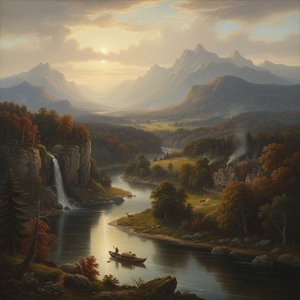
Capturing the American Spirit: A Journey Through Iconic Landscapes and the Legacy of the Hudson River School
Explore the profound beauty of American art history. From the Hudson River School to iconic landscapes, discover a curated journey through the masterpieces that defined a nation's spirit and the enduring legacy of American Romanticism.
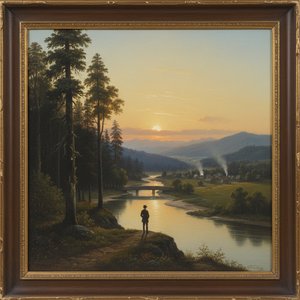
Robert Spencer: Luminism, Narrative & the American Landscape Tradition
Explore the captivating world of Luminism & the Hudson River School with our expert analysis. Discover the history, artists, and enduring beauty of 19th-century American landscape painting. Find museum-quality reproductions at OriginalUniqueArt.
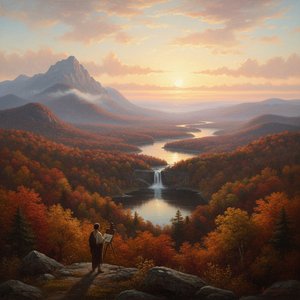
L'École du fleuve Hudson : Romantisme américain et exploration d'un paysage national
Explorez l'École du fleuve Hudson : un mouvement artistique américain majeur célébrant la nature et le sublime. Découvrez ses peintres emblématiques, son histoire et son héritage durable avec OriginalUniqueArt.

L'École du fleuve Hudson : 10 chefs-d'œuvre incontournables pour sublimer votre intérieur
Plongez dans l'univers grandiose de l'École du fleuve Hudson ! Découvrez 10 chefs-d'œuvre emblématiques de Thomas Cole, Frederic Church et Albert Bierstadt. Inspirez votre décoration intérieure avec ces paysages américains romantiques. Explorez la collection complète sur OriginalUniqueArt.com.