Aperçu en situation
 Partager
 Partager
 Détails
 Guide imprimable

 Télécharger
 Articles similaires
 Radiographie
 Voir le diaporama
 Statistiques
Grand Canyon


 Afficher la suite
Giclées et impressions d'art
Impressions giclées ou sur toile de qualité musée, avec une production rapide et des finitions au choix. ( Acheter la peinture faite à la main Passer au format image numérique)




P118B €10

P118H €10

P118W €10

P438Z €10

P508JH €12

P508YH €12

P805H €10

P805Z €10

P919BZ €10

P919G €10

P919XJ €10

P959ZH €10

P968JZ €12

W106C €8

W218G €10

W218JH €8

W218Y €10

W307PJ €10

W316G €10

W316PJ €8

W316Y €10

W398PJ €8

W4111J €10

W500HY €15

W500JH €15

W692G €12

W849H €8

W940BG €15

W953PJ €8




Choisissez parmi nos formats prédéfinis qui respectent les proportions originales de l’œuvre.

Saisissez la largeur et la hauteur souhaitées pour qu'elles s'adaptent à votre cadre ou à votre mur. Une impression ne peut être que découpée, elle ne peut jamais être agrandie au-delà de l'image originale ; ainsi, un format de forme différente entraînera la perte d'une partie de l'image. Nous vous envoyons une maquette numérique pour approbation avant toute impression. L'image présentée sur cette page ne montre pas le recadrage réel — seule la maquette le permet.
Livraison dans le monde entier () en 2 semaines au lieu des 4/5 semaines habituelles. (23 octobre)

Livraison express gratuite dans le monde entier

Toile de lin de haute qualité

Assurance transport complète

Garantie de remboursement des droits de douane

Garantie de fidélité des couleurs

Garantie de retour de 100 jours (uniquement en cas de défaut)

Garantie de remboursement à 100%

Tarifs dégressifs sur quantité
 L'option verre n'est disponible que pour les dimensions inférieures à 110 cm.

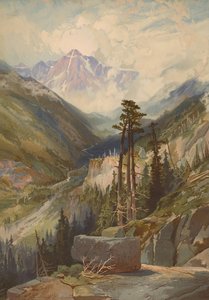
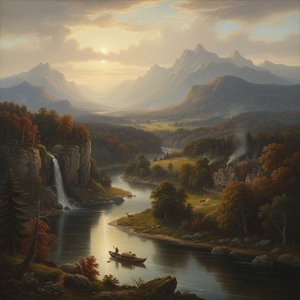
Grand Canyon
Giclées et impressions d'art
Format de la reproduction
-


Prix total final
€ 70
A Symphony in Stone and Sky
To gaze upon Thomas Moran’s 1912 masterpiece, Grand Canyon, is to step into the very heart of the American Romantic spirit. This is not merely a geological record of one of Earth's most profound chasms; it is an evocative embodiment of the sublime, designed to stir the deepest recesses of the human soul. As a prominent figure of the Hudson River School, Moran possessed a rare ability to translate the untamed wilderness into a visual language of awe and reverence. In this oil on canvas, the artist transcends simple representation, striving instead to capture the ephemeral essence of light, atmosphere, and the overwhelming majesty of the American West.
The painting serves as a breathtaking window into a landscape where the earth meets the heavens in a dramatic embrace. Through a masterful use of diagonal perspective, Moran draws the viewer’s eye upward, navigating through textured foreground rocks and lush foliage toward the dizzying heights of the canyon walls. This compositional choice is deeply intentional, reinforcing a sense of human insignificance when confronted with such monumental natural power. The interplay of light and shadow creates a palpable sense of depth, as if one could reach out and feel the cooling mist rising from the depths or the warmth of the sun breaking through a turbulent sky.
The Mastery of Light and Color
Moran’s technical prowess is most evident in his exquisite handling of color and light, a hallmark of his reputation as an unparalleled colorist. He employs a sophisticated technique of layering thin glazes of oil paint, a method that allows light to penetrate the surface and glow from within, creating a luminous, ethereal effect. The palette is a study in contrasts: warm, radiant yellows and fiery oranges illuminate the canyon's edges where sunlight pierces the clouds, while cooler blues, deep grays, and muted violets dominate the distant, receding peaks. This atmospheric perspective does more than create distance; it evokes the very breath of the continent.
The brushwork further enhances this sensory experience. While the foreground features textured, vigorous strokes that ground the viewer in the rugged reality of the terrain, the background transitions into smoother, softer applications that suggest the hazy, moisture-laden air of a storm passing over the mountains. This meticulous attention to detail—from the jagged edges of ancient stone to the soft, billowing clouds—ensures that the painting remains a visceral experience, inviting the observer to participate in the drama of the landscape.
A Timeless Legacy for the Discerning Collector
For the art lover, the collector, or the interior designer, a high-quality reproduction of this work offers more than mere decoration; it provides an emotional anchor for a space. The Grand Canyon by Thomas Moran carries with it a sense of historical grandeur and a profound connection to the American identity. Its scale and dramatic movement make it a commanding centerpiece, capable of transforming a room into a sanctuary of contemplation and wonder.
Whether placed in a sophisticated gallery setting or integrated into a curated residential interior, this painting brings the spirit of exploration and the beauty of the untamed world into the home. It remains a testament to a period when art sought to bridge the gap between the seen and the felt, making it an enduring choice for those who seek to surround themselves with works that possess both historical significance and an everlasting emotional resonance.
Questions et réponses
À quel style appartient « Grand Canyon » ?
« Grand Canyon » est une œuvre de Hudson River School. Ce mouvement indique la tradition artistique à laquelle l'œuvre appartient.
Quelle est l'identité chromatique de «Grand Canyon» de Thomas Moran ?
« Grand Canyon » se définit par une palette Earthy dominée par le Quinacridone Magenta (#75604c).
Quelle saturation et quelle intensité «Grand Canyon» de Thomas Moran présente-t-il ?
Les couleurs de «Grand Canyon» de Thomas Moran présentent une saturation Subtle Color avec une intensité Balanced.
Biographie de l'artiste
Premières années et carrière
Thomas Moran, un peintre et graveur américain renommé, est né le 12 février 1837 à Bolton, en Angleterre. Sa famille a déménagé aux États-Unis, s'installant à New York, où Moran trouverait sa voie artistique. En tant que frère cadet du peintre maritime Edward Moran, Thomas partageait un atelier avec lui, marquant le début de son parcours artistique.Style artistique et influences
Le travail de Moran était fortement influencé par l'artiste britannique J. M. W. Turner, dont l'utilisation de la couleur et le choix des paysages ont inspiré Moran à explorer des thèmes similaires dans ses propres œuvres. Cela se voit dans ses peintures, qui présentent souvent les Rocheuses et l'ouest américain. Son style, caractérisé par un souci du détail méticuleux et un mélange de réalisme et de romantisme, lui a valu une place importante au sein du mouvement de l'école de la rivière Hudson.Œuvres notables et réalisations
- Le canyon de la Yellowstone (1872) : Cette peinture monumentale a été achetée par le gouvernement pour 10 000 $, marquant la première reconnaissance significative de Moran en tant qu'artiste.
- Parc national de Yellowstone : Les croquis et les peintures de Moran ont joué un rôle crucial dans l'établissement du Yellowstone comme premier parc national en 1872.
Héritage et impact
Les contributions de Moran à la peinture de paysage américain sont indéniables. Son travail n'a pas seulement reflété la beauté de l'ouest américain, mais a également inspiré une nouvelle génération d'artistes. Aujourd'hui, ses peintures se trouvent dans divers musées, dont le Smithsonian American Art Museum, témoignant de son héritage durable.- Voir les œuvres de Thomas Moran sur OriginalUniqueArt.com
- En savoir plus sur Thomas Moran sur Wikipédia
- Explorer le mouvement artistique de l'école de la rivière Hudson sur OriginalUniqueArt.com
Dates clés
- 12 février 1837 : Né à Bolton, en Angleterre
- 25 août 1926 : Décédé à Santa Barbara, Californie

Thomas Moran
1837 - 1926 , Royaume-Uni
En bref
- Artistes Influents: ['J. M. W. Turner']
- Date De Décès: 25 août 1926
- Date De Naissance: 12 février 1837
- Influences Artistiques: ['Hudson River School']
- Lieu De Naissance: Bolton, Royaume-Uni
- Mouvement Artistique: Hudson River School
- Nationalité: Américaine (d'origine anglaise)
- Nom Complet: Thomas Moran
- Œuvres Notables:
- Le Grand Canyon du Yellowstone
- Yellowstone National Park
Articles connexes
Thomas Hill: Luminosity, Landscape & the American Pastoral Ideal
Explore the luminous landscapes of Thomas Hill, a pivotal figure in the Hudson River School & Luminism movements. Discover his artistic journey, philosophical depth, and enduring legacy with OriginalUniqueArt.
Robert Spencer: Luminism, Narrative & the American Landscape Tradition
Explore the captivating world of Luminism & the Hudson River School with our expert analysis. Discover the history, artists, and enduring beauty of 19th-century American landscape painting. Find museum-quality reproductions at OriginalUniqueArt.
L'École du fleuve Hudson : Romantisme américain et exploration d'un paysage national
Explorez l'École du fleuve Hudson : un mouvement artistique américain majeur célébrant la nature et le sublime. Découvrez ses peintres emblématiques, son histoire et son héritage durable avec OriginalUniqueArt.

L'École du fleuve Hudson : 10 chefs-d'œuvre incontournables pour sublimer votre intérieur
Plongez dans l'univers grandiose de l'École du fleuve Hudson ! Découvrez 10 chefs-d'œuvre emblématiques de Thomas Cole, Frederic Church et Albert Bierstadt. Inspirez votre décoration intérieure avec ces paysages américains romantiques. Explorez la collection complète sur OriginalUniqueArt.com.
Capturing the American Spirit: A Journey Through Iconic Landscapes and the Legacy of the Hudson River School
Explore the profound beauty of American art history. From the Hudson River School to iconic landscapes, discover a curated journey through the masterpieces that defined a nation's spirit and the enduring legacy of American Romanticism.