
 Aperçu en situation
 Envoyer
 Partager
 Détails de l'œuvre
 Guide
Guide

 Télécharger l'image
 Articles similaires
 Radiographie
 Diaporama
 Questions et réponses
 Statistiques
Poussant le rail


 Lire la suite
Giclées et impressions d'art
Impressions giclées ou sur toile de qualité musée, avec une production rapide et des finitions au choix. ( Commander la reproduction peinte à la main Passer au format numérique)




P118B €10

P118H €10

P118W €10

P438Z €10

P508JH €12

P508YH €12

P805H €10

P805Z €10

P919BZ €10

P919G €10

P919XJ €10

P959ZH €10

P968JZ €12

W106C €8

W218G €10

W218JH €8

W218Y €10

W307PJ €10

W316G €10

W316PJ €8

W316Y €10

W398PJ €8

W4111J €10

W500HY €15

W500JH €15

W692G €12

W849H €8

W940BG €15

W953PJ €8




Choisissez parmi nos formats prédéfinis qui respectent les proportions originales de l’œuvre.

Saisissez la largeur et la hauteur souhaitées pour qu'elles s'adaptent à votre cadre ou à votre mur. Une impression peut être recadrée, mais jamais agrandie au-delà de l'image originale ; ainsi, un format de forme différente entraînera la perte d'une partie de l'image. Nous vous envoyons une maquette numérique pour approbation avant toute impression. L'image présentée sur cette page ne montre pas le recadrage réel — seule la maquette le permet.
Livraison dans le monde entier () en 2 semaines au lieu des 4/5 semaines habituelles. (15 novembre)

Livraison express gratuite dans le monde entier

Toile de lin de qualité supérieure

Assurance transport complète

Garantie de remboursement des droits de douane

Garantie de fidélité des couleurs

Politique de retour de 100 jours (uniquement en cas de défaut)

Garantie de remboursement à 100%

Offre de tarifs dégressifs
 L'option verre n'est disponible que pour les dimensions inférieures à 110 cm.

Poussant le rail
Giclées et impressions d'art
Format de la reproduction
-


Prix total
€ 72
Le poids de la persévérance : un chef-d'œuvre du réalisme américain
Dans les étendues calmes et humides des marais du New Jersey, près de la rivière Delaware, un drame profond de l'endurance humaine se déploie au sein du chef-d'œuvre de 1874 de Thomas Eakins, Poussant le rail. Il ne s'agit pas seulement d'une représentation du travail manuel ; c'est une fenêtre évocatrice sur l'âme du réalisme américain. Le tableau capture un instant unique et haletant où neuf hommes sont engagés dans une lutte collective, s'efforçant contre le poids immense d'un rail lourd tracté à travers un paysage marécageux et détrempé. Eakins, un peintre qui cherchait à dissé specter la réalité avec la précision d'un chirurgien, ne détourne pas le regard de la rudesse ou de la sueur. Au contraire, il invite le spectateur au cœur même de l'effort, rendant la lourdeur physique du fer et la résistance de la boue presque tangibles.
La résonance émotionnelle de l'œuvre réside dans sa dignité tranquille. Il n'y a pas de grand héroïsme ici, seulement la vérité brute de la camaraderie et la détermination partagée nécessaire pour surmonter des obstacles monumentaux. Pour le collectionneur ou l'amateur d'art, cette pièce offre une qualité méditative — un rappel que la force se trouve souvent dans les tâches les plus ordinaires, répétitives et épuisantes. C'est une peinture qui impose le respect par sa fixité, alors même qu'elle dépeint un mouvement intense et une tension musculaire palpable.
Anatomie de l'ombre et de la lumière
Sur le plan technique, Poussant le rail est un triomphe de précision anatomique et de maîtrise atmosphérique. Eakins était célèbre pour son obsession de la structure sous-jacente de la forme humaine, et ici, son œil scientifique brille à travers chaque tendon et chaque muscle contracté. Grâce à une utilisation magistrale du clair-obscur — ce jeu dramatique entre l'ombre et la lumière — il souligne le coût physique du labeur, projetant des ombres profondes qui accentuent la courbure des dos et la poigne des mains. Cette précision anatomique confère aux figures une dimension monumentale, élevant ces travailleurs au rang de sujets classiques.
La palette de l'artiste est intentionnellement sobre, dominée par des bruns terreux, des verts mousse profonds et les gris brumeux d'un après-midi humide. En mélangeant ses huiles avec habileté, Eakins crée une brume atmosphérique qui suggère l'humidité et l'air pesant du marais. Cette technique permet à l'arrière-plan de s'effacer dans un flou impressionniste doux, garantissant que l'attention du spectateur reste ancrée sur les figures centrales. Pour ceux qui cherchent à intégrer une telle pièce dans un intérieur sophistiqué, ses tons terreux procurent une chaleur organique et apaisante qui complète aussi bien les espaces minimalistes modernes que les décors classiques traditionnels.
Un instantané d'une époque en transition
Comprendre Poussant le rail, c'est comprendre la tension de l'Âge d'Or (Gilded Age). Issu de l'école de Darby, le travail d'Eakins reflète le progrès industriel bourgeonnant qui remodelait rapidement le paysage américain. Le rail lourd lui-même sert de symbole puissant de cette époque — un précurseur du progrès technologique et de la marche implacable de l'urbanisation. Pourtant, en se concentrant sur le coût humain et l'effort physique requis pour déplacer de tels objets, Eakins capture la friction entre l'homme et la machine.
Le tableau s'érige comme un témoignage d'une époque où le progrès se mesurait à la sueur et à la volonté collective. C'est une œuvre intellectuellement stimulante qui invite à une profonde réflexion sur l'histoire, le travail et la résilience de l'esprit humain. Qu'elle soit exposée comme point focal dans une galerie ou comme ajout empreint d'âme dans un cabinet de travail privé, cette reproduction apporte avec elle le poids de l'histoire et la beauté intemporelle d'une vérité sans compromis.
Questions et réponses
Quelle pièce s'accorde avec les couleurs de «Poussant le rail» de Thomas Eakins ?
Avec sa palette Tons terreux, «Poussant le rail» de Thomas Eakins est recommandé pour une Salon. Ses couleurs justifient d'ailleurs cette suggestion.
Dans quel mouvement et à quelle époque s'inscrit «Poussant le rail» de Thomas Eakins ?
«Poussant le rail» de Thomas Eakins s'inscrit dans le mouvement Réalisme contemporain, au sein de l'époque XIXe siècle de son créateur.
À quelle période de la carrière de Thomas Eakins se situe « Poussant le rail » ?
Au cours de la carrière de Thomas Eakins, « Poussant le rail » s'inscrit dans la période Période de maturité. Cette phase permet de le comparer aux autres œuvres de l'artiste.
Biographie de l'artiste
La vie de Thomas Eakins
Né à Philadelphie, en Pennsylvanie, le 25 juillet 1844, Thomas Eakins a mené une existence profondément ancrée dans la cité de son enfance. Homme aux multiples disciplines, il fut tour à tour peintre, photographe, sculpteur et pédagogue en beaux-arts. Si ses curiosités intellectuelles l'ont souvent poussé à voyager pour ses études, la géographie de son existence est demeurée largement centrée sur Philadelphie. Il a évolué au sein des cercles intellectuels et sociaux de la ville, observant avec acuité les individus et les réalités physiques qui façonnaient le paysage local.
Sa vie professionnelle fut marquée par un engagement indéfectible envers le tangible. Qu'il s'agisse de capturer un portrait à l'huile ou de documenter un instant à travers l'objectif d'un appareil photographique, son attention est restée focalisée sur la vérité structurelle de ses sujets. Ce dévouement au réel, au détriment de l'idéalisme, l'a souvent mis en porte-à-faux avec les sensibilités dominantes de son époque. Homme de convictions intenses, il possédait un tempérament qui a façonné tant sa production artistique que sa position au sein de la communauté académique. Il s'est éteint à Philadelphie le 25 juin 1916.
- Max Schmitt en monocellulaire (1871)
- La Clinique Gross (1875)
- William Rush et son modèle (1877)
- Portrait de Walt Whitman (1887)
Jeunesse et formation artistique
Né à Philadelphie, Thomas Eakins fut façonné par un foyer où la précision était une règle de vie. Son père, Benjamin Eakins, exerçait le métier de maître d'écriture et calligraphe, une profession exigeant une main disciplinée et un œil aiguisé pour le moindre détail. Cette exposition précoce aux mécanismes de la forme et de la ligne offrit un socle silencieux à un jeune homme qui, plus tard, chercherait à comprendre la structure humaine avec une rigueur scientifique. Son éducation prit véritablement corps à la Pennsylvania Academy of the Fine Arts, où il fut inscrit de 1862 à 1866. C'est là que son intérêt pour la réalité physique du corps commença à s'enraciner, dépassant le simple stade du croquis pour s'orienter vers une investigation plus profonde de l'anatomie.
Cette curiosité anatomique le conduisit jusqu'aux amphithéâtres du Jefferson Medical College. Refusant de rester confiné aux limites de l'atelier, Eakins partit à la recherche de la vérité clinique du squelette humain, assistant à des cours d'anatomie pour apprendre la mécanique sous-jacente des muscles et des os. Cette intersection entre l'art et la science allait devenir la marque de fabrique de son approche. En 1866, il quitta Philadelphie pour Paris afin de poursuivre ses études. Son séjour en France fut consacré à l'assimilation de la maîtrise technique de l'époque, affinant une méthode d'observation qui privilégiait l'expérience directe aux idéaux romantisés. Cette période de formation consolida son engagement envers un style ancré dans la vérité tangible et brute de ses sujets.
Technique et style artistique
Thomas Eakins a porté la tradition du réalisme américain du XIXe siècle vers un sommet d'accomplissement. Son approche se distinguait par un engagement rigoureux envers la précision anatomique et une finesse psychologique saisissante. Il ne cherchait pas simplement à capturer une ressemblance ; il aspirait à comprendre les structures sous-jacentes de la forme humaine. Cette curiosité scientifique l'a poussé à étudier la mécanique de la locomotion et les complexités du corps, puisant souvent dans son intérêt profond pour l'anatomie. Ses sujets se trouvaient fréquemment plongés dans l'effort physique, que ce soit à travers le rythme discipliné de l'aviron ou l'intensité concentrée de la pratique médicale.
Ses intérêts étaient vastes, trouvant souvent leur chemin sur la toile à travers des représentations de la musique, de la sculpture et des sports de plein air. Il fut un innovateur dans l'usage de la photographie, employant ce médium comme un outil pratique pour servir ses desseins artistiques et atteindre une plus grande exactitude dans ses depictions du mouvement. Cette intégration de la nouvelle technologie à la peinture traditionnelle lui a permis d'observer le monde avec une clarté inhabituelle chez ses contemporains. Il se concentrait sur la réalité tangible de ses sujets, préférant la rudesse de l'expérience réelle aux versions idéalisées ou romantisées de la vie.
Œuvres Clés et Chefs-d'œuvre
Le pinceau de Thomas Eakins a souvent cherché l'intersection entre l'effort physique et la contemplation silencieuse. En 1871, il a produit Max Schmitt en monocellulaire, une œuvre qui capture l'isolement rythmique d'un rameur. Le tableau reflète sa fascination pour le mouvement et la concentration solitaire exigée par ce sport. Son intérêt pour la forme humaine s'est étendu au domaine de l'allégorie historique, comme on peut le voir dans William Rush et son modèle (1877). Cette pièce utilisait le nu féminin pour explorer un sujet historique, tout en défiant les conventions sociales de son époque.
La tension entre l'observation scientifique et la vulnérabilité humaine est peut-être plus visible dans La Clinique Gross (1875). Cette œuvre présente une vision brute et sans détour d'une procédure chirurgicale, mettant l'accent sur la concentration intense des professionnels de la médecine impliqués. Elle demeure l'un de ses tableaux les plus discutés en raison de sa franchise. Plus tard, en 1887, il a tourné son attention vers le géant littéraire de son époque avec son Portrait de Walt Whitman. Cette étude du poète s'éloigne du registre clinique pour une représentation plus psychologique du caractère d'un homme, capturant les traits marqués d'une vie vécue avec une rigueur intellectuelle.
- The Pair Oared Shell (1872)
- The Chess Players (1876)
- The Writing Master (1882)
- The Concert Singer (1890)
Enseignement et vie professionnelle
L'influence de Thomas Eakins s'étendait bien au-delà des limites solitaires de son atelier, pénétrant les salles de classe où la prochaine génération d'artistes américains cherchait une direction. En 1879, il accède au poste de professeur de dessin et de peinture à la Pennsylvania Academy of Fine Arts. Sa présence y fut transformatrice, faisant de l'institution un centre de premier plan pour l'étude artistique. Il ne se contentait pas d'enseigner la technique ; il exigeait une compréhension rigoureuse, presque clinique, de la forme humaine. Cet engagement envers la vérité anatomique le plaça souvent en opposition avec les normes sociales et académiques de l'époque.
Son rayonnement pédagogique ne se limita pas à Philadelphie. Il partagea ses méthodes à l'Art Students League de Philadelphie ainsi qu'à la National Academy of Design à New York. Cependant, son insistance à utiliser des modèles masculins entièrement nus pour faciliter l'étude de la musculature et du mouvement s'avéra profondément controversée. Ces méthodes non conventionnelles finirent par engendrer des frictions avec ses collègues et son renvoi du Drexel Institute de Philadelphie. Malgré ces revers professionnels et l'isolement social qui en découlait parfois, son dévouement à une approche de l'art fondée sur la science demeura inébranlable.
Héritage et influence durable
L'importance de la contribution de Thomas Eakins au canon américain se mesure à l'aune de son intransigeance face à la forme humaine. Il est largement reconnu comme l'un des artistes américains les plus fondamentaux, un homme dont le dévouement à la mécanique de la vie l'a souvent placé en opposition avec les sensibilités de son époque. Son influence a transcendé la simple toile pour s'inscrire dans une conscience culturelle plus vaste ; notamment, son œuvre a fait partie de l'événement pictural lors de la compétition artistique des Jeux Olympiques d'été de 1932.
Sa présence à Philadelphie demeure physiquement ancrée dans l'histoire de la ville. La maison qu'il occupait dans le nord de Philadelphie, une demeure qui fut le témoin de sa dévotion de toute une vie à son art, a été classée monument historique national en 1965. Cette reconnaissance fut suivie en 1966 par l'inscription du bâtiment au Registre national des lieux historiques. Ces distinctions garantissent que l'espace même où il a étudié l'anatomie et forgé sa vision si singulière demeure une partie permanente et immuable du paysage américain.
Où admirer ses œuvres aujourd'hui
La présence physique de la vision de Thomas Eakins demeure dispersée à travers plusieurs institutions majeures, principalement concentrées dans le Nord-Est des États-Unis. À Philadelphie, le Philadelphia Museum of Art conserve une collection significative de ses peintures, préservant ainsi le témoignage visuel de la ville qui a façonné sa perspective. Son œuvre trouve également un refuge à New York, où le Metropolitan Museum of Art abrite plusieurs de ses toiles, notamment des études sur le mouvement et le caractère. Le Brooklyn Museum conserve également ses peintures au sein de sa collection permanente.
Au-delà des centres urbains de la côte Est, son influence est préservée dans des cadres académiques prestigieux. La Yale University Art Gallery à Hartford détient des œuvres qui reflètent son engagement envers la précision anatomique et l'étude de la forme humaine. Ces collections offrent une occasion unique de se confronter à la précision de son coup de pinceau et à son intérêt profond pour la mécanique du corps. Rencontrer son travail en personne, c'est faire l'expérience directe de la force de son observation.
- Max Schmitt en monocellulaire (1871)
- La Clinique de Gross (1875)
- Portrait de Walt Whitman (1887)
- Salutat (1898)

Thomas Eakins
1844 - 1916 , États-Unis
L'essentiel de l'artiste
- Artistes Ayant Influencé Cet Artiste:
- Jean-Léon Gérôme
- Léon Bonnat
- Diego Velázquez
- Jusepe de Ribera
- Artistes Ou Mouvements Influencés Par Cet Artiste: ['Ashcan School']
- Date De Décès: 1916
- Date De Naissance: 1844
- Lieu De Naissance: Philadelphie, États-Unis d'Amérique
- Mouvement Ou Style Artistique: Réalisme
- Nationalité: Américaine
- Nom Complet: Thomas Cowperthwait Eakins
- Œuvres Notables:
- Max Schmitt en monocellulaire
- La Clinique Gross
- William Rush et son modèle
Articles connexes

Les 10 Chefs-d'œuvre du XIXe Siècle : Artistes et Décor Intemporels
Plongez au cœur du XIXe siècle avec les 10 œuvres incontournables de Manet, Monet et Renoir. Découvrez l'histoire, les techniques et l'émotion derrière ces chefs-d'œuvre impressionnistes et réalistes. Trouvez votre reproduction idéale sur OriginalUniqueArt.com !

10 chefs-d'œuvre du Réalisme Romantique qui capturent l'âme humaine
Plongez dans l'émotion du Réalisme Romantique. Explorez 10 chefs-d'œuvre iconiques, de Constable à Homer, mêlant vérité et passion. Trouvez l'inspiration pour votre décor avec nos reproductions de qualité musée sur OriginalUniqueArt.com. Découvrez toute la collection en ligne.

The Weight of Reality: Examining the Unvarnished Energy of American Realist Artworks
Explore the raw power of American Realism and the Ashcan School. Discover the truth behind these iconic urban masterpieces now.

Steel, Soul, and Sweat: Analyzing the Human Narrative within Industrial Age Artworks
Explore the raw power of Industrial Age art through masters like Rivera and Leger. Discover the soul of the machine age now.
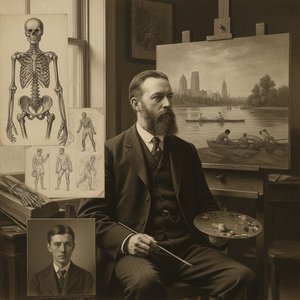
Thomas Eakins: Realism, Anatomy & the American Spirit – A Comprehensive Exploration of Life and Legacy
Explore the life & legacy of Thomas Eakins, a pivotal American Realist painter. Discover his groundbreaking techniques, anatomical precision, and iconic works like 'The Gross Clinic.' A comprehensive guide for art enthusiasts.


