Aperçu en situation
 Partager
 Partager
 Détails
 Guide imprimable

 Télécharger
 Articles similaires
 Radiographie
 Voir le diaporama
 Statistiques
River in the Catskills


 Afficher la suite
Giclées et impressions d'art
Impressions giclées ou sur toile de qualité musée, avec une production rapide et des finitions au choix. ( Acheter la peinture faite à la main Passer au format image numérique)




P118B €10

P118H €10

P118W €10

P438Z €10

P508JH €12

P508YH €12

P805H €10

P805Z €10

P919BZ €10

P919G €10

P919XJ €10

P959ZH €10

P968JZ €12

W106C €8

W218G €10

W218JH €8

W218Y €10

W307PJ €10

W316G €10

W316PJ €8

W316Y €10

W398PJ €8

W4111J €10

W500HY €15

W500JH €15

W692G €12

W849H €8

W940BG €15

W953PJ €8




Choisissez parmi nos formats prédéfinis qui respectent les proportions originales de l’œuvre.

Saisissez la largeur et la hauteur souhaitées pour qu'elles s'adaptent à votre cadre ou à votre mur. Une impression ne peut être que découpée, elle ne peut jamais être agrandie au-delà de l'image originale ; ainsi, un format de forme différente entraînera la perte d'une partie de l'image. Nous vous envoyons une maquette numérique pour approbation avant toute impression. L'image présentée sur cette page ne montre pas le recadrage réel — seule la maquette le permet.
Livraison dans le monde entier () en 2 semaines au lieu des 4/5 semaines habituelles. (22 octobre)

Livraison express gratuite dans le monde entier

Toile de lin de haute qualité

Assurance transport complète

Garantie de remboursement des droits de douane

Garantie de fidélité des couleurs

Garantie de retour de 100 jours (uniquement en cas de défaut)

Garantie de remboursement à 100%

Tarifs dégressifs sur quantité
 L'option verre n'est disponible que pour les dimensions inférieures à 110 cm.

River in the Catskills
Giclées et impressions d'art
Format de la reproduction
-


Prix total final
€ 70
A Symphony of Light and Landscape – Thomas Cole’s River in the Catskills
Thomas Cole's "River in the Catskills," painted in 1843, isn’t merely a depiction of a valley; it’s an immersive experience, a carefully constructed meditation on nature’s power and humanity’s place within its grandeur. This oil-on-canvas masterpiece, now residing in the Museum of Fine Arts in Boston, stands as a cornerstone of the Hudson River School movement – a period where American artists sought to capture the sublime beauty of their native land with a distinctly Romantic sensibility. More than just a landscape, it’s a visual poem, imbued with allegorical weight and a profound sense of melancholy, inviting contemplation on themes of progress, industry, and the enduring spirit of the wilderness.
Cole's genius lies in his masterful manipulation of light and color. The scene unfolds as twilight descends, casting long shadows across the valley floor and bathing the distant mountains in a hazy, ethereal glow. The palette is dominated by muted greens, blues, and browns – earthy tones that evoke the stillness of the forest and the quiet dignity of the river. Yet, within this restraint lies an extraordinary vibrancy; Cole doesn’t simply paint colors; he captures their essence, creating a sense of depth and atmosphere that draws the viewer into the heart of the scene. The subtle gradations of light, particularly in the reflection on the water's surface, are executed with remarkable precision, lending the painting a luminous quality that seems to breathe.
The Hudson River School: A New American Vision
To fully appreciate “River in the Catskills,” it’s essential to understand its context within the broader movement of the Hudson River School. Emerging in the mid-19th century, this group of artists – including Cole, Frederic Church, and Asher Brown Durand – rejected the prevailing European artistic traditions that favored historical or mythological subjects. Instead, they turned their attention inward, seeking inspiration in the landscapes of America’s eastern seaboard. Influenced by Romanticism's emphasis on emotion and the sublime, these painters aimed to capture not just the outward appearance of nature but also its spiritual essence – a sense of awe, wonder, and connection with something larger than themselves.
Cole, in particular, was deeply concerned with the relationship between humanity and the natural world. His paintings often explored themes of wilderness, conservation, and the potential consequences of unchecked industrial development. “River in the Catskills” can be interpreted as a cautionary tale – a glimpse into a future where the beauty and tranquility of nature are threatened by the relentless march of progress. The solitary figure standing near the river’s edge serves as a poignant reminder of humanity's vulnerability within this vast, untamed landscape.
Symbolism and Emotional Resonance
Beyond its technical brilliance, “River in the Catskills” is rich in symbolism. The river itself represents life’s flow – a constant movement towards an unknown destination. The mountains, shrouded in mist, evoke a sense of mystery and timelessness, while the setting sun symbolizes both beauty and mortality. The solitary figure, often interpreted as representing the artist himself, stands in quiet contemplation, seemingly absorbing the scene's profound emotional weight. There’s a palpable feeling of solitude and introspection within the painting – a yearning for connection with nature and a recognition of our own insignificance in the face of its grandeur.
The composition further reinforces this sense of melancholy. The wide-angle perspective draws the viewer's eye into the distance, creating an illusion of vastness and emphasizing the scale of the landscape. The carefully arranged elements – the trees, the rocks, the river – contribute to a harmonious yet subtly unsettling balance. “River in the Catskills” isn’t simply beautiful; it’s profoundly moving, prompting viewers to reflect on their own relationship with nature and the values that shape our world.
Bringing the Vision Home: Reproductions and Legacy
Handmade oil painting reproductions of Thomas Cole's "River in the Catskills" offer a remarkable opportunity to bring this iconic work into your home or office. Each reproduction meticulously captures the original’s luminous quality, rich color palette, and evocative atmosphere. Whether you choose a large-scale statement piece or a smaller, more intimate print, owning a reproduction of “River in the Catskills” is a way to connect with one of America's most important artistic legacies – a testament to the power of landscape painting and the enduring beauty of the American wilderness.
Questions et réponses
Quelle est l'intensité des couleurs de "River in the Catskills" ?
Les couleurs de «River in the Catskills» de Thomas Cole présentent une saturation Couleurs subtiles avec une intensité Équilibré.
De quel type d'œuvre s'agit-il pour "River in the Catskills" ?
« River in the Catskills » est une œuvre de type Art mural.
Qu'est-ce qui explique le statut du droit d'auteur de «River in the Catskills» de Thomas Cole ?
Le statut du droit d'auteur de « River in the Catskills » - dans le domaine public - ses droits d'auteur ont expiré - découle du décès de l'artiste en 1848.
Biographie de l'artiste
Premières années et carrière
Thomas Cole, un artiste d'origine britannique devenu américain, est né le 1er février 1801 à Bolton le Moors, dans le Lancashire. En 1818, il émigra avec sa famille aux États-Unis, s’installant à Steubenville, Ohio. À l’âge de 22 ans, Cole déménagea à Philadelphie puis, en 1825, à Catskill, dans l'État de New York, où il vécut avec sa femme et ses enfants jusqu'en 1847.Style artistique et influences
Le travail de Cole se caractérise par sa représentation romantique de la nature sauvage américaine. Il était largement autodidacte en tant que peintre, s’appuyant sur des livres et étudiant les œuvres d’autres artistes. En 1822, Cole commença à travailler comme portraitiste avant de concentrer son attention sur le paysage. Ses peintures mettaient souvent en scène la Catskill Mountain House, les célèbres chutes de Kaaterskill et deux vues de Cold Spring.Œuvres notables
- Le cours de l'Empire, une série de cinq tableaux créée par Cole entre 1833 et 1836, se distingue en reflétant les sentiments populaires américains de l’époque.
- Une vue du mont Etna depuis Taormina (huile sur toile de 78x120 pouces) témoigne de sa fascination pour le plus haut volcan actif d’Europe.
- L'Oxbow (1836), représentant un paysage serein, est un autre exemple de la maîtrise du paysage par Cole.
Musées et collections
De nombreuses œuvres de Cole peuvent être trouvées dans les musées suivants :- New York Historical Society : abrite la série Le cours de l'Empire.
- National Gallery à Washington, D.C. : présente une version du Voyage de la vie.
- Institut d'arts Munson-Williams-Proctor à Utica, dans l’État de New York : abrite une autre version du Voyage de la vie.
- Allen Memorial Art Museum : présente Lac aux arbres morts (1825).
Héritage et influence
L'influence de Cole sur l’art américain est profonde. Il est considéré comme le fondateur de l’École du fleuve Hudson, un mouvement artistique américain du milieu du XIXe siècle qui a émergé dans la vallée du fleuve Hudson, dans l’État de New York. Son travail a inspiré des générations d'artistes, dont Asher B. Durand et Frederic Edwin Church. Lectures recommandées : * L’École du fleuve Hudson * Thomas Cole sur Wikipédia Découvrez d'autres œuvres de Thomas Cole : Frederic Edwin Church, péninsule de Schoodic au lever du soleil (pour comparaison avec le style de Cole) Winslow Homer, canoës dans les rapides, rivière Saguenay (exemple d'un autre peintre américain de paysages).
Thomas Cole
1801 - 1848 , Royaume-Uni
En bref
- Artistes Influents: ['Autres artistes (auto-didacte)']
- Date De Décès: 1848
- Date De Naissance: 1er février 1801
- Influence Sur Les Artistes:
- Asher B. Durand
- Frederic Edwin Church
- Lieu De Naissance: Bolton, Royaume-Uni
- Mouvement Artistique: École du fleuve Hudson
- Nationalité: Britannique-Américain
- Nom Complet: Thomas Cole
- Œuvres Notables:
- The Course of Empire
- A View from Mount Etna
- The Oxbow
Articles connexes
Epic Landscapes & Wild Nature: The Power of the Hudson River School's Sublime Artistry
Explore the breathtaking power of the Hudson River School. Journey through epic American landscapes, from Thomas Cole's sublime vistas to Luminist light, and discover how these timeless masterpieces continue to inspire modern collectors and art lovers worldwide.
Robert Spencer: Luminism, Narrative & the American Landscape Tradition
Explore the captivating world of Luminism & the Hudson River School with our expert analysis. Discover the history, artists, and enduring beauty of 19th-century American landscape painting. Find museum-quality reproductions at OriginalUniqueArt.
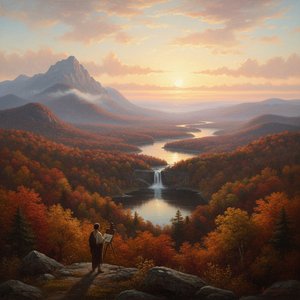
L'École du fleuve Hudson : Romantisme américain et exploration d'un paysage national
Explorez l'École du fleuve Hudson : un mouvement artistique américain majeur célébrant la nature et le sublime. Découvrez ses peintres emblématiques, son histoire et son héritage durable avec OriginalUniqueArt.

Les 10 Chefs-d'œuvre du Paysage Romantique : Artistes et Décor d'Intérieur
Plongez dans l'émotion du Romantisme avec les 10 plus beaux paysages de Friedrich, Turner & Delacroix. Découvrez leur histoire et trouvez l'inspiration déco idéale sur OriginalUniqueArt.com !
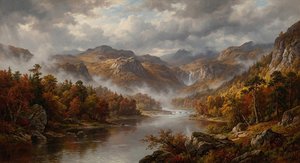
L'École du fleuve Hudson : 10 chefs-d'œuvre incontournables pour sublimer votre intérieur
Plongez dans l'univers grandiose de l'École du fleuve Hudson ! Découvrez 10 chefs-d'œuvre emblématiques de Thomas Cole, Frederic Church et Albert Bierstadt. Inspirez votre décoration intérieure avec ces paysages américains romantiques. Explorez la collection complète sur OriginalUniqueArt.com.