Aperçu en situation
 Partager
 Partager
 Détails
 Guide imprimable

 Télécharger
 Articles similaires
 Radiographie
 Voir le diaporama
 Statistiques
Le Derby d'Epsom
 Acrylique sur toile
- Art mural
- Romantisme
 1821
1821 92.0 x 122.0 cm
 Musée du Louvre
 Afficher la suite
Giclées et impressions d'art
Impressions giclées ou sur toile de qualité musée, avec une production rapide et des finitions au choix. ( Acheter la peinture faite à la main Passer au format image numérique)




P118B €10

P118H €10

P118W €10

P438Z €10

P508JH €12

P508YH €12

P805H €10

P805Z €10

P919BZ €10

P919G €10

P919XJ €10

P959ZH €10

P968JZ €12

W106C €8

W218G €10

W218JH €8

W218Y €10

W307PJ €10

W316G €10

W316PJ €8

W316Y €10

W398PJ €8

W4111J €10

W500HY €15

W500JH €15

W692G €12

W849H €8

W940BG €15

W953PJ €8




Choisissez parmi nos formats prédéfinis qui respectent les proportions originales de l’œuvre.

Saisissez la largeur et la hauteur souhaitées pour qu'elles s'adaptent à votre cadre ou à votre mur. Une impression ne peut être que découpée, elle ne peut jamais être agrandie au-delà de l'image originale ; ainsi, un format de forme différente entraînera la perte d'une partie de l'image. Nous vous envoyons une maquette numérique pour approbation avant toute impression. L'image présentée sur cette page ne montre pas le recadrage réel — seule la maquette le permet.
Livraison dans le monde entier () en 2 semaines au lieu des 4/5 semaines habituelles. (23 octobre)

Livraison express gratuite dans le monde entier

Toile de lin de haute qualité

Assurance transport complète

Garantie de remboursement des droits de douane

Garantie de fidélité des couleurs

Garantie de retour de 100 jours (uniquement en cas de défaut)

Garantie de remboursement à 100%

Tarifs dégressifs sur quantité
 L'option verre n'est disponible que pour les dimensions inférieures à 110 cm.

Le Derby d'Epsom
Giclées et impressions d'art
Format de la reproduction
-


Prix total final
€ 70
A Moment Frozen in Motion: Géricault’s “The Epsom Derby”
Jean-Louis André Théodore Géricault's "The Epsom Derby," painted in 1821, isn’t merely a depiction of horse racing; it’s a visceral embodiment of Romanticism’s fascination with drama, movement, and the raw power of human emotion. This monumental canvas, now residing within the hallowed halls of the Louvre, captures not just the spectacle of the Derby but also the underlying tension and exhilaration inherent in this quintessential English tradition. Géricault, already a name synonymous with intensity and innovation, sought to transcend the conventional sporting prints of his time, forging instead an intensely personal and emotionally charged portrayal.
The painting immediately assaults the viewer with its dynamism. The horses, rendered with astonishing anatomical precision – a testament to Géricault’s rigorous study of anatomy under Carle Vernet and later, independent investigation – are not simply galloping; they're exploding into motion. Their legs, extended in a seemingly impossible arc, defy gravity, capturing that fleeting moment of airborne grace so often missed by traditional depictions. The jockey, barely visible amidst the surging mass of horses and spectators, is swallowed by the scene, emphasizing the overwhelming power of the race itself. This isn’t a static record; it's a captured explosion.
The Romantic Spirit: Drama and Emotion
Géricault was deeply immersed in the burgeoning Romantic movement, rejecting the Neoclassical emphasis on order and reason in favor of intense emotion, dramatic narratives, and the sublime. “The Epsom Derby” perfectly embodies this shift. The composition is deliberately unbalanced, creating a sense of instability and urgency. The figures are tightly packed, almost claustrophobic, mirroring the frenetic energy of the race. The use of dark, brooding colors – deep browns, blacks, and grays – further amplifies the drama, while strategically placed highlights draw attention to key moments within the chaos.
Interestingly, Géricault’s inspiration stemmed from a desire to move beyond the typical depictions of horse racing. He sought to capture not just the physical spectacle but also the underlying human experience—the thrill of competition, the risk of failure, and the collective anticipation of the crowd. This ambition is evident in his meticulous attention to detail, from the individual expressions on the faces of the spectators to the subtle shifts in posture among the horses.
A Technical Masterpiece: Observation and Innovation
The technical execution of “The Epsom Derby” is as remarkable as its emotional impact. Géricault meticulously studied horse movement, even consulting with experts and conducting his own research – a radical departure for an artist primarily known for historical or mythological subjects. His detailed anatomical studies, combined with his understanding of perspective and composition, resulted in a remarkably realistic portrayal of the race. The painting’s scale—measuring 123cm by 92cm—further enhances its impact, enveloping the viewer within the scene.
Furthermore, Géricault employed an innovative technique for depicting movement. As documented by Eadweard Muybridge's photographic studies of galloping horses, Géricault accurately captured the fleeting moment when a horse’s legs are momentarily beneath its body during the airborne phase of its stride – a detail that would have been virtually impossible to represent with traditional painting techniques at the time. This demonstrates Géricault’s commitment to scientific observation and his willingness to push the boundaries of artistic representation.
Symbolism and Legacy: A Reflection on Humanity
Beyond its technical brilliance, “The Epsom Derby” carries a deeper symbolic weight. The race itself represents not just competition but also ambition, risk, and ultimately, mortality. The fleeting nature of victory and the potential for devastating defeat are subtly conveyed through the painting’s dynamic composition and intense emotional atmosphere. Géricault's work can be seen as an allegory for the human condition—a reminder that life is a constant struggle against forces beyond our control.
Géricault’s “The Epsom Derby” remains a pivotal work in the history of art, solidifying his reputation as one of the most important figures of the Romantic era. It's a painting that continues to captivate viewers with its dramatic intensity, technical mastery, and profound exploration of human emotion—a timeless testament to the power of observation, innovation, and artistic vision.
Questions et réponses
Quelle est la teinte dominante de «Le Derby d'Epsom» de Théodore Géricault ?
La teinte dominante de «Le Derby d'Epsom» de Théodore Géricault est De l'ocre au sépia. Cette teinte constitue la tonalité de fond de la palette.
Quelle émotion «Le Derby d'Epsom» de Théodore Géricault dégage-t-il ?
«Le Derby d'Epsom» de Théodore Géricault dégage un sentiment Mélancolique au sein d'une atmosphère globalement Romantique et onirique.
Où puis-je trouver des œuvres d'art similaires à «Le Derby d'Epsom» de Théodore Géricault ?
Les œuvres similaires à « Le Derby d'Epsom » sont répertoriées sur la page Œuvres similaires de l'œuvre.
Biographie de l'artiste
Jean-Louis André Théodore Géricault (1791 - 1824): A Pioneer of Romantic Art
Théodore Géricault, born September 26, 1791, in Rouen, France, stands as a monumental figure in the history of French art—a testament to Romantic fervor and an uncompromising commitment to portraying human suffering with unparalleled dramatic intensity. His life was tragically curtailed by illness at just thirty-two, yet his artistic legacy continues to inspire awe and admiration for its boldness and emotional depth. From humble beginnings within a family steeped in legal tradition, Géricault’s path toward artistic greatness was marked by intellectual curiosity and an early fascination with the equestrian arts—a passion nurtured under the tutelage of Carle Vernet, a celebrated painter known for his depictions of English sporting events. This formative influence instilled in him a meticulous attention to detail and a profound understanding of anatomy and movement, qualities that would become hallmarks of his distinctive style.Early Training & Influences: The Crucible of Classical Tradition
Géricault’s formal education commenced at the Lycée Impérial in Paris, where he studied under Pierre Bouillon—a staunch defender of classical ideals who nevertheless recognized Géricault's innate talent for capturing emotion and conveying profound psychological insight. Bouillon’s rigorous instruction shaped Géricault’s artistic sensibilities, grounding him in the traditions of Greco-Roman sculpture and fostering a disciplined approach to composition. Simultaneously, he pursued independent study at the Louvre—the epicenter of artistic discourse during his time—immersing himself in the works of titans like Rubens, Titian, Velázquez, Rembrandt, and Michelangelo. This exposure ignited within him an ardent desire to emulate their mastery of light, shadow, and expressive brushwork—a pursuit that would propel him toward a singular vision of art as a vehicle for confronting uncomfortable truths and eliciting visceral emotional responses.The Louvre & The Birth of Romantic Expression
Unlike many of his contemporaries who adhered rigidly to Neoclassical conventions, Géricault rejected the stylized elegance favored by the Académie Française. Instead, he embraced the dynamism and psychological complexity championed by Romantic artists—a movement that sought to liberate art from formal constraints and explore the depths of human emotion. His formative years at the Louvre fostered a rebellious spirit—one that would soon challenge established artistic norms and propel him toward groundbreaking innovations. He meticulously copied masterpieces by Rubens and Rembrandt, absorbing their techniques for conveying profound emotional resonance and mastering the subtleties of chiaroscuro—a dramatic interplay of light and shadow that became an indispensable element of his artistic vocabulary. This dedication to observation and experimentation cemented Géricault’s position as a visionary artist—one who dared to confront societal injustices and depict human suffering with unflinching honesty.The Raft of the Méduse: A Masterpiece of Dramatic Intensity
Géricault's magnum opus, *The Raft of the Medusa* (1818-1819), stands as an unparalleled achievement in Romantic art—a monumental canvas that transcends mere historical narrative and becomes a searing indictment of human folly and governmental negligence. Inspired by the harrowing true story of the shipwreck of the French frigate Méduse in 1816, where incompetence and callous disregard for human life resulted in unimaginable suffering for its passengers, Géricault undertook exhaustive research—interviewing survivors, studying corpses at hospitals, and constructing a scale model of the raft itself—to ensure meticulous accuracy and maximize emotional impact. The resulting painting is not merely a depiction of tragedy; it’s an immersive experience that confronts viewers with the raw horror of abandonment, desperation, and impending doom. Géricault skillfully employed pyramidal composition—drawing inspiration from Michelangelo—to create a dynamic tension that draws the eye across the canvas and underscores the profound psychological drama unfolding before its gaze. The painting's controversial reception at the Salon of 1819 solidified Géricault’s reputation as a daring innovator—a courageous artist who defied artistic conventions and championed an uncompromising commitment to portraying human suffering with unflinching honesty.Legacy & Influence: Shaping the Course of Romantic Art
Théodore Géricault's influence on subsequent generations of artists is undeniable—particularly Eugène Delacroix, whom he mentored and whose own paintings bear the indelible stamp of Géricault’s stylistic vision. His unwavering belief in realism—combined with his masterful command of dramatic composition and expressive brushwork—established him as a cornerstone of Romantic art—a movement that prioritized emotional intensity over formal elegance and sought to capture the turbulent spirit of its time. Beyond his artistic achievements, Géricault remains an enduring symbol of artistic integrity—a testament to the transformative power of observation, research, and unwavering dedication to conveying profound psychological insight. His bronze figure reclines on his tomb at Père Lachaise Cemetery in Paris—a poignant reminder of a life tragically cut short but indelibly etched into the annals of art history—forever enshrined as one of France’s most visionary and influential painters.
Théodore Géricault
1791 - 1824 , France
En bref
- Artistic Movement Or Style: Romanticisme
- Artists Or Movements Influenced By This Artist: ['Eugène Delacroix']
- Artists Who Influenced This Artist:
- Rubens
- Titian
- Velázquez
- Date Of Birth: 26 septembre 1791
- Full Name: Jean-Louis André Théodore Géricault
- Nationality: Francais
- Notable Artworks:
- Le Naufrage de la Méduse
- Cheval effrayé par l'orage
- Wounded Cuirassier
- Place Of Birth: Rouen, France
Articles connexes
The Noble Steed: A Historical and Artistic Exploration of Horses in Fine Art
Explore the rich history of horses in fine art! From ancient depictions to Renaissance masterpieces & beyond, discover iconic artworks and artists. Learn about symbolism, techniques, and find museum-quality reproductions at OriginalUniqueArt.
Romantisme : Les 10 Chefs-d'œuvre Incontournables pour une Déco Inspirée
Plongez au cœur du Romantisme avec les 10 œuvres majeures de Delacroix, Goya et Turner. Découvrez l'histoire, la technique & l'émotion derrière ces chefs-d'œuvre. Reproductions d'art exceptionnelles sur
The Noble Steed on Canvas: A Historical & Artistic Exploration of Horse Painting Across Cultures
Explore the rich history of horse painting! Discover masterpieces from Stubbs to Munnings & learn about symbolism, techniques & artists. Find museum-quality reproductions at OriginalUniqueArt.

The Equine Muse: A Historical & Artistic Exploration of Horses in Painting
Explore the captivating history of horses in painting! Discover Renaissance masterpieces, Baroque grandeur & expert insights for collecting equestrian art. Learn about symbolism, techniques & lasting value with OriginalUniqueArt.
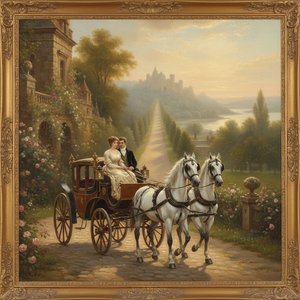
Timeless Elegance: A Visual Journey Through the Romance of Horse Carriage Artworks
Embark on a visual journey through the romantic world of horse carriage art. Discover the mastery of equestrian oil paintings, from Impressionist textures to classical realism, and learn how to bring timeless elegance into your home with museum-quality reproductions.