
 Aperçu en situation
 Envoyer
 Partager
 Détails de l'œuvre
 Guide
Guide

 Télécharger l'image
 Articles similaires
 Radiographie
 Diaporama
 Questions et réponses
 Statistiques
Actor with Flute


 Lire la suite
Giclées et impressions d'art
Impressions giclées ou sur toile de qualité musée, avec une production rapide et des finitions au choix. ( Commander la reproduction peinte à la main Passer au format numérique)




P118B €10

P118H €10

P118W €10

P438Z €10

P508JH €12

P508YH €12

P805H €10

P805Z €10

P919BZ €10

P919G €10

P919XJ €10

P959ZH €10

P968JZ €12

W106C €8

W218G €10

W218JH €8

W218Y €10

W307PJ €10

W316G €10

W316PJ €8

W316Y €10

W398PJ €8

W4111J €10

W500HY €15

W500JH €15

W692G €12

W849H €8

W940BG €15

W953PJ €8




Choisissez parmi nos formats prédéfinis qui respectent les proportions originales de l’œuvre.

Saisissez la largeur et la hauteur souhaitées pour qu'elles s'adaptent à votre cadre ou à votre mur. Une impression peut être recadrée, mais jamais agrandie au-delà de l'image originale ; ainsi, un format de forme différente entraînera la perte d'une partie de l'image. Nous vous envoyons une maquette numérique pour approbation avant toute impression. L'image présentée sur cette page ne montre pas le recadrage réel — seule la maquette le permet.
Livraison dans le monde entier () en 2 semaines au lieu des 4/5 semaines habituelles. (8 novembre)

Livraison express gratuite dans le monde entier

Toile de lin de qualité supérieure

Assurance transport complète

Garantie de remboursement des droits de douane

Garantie de fidélité des couleurs

Politique de retour de 100 jours (uniquement en cas de défaut)

Garantie de remboursement à 100%

Offre de tarifs dégressifs
 L'option verre n'est disponible que pour les dimensions inférieures à 110 cm.

Actor with Flute
Giclées et impressions d'art
Format de la reproduction
-


Prix total
€ 72
The Serene Echoes of Performance: An Encounter with Sumi-e Mastery
To gaze upon this depiction of an actor playing the flute is to step into a moment suspended between breath and note. It is not merely a portrait, but a meditation on artistry itself. Executed in the profound tradition of Sumi-e, or Japanese ink painting, the work captures the quiet dignity inherent in skilled performance. The composition centers entirely upon the figure, whose posture suggests both deep concentration and effortless grace. The artist has masterfully employed the stark elegance of black ink against a muted, almost ethereal beige ground. This restraint is key; it forces the viewer to look beyond mere representation and into the very essence of the subject’s spirit.
Technique and Tonal Depth in Ink Wash
The technical brilliance here lies in the handling of the ink wash. Unlike works that rely on sharp outlines or vibrant pigments, this piece achieves its depth through varying densities of sumi. The artist builds tone not with color, but with shadow and gradation—a subtle interplay of washes that suggests texture in the drapery and musculature without ever becoming overly literal. This characteristic flatness, typical of classical Japanese art, deliberately flattens space to elevate the subject’s presence above any concern for realistic perspective. It is a celebration of line economy; every brushstroke feels deliberate, carrying the weight of tradition while maintaining an air of immediate intimacy.
Cultural Resonance and Symbolic Weight
The choice of subject—an artist at his craft—is deeply resonant within Japanese cultural history. The flute itself acts as a potent symbol, representing not just musical skill, but also the disciplined pursuit of beauty and emotional expression. For collectors and designers alike, this piece offers more than mere decoration; it is an artifact imbued with cultural narrative. It speaks to the value placed on refined arts, the quiet moments of contemplation that follow intense creation. The overall feeling evoked is one of serene contemplation, a visual balm for the modern, hurried sensibility.
A Touch of Edo Elegance
While the style harks back to profound artistic lineages, the period context suggests an echo of the refined tastes prevalent during the 18th century. The minimalism inherent in Sumi-e aligns perfectly with aesthetics that prize simplicity and elegance over opulent display. For those curating a space—be it a gallery wall or a private sanctuary—this reproduction offers an unparalleled depth. It whispers tales of master craftsmanship, inviting the viewer to slow their pace, listen for the imagined melody, and appreciate the enduring power of art distilled to its most essential elements.
Questions et réponses
Quelle est la taille d'impression recommandée pour «Actor with Flute» de Suzuki Harunobu ?
Pour «Actor with Flute», un format d'impression de Medium est recommandé. D'autres tailles sont disponibles avec les mêmes proportions.
Quelle est la technique et la date de création de «Actor with Flute» de Suzuki Harunobu ?
«Actor with Flute» a été réalisé en 1700, en Ink On Paper.
Où devrait être accrochée une reproduction de «Actor with Flute» de Suzuki Harunobu ?
Avec son format Panoramic, une reproduction de « Actor with Flute » est idéale pour un(e) Living Room.
Biographie de l'artiste
Premières années et influences
Suzuki Harunobu, un designer japonais d'œuvres d'art gravées sur bois dans le style ukiyo-e, est né en 1725. Peu se sait de sa vie précoce, mais il est supposé avoir grandi à Kyoto. Son travail témoigne d’influences provenant de nombreux artistes, dont Torii Kiyonobu, Ishikawa Toyonobu, l’école Kawamata et l’école Kanō. Cependant, la plus forte influence sur Harunobu fut le peintre et graveur Nishikawa Sukenobu, qui pourrait avoir été le professeur direct de Harunobu.Carrière artistique
Harunobu a commencé sa carrière dans le style de l’école Torii, créant de nombreuses œuvres habiles mais peu innovantes. Cependant, avec son implication auprès d'un groupe de samouraïs lettrés, il s'est attaqué à de nouveaux formats et styles. En 1764, Harunobu fut choisi pour aider ces samouraïs dans leurs efforts amateurs pour créer des e-goyomi (calendriers). Ces impressions de calendrier seraient les premières nishiki-e (impressions brodées), avec Harunobu expérimentant de meilleurs bois pour les blocs et utilisant des couleurs plus coûteuses.Œuvres notables et innovations
- Les "impressions brodées" de Suzuki Harunobu ont conduit à la production en couleur complète devenant standard, avec dix blocs ou plus utilisés pour créer chaque impression.
- Son utilisation de multiples blocs de bois séparés dans la création d'une seule image était une innovation qui dépendait de l'utilisation de encoches et de cales pour maintenir le papier en place.
- Les impressions de Harunobu étaient populaires auprès de la classe chōnin, devenue suffisamment riche pour se permettre de décorer leurs maisons avec elles.
Héritage
Suzuki Harunobu’s travail a été central dans la formation de la perception occidentale de l'art japonais à la fin du XIXe siècle. Son influence peut être observée dans les paysages de Hokusai et Hiroshige, qui ont été popularisés pendant le mouvement japoniste.- Voir les œuvres de Suzuki Harunobu sur OriginalUniqueArt
- En savoir plus sur Suzuki Harunobu sur Wikipédia
- Explorer l'art ukiyo-e sur OriginalUniqueArt
Tableaux et artistes notables
- Hiroshige Utagawa’s série Kyōka Tokaido, Seki (voir sur OriginalUniqueArt)
- Miyagawa Issho’s cortesanes de Shimabara exorcisant des démons (voir sur OriginalUniqueArt)
- Kuniyoshi Utagawa’s une tablette votive avec des masques d'acteurs kabuki à face valeur (voir sur OriginalUniqueArt)
Musées et collections
- Indianapolis Museum of Art (Indianapolis, États-Unis)
- Fukuoka City Museum (Fukuoka, Japon)

Suzuki Harunobu
1725 - 1770 , Japon
L'essentiel de l'artiste
- Artistes Influents:
- Torii Kiyonaga
- Nishikawa Sukenobu
- Date De Naissance: 1725
- Influences Artistiques:
- Utagawa Hiroshige
- Japonisme
- Lieu De Naissance: Tokyo, Japon
- Mouvement Artistique: Ukiyo-e
- Nationalité: Japonaise
- Nom Complet: Suzuki Harunobu
- Oeuvres Notables: ['Fulling Cloth At The Jewel River']
Articles connexes
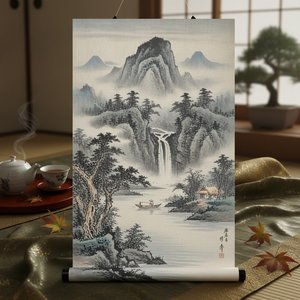
Serenity on Canvas: A Guide to the Timeless Beauty of Japanese Landscape Painting
Discover the serene beauty of Japanese landscape painting. From Hokusai's iconic woodblock prints to meditative sumi-e ink washes, explore a visual journey through the 'floating world' and learn how to bring this timeless Zen aesthetic into your modern home decor.

Floating World: The Captivating Art and Legacy of Japanese Ukiyo-e
Explore the profound beauty of Japanese Ukiyo-e. Discover the history, masters like Hokusai, and the enduring legacy of the 'Floating World' through an expert art-historical lens.
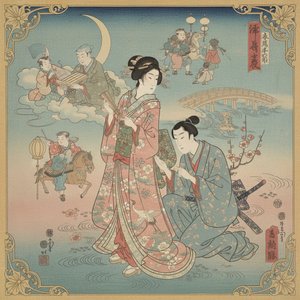
Suzuki Harunobu: Pioneering Ukiyo-e & the Refinement of Edo Period Printmaking
Discover the revolutionary world of Suzuki Harunobu, a pioneer of ukiyo-e printmaking. Explore his exquisite nishiki-e techniques, diverse subjects & lasting impact on Japanese art history. Learn more at OriginalUniqueArt.

Les 25 chefs-d'œuvre iconiques de Katsushika Hokusai : l'art éternel du Japon
Explorez les 25 chefs-d'œuvre de Hokusai et l'âme de l'ukiyo-e. Découvrez ces trésors sur OriginalUniqueArt.com.
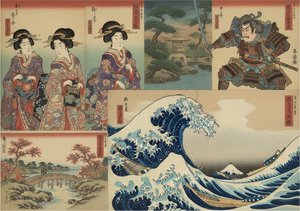
Ukiyo-e : Exploration du Monde Flottant et de l'Héritage Artistique Durable du Japon
Explorez l'univers fascinant de l'ukiyo-e, l'art japonais de l'époque d'Edo. Découvrez les maîtres (Hokusai, Hiroshige) et son influence durable sur le monde de l'art. Guide expert pour collectionneurs.


