
 Aperçu en situation
 Envoyer
 Partager
 Détails de l'œuvre

 Télécharger
 Articles similaires
 Radiographie
 Diaporama
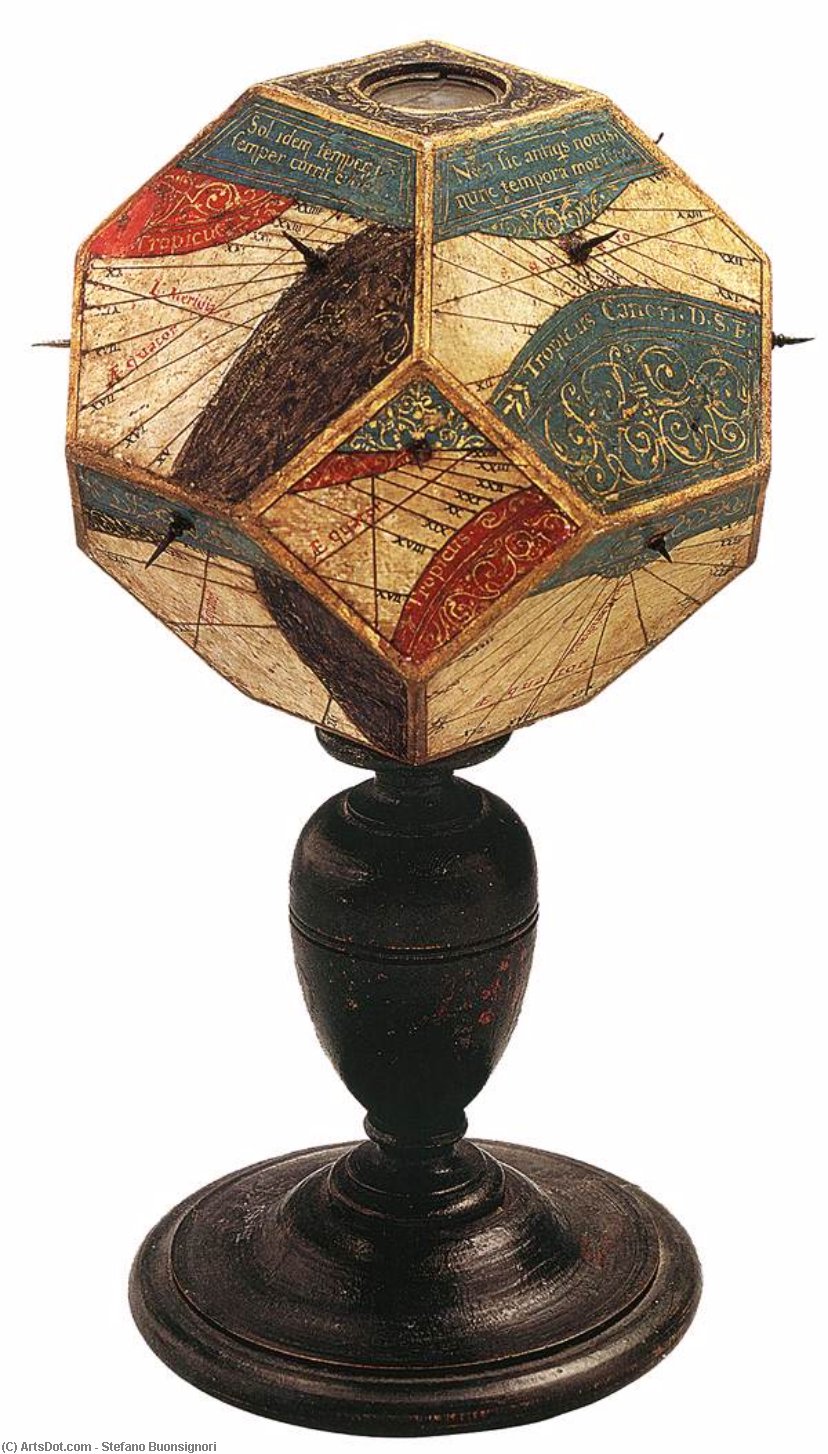
Sundial


 Lire la suite
Giclées et impressions d'art
Impressions giclées ou sur toile de qualité musée, avec une production rapide et des finitions au choix. ( Commander la reproduction peinte à la main Télécharger l'image haute résolution)




































Choisissez parmi nos formats prédéfinis qui respectent les proportions originales de l’œuvre.

Vous pouvez saisir vos propres dimensions pour vous adapter à un cadre ou à un espace spécifique. Si la taille sélectionnée ne correspond pas aux proportions de l'image originale, nous recadrerons l'œuvre ou étendrons l'image avec une bordure en miroir ou une couleur unie. Une maquette numérique vous sera envoyée pour approbation avant le début de la production.
Veuillez noter que l'aperçu à l'écran ne reflète pas le recadrage ou l'extension réelle. Seule la maquette montrera avec précision la composition finale.
Bien que des tailles personnalisées soient disponibles, nous vous recommandons de choisir une dimension dans la liste prédéfinie afin de préserver les proportions originales.
Livraison dans le monde entier () en 2 semaines au lieu des 4/5 semaines habituelles. (15 août)

Livraison express gratuite dans le monde entier

Toile de lin de qualité supérieure

Assurance transport complète

Garantie de remboursement des droits de douane

Garantie de fidélité des couleurs

Politique de retour de 60 jours (uniquement en cas de défaut)

Garantie de remboursement à 100%

Offre de tarifs dégressifs
 L'option verre n'est disponible que pour les dimensions inférieures à 110 cm.

Sundial
Giclées et impressions d'art
Format de la reproduction
-


Prix total
$ 80
Biographie de l'artiste
Stefano Bonsignori: The Florentine Cartographer Who Shaped Renaissance Vision
Stefano Bonsignori (c. 1540 – September 21, 1589) remains a figure shrouded in scholarly mystery, yet his legacy endures as one of Florence’s most celebrated cartographers and artists during the High Renaissance. Born into a Florentine noble family, Bonsignori's life was largely devoted to monastic pursuits within the Olivetan Order, but it gained renown through his unparalleled contribution to visual representation of the city – specifically, the monumental Bonsignori Map of Florence, which stands as an emblem of humanist ambition and artistic innovation. This article delves into Bonsignori’s life, explores his groundbreaking mapmaking techniques, examines his artistic style, and assesses his enduring impact on Florentine culture and intellectual history.Early Life and Formation
Little biographical detail survives beyond confirmation that Bonsignori was born in Florence around 1540. He entered the Olivetan Order at Monte Oliveto Maggiore, a Benedictine monastery nestled in the Tuscan hills—a location that would profoundly influence his artistic sensibility and worldview. The contemplative life fostered an appreciation for precision, observation, and meticulous detail – qualities that would subsequently characterize Bonsignori’s cartographic endeavors. While scant documentation exists regarding his formative years, scholars believe he received a robust education emphasizing mathematics and geometry, disciplines crucial to the creation of accurate maps. His monastic upbringing instilled in him a deep reverence for natural beauty and fostered an intellectual curiosity that propelled him toward scientific pursuits.The Bonsignori Map: A Triumph of Innovation
Bonsignori’s fame rests principally upon his magnum opus – the Bonsignori Map of Florence, commissioned by Grand Duke Francesco I Medici between 1576 and 1584. Unlike previous Florentine maps that relied on inaccurate sketches and idealized representations, Bonsignori undertook a radical reimagining of how Florence could be depicted. He employed a technique known as “axonometry,” which combined perspective projection with stereographic projection—a method pioneered by Gerard Mercator—to achieve unprecedented accuracy. This innovative approach allowed him to represent the city’s topography in three dimensions, capturing not only its physical contours but also subtle variations in elevation and shading.- Detailed Survey: Bonsignori meticulously surveyed Florence using instruments like a solar quadrant and portable sundials—tools reflecting the humanist emphasis on empirical observation.
- Stereographic Projection: He skillfully utilized stereographic projection, developed by Mercator, to create a map that faithfully reproduced the city’s spatial relationships.
- Innovative Rendering: Bonsignori's masterful rendering of Florence incorporated shading and contour lines—techniques previously uncommon in Florentine cartography—to convey depth and realism.
Artistic Style and Influences
Beyond his cartographic prowess, Bonsignori possessed considerable talent as an artist—primarily engaged in painting frescoes for churches and private commissions. His style reflects the prevailing aesthetic sensibilities of the Florentine Renaissance, characterized by clarity, elegance, and a harmonious blend of observation and imagination. Like many artists of his time, Bonsignori drew inspiration from classical ideals of beauty and proportion, evident in his meticulous attention to detail and compositional balance. Notable Influences:- Gerard Mercator: Bonsignori’s adoption of stereographic projection demonstrates the profound impact of Mercator's groundbreaking cartographic innovations on Florentine art.
- Leonardo da Vinci: Bonsignori’s meticulous observation and anatomical precision—traits shared with Leonardo—suggested a broader engagement with humanist scholarship and scientific inquiry.
Legacy and Historical Significance
Stefano Bonsignori died in Florence in 1589, leaving behind an indelible mark on Florentine history and culture. The Bonsignori Map remains not merely a geographical record but also a symbol of humanist intellectual achievement—a testament to the transformative power of observation, innovation, and artistic excellence. It exemplifies the Renaissance ideal of “uomo universale,” or universal man—someone proficient in multiple disciplines who sought to comprehend the cosmos through both art and science. Bonsignori’s legacy continues to inspire scholars and artists alike, reminding us that beauty and knowledge are inseparable pursuits—a conviction perfectly encapsulated in his enduring masterpiece.
stefano buonsignori
1589 , Italy
L'essentiel de l'artiste
- Artistic Movement Or Style: Renaissance
- Artists Or Movements Influenced By This Artist: ['Francesco I']
- Artists Who Influenced This Artist: ['Ignazio Danti']
- Date Of Death: 1589
- Full Name: Stefano Bonsignori
- Nationality: Italian
- Notable Artworks: ['The Dalmatian shore']
- Place Of Birth: Florence

