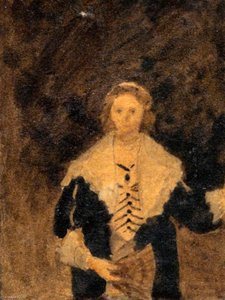
Aperçu en situation
 Partager
 Partager
 Détails

 Télécharger
 Articles similaires
 Radiographie
 Voir le diaporama
 Statistiques
Thomas Hamilton (1784–1858), RSA
 Oil On Canvas
- WallArt
- 19th-century British Portraiture
 76.0 x 63.0 cm
 Académie Royale Écossaise des Beaux-Arts - Architecture
 Afficher la suite
Reproduction à l'huile faite à la main
Huile sur toile peinte à la main, avec cadre et dimensions personnalisés, réalisée sur commande par nos artistes. ( Passer au format impression Passer au format image numérique)




P118B $10

P118H $10

P118W $10

P438Z $10

P508JH $12

P508YH $12

P805H $10

P805Z $10

P919BZ $10

P919G $10

P919XJ $10

P959ZH $10

P968JZ $12

W106C $8

W218G $10

W218JH $8

W218Y $10

W307PJ $10

W316G $10

W316PJ $8

W316Y $10

W398PJ $8

W4111J $10

W500HY $15

W500JH $15

W692G $12

W849H $8

W940BG $15

W953PJ $8




Choisissez parmi nos formats prédéfinis qui respectent les proportions originales de l’œuvre.

Vous pouvez saisir vos propres dimensions pour l'adapter à un cadre ou à un espace spécifique. Si la taille sélectionnée ne correspond pas aux proportions de l'image d'origine, nous recadrerons l'œuvre ou prolongerons la peinture avec des éléments peints à la main supplémentaires. Une maquette numérique vous sera envoyée pour approbation avant le début de la production.
Veuillez noter que l'aperçu à l'écran ne reflète pas le recadrage ou l'extension réels. Seule la maquette montrera fidèlement la composition finale.
Bien que des tailles personnalisées soient disponibles, nous vous recommandons de sélectionner une dimension dans la liste prédéfinie afin de préserver les proportions d'origine.
Après la commande, l’équipe OriginalUniqueArt.com contactera le client par e-mail pour recueillir ses instructions et lui fournira une maquette d’aperçu
Livraison dans le monde entier () en 3 à 4 semaines au lieu des 5 semaines habituelles. (13 septembre). Aucun compromis sur la qualité.

Livraison express gratuite dans le monde entier

Toile de lin de haute qualité

Assurance transport complète

Garantie de remboursement des droits de douane

Garantie de fidélité des couleurs

Garantie de retour de 100 jours (uniquement en cas de défaut)

Garantie de remboursement à 100%

Tarifs dégressifs sur quantité
 L'option verre n'est disponible que pour les dimensions inférieures à 110 cm.

Thomas Hamilton (1784–1858), RSA
Technique de reproduction
Format de la reproduction
-


Prix total final
$ 300
Thomas Hamilton (1784–1858), RSA – A Portrait of Dignified Authority
Sir William Nicholson’s “Thomas Hamilton (1784–1858), RSA” is more than a mere likeness; it's a carefully constructed tableau of 19th-century British identity, imbued with the quiet strength and measured intellect of its subject. Painted in 1863, this three-quarter portrait captures Thomas Hamilton, a prominent figure in Scottish society – a judge, advocate, and respected member of the Royal Society of Edinburgh – presenting an image of established authority and understated elegance. Nicholson’s masterful handling of light, shadow, and texture elevates the painting beyond a simple representation, transforming it into a compelling study of character and social standing.
The composition immediately draws the eye to Hamilton's face, rendered with remarkable sensitivity. Nicholson skillfully employs subtle gradations of tone – from the warm flesh tones of his neck and hands to the darker hues of his hair and clothing – creating a sense of depth and volume that breathes life into the portrait. The arrangement is deliberately formal, echoing the conventions of official portraits of the era, yet infused with a touch of intimacy through the direct gaze exchanged with the viewer. The slightly off-center positioning subtly directs attention to Hamilton’s face while simultaneously providing context for his social role.
A Palette of Restraint and Distinction
Nicholson's color palette is deliberately restrained, dominated by deep browns, grays, and blacks – a hallmark of the mid-19th century British artistic tradition. These somber tones are expertly contrasted with the warmer hues of Hamilton’s skin and clothing, creating a visual harmony that speaks to both his status and his inherent dignity. The crisp white collar provides a striking focal point, acting as a beacon against the darker background and emphasizing the formality of the occasion. The careful layering of paint—evident in the smooth transitions between tones—demonstrates Nicholson’s refined technique and commitment to realism.
The use of lines is equally deliberate. Sharp outlines define Hamilton's features, clothing, and hair, lending a sense of structure and clarity to the composition. However, these lines are softened through subtle blending and shading, preventing the portrait from feeling overly rigid or artificial. The waistcoat’s structured form contrasts with the softer curves of his face and neck, creating an interesting interplay between order and organic form.
Historical Context and Artistic Influences
“Thomas Hamilton (1784–1858), RSA” is firmly rooted in the artistic conventions of Victorian Britain. Nicholson’s work reflects a broader trend towards realism and psychological depth, moving away from the idealized representations of earlier eras. The portrait draws inspiration from the works of Sir Joshua Reynolds, whose emphasis on capturing likeness and conveying character profoundly influenced Nicholson's approach. Furthermore, the painting aligns with the Royal Scottish Academy’s commitment to portraying prominent figures in Scottish society – a tradition that celebrated both individual achievement and national identity.
Interestingly, this portrait emerged during a period of significant social and political change in Britain. The Industrial Revolution was transforming the country's economy and society, leading to new forms of wealth and power. Hamilton’s position as a judge and advocate reflects the growing importance of law and order in this rapidly changing world. The painting can be interpreted as a visual testament to the enduring values of tradition, integrity, and social responsibility.
Symbolism and Emotional Resonance
While outwardly formal, “Thomas Hamilton (1784–1858), RSA” subtly conveys a sense of quiet confidence and intellectual depth. Hamilton’s composed expression – his direct gaze and slightly raised eyebrows – suggests both intelligence and authority. The portrait speaks to the dignity of his position and the weight of responsibility he carried as a judge and advocate. The painting's subdued palette and carefully controlled composition contribute to its overall sense of gravitas, inviting viewers to contemplate the complexities of Hamilton’s character and the broader social context in which he lived.
Ultimately, Nicholson’s portrait is not merely a depiction of a man; it’s an exploration of identity, status, and the enduring values of Victorian Britain. A high-quality reproduction captures this essence beautifully, offering a timeless glimpse into a pivotal moment in Scottish history and artistic achievement.
Biographie de l'artiste
Premières années et formation
Sir William Newzam Prior Nicholson, un peintre britannique renommé, est né le 5 février 1872 à Newark-on-Trent. Il était le plus jeune fils de William Newzam Nicholson, industriel et député conservateur, et de sa femme Annie Elizabeth Prior. Dès l'âge de 9 ans, Nicholson a fréquenté la Magnus Grammar School, où il a reçu des cours d'art de William Cubley, peintre et homme politique.Carrière artistique
La carrière artistique de Nicholson peut être divisée en plusieurs phases, chacune marquée par un style et un médium unique. Au début de ses vingt ans, il a collaboré avec son beau-frère James Pryde sur des conceptions d'affiches et des travaux graphiques, produisant des affiches innovantes qui mettaient en valeur leur audace du contour et la simplicité du traitement.- Le partenariat Beggarstaff (1893-1898) : La collaboration de Nicholson avec James Pryde a donné naissance à une série d'affiches révolutionnaires, notamment Don Quixote (1895) et Harper’s Magazine (1895).
- Gravure sur bois et eau-forte (années 1900) : Nicholson s'est développé au-delà des affiches, développant un style personnel qu'il a exploité grâce aux techniques de gravure sur bois et d'eau-forte.
- Peinture (années 1910) : Il s'est concentré sur la peinture, encouragé par Whistler, et a exposé pour la première fois en tant que peintre à la International Society.
Œuvres notables et expositions
Parmi les œuvres notables de Nicholson figurent :- Lady in furs, Mme P. (c.1907), un portrait qui témoigne de sa maîtrise dans la capture de l'essence de ses sujets.
- The Lowestoft Bowl (1911), une nature morte qui démontre son souci du détail et son utilisation de la couleur.
- Étude pour 'Plaza de Toros, Malaga' (1935), un paysage qui met en évidence sa capacité à capturer l'atmosphère d'un lieu.
Influences et développement artistique
Nicholson a été influencé par plusieurs artistes et mouvements artistiques. Whistler a joué un rôle important dans son développement en tant que peintre, l'encourageant à explorer la peinture et à affiner ses compétences. L’influence du mouvement Arts and Crafts est également visible dans son travail, notamment dans ses gravures sur bois qui mettent l'accent sur la simplicité et le retour aux techniques artisanales traditionnelles. Son association avec James Pryde sous le nom de Beggarstaff a été cruciale pour son développement artistique précoce, lui permettant d’expérimenter des formes graphiques audacieuses et innovantes.Héritage et importance historique
L'œuvre de Nicholson témoigne de sa polyvalence et de son talent en tant qu'artiste. Son travail dans les affiches, la gravure sur bois et la peinture a eu un impact significatif sur le développement de l’art moderne au début du XXe siècle. Ses portraits sont appréciés pour leur réalisme et leur capacité à capturer la personnalité de ses sujets, tandis que ses natures mortes et ses paysages témoignent de son sens aigu de l'observation et de sa maîtrise des couleurs et de la lumière. Nicholson est aujourd’hui considéré comme un artiste britannique important du XXe siècle, dont l’œuvre continue d’inspirer et de fasciner les amateurs d’art du monde entier.Collections publiques
Les œuvres de Nicholson peuvent être admirées dans plusieurs musées prestigieux :- Tate Britain, qui présente plusieurs de ses œuvres, notamment The Lowestoft Bowl (1911) et Lady in furs, Mme P. (c.1907).
- National Galleries of Scotland, qui possède une collection étendue des peintures de Nicholson, dont The Young Polo Player (années 1920).
- Sir William Newzam Prior Nicholson | 3 œuvres
- Découvrez les chefs-d'œuvre du musée Blake (Royaume-Uni)
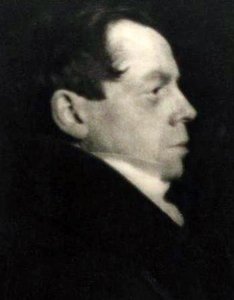
Sir William Nicholson
1872 - 1949 , Royaume-Uni
En bref
- Date De Décès: 1949
- Date De Naissance: 5 février 1872
- Influences Artistiques: ['Whistler']
- Lieu De Naissance: Newark, Royaume-Uni
- Nationalité: Britannique
- Nom Complet: Sir William Nicholson
- Oeuvres Notables:
- Lady in Furs, Mme P.
- The Lowestoft Bowl
- Study for 'Plaza de Toros'
- Style Artistique: Portrait, nature morte, woodcut
Articles similaires
Thomas Hudson: A Study in 18th-Century Portraiture & British Artistic Identity
Explore the life & work of Thomas Hudson, a leading 18th-century British portraitist. Discover his mastery of the 'Grand Manner,' influential style, and lasting impact on British art. Learn about his notable portraits like Judge William Noel & Alexander Van Aken.
Thomas Barker of Bath: Landscape Painting & Societal Reflection in Early 19th-Century England
Explore the life & work of Thomas Barker of Bath, a key figure in 19th-century English Romanticism. Discover his Parisian success, iconic paintings like 'The Bride of Death', and lasting artistic legacy. Learn more at OriginalUniqueArt.
Thomas Daniell: Navigating Light, Landscape & Cultural Exchange in Early 19th-Century India
Explore the captivating landscapes of Thomas Daniell, a pioneering artist who documented India's beauty in the 19th century. Discover his 'Oriental Scenery,' aquatint technique & lasting legacy. Hand-painted reproductions available at OriginalUniqueArt.
Sir William Nicholson: A Study in Post-Impressionist Portraiture & Decorative Modernism
Explore the life & work of Sir William Nicholson, a pivotal British Post-Impressionist painter. Discover his striking portraits, innovative woodcuts, and lasting influence on early 20th-century art. Expert insights for collectors.

Les 10 Chefs-d'œuvre du XIXe Siècle : Artistes et Décor Intemporels
Plongez au cœur du XIXe siècle avec les 10 œuvres incontournables de Manet, Monet et Renoir. Découvrez l'histoire, les techniques et l'émotion derrière ces chefs-d'œuvre impressionnistes et réalistes. Trouvez votre reproduction idéale sur OriginalUniqueArt.com !