Aperçu en situation
 Partager
 Partager
 Détails
 Guide imprimable

 Télécharger
 Articles similaires
 Radiographie
 Voir le diaporama
 Statistiques
George IV
 Oil On Canvas
- WallArt
- Regency Portraiture
 1822
1822- 19th Century
 271.0 x 179.0 cm
 Wallace Collection
 Afficher la suite
Reproduction à l'huile faite à la main
Huile sur toile peinte à la main, avec cadre et dimensions personnalisés, réalisée sur commande par nos artistes. ( Passer au format impression Passer au format image numérique)




P118B €10

P118H €10

P118W €10

P438Z €10

P508JH €12

P508YH €12

P805H €10

P805Z €10

P919BZ €10

P919G €10

P919XJ €10

P959ZH €10

P968JZ €12

W106C €8

W218G €10

W218JH €8

W218Y €10

W307PJ €10

W316G €10

W316PJ €8

W316Y €10

W398PJ €8

W4111J €10

W500HY €15

W500JH €15

W692G €12

W849H €8

W940BG €15

W953PJ €8




Choisissez parmi nos formats prédéfinis qui respectent les proportions originales de l’œuvre.

Vous pouvez saisir vos propres dimensions pour l'adapter à un cadre ou à un espace spécifique. Si la taille sélectionnée ne correspond pas aux proportions de l'image d'origine, nous recadrerons l'œuvre ou prolongerons la peinture avec des éléments peints à la main supplémentaires. Une maquette numérique vous sera envoyée pour approbation avant le début de la production.
Veuillez noter que l'aperçu à l'écran ne reflète pas le recadrage ou l'extension réels. Seule la maquette montrera fidèlement la composition finale.
Bien que des tailles personnalisées soient disponibles, nous vous recommandons de sélectionner une dimension dans la liste prédéfinie afin de préserver les proportions d'origine.
Après la commande, l’équipe OriginalUniqueArt.com contactera le client par e-mail pour recueillir ses instructions et lui fournira une maquette d’aperçu
Livraison dans le monde entier () en 3 à 4 semaines au lieu des 5 semaines habituelles. (10 octobre). Aucun compromis sur la qualité.

Livraison express gratuite dans le monde entier

Toile de lin de haute qualité

Assurance transport complète

Garantie de remboursement des droits de douane

Garantie de fidélité des couleurs

Garantie de retour de 100 jours (uniquement en cas de défaut)

Garantie de remboursement à 100%

Tarifs dégressifs sur quantité
 L'option verre n'est disponible que pour les dimensions inférieures à 110 cm.

George IV
Technique de reproduction
Format de la reproduction
-


Prix total final
€ 259
A Vision of Regency Majesty
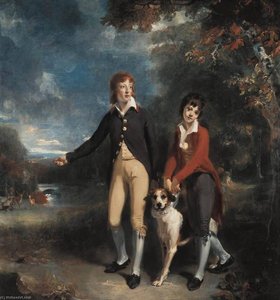
To stand before Sir Thomas Lawrence’s “George IV” is to be transported directly into the opulent drawing rooms of early nineteenth-century England, where every brushstroke whispers of a bygone era of unparalleled grandeur. Painted in 1822, this monumental portrait is far more than a mere likeness of a monarch; it is a carefully constructed tableau vivant designed to evoke the very essence of royal authority and aristocratic refinement. Lawrence, a master of the Regency period, captures King George IV not just as a man, but as a symbol of stability and prestige during a time of profound political transformation. The portrait radiates an aura of confidence, inviting the viewer to witness the zenith of the British monarchy through a lens of idealized splendor.
The subject himself, known for his flamboyant tastes and theatrical presence, is presented with a commanding dignity that belies the complexities of his reign. Lawrence utilizes a formal composition, mirroring the grand traditions of royal portraiture, yet infuses it with a Romantic vitality that feels strikingly modern. The King stands as a pillar of power against a backdrop of deep, crimson drapery—a bold choice that serves as both a visual anchor and a symbolic representation of imperial dominion. This rich, heavy curtain frames the monarch, creating a sense of theatrical intimacy that draws the eye toward the intricate details of his royal attire.
The Mastery of Light and Texture
What truly distinguishes this work is Lawrence’s extraordinary technical prowess, particularly his use of the glazing technique. By applying thin, translucent washes of color over successive layers, the artist achieved a luminous quality in the skin tones that seems to glow from within. This meticulous process allows for subtle gradations of light and shadow, sculpting the planes of the King's face with an almost ethereal softness. The interplay of light is nothing short of masterful; it catches the gleam of gold ornaments and highlights the crispness of fine lace, creating a tactile experience for the observer.
For the discerning collector or interior designer, the painting offers a feast of textures that can elevate any space. One can almost feel the weight of the velvet, the smoothness of the silk, and the intricate embroidery of the royal sash. Lawrence’s ability to render these varying surfaces—from the matte finish of skin to the reflective sheen of polished regalia—demonstrates an observational acuity that was unparalleled in his time. This attention to detail ensures that a high-quality reproduction of this piece retains its profound depth, making it a breathtaking focal point for a sophisticated gallery or a stately home.
An Enduring Legacy of Elegance
Beyond the technical brilliance, the emotional impact of “George IV” lies in its ability to evoke nostalgia for an age of elegance and unashamed luxury. The portrait serves as a window into the Regency era, a period defined by both social reform and an unapologetic embrace of beauty. There is a palpable sense of drama in the composition, a tension between the rigid formality of the pose and the vibrant, swirling energy of the surrounding fabrics. It is a piece that commands attention, demanding that the viewer acknowledge the weight of history and the enduring allure of royal iconography.
Incorporating such a masterpiece into a contemporary interior provides more than just decoration; it introduces a narrative of heritage and prestige. Whether placed in a library filled with leather-bound volumes or as a centerpiece in a modern, minimalist hall, the portrait brings a sense of historical gravity and artistic soul. It remains an essential acquisition for those who appreciate art that does not merely decorate a room but transforms its very atmosphere into one of timeless sophistication.
Questions et réponses
Les couleurs de «George IV» de Thomas Lawrence sont-elles saturées ou atténuées ?
Les couleurs de «George IV» de Thomas Lawrence présentent une saturation Subtle Color. La saturation décrit si les couleurs sont vives ou atténuées.
Quel âge avait Thomas Lawrence lors de la création de « George IV » ?
Thomas Lawrence avait 53 ans lors de la création de « George IV » en 1822. L'âge est calculé à partir de l'année de naissance de l'artiste, 1769.
Quand "George IV" a-t-il été créé, et à quel mouvement appartient-il ?
«George IV» a été réalisé en 1822, au sein du mouvement Regency Portraiture.
Avec quelle technique «George IV» de Thomas Lawrence est-elle réalisée ?
« George IV » est réalisé en Oil On Canvas.
Comment le médium et le mouvement se conjuguent-ils dans « George IV » ?
«George IV» de Thomas Lawrence allie la technique de Oil On Canvas au style Regency Portraiture. La technique et le mouvement décrivent respectivement la réalisation et le style de l'œuvre.
À quel artiste est attribuée l'œuvre "George IV" ?
« George IV » est attribué à Thomas Lawrence.
Quelle est la date de création de «George IV» de Thomas Lawrence ?
«George IV» date de 1822. Cette date inscrit l'œuvre dans la carrière de Thomas Lawrence ainsi que dans son époque.
Biographie de l'artiste
Première Vie et Éducation
- Né: Bristol, Royaume-Uni, 13 avril 1769
- Décédé: Londres, 7 janvier 1830
- Parents: Thomas Lawrence (superviseur des droits d'accises) et Lucy Read.
- Talent Précoce: A fait preuve d'un talent artistique prodigieux dès son plus jeune âge, commençant à dessiner vers l'âge de dix ans.
- Auto-didacte: Principalement auto-didacte, bien qu’il ait reçu une certaine instruction en français et en latin.
- Soutien Familial: A initialement soutenu sa famille grâce à des portraits au pastel tout en vivant à Bath.
- Déménagement à Londres: S'est installé à Londres à l'âge de 18 ans et s'est rapidement forgé une réputation de peintre portraitiste.
Carrière et Développement Artistique
- Premières Commandes: A reçu sa première commande royale, un portrait de la reine Charlotte, en 1789.
- Adhésion à la Royal Academy: Est devenu Associé de la Royal Academy en 1791 et membre à part entière en 1794.
- Président de la Royal Academy: A siégé comme président de la Royal Academy à partir de 1820.
- Portraits de la Chambre de Waterloo: A été commandé pour peindre des portraits des chefs alliés pour la Chambre de Waterloo au château de Windsor, mettant en valeur son talent et obtenant une reconnaissance internationale.
- Style et Technique: Connu pour sa capacité à capturer les traits et sa maîtrise virtuose de la peinture. Influencé par Sir Joshua Reynolds. Son style a peu évolué tout au long de sa carrière.
- Sujets: Se concentrait principalement sur le portrait, dépeignant la noblesse, la royauté et des personnalités importantes de l'époque Regency.
Réalisations Majeures et Reconnaissance
- Peintre Portraitiste le Plus à la Mode: Considéré comme l’un des peintres portraitistes les plus à la mode en Europe à son époque.
- Mécénat Royal: A bénéficié d'un généreux mécénat du Prince Régent (plus tard roi George IV).
- Acclamation Internationale: Son œuvre a été exposée au Salon de Paris de 1824, obtenant l’admiration des artistes français comme Delacroix.
- Implication dans la National Gallery: A joué un rôle dans la fondation de la National Gallery et l'acquisition des marbres d'Elgin pour la Grande-Bretagne.
- Honneurs: A été anobli en 1815.
Influences et Héritage
- Sir Joshua Reynolds: Une influence significative sur le développement précoce de Lawrence en tant que peintre portraitiste.
- Anciens Maîtres: A étudié intensivement les dessins des Anciens Maîtres, notamment ceux de Michel-Ange et Raphaël.
- Romantisme: Son œuvre reflétait le glamour de l'époque Regency et s'alignait sur les idéaux artistiques romantiques.
- Déclin à l’Ère Victorienne: La réputation de Lawrence a diminué pendant la période victorienne, mais elle a depuis été partiellement restaurée.
- Impact Durable: Reste une figure importante dans l'histoire de l'art britannique, célébré pour son talent, son charme et sa capacité à capturer l'essence de ses sujets.
Controverses et Vie Personnelle
- Difficultés Financières: Malgré son succès, Lawrence a passé une grande partie de sa vie endetté.
- Relations Complexes: A eu des relations tortueuses avec Sally et Maria Siddons.
- Liens avec les Sitter : Ses modèles comprenaient à la fois des propriétaires d'esclaves et des abolitionnistes, reflétant le paysage social complexe de son époque.

Thomas Lawrence
1769 - 1830 , Royaume-Uni
En bref
- Artistes Influents: ['Sir Joshua Reynolds']
- Date De Décès: 7 janvier 1830
- Date De Naissance: 13 avril 1769
- Lieu De Naissance: Bristol, Royaume-Uni
- Mouvement Artistique: Portraiture Regency
- Nationalité: Britannique
- Nom Complet: Sir Thomas Lawrence
- Oeuvres Notables:
- Portrait de Charlotte
- Chambre de Waterloo
Articles similaires

Thomas Phillips: Portraiture, Patronage & the Rise of Victorian Society Art
Explore the life & work of Thomas Phillips (1770-1845), a leading Victorian portrait painter renowned for his captivating portrayals of Britain's 'men of genius'. Discover his artistic journey, patronage, and lasting legacy.

Sir Thomas Lawrence: Portraiture, Power & Regency Society's Aesthetics
Explore the captivating world of Sir Thomas Lawrence, Regency England's premier portraitist. Discover his artistic techniques, powerful representations of society, and enduring legacy. Expert insights for discerning art collectors.
Thomas George Webster: Navigating Genre Boundaries & American Identity in 19th-Century Landscape Painting
Explore the captivating genre scenes of Thomas George Webster, a Victorian painter bridging British traditions with American themes. Discover his style, influences & legacy in 19th-century art history.

Georges Seurat : Les 25 Œuvres Maîtresses du Pointillisme | OriginalUniqueArt
Plongez dans l'univers lumineux de Georges Seurat ! Découvrez les 25 œuvres majeures du pointillisme, de 'Un dimanche après-midi à l'Île de la Grande Jatte' aux 'Poseuses'. Reproductions d'art exceptionnelles et inspiration déco sur OriginalUniqueArt.com.

Georges Braque : Les 25 Œuvres Maîtresses du Cubisme et de la Modernité | OriginalUniqueArt
Plongez dans l'univers de Georges Braque avec les 25 œuvres incontournables du cubisme. Découvrez l'histoire, les techniques et l'impact de ce maître de l'art moderne. Reproductions d'art exceptionnelles sur OriginalUniqueArt.com.