Format du texte

() ·

Une peinture faite pour vous, à la main

Munitions, Newcastle

Reproduction à l'huile faite à la main

Huile sur toile peinte à la main, avec cadre et dimensions personnalisés, réalisée sur commande par nos artistes. ( Passer au format impression Passer au format numérique)

Description de la pièce

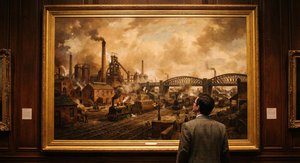
Sir John Lavery's "Munitions, Newcastle" (1917) captures the industrial heart of wartime Britain – a bustling munitions factory scene brimming with activity and raw determination.

Biographie de l'artiste

Sir John Lavery (1856-1941) : peintre irlandais de portraits élégants et de scènes de guerre, capturant l'époque édouardienne avec talent et sensibilité.

à partir du ·

Chapitre 1

Quelle dimension choisir ?

Faites glisser pour modifier la taille ; l'image de gauche présente le cadre à sa largeur réelle. Les proportions de l'original sont conservées.

Format standard
sur mesure
CM
INCH

Choisissez parmi nos formats prédéfinis qui respectent les proportions originales de l’œuvre.

largeur
hauteur

Saisissez la largeur et la hauteur souhaitées, pour s'adapter à votre cadre ou à votre mur. Cette œuvre est peinte à la main ; ainsi, pour un format de forme différente, l'artiste peut peindre un peu plus autour du tableau ou réduire légèrement les bords — c'est vous qui choisissez. Nous vous envoyons une maquette numérique pour approbation avant que la peinture ne commence. L'image présentée sur cette page ne reflète pas le résultat réel — seule la maquette le fait.

Chapitre 2

Comment souhaitez-vous qu'il vous soit livré ?

Choisissez le type de bordure pour votre toile tendue

Choisissez votre cadre

Corner sample of the WhiteWrap canvas edge finish, stretched on bois massif bars
Bords blancs €1
Corner sample of the BlurSideWrap canvas edge finish, stretched on bois massif bars
Bords estompés €1
Corner sample of the ExtendedWrap canvas edge finish, stretched on bois massif bars
Bords imprimés €1
Corner sample of the P118B picture frame: polystyrène moulé, 5 cm wide and 3 cm thick
P118B €10
Corner sample of the P118H picture frame: polystyrène moulé, 5 cm wide and 3 cm thick
P118H €10
Corner sample of the P118W picture frame: polystyrène moulé, 5 cm wide and 3 cm thick
P118W €10
Corner sample of the P438Z picture frame: polystyrène moulé, 5.5 cm wide and 3.5 cm thick
P438Z €10
Corner sample of the P508JH picture frame: polystyrène moulé, 7 cm wide and 3.5 cm thick
P508JH €12
Corner sample of the P508YH picture frame: polystyrène moulé, 7 cm wide and 3.5 cm thick
P508YH €12
Corner sample of the P805H picture frame: polystyrène moulé, 5 cm wide and 3.5 cm thick
P805H €10
Corner sample of the P805Z picture frame: polystyrène moulé, 5 cm wide and 3.5 cm thick
P805Z €10
Corner sample of the P919BZ picture frame: polystyrène moulé, 7 cm wide and 3.5 cm thick
P919BZ €10
Corner sample of the P919G picture frame: polystyrène moulé, 7 cm wide and 3.5 cm thick
P919G €10
Corner sample of the P919XJ picture frame: polystyrène moulé, 7 cm wide and 3.5 cm thick
P919XJ €10
Corner sample of the P959ZH picture frame: polystyrène moulé, 5 cm wide and 3 cm thick
P959ZH €10
Corner sample of the P968JZ picture frame: polystyrène moulé, 6 cm wide and 4 cm thick
P968JZ €12
Corner sample of the W106C picture frame: bois massif, 5 cm wide and 3 cm thick
W106C €8
Corner sample of the W218G picture frame: bois massif, 5 cm wide and 3 cm thick
W218G €10
Corner sample of the W218JH picture frame: bois massif, 5 cm wide and 3 cm thick
W218JH €8
Corner sample of the W218Y picture frame: bois massif, 5 cm wide and 3 cm thick
W218Y €10
Corner sample of the W307PJ picture frame: bois massif, 6 cm wide and 3 cm thick
W307PJ €10
Corner sample of the W316G picture frame: bois massif, 6 cm wide and 3 cm thick
W316G €10
Corner sample of the W316PJ picture frame: bois massif, 6 cm wide and 3 cm thick
W316PJ €8
Corner sample of the W316Y picture frame: bois massif, 6 cm wide and 3 cm thick
W316Y €10
Corner sample of the W398PJ picture frame: bois massif, 5 cm wide and 3 cm thick
W398PJ €8
Corner sample of the W4111J picture frame: bois massif, 6.5 cm wide and 3.5 cm thick
W4111J €10
Corner sample of the W500HY picture frame: bois massif, 7 cm wide and 5 cm thick
W500HY €15
Corner sample of the W500JH picture frame: bois massif, 7 cm wide and 5 cm thick
W500JH €15
Corner sample of the W692G picture frame: bois massif, 8 cm wide and 4 cm thick
W692G €12
Corner sample of the W849H picture frame: bois massif, 5 cm wide and 3 cm thick
W849H €8
Corner sample of the W940BG picture frame: bois massif, 7.5 cm wide and 4.5 cm thick
W940BG €15
Corner sample of the W953PJ picture frame: bois massif, 6 cm wide and 3.5 cm thick
W953PJ €8
Corner sample of the H24-GOLD picture frame: bois sculpté et apprêté au gesso, 10 cm wide and 6 cm thick
H24-GOLD €30
Corner sample of the H24-SILVER picture frame: bois sculpté et apprêté au gesso, 10 cm wide and 6 cm thick
H24-SILVER €30
Corner sample of the H36-GOLD picture frame: bois sculpté et apprêté au gesso, 15 cm wide and 6.5 cm thick
H36-GOLD €45
Corner sample of the H36-SILVER picture frame: bois sculpté et apprêté au gesso, 15 cm wide and 6.5 cm thick
H36-SILVER €45
Aperçu du cadre
Sous cadre

Baguette : . Dimensions hors tout avec le cadre : .

Chapitre 3

Qui le peint, et y a-t-il des modifications à apporter ?

Exemples de personnalisation possibles : Remplacer le visage par la photo du client ; Ajouter un animal (ex: remplacer le chat par un chien) ; Inclure un message caché en arrière-plan ; Modifier le paysage ou les éléments de l'arrière-plan.
Après la commande, l'équipe de OriginalUniqueArt.com contactera le client par e-mail pour obtenir ses instructions et lui fournir un aperçu de la maquette

Livraison dans le monde entier () en 3 à 4 semaines au lieu des 5 semaines habituelles. (4 novembre). Aucun compromis sur la qualité.

Chapitre 4

Les dernières touches

Une plaque nominative, comme au musée ?

Détails de la plaque en bronze gravée

This elegant plaque features the artist's name and the title of the artwork, finely engraved for a timeless presentation.

It is made from bronze with a refined, elegant finish. The text is precisely laser-engraved for a sharp and permanent result. Measuring 9x2 cm, the plaque is compact yet easy to read. It's built to be durable and scratch-resistant, offering a professional, museum-quality look. Mounting is simple thanks to the included adhesive backing.

Détails de la plaque en acrylique transparent

The plaque includes essential engraved details such as the artist's name, the title of the artwork, the date it was created, the type of media used-like oil on canvas or watercolor-a brief description of the piece, and a QR code that links to the complete artwork information.

It is crafted from clear acrylic, offering a sleek, modern appearance. The text is UV-engraved in black to ensure strong visual contrast. With a size of 10x15 cm, it ensures optimal readability. It comes equipped with two metal hooks for secure wall mounting. The plaque is designed to be weather-resistant, making it suitable for various environments, and it includes interactive features that work seamlessly with smartphone scanning.

Détails de la plaque en acrylique noir

This elegant plaque includes engraved information such as the artist's name, the title of the artwork, the date it was created, the type of media used (like oil on canvas or watercolor), a short description of the artwork, and a QR code for quick access to more information.

The plaque itself is made from refined black acrylic with a premium finish. The text is laser-engraved in white for high contrast and readability. Its size is 10x15 cm, designed to be easy to read. It comes with two metal hooks for professional mounting. The design is sleek and fits any interior style. It is also weather-resistant and durable, with built-in digital integration for mobile compatibility.

Un vernis protecteur ?

Pour quand en avez-vous besoin ?

Chapitre 5

Votre tableau, tel que vous l'avez commandé

Munitions, Newcastle

Technique de reproduction

Format de la reproduction

-

Artiste de prestige

Plus de détails, de finesse et un temps de production accru

-

Cadre de reproduction

-

-

Pour les œuvres ou reproductions dont un côté mesure plus de 105 cm (environ 41 pouces), le cadre sera expédié sous forme de kit démonté. Cette méthode garantit une livraison sécurisée et prévient tout dommage pendant le transport.

Assemblage professionnel requis - ce produit n'est pas destiné au bricolage (DIY).
Le kit doit être assemblé et la toile tendue par un encadreur professionnel expérimenté, en utilisant de la colle à bois (non fournie), une pince à tendre la toile et des serre-joints pour maintenir les traverses d'équerre pendant le séchage de la colle. Un assemblage incorrect ou une tension inégale de la toile peut endommager l'œuvre de manière irréversible et n'est pas couvert par notre garantie.

  • Toutes les baguettes en bois massif sont incluses, découpées avec précision à la taille requise.

  • À assembler avec les vis fournies, ainsi qu'avec de la colle à bois pour les assemblages d'angles (non fournie), à prévoir par votre encadreur.

  • L'utilisation d'outils professionnels est requise et non incluse : une pince à tendre la toile (tendeur) et des serre-joints pour maintenir les baguettes bien d'équerre pendant le séchage de la colle.

Important :
L'assemblage des angles nécessite de la colle à bois, les barres doivent être maintenues avec des serre-joints jusqu'au séchage complet de la colle, et le tendage de la toile sur le châssis assemblé nécessite une pince à tendre la toile. Aucun de ces éléments n'est inclus dans le kit. Veuillez consulter un encadreur professionnel expérimenté avant de commander ce format.

Cartel

-

-

Vernis de protection

Vernis brillant (intensifie les couleurs, protège de la lumière et de l'humidité)

-

Personnaliser mon œuvre

Exemples de personnalisation : remplacer le visage par une photo du client ; ajouter un animal de compagnie (par exemple, remplacer un chat par un chien) ; inclure un message caché en arrière-plan ; modifier le paysage ou les éléments d'arrière-plan.

-

Livraison urgente

Livraison dans le monde entier () en 3 à 4 semaines au lieu des 5 semaines habituelles. (4 novembre). Aucune concession sur la qualité.

-

Livraison express

Livraison dans le monde entier () sous 5 semaines. (11 novembre).

Inclus

Prix total

€ 267

Prix total € 267

L'option verre n'est disponible que pour les dimensions inférieures à 110 cm.

Inclus avec chaque commande

  • Livraison express gratuite dans le monde entier

  • Toile de lin de qualité supérieure
  • Assurance transport complète
  • Garantie de remboursement des droits de douane
  • Garantie de fidélité des couleurs
  • Politique de retour de 100 jours (uniquement en cas de défaut)
  • Garantie de remboursement à 100%
  • Offre de tarifs dégressifs

A Chronicle of Industry and Resilience: Lavery’s “Munitions, Newcastle”

Sir John Lavery's "Munitions, Newcastle," painted in 1917, is far more than a depiction of a factory floor; it’s a poignant snapshot of Britain’s wartime spirit, a testament to the tireless efforts of its workforce, and a masterful example of the artist’s evolving Impressionistic style. The painting immediately draws the eye into a vast, echoing space – an industrial heart beating with the rhythm of production during World War I. Lavery doesn't shy away from the gritty reality of the scene; instead, he embraces it, capturing the scale and intensity of the munitions factory in Newcastle with remarkable detail and emotional resonance. The composition is deliberately powerful, utilizing a strong horizontal axis defined by the towering overhead cranes that dominate the upper portion of the canvas. These aren’t merely mechanical structures; they become symbols of industry's relentless drive, reaching upwards towards an unseen goal – fueling the war effort.

Impressionistic Detail and Atmospheric Depth

Lavery’s brushwork is immediately striking, a hallmark of his Impressionistic approach. Loose, visible strokes create a sense of movement and immediacy, as if we are standing within this bustling factory ourselves. The artist skillfully employs light and shadow to build depth and atmosphere, bathing the scene in a warm, artificial glow emanating from the furnaces and strategically placed lamps. This isn’t a romanticized view; it's a deliberately realistic portrayal of an industrial environment, yet Lavery imbues it with a remarkable sense of drama. The muted palette – dominated by browns, grays, and ochres – reflects the utilitarian nature of the setting, while subtle hints of blue and white punctuate the scene, drawing attention to machinery and equipment, adding visual interest without overwhelming the overall mood. The figures themselves are rendered with sensitivity, capturing their focused expressions and purposeful movements as they navigate the complex network of operations.

A Window into Wartime Britain

“Munitions, Newcastle” offers a crucial glimpse into the lives of ordinary Britons during World War I. The painting’s creation coincided with a period of immense national mobilization, as factories across the country were retooled to produce weapons and supplies for the war effort. Lavery's decision to depict this specific factory – one involved in munitions production – highlights the vital role played by industrial workers in sustaining the Allied cause. The image speaks volumes about the sacrifices made by these individuals, who worked long hours under demanding conditions to contribute to a national endeavor. It’s a powerful reminder of the human cost of conflict and the collective effort required to overcome adversity. Further research reveals that Lavery was commissioned by William Burrell, a wealthy shipowner, to paint this scene, highlighting the significant patronage that supported British artists during wartime.

Symbolism and Emotional Resonance

Beyond its documentary value, “Munitions, Newcastle” is rich in symbolism. The sheer scale of the factory – dwarfing the human figures within it – underscores the overwhelming power of industrial production. The cranes, reaching towards the heavens, can be interpreted as symbols of ambition, progress, and the relentless pursuit of victory. The faces of the workers, etched with concentration and determination, embody the spirit of resilience and patriotism that characterized Britain during the war years. Lavery’s masterful use of light and shadow evokes a sense of urgency and drama, mirroring the anxieties and uncertainties of wartime. The painting ultimately serves as a poignant meditation on industry, sacrifice, and the enduring strength of the human spirit in the face of adversity – a timeless message rendered with remarkable skill and sensitivity by one of Britain's most celebrated portraitists.

Questions et réponses

Quelle est l'émotion qui se dégage de «Munitions, Newcastle» de Sir John Lavery ?

«Munitions, Newcastle» est empreint d'un sentiment Somber. La tonalité émotionnelle décrit l'impression qui se dégage de l'œuvre.

Quelle technique a été utilisée pour «Munitions, Newcastle» de Sir John Lavery ?

Sir John Lavery a utilisé la technique du Oil On Canvas pour « Munitions, Newcastle ». Cette technique définit la nature matérielle de l'œuvre originale.

«Munitions, Newcastle» de Sir John Lavery est-il une composition en portrait, en paysage ou carrée ?

«Munitions, Newcastle» de Sir John Lavery présente un format Portrait. Le format décrit les proportions de la composition.

En savoir plus sur cette peinture

Aperçu en situation Visualiser en RA Passer au format impression Passer au format numérique Envoyer
Détails de l'œuvre Guide Ajouter aux favoris Télécharger l'image Articles similaires Radiographie Diaporama Questions et réponses Statistiques

En chiffres

  • 1917l'année de création
  • 29cadres au choix
  • formats standards, dans leurs propres proportions
  • 5semaines de travail et de livraison
Sir John Lavery

Sir John Lavery

1856 - 1941, Irlande

Informations clés sur Sir John Lavery

  • Artistic Movement Or Style: Impressionnisme
  • Artists Who Influenced This Artist: ['James McNeill Whistler']
  • Date Of Birth: 20 mars 1856
  • Date Of Death: 10 janvier 1941
  • Full Name: Sir John Lavery
  • Nationality: Irlandais
  • Notable Artworks:
    • Michael Collins, Love of Ireland
    • Summer on the River
    • War Room – depicts surrender
    • Lady Lavery
    • The Artist’s Studio
    • A Visitor to the Studio
    • On the Loing: An Afternoon Chat
  • Place Of Birth: Belfast, Irlande

Biographie de l'artiste

Sir John Lavery : Une Vie Dédiée au Portrait et à la Société

  • Né: Belfast, Irlande (1856)
  • Décédé: 1941

Sir John Lavery RA était un peintre irlandais très respecté, renommé pour ses portraits captivants et ses représentations évocatrices de scènes de guerre. Né à Belfast, il a démontré un talent artistique dès son plus jeune âge, fréquentant l'Académie Haldane à Glasgow dans les années 1870 avant d'affiner davantage ses compétences à l'Académie Julian à Paris au début des années 1880.

Débuts de Carrière et Influences

Après son retour à Glasgow, Lavery s’est associé aux artistes de la School of Glasgow. Un moment décisif est survenu en 1888 lorsqu'il a reçu une commande pour peindre la visite d'État de la reine Victoria à l'Exposition Internationale de Glasgow. Cet engagement prestigieux a lancé sa carrière en tant que peintre mondain recherché, ce qui l’a incité à déménager à Londres peu après.

  • Influences Précoces : Lavery a été notablement influencé par James McNeill Whistler, comme en témoigne son style artistique et son approche du portrait.
  • Association avec la School of Glasgow : Son passage au sein de la School of Glasgow a favorisé une sensibilité esthétique distinctive qui a informé ses œuvres ultérieures.

Représentations de Guerre et Reconnaissance Officielle

Comme William Orpen, Lavery a été nommé artiste officiel pendant la Première Guerre mondiale. Cependant, des problèmes de santé persistants et un grave accident de voiture résultant d'un raid de Zeppelin l'ont empêché de servir sur le front occidental. Au lieu de cela, il s’est concentré sur la documentation des scènes de guerre au sein de la Grande-Bretagne, capturant des bateaux, des avions et des dirigeables.

  • Artiste Officiel : Malgré ses limitations, les contributions de Lavery en tant qu'artiste officiel ont fourni des archives visuelles précieuses d’une nation en guerre.
  • Œuvres Notables de Guerre : Sa série comprenait "Salle de Guerre – dépeint la reddition de la haute mer en 1918", "Munitions, Newcastle, 1917" et “Une Défense Côtière – un canon antiaérien de 18 livres, Tyneside, 1917.”

Vie Ultérieure et Héritage

Après la guerre, Lavery a été anobli et élu à la Royal Academy en 1921. Sa vie personnelle s'est entrelacée avec des événements historiques importants ; lui et sa femme, Hazel, ont joué un rôle discret dans la Guerre d'Indépendance irlandaise et la Guerre civile, mettant leur maison londonienne à disposition des négociateurs irlandais. Il a immortalisé Michael Collins avec son tableau "Michael Collins, Amour de l’Irlande", qui est maintenant exposé à la Hugh Lane Municipal Gallery.

  • Relations Anglo-irlandaises : L'implication des Lavery reflétait une relation complexe entre la Grande-Bretagne et l'Irlande pendant une période de bouleversements politiques intenses.
  • L’Influence de Hazel Lavery : Hazel Lavery, son épouse, est devenue un sujet fréquent dans ses peintures et a servi de figure allégorique de "l'Irlande" sur les billets de banque irlandais de 1928 à 1975.
  • Mécénat Généreux : Lavery a fait des dons importants de ses œuvres au Musée d’Ulster et à la Hugh Lane Municipal Gallery, consolidant ainsi son héritage dans l'art irlandais.

Style Artistique et Œuvres Clés

Le style artistique de Lavery mêlait des éléments de l'impressionnisme à un sens aigu pour capturer la personnalité et l’atmosphère. Ses portraits sont célébrés pour leur réalisme, leur élégance et leur portraitage perspicace du caractère. Il était également habile dans le fait de représenter des paysages et des scènes de la vie quotidienne.

  • Œuvres Clés : "L'Ouverture des Modernes Galeries d'Art Étranger et Sargent à la Tate Gallery, le 26 juin 1926," “Sur le Loing : Une Conversation dans l’Après-midi (également connu sous le nom de Sous le Cerisier),” "Un Visiteur au Studio", "Eileen, Sa Première Communion."
  • Thèmes Récurrents : Les portraits de figures importantes, les scènes de la société britannique et les représentations d’expériences de guerre étaient centraux dans son œuvre.

Informations clés

  • Movement: Scottish Impressionism
  • Location: Imperial War Museum
  • Medium: Oil on canvas
  • Artist: Sir John Lavery
  • Year: 1917
  • Dimensions: 63.5 x 76.2 cm

Quiz d'art

Chaque question ne comporte qu'une seule bonne réponse.

Question 1:
What is the primary subject depicted in John Lavery’s ‘Munitions, Newcastle’?
Question 2:
The painting ‘Munitions, Newcastle’ is primarily executed in which style?
Question 3:
What architectural element dominates the upper portion of ‘Munitions, Newcastle’?
Question 4:
In what year was ‘Munitions, Newcastle’ painted?
Question 5:
What does the painting ‘Munitions, Newcastle’ primarily aim to convey about World War I?