

 Aperçu en situation
 Envoyer
 Partager
 Détails de l'œuvre
 Guide
Guide

 Télécharger l'image
 Articles similaires
 Radiographie
 Diaporama
 Statistiques
Qajar #2
 Acrylic On Canvas
- WallArt
- Contemporary Photography
 1998
1998 30.0 x 40.0 cm
 Pergamonmuseum
 Lire la suite
L’œuvre d'art présentée sur cette page est protégée par le droit d'auteur, ce qui signifie que nous ne pouvons légalement créer ou vendre de reproduction identique. Cette protection est appliquée en vertu d'accords internationaux tels que la Convention de Berne et par les lois nationales, notamment celles énoncées par le Loi américaine sur le droit d'auteur - Titre 17.
Cette méthode est pleinement conforme aux réglementations sur le droit d'auteur car elle ne repose pas sur la copie ou la duplication de l'œuvre protégée. Il s'agit plutôt d'une réinterprétation créative — une nouvelle peinture qui s'inspire de l'original sans pour autant lui être identique.
Giclées et impressions d'art
Impressions giclées ou sur toile de qualité musée, avec une production rapide et des finitions au choix. ( Commander la reproduction peinte à la main Passer au format numérique)




P118B €10

P118H €10

P118W €10

P438Z €10

P508JH €12

P508YH €12

P805H €10

P805Z €10

P919BZ €10

P919G €10

P919XJ €10

P959ZH €10

P968JZ €12

W106C €8

W218G €10

W218JH €8

W218Y €10

W307PJ €10

W316G €10

W316PJ €8

W316Y €10

W398PJ €8

W4111J €10

W500HY €15

W500JH €15

W692G €12

W849H €8

W940BG €15

W953PJ €8




Choisissez parmi nos formats prédéfinis qui respectent les proportions originales de l’œuvre.

Saisissez la largeur et la hauteur souhaitées pour qu'elles s'adaptent à votre cadre ou à votre mur. Une impression peut être recadrée, mais jamais agrandie au-delà de l'image originale ; ainsi, un format de forme différente entraînera la perte d'une partie de l'image. Nous vous envoyons une maquette numérique pour approbation avant toute impression. L'image présentée sur cette page ne montre pas le recadrage réel — seule la maquette le permet.
Livraison dans le monde entier () en 2 semaines au lieu des 4/5 semaines habituelles. (25 octobre)

Livraison express gratuite dans le monde entier

Toile de lin de qualité supérieure

Assurance transport complète

Garantie de remboursement des droits de douane

Garantie de fidélité des couleurs

Politique de retour de 100 jours (uniquement en cas de défaut)

Garantie de remboursement à 100%

Offre de tarifs dégressifs
 L'option verre n'est disponible que pour les dimensions inférieures à 110 cm.

Qajar #2
Giclées et impressions d'art
Format de la reproduction
-


Prix total
€ 70
A Window into Domesticity: Unveiling the Layers of Qajar #2
Shadi Ghadirian’s “Qajar #2,” created in 1998, isn't merely a photograph; it’s a meticulously constructed tableau that invites profound reflection on Iranian society, tradition, and the evolving role of women. The image, rendered in stark black and white, presents two figures – likely family members – posed within a modestly furnished interior. Their attire, echoing the styles of the Qajar dynasty (1789-1925), immediately establishes a historical connection, yet their contemporary surroundings—a bookshelf laden with books, a glimpse of a modern appliance—create an arresting juxtaposition. This deliberate layering of past and present is central to Ghadirian’s artistic vision, prompting us to consider how tradition continues to shape the lives of women in Iran today.

The Qajar Legacy and the Artist’s Lens
Ghadirian's work is deeply rooted in the history of the Qajar dynasty, a period marked by both immense power and significant social upheaval. The Qajars ruled Iran from 1789 until 1925, ushering in an era of modernization while simultaneously clinging to traditional customs. The dynasty’s influence on Iranian culture is undeniable, particularly in its visual arts – architecture, textiles, and portraiture. Ghadirian consciously engages with this legacy, using the Qajar aesthetic as a framework for exploring contemporary issues. The choice of the Qajar style isn't simply decorative; it serves to highlight the enduring presence of these traditions within modern Iranian life, creating a subtle tension between the familiar and the unfamiliar.
Furthermore, Ghadirian’s work is informed by her own experiences as an Iranian woman navigating a complex cultural landscape. Her photographs often depict women in quiet moments of domesticity, subtly challenging conventional representations of female identity within Iranian society. The figures in “Qajar #2” are presented with a dignified reserve, their gazes averted, suggesting a certain guardedness—a characteristic that resonates deeply with the historical context and the artist’s own perspective.
Technique and Symbolism: A Delicate Balance
Ghadirian's mastery lies in her ability to create a sense of intimacy and immediacy through her photographic technique. The black-and-white medium lends itself perfectly to capturing subtle nuances of expression, texture, and light. The composition is carefully considered—the positioning of the figures, the arrangement of objects within the room—all contribute to a narrative that unfolds slowly and deliberately. Notice the deliberate use of props: the books on the shelf, hinting at education and intellectual pursuits; the glimpse of an appliance, representing the intrusion of modernity into the domestic sphere. These seemingly simple details carry significant symbolic weight.
The inclusion of Western elements—a hint of a Pepsi can, for example—is particularly striking. It’s a visual reminder of Iran's engagement with the global world and the ongoing negotiation between tradition and progress. The photograph itself feels like a carefully staged moment, capturing a fleeting glimpse into a private life.
Emotional Resonance: A Quiet Contemplation
“Qajar #2” is not an overtly dramatic or confrontational work; rather, it possesses a quiet intensity that lingers in the viewer’s mind. It evokes a sense of melancholy and contemplation—a feeling of being invited to witness a private moment suspended in time. The figures' averted gazes suggest a certain reserve, inviting us to imagine their stories, their hopes, and their anxieties. The photograph speaks volumes about the complexities of Iranian society, the enduring power of tradition, and the subtle yet profound changes that are shaping the lives of women within it. It’s an artwork that rewards careful observation and invites repeated viewing, revealing new layers of meaning with each encounter.
Questions et réponses
Quelle est la forme de «Qajar #2» de Shadi Ghadirian et quelles sont ses dimensions ?
«Qajar #2» de Shadi Ghadirian est une composition en Portrait mesurant 30 x 40 cm dans l'original.
Comment puis-je prévisualiser une reproduction de «Qajar #2» de Shadi Ghadirian ?
Pour prévisualiser une reproduction de «Qajar #2» de Shadi Ghadirian, consultez la page d'aperçu de l'œuvre : Aperçu en situation.
«Qajar #2» est-il l'une des œuvres les plus populaires de Shadi Ghadirian ?
«Qajar #2» de Shadi Ghadirian affiche un niveau de popularité Recognized. Cette classification témoigne de la reconnaissance de l'œuvre auprès du public.
Biographie de l'artiste
Une Vision Entre Deux Époques
Shadi Ghadirian s'impose comme une voix profonde de la photographie contemporaine, capturant les textures complexes de la vie à Téhéran. Née en 1974, son parcours artistique est intimement lié à ses expériences de femme musulmane naviguant dans les complexités de l'Iran post-révolutionnaire. Son œuvre constitue une méditation poignante sur l'équilibre délicat entre tradition et modernité, explorant les tensions silencieuses qui habitent les sphères domestique et publique. À travers son objectif, les contradictions du quotidien deviennent visibles, révélant les subtils tiraillements de l'identité culturelle et l'évolution du statut des femmes au sein d'une société en mutation rapide.
Le socle académique de Ghadirian a été posé à l'Université Islamique Azad, branche de Téhéran-Centre, où elle a étudié sous la direction de l'estimé Bahman Jalali. Cette période de formation formelle lui a apporté la maîtrise technique nécessaire pour exécuter des compositions hautement construites et symboliques. Sa pratique photographique ne relève pas de la simple documentation ; il s'agit d'un acte délibéré de subversion du portrait traditionnel afin de commenter la censure, la religion et la persistance de l'héritage face aux influences de la mondialisation.
Le Dialogue entre Tradition et Modernité
L'artiste a acquis une reconnaissance internationale majeure grâce à ses séries révolutionnaires, notamment Qajar et Like Every Day. Dans la série Qajar, créée en 1998, Ghadirian utilise avec maestria une technique qui évoque la photographie de studio formelle de la dynastie Qajar du XIXe siècle. En mettant en scène des portraits de femmes — souvent des amies et des membres de sa famille — dans des costumes élaborés et des poses rappelant cette époque, elle établit un lien historique immédiat avec le passé de l'Iran. Cependant, elle rompt brillamment ce sentiment d'antiquité en introduisant des accessoires occidentaux contemporains tels que des magnétophones, des canettes de Pepsi et des lunettes de soleil.
Cette juxtaposition délibérée crée une tension visuelle saisissante, agissant comme un raccourci pour illustrer les complexités d'une nation traversant une modernisation rapide tout en étant aux prises avec des traditions profondément ancrées. Ses œuvres ultérieures continuent d'explorer ces thèmes de l'identité et de la contradiction :
- Miss Butterfly : Une série qui explore les strates de l'identité féminine.
- Nil, Nil : Des œuvres offrant des observations silencieuses sur la réalité quotidienne et les nuances sociétales.
- Ctrl+Alt+Delete : Une exploration des mutations numériques et modernes de la culture.
- West by East : Une réflexion sur l'intersection des influences orientales et occidentales.
Symbolisme et Commentaire Social
Au-delà d'une esthétique frappante, le travail de Ghadirian est profondément symbolique, utilisant souvent des éléments minimalistes pour transmettre des messages profonds sur les contraintes imposées à la vie des femmes. Dans des pièces telles que Nil Nil #5, une scène simple mettant en scène un aspirateur et des sacs à main devient une distillation magistrale de la domesticité et des réalités discrètes de l'existence féminine. Sa capacité à trouver du sens dans le banal lui permet de critiquer les normes sociales et la complexité des stéréotypes négatifs sans avoir recours à une rhétorique politique explicite.
À travers ses diverses séries photographiques — incluant Be Colourful, My Press Photo et Out of Focus — elle a bâti un corpus d'œuvres qui transcende les frontières. Bien que son sujet soit ancré dans les spécificités de la vie iranienne, son exploration des rôles de genre, de la religion et de la lutte pour l'autonomie résonne auprès des femmes du monde entier. Ghadirian demeure une figure vitale de l'art contemporain, utilisant la caméra pour éclairer les intersections magnifiques, et souvent difficiles, entre l'histoire et le moment présent.

Shadi Ghadirian
1974 - , Iran
L'essentiel de l'artiste
- Artistic Movement Or Style: Photographie contemporaine
- Artists Who Influenced This Artist: ['Bahman Jalali']
- Date Of Birth: 1974
- Full Name: Shadi Ghadirian
- Nationality: Iranienne
- Notable Artworks:
- Qajar
- Like Every Day
- Nil Nil
- Miss Butterfly
- Place Of Birth: Téhéran, Iran
Articles connexes

The Lens of Truth: A Comprehensive History and Legacy of Documentary Photography
Explore the profound history of documentary photography. From early daguerreotypes to social reform movements, discover how the lens captures truth, preserves vanishing cultures, and shapes our global visual narrative through an expert art-historical lens.

Le Pictorialisme : Quête de l'Âme Artistique de la Photographie – Esthétiques, Techniques et Héritage
Explorez l'histoire du Pictorialisme, mouvement clé de la photographie artistique. Découvrez ses techniques (gum bichromate, bromoil), figures emblématiques et son héritage durable. Analyse approfondie par OriginalUniqueArt.

Monochrome Visions: Exploring the Aesthetic & Historical Significance of Black & White Photography
Explore the rich history & artistic power of black and white photography. From early techniques to iconic masters like Ansel Adams, discover why monochrome continues to captivate art lovers today. Expert insights for collectors.
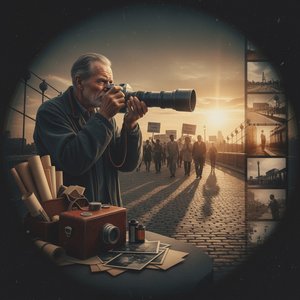
Witnessing History Through Lens & Light: Documentary Photography's Enduring Legacy
Explore the powerful history of documentary photography – from its origins to contemporary masters like Gordon Parks & W. Eugene Smith. Discover how this art form shapes our understanding of society and witness pivotal moments in time.

Beyond the Lens: Photography's Enduring Influence on Modern & Contemporary Art
Explore photography's pivotal role in shaping modern & contemporary art. Discover key movements, influential artists like Stieglitz, and expert collecting advice from OriginalUniqueArt.
