
 Aperçu en situation
 Envoyer
 Partager
 Détails de l'œuvre

 Télécharger
 Articles similaires
 Radiographie
 Diaporama
Untitled


 Lire la suite
Giclées et impressions d'art
Impressions giclées ou sur toile de qualité musée, avec une production rapide et des finitions au choix. ( Commander la reproduction peinte à la main Télécharger l'image haute résolution)




P118B $10

P118H $10

P118W $10

P438Z $10

P508JH $12

P508YH $12

P805H $10

P805Z $10

P919BZ $10

P919G $10

P919XJ $10

P959ZH $10

P968JZ $12

W106C $8

W218G $10

W218JH $8

W218Y $10

W307PJ $10

W316G $10

W316PJ $8

W316Y $10

W398PJ $8

W4111J $10

W500HY $15

W500JH $15

W692G $12

W849H $8

W940BG $15

W953PJ $8




Choisissez parmi nos formats prédéfinis qui respectent les proportions originales de l’œuvre.

Vous pouvez saisir vos propres dimensions pour vous adapter à un cadre ou à un espace spécifique. Si la taille sélectionnée ne correspond pas aux proportions de l'image originale, nous recadrerons l'œuvre ou étendrons l'image avec une bordure en miroir ou une couleur unie. Une maquette numérique vous sera envoyée pour approbation avant le début de la production.
Veuillez noter que l'aperçu à l'écran ne reflète pas le recadrage ou l'extension réelle. Seule la maquette montrera avec précision la composition finale.
Bien que des tailles personnalisées soient disponibles, nous vous recommandons de choisir une dimension dans la liste prédéfinie afin de préserver les proportions originales.
Livraison dans le monde entier () en 2 semaines au lieu des 4/5 semaines habituelles. (18 août)

Livraison express gratuite dans le monde entier

Toile de lin de qualité supérieure

Assurance transport complète

Garantie de remboursement des droits de douane

Garantie de fidélité des couleurs

Politique de retour de 60 jours (uniquement en cas de défaut)

Garantie de remboursement à 100%

Offre de tarifs dégressifs
 L'option verre n'est disponible que pour les dimensions inférieures à 110 cm.

Untitled
Giclées et impressions d'art
Format de la reproduction
-


Prix total
$ 80
Description de la pièce
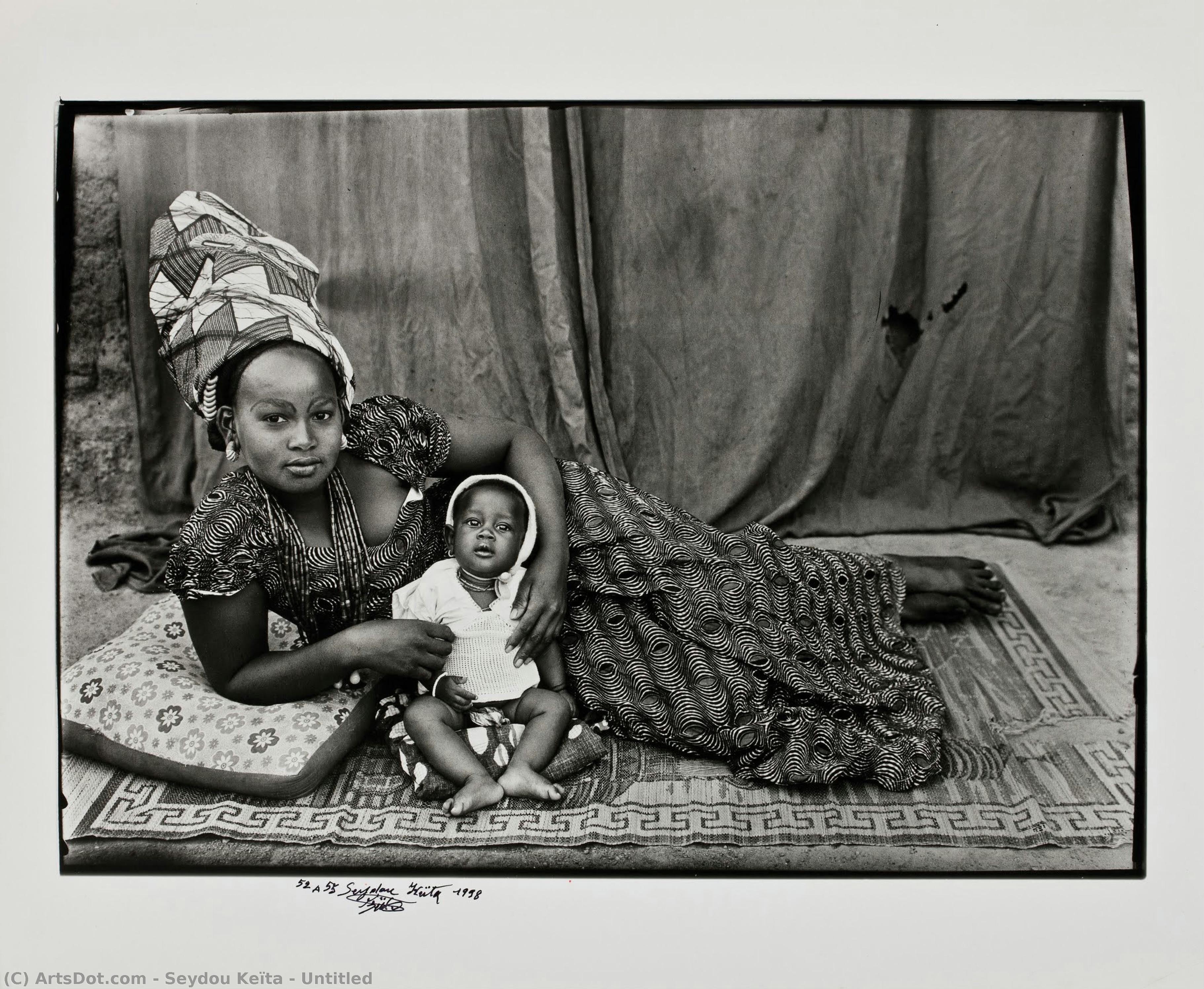
Seydou Keïta’s Timeless Portraits: Windows into a Changing Mali
The photograph presented here – often simply titled “Untitled” – is far more than just a portrait; it's a meticulously crafted window into the heart of 1950s Bamako, Mali. Captured by the visionary Seydou Keïta, a pivotal figure in African photography, this image embodies his signature style: a masterful blend of documentary realism and artistic elegance that simultaneously celebrates and preserves the cultural richness of his homeland. Keïta’s work wasn't merely about capturing likenesses; he sought to reveal character, history, and identity through carefully composed scenes, often utilizing simple yet profoundly effective backdrops – in this instance, a subtly patterned rug – to elevate the subjects and tell their stories.
Born around 1921 and tragically passing away in 2001, Keïta’s life coincided with an era of immense transformation for Mali. Emerging from colonial rule and navigating the complexities of independence, his photographic studio became a vital hub within Bamako's burgeoning community. He initially began as a carpenter, inheriting this craft from his father and uncle, but it was the gift of a Kodak Brownie camera in 1935 that truly ignited his artistic passion. This early encounter with photography shaped not only his career but also his approach to portraiture – he quickly developed a distinctive style characterized by direct engagement with his subjects, a focus on natural light, and an acute awareness of composition.
A Symphony of Light and Shadow: Technique and Composition
The photograph’s monochrome palette is not simply a stylistic choice; it's integral to Keïta’s technique. He expertly manipulated light and shadow to sculpt the forms of his subjects, creating a sense of depth and texture that transcends the limitations of black and white. The diffused lighting, likely originating from an external source – perhaps studio lights – avoids harsh contrasts, allowing subtle details in skin tones and clothing to emerge with remarkable clarity. The composition itself is remarkably balanced, drawing the eye directly to the woman and child at the center, while the slightly blurred figures in the background provide context without disrupting the primary focus.
Notice the deliberate use of lines – the geometric patterns of the rug beneath them, the folds of fabric, and even the subtle contours of their clothing. These lines aren’t merely decorative; they contribute to a sense of spatial depth and visual interest. Keïta's mastery lies in his ability to create a visually rich image with minimal elements, relying on careful observation and an intuitive understanding of photographic principles.
Symbolism and the Essence of Malian Culture
Beyond its technical merits, this photograph resonates deeply with themes of motherhood, family connection, and cultural heritage. The woman’s posture – leaning gently towards her child – immediately evokes feelings of tenderness and intimacy. The traditional African clothing she wears is not just a fashion statement; it's a powerful symbol of her identity and belonging, connecting her to generations past. Keïta wasn’t simply photographing individuals; he was documenting the soul of his community, capturing its spirit and preserving its traditions for posterity.
The photograph’s slightly aged appearance – evidenced by subtle grain and minor imperfections – adds a layer of authenticity and historical resonance. It speaks to the passage of time and the enduring power of Keïta's work. It’s a reminder that these images are not merely reproductions; they are tangible links to a specific moment in history, offering a glimpse into the lives of ordinary people in a rapidly changing world.
A Legacy Preserved: Reproduction and Artistic Impact
Seydou Keïta's work has had a profound impact on contemporary photography, influencing generations of artists. His pioneering approach to portraiture – emphasizing direct engagement with subjects, utilizing simple backdrops, and capturing the essence of cultural identity – continues to inspire photographers today. Reproductions like this one offer an accessible way to experience the beauty and significance of Keïta’s legacy, allowing us to appreciate his artistic vision and gain a deeper understanding of Malian culture.
The original photograph, measuring 40 x 53 cm, is a testament to Keïta's meticulous craftsmanship. It stands as a powerful reminder of the importance of preserving cultural heritage through art – a timeless image that continues to resonate with viewers around the world.
Biographie de l'artiste
Seydou Keïta : Un Portrait de la Mandingue Postcoloniale
Jeunesse et Débuts
- Né à Bamako, au Mali vers 1921 (la date exacte reste incertaine), Seydou Keïta est devenu une figure centrale de la photographie africaine.
- Son père et son oncle étaient des charpentiers qualifiés, ce qui a initialement influencé son propre travail artisanal.
- Un tournant s'est produit en 1935 lorsqu’il a reçu un appareil Kodak Brownie de son oncle après un voyage au Sénégal, déclenchant une passion pour la photographie qui durera toute sa vie.
- Il équilibrait la menuiserie avec la photographie, capturant initialement des portraits de sa famille et de ses amis avant d’élargir sa clientèle.
Ouverture d'un Studio et Développement Artistique
- Keïta a perfectionné ses compétences sous la direction de Pierre Garnier, propriétaire d’une boutique d’approvisionnement photographique française, et de Mountaga Traoré, un mentor dans le domaine.
- En 1948, il a ouvert son premier studio photo à Bamako-Koura, devenant un centre névralgique pour les portraits.
- Son style est rapidement devenu reconnaissable grâce à l’utilisation innovante de accessoires et de décors, créant des compositions saisissantes.
- Les portraits de Keïta ne se limitaient pas à des enregistrements ; ce étaient des représentations soigneusement construites du statut, de la modernité et de l'identité au sein d’un Mali en mutation.
Thèmes et Style
- Au cœur de son œuvre se trouve la documentation de la société bamakoise dans les années 1950 – une période de transition sociale et politique importante.
- Ses sujets, souvent vêtus de leurs plus belles tenues, incarnent un sentiment d’orgueil et d’aspiration.
- Il a habilement capturé à la fois des personnalités individuelles et des valeurs culturelles collectives.
- L'utilisation de décors à motifs et d'accessoires soigneusement choisis a ajouté des couches de signification à ses portraits, reflétant les aspirations et les goûts de ses modèles.
Carrière ultérieure et service gouvernemental
- En 1962, Keïta est passé au service du gouvernement, devenant photographe officiel du chef de la police malien et du directeur de la sécurité nationale.
- Ce rôle a entraîné la fermeture de son studio en 1963, marquant un changement dans sa focalisation photographique.
- Malgré son retrait de la photographie en 1977, Keïta est resté une figure respectée au sein du Mali.
Reconnaissance et héritage
- Reconnaissance internationale est arrivée en 1991 lorsque son travail a été exposé de manière anonyme au Center for African Art à New York City.
- L’expert en art André Magnin a joué un rôle crucial dans l'identification de Keïta et dans la mise en lumière de son vaste fichier de négatifs auprès d’un public plus large.
- De grandes rétrospectives, dont une au Grand Palais à Paris (2016), ont consolidé sa place en tant que figure majeure de la photographie du 20e siècle.
- L'héritage de Keïta réside dans sa capacité à capturer non seulement des ressemblances, mais aussi l’esprit d’une nation en proie à un changement profond, offrant des aperçus inestimables sur la vie et le style postcoloniale africains. Son travail continue d'inspirer les photographes et les amateurs d'art du monde entier.

seydou keïta
1921 - 2001 , Mali
L'essentiel de l'artiste
- Artistic Movement Or Style: Portraiture, Studio Photography
- Artists Who Influenced This Artist:
- Pierre Garnier
- Mountaga Traoré
- Date Of Birth: c. 1921
- Date Of Death: 2001
- Full Name: Seydou Keïta
- Nationality: Malian
- Notable Artworks:
- Untitled (woman)
- Untitled (two women)
- Place Of Birth: Bamako, Mali
Articles connexes

Beyond the Lens: Photography's Enduring Influence on Modern & Contemporary Art
Explore photography's pivotal role in shaping modern & contemporary art. Discover key movements, influential artists like Stieglitz, and expert collecting advice from OriginalUniqueArt.

Monochrome Visions: Exploring the Aesthetic & Historical Significance of Black & White Photography
Explore the rich history & artistic power of black and white photography. From early techniques to iconic masters like Ansel Adams, discover why monochrome continues to captivate art lovers today. Expert insights for collectors.

Le Pictorialisme : Quête de l'Âme Artistique de la Photographie – Esthétiques, Techniques et Héritage
Explorez l'histoire du Pictorialisme, mouvement clé de la photographie artistique. Découvrez ses techniques (gum bichromate, bromoil), figures emblématiques et son héritage durable. Analyse approfondie par OriginalUniqueArt.

Witnessing History Through Lens & Light: Documentary Photography's Enduring Legacy
Explore the powerful history of documentary photography – from its origins to contemporary masters like Gordon Parks & W. Eugene Smith. Discover how this art form shapes our understanding of society and witness pivotal moments in time.
The Lens of Truth: A Comprehensive History and Legacy of Documentary Photography
Explore the profound history of documentary photography. From early daguerreotypes to social reform movements, discover how the lens captures truth, preserves vanishing cultures, and shapes our global visual narrative through an expert art-historical lens.


