- Accueil

- Reproduction de peinture à l'huile
- Sébastien Bourdon
- Presentation in the Temple
 Commander l'impression Acheter l'image haute résolution
 Partager
 Partager
 Détails de l'œuvre
 Ajouter aux favoris

 Télécharger
 Articles similaires
 Radiographie
 Diaporama
Presentation in the Temple
 Oil On Canvas
- WallArt
- Baroque Painting
 1644
1644- Early Modern
 71.0 x 61.0 cm
 Musée du Louvre
 Afficher la suite
Reproduction à l'huile faite à la main
Huile sur toile peinte à la main, avec cadre et dimensions personnalisés, réalisée sur commande par nos artistes.




P118B $10

P118H $10

P118W $10

P438Z $10

P508JH $12

P508YH $12

P805H $10

P805Z $10

P919BZ $10

P919G $10

P919XJ $10

P959ZH $10

P968JZ $12

W106C $8

W218G $10

W218JH $8

W218Y $10

W307PJ $10

W316G $10

W316PJ $8

W316Y $10

W398PJ $8

W4111J $10

W500HY $15

W500JH $15

W692G $12

W849H $8

W940BG $15

W953PJ $8




Choisissez parmi nos formats prédéfinis qui respectent les proportions originales de l’œuvre.

Vous pouvez saisir vos propres dimensions pour l'adapter à un cadre ou à un espace spécifique. Si la taille sélectionnée ne correspond pas aux proportions de l'image d'origine, nous recadrerons l'œuvre ou prolongerons la peinture avec des éléments peints à la main supplémentaires. Une maquette numérique vous sera envoyée pour approbation avant le début de la production.
Veuillez noter que l'aperçu à l'écran ne reflète pas le recadrage ou l'extension réels. Seule la maquette montrera fidèlement la composition finale.
Bien que des tailles personnalisées soient disponibles, nous vous recommandons de sélectionner une dimension dans la liste prédéfinie afin de préserver les proportions d'origine.
Après la commande, l’équipe OriginalUniqueArt.com contactera le client par e-mail pour obtenir ses instructions et lui fournira une maquette d’aperçu.
Livraison dans le monde entier () en 3 à 4 semaines au lieu des 5 semaines habituelles. (23 juillet). Aucune concession sur la qualité.

Livraison express gratuite dans le monde entier

Toile de lin de haute qualité

Assurance transport complète

Garantie de remboursement des frais de douane

Garantie de fidélité des couleurs

Politique de retour de 60 jours (uniquement en cas de défaut)

Garantie de remboursement à 100%

Réduction sur les achats groupés
 L'option verre n'est disponible que pour les dimensions inférieures à 110 cm.

Presentation in the Temple
Technique de reproduction
Format de reproduction
-


Prix total final
-
Description de l'œuvre
A Moment of Divine Revelation in Baroque Light
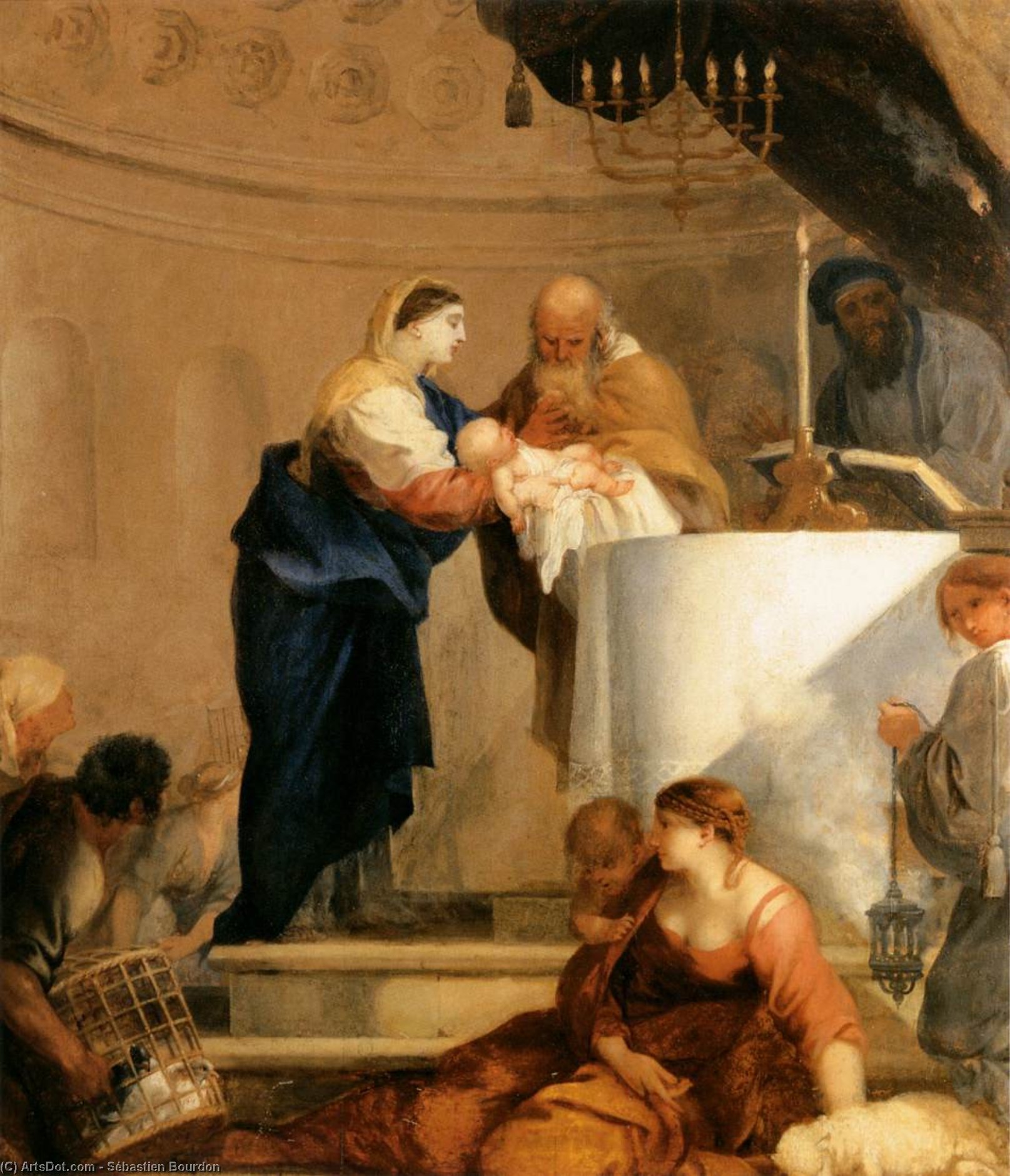
To stand before this depiction of Presentation in the Temple is to be enveloped by the dramatic chiaroscuro that defined the height of the Baroque era. Sébastien Bourdon, a master whose brushstrokes seem imbued with palpable emotion, captures not merely an event, but a profound spiritual moment. The scene unfolds with an immediacy that pulls the viewer directly into the sacred gathering. Observe the central grouping: the tender interaction between mother and child forms the emotional core, while surrounding figures participate in a tableau vivant of devotion. Bourdon’s handling of light is nothing short of miraculous; it does not simply illuminate the scene, it seems to emanate from the divine action itself, carving out figures from deep shadow with masterful precision.
Mastery of Baroque Drama and Composition
Bourdon, trained in the grand traditions that flowed from Rome, understood drama as a compositional element. This painting is a testament to his ability to merge narrative storytelling with technical brilliance. The composition guides the eye effortlessly across the figures—from the solemnity of the old man holding an infant, to the attentive gazes of those nearby. Even the inclusion of seemingly incidental elements, such as the two watchful dogs positioned on either side, adds a layer of grounded realism that anchors the spiritual weight of the subject matter. The placement of the chair near the center suggests both repose and ritual importance, subtly directing our focus toward the unfolding narrative.
Symbolism Woven into Sacred Detail
The symbolism within this work is rich and deeply resonant for the art connoisseur. The act of presentation itself speaks to themes of piety, lineage, and divine acknowledgment. Every gesture—the gentle touch, the upward gaze—is weighted with theological meaning. In Baroque art, animals often serve as silent witnesses or symbolic complements; here, the dogs may represent fidelity or the earthly connection to the sacred rite taking place. To own a reproduction of this piece is to invite into your space not just decoration, but contemplation—a visual meditation on faith and human connection.
Technique and Enduring Emotional Resonance
Executed in 1644, this work showcases Bourdon’s mature technique: a vibrant yet controlled palette used to heighten the emotional stakes. The texture suggested by the paint handling—the softness of drapery against the solidity of flesh—is breathtaking. For those who appreciate historical painting and the dramatic flair of the seventeenth century, this piece offers an unparalleled opportunity. It speaks to a time when art was not merely observed, but experienced; it demands participation from the viewer's heart. Reproducing such a work allows modern interiors to breathe with the grandeur and emotional depth of a Baroque masterwork.
Biographie de l'artiste
Sébastien Bourdon: A Baroque Master of Dramatic Light and Emotion
Sébastien Bourdon (1616 – 1671) stands as a pivotal figure in the flourishing artistic landscape of seventeenth-century France, embodying the grandeur and emotional intensity characteristic of the Baroque period. Born in Montpellier, France, he descended from a family steeped in artistic tradition—his father was a glass painter—and received an early education that instilled within him a profound appreciation for visual storytelling.
Bourdon’s formative years were marked by apprenticeship under Jean Baptiste Tourneyn, a Parisian painter who exposed him to the stylistic conventions of his time. Crucially, this training fostered a connection with the artistic currents emanating from Rome, where he embarked on a transformative journey in 1636. Inspired by luminaries such as Nicolas Poussin, Claude Lorrain, and Caravaggio—artists whose mastery captivated Bourdon’s imagination—he honed his skills amidst the intellectual fervor of the papal court.
Bourdon's artistic style is defined by its remarkable versatility and adaptability. While he excelled in portraiture, capturing subjects with sensitivity and nuance – often employing a Rubensian approach or favoring intimate bust-length portraits against muted backgrounds – he equally demonstrated prowess in monumental canvases imbued with Baroque drama. His most celebrated achievement remains “The Crucifixion of St. Peter,” commissioned for the cathedral of Notre Dame, a masterpiece that exemplifies Bourdon’s masterful command of chiaroscuro and his ability to convey profound spiritual emotion.
Other notable works include “The Deposition,” which showcases Bourdon's meticulous attention to detail and his capacity to depict scenes brimming with palpable pathos. His artistic output extended beyond religious commissions; he produced captivating landscapes reflecting the grandeur of the Italian countryside, demonstrating a broader engagement with humanist ideals.
Bourdon’s influence resonated throughout Europe, establishing him as a founding member of the Académie royale de peinture et de sculpture in Paris. He nurtured an extensive atelier, fostering the careers of numerous pupils who carried forward his artistic legacy. Bourdon's dedication to craft and unwavering pursuit of excellence cemented his place as one of the foremost painters of his era.
Bourdon’s enduring legacy resides not only in his impressive oeuvre but also in his role as a champion of Baroque aesthetics—a style characterized by theatrical lighting, dynamic compositions, and an expressive portrayal of human emotion. His paintings continue to inspire admiration for their technical brilliance and emotional depth, securing Bourdon's position as a cornerstone of French art history.

Sébastien Bourdon
1616 - 1671 , France
En bref
- Artistic Movement Or Style: Baroque
- Artists Who Influenced This Artist:
- Nicolas Poussin
- Claude Lorrain
- Caravaggio
- Date Of Birth: 2 février 1616
- Date Of Death: 8 mai 1671
- Full Name: Sébastien Bourdon
- Nationality: Francais
- Notable Artworks:
- La Crucifixion de Saint Pierre
- La Déposition
- Place Of Birth: Montpellier, France
Articles connexes
Claude Monet : Les 25 Chefs-d'Œuvre Impressionnistes à Redécouvrir | OriginalUniqueArt
Plongez dans l'univers impressionniste de Claude Monet ! Découvrez les 25 œuvres les plus célèbres du maître, de 'Impression soleil levant' aux 'Nymphéas'. Inspirez votre décoration intérieure avec OriginalUniqueArt.com et trouvez la reproduction parfaite.

Les 10 Chefs-d'œuvre Baroques qui ont Révolutionné l'Art |
Plongez au cœur du baroque avec les 10 chefs-d'œuvre de Caravaggio, Rembrandt et Rubens. Découvrez l'histoire fascinante de ces artistes et leurs tableaux célèbres. Reproductions d'art de qualité muséale sur – Explorez la collection !
Les 10 Chefs-d'œuvre Grisants : Peintures Célèbres et Décoration d'Intérieur
Plongez dans l'univers subtil des 10 plus beaux tableaux gris de l'histoire de l'art. Découvrez Monet, Van Gogh et d'autres maîtres et trouvez l'inspiration déco parfaite sur !

El Greco : Les 25 Chefs-d'Œuvre Incontournables pour une Décoration d'Exception
Plongez dans l'univers spirituel d'El Greco ! Découvrez les 25 œuvres incontournables du maître espagnol, de *L'Enterrement du Comte d'Orgaz* à ses portraits saisissants. Inspirez votre décoration intérieure avec des reproductions d'art exceptionnelles sur OriginalUniqueArt.com.
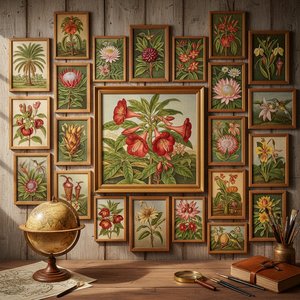
Marianne North : Les 25 Œuvres Maîtresses d'une Voyageuse en Couleurs | OriginalUniqueArt
Plongez dans l'univers coloré de Marianne North ! Découvrez ses 25 œuvres les plus emblématiques, des paysages exotiques aux fleurs peintes avec une précision botanique unique. Reproductions d'art de qualité supérieure sur OriginalUniqueArt.com.