- Accueil

- Reproduction de peinture à l'huile
- Sébastien Bourdon
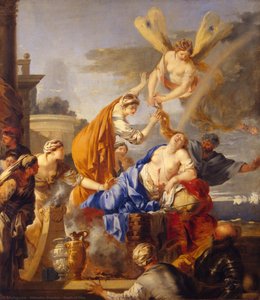
- Les mendiants

 Commander l'impression Acheter l'image haute résolution
 Partager
 Partager
 Détails de l'œuvre
 Ajouter aux favoris

 Télécharger
 Articles similaires
 Radiographie
 Diaporama
Les mendiants


 Afficher la suite
Reproduction à l'huile faite à la main
Huile sur toile peinte à la main, avec cadre et dimensions personnalisés, réalisée sur commande par nos artistes.




P118B $10

P118H $10

P118W $10

P438Z $10

P508JH $12

P508YH $12

P805H $10

P805Z $10

P919BZ $10

P919G $10

P919XJ $10

P959ZH $10

P968JZ $12

W106C $8

W218G $10

W218JH $8

W218Y $10

W307PJ $10

W316G $10

W316PJ $8

W316Y $10

W398PJ $8

W4111J $10

W500HY $15

W500JH $15

W692G $12

W849H $8

W940BG $15

W953PJ $8




Choisissez parmi nos formats prédéfinis qui respectent les proportions originales de l’œuvre.

Vous pouvez saisir vos propres dimensions pour l'adapter à un cadre ou à un espace spécifique. Si la taille sélectionnée ne correspond pas aux proportions de l'image d'origine, nous recadrerons l'œuvre ou prolongerons la peinture avec des éléments peints à la main supplémentaires. Une maquette numérique vous sera envoyée pour approbation avant le début de la production.
Veuillez noter que l'aperçu à l'écran ne reflète pas le recadrage ou l'extension réels. Seule la maquette montrera fidèlement la composition finale.
Bien que des tailles personnalisées soient disponibles, nous vous recommandons de sélectionner une dimension dans la liste prédéfinie afin de préserver les proportions d'origine.
Après la commande, l’équipe OriginalUniqueArt.com contactera le client par e-mail pour obtenir ses instructions et lui fournira une maquette d’aperçu.
Livraison dans le monde entier () en 3 à 4 semaines au lieu des 5 semaines habituelles. (22 juillet). Aucune concession sur la qualité.

Livraison express gratuite dans le monde entier

Toile de lin de haute qualité

Assurance transport complète

Garantie de remboursement des frais de douane

Garantie de fidélité des couleurs

Politique de retour de 60 jours (uniquement en cas de défaut)

Garantie de remboursement à 100%

Réduction sur les achats groupés
 L'option verre n'est disponible que pour les dimensions inférieures à 110 cm.

Les mendiants
Technique de reproduction
Format de reproduction
-


Prix total final
-
Description de l'œuvre
A Window into 17th-Century France: The Stark Realism of *Les Mendiants*
Sébastien Bourdon’s *Les Mendiants*, painted around 1645, isn't merely a depiction of beggars; it’s a meticulously crafted tableau that plunges the viewer directly into the heart of 17th-century France – a nation grappling with poverty, social injustice, and the lingering scars of war. This genre painting, housed within the hallowed halls of the Louvre Museum in Paris, transcends simple observation to become a poignant commentary on humanity’s vulnerability and the complexities of charity. Bourdon, deeply influenced by the artistic currents flowing from Rome – particularly the dramatic lighting and emotive storytelling championed by Caravaggio – masterfully utilizes composition, color, and line to evoke a powerful sense of empathy and social critique.
The scene unfolds within the ruins of an ancient structure, a deliberate choice that immediately establishes a mood of decay and transience. A group of mendicants—men, women, and children – are rendered with remarkable realism, their faces etched with hardship and desperation. They’re not idealized figures; Bourdon presents them as individuals, each bearing the marks of poverty and suffering. A subtle yet crucial element is introduced by a wheelbarrow positioned strategically in the foreground, hinting at labor, perhaps scavenging for scraps or transporting meager possessions – a visual representation of their struggle for survival. The composition itself is carefully balanced, drawing the eye towards the central archway that frames the crumbling backdrop, creating a sense of immediacy and inviting the viewer to contemplate the scene’s gravity.
The Language of Light and Shadow: Bourdon's Baroque Technique
Bourdon’s technical prowess is immediately apparent in his masterful manipulation of light and shadow. The painting is dominated by a diffused, natural light emanating from the left side, casting soft shadows that sculpt the figures and highlight certain areas of the ruins. This chiaroscuro effect – a hallmark of Baroque art – not only adds depth and volume but also intensifies the emotional impact of the scene. The muted earth tones—browns, grays, and creams—are skillfully blended to create a sense of atmospheric perspective, with distant elements appearing paler and less distinct. The brushstrokes are relatively smooth, contributing to a realistic representation of textures – from the rough fabrics of the beggars’ clothing to the weathered surfaces of the stone.
- Oil on Canvas: Bourdon's choice of medium—oil paint on canvas—allowed for rich color saturation and subtle gradations in tone, essential for achieving the painting’s nuanced realism.
- Linear Perspective: The use of linear perspective creates a convincing illusion of depth, drawing the viewer into the scene and emphasizing the vastness of the ruined landscape.
- Atmospheric Perspective: The subtle blurring of distant elements reinforces the sense of spatial recession and adds to the painting’s overall atmosphere.
Symbolism and Social Commentary
Beyond its technical brilliance, *Les Mendiants* is laden with symbolic meaning. The ruins themselves represent decay, loss, and the passage of time – a potent metaphor for the fragility of human existence. The mendicants, as figures soliciting alms, evoke feelings of pity, compassion, and social concern. Their presence serves as a stark reminder of the inequalities inherent in society and the responsibility of the wealthy to care for the less fortunate. The inclusion of the wheelbarrow subtly suggests the cycle of poverty and the constant struggle for survival. The painting’s overall mood is somber but not overtly tragic; it invites reflection rather than despair, prompting viewers to consider their own role in addressing social injustice.
A Legacy of Dramatic Realism
Bourdon's *Les Mendiants* stands as a pivotal work within the tradition of 17th-century Dutch genre painting and a significant precursor to later artistic movements. Its influence can be seen in works by Francisco Goya, who was known to have owned a copy of this painting. The scene’s stark realism, coupled with its powerful emotional resonance, cemented Bourdon's reputation as one of the most accomplished artists of his time – an artist capable of capturing not only the outward appearance of reality but also the underlying complexities of human experience.
Biographie de l'artiste
Sébastien Bourdon: A Baroque Master of Dramatic Light and Emotion
Sébastien Bourdon (1616 – 1671) stands as a pivotal figure in the flourishing artistic landscape of seventeenth-century France, embodying the grandeur and emotional intensity characteristic of the Baroque period. Born in Montpellier, France, he descended from a family steeped in artistic tradition—his father was a glass painter—and received an early education that instilled within him a profound appreciation for visual storytelling.
Bourdon’s formative years were marked by apprenticeship under Jean Baptiste Tourneyn, a Parisian painter who exposed him to the stylistic conventions of his time. Crucially, this training fostered a connection with the artistic currents emanating from Rome, where he embarked on a transformative journey in 1636. Inspired by luminaries such as Nicolas Poussin, Claude Lorrain, and Caravaggio—artists whose mastery captivated Bourdon’s imagination—he honed his skills amidst the intellectual fervor of the papal court.
Bourdon's artistic style is defined by its remarkable versatility and adaptability. While he excelled in portraiture, capturing subjects with sensitivity and nuance – often employing a Rubensian approach or favoring intimate bust-length portraits against muted backgrounds – he equally demonstrated prowess in monumental canvases imbued with Baroque drama. His most celebrated achievement remains “The Crucifixion of St. Peter,” commissioned for the cathedral of Notre Dame, a masterpiece that exemplifies Bourdon’s masterful command of chiaroscuro and his ability to convey profound spiritual emotion.
Other notable works include “The Deposition,” which showcases Bourdon's meticulous attention to detail and his capacity to depict scenes brimming with palpable pathos. His artistic output extended beyond religious commissions; he produced captivating landscapes reflecting the grandeur of the Italian countryside, demonstrating a broader engagement with humanist ideals.
Bourdon’s influence resonated throughout Europe, establishing him as a founding member of the Académie royale de peinture et de sculpture in Paris. He nurtured an extensive atelier, fostering the careers of numerous pupils who carried forward his artistic legacy. Bourdon's dedication to craft and unwavering pursuit of excellence cemented his place as one of the foremost painters of his era.
Bourdon’s enduring legacy resides not only in his impressive oeuvre but also in his role as a champion of Baroque aesthetics—a style characterized by theatrical lighting, dynamic compositions, and an expressive portrayal of human emotion. His paintings continue to inspire admiration for their technical brilliance and emotional depth, securing Bourdon's position as a cornerstone of French art history.

Sébastien Bourdon
1616 - 1671 , France
En bref
- Artistic Movement Or Style: Baroque
- Artists Who Influenced This Artist:
- Nicolas Poussin
- Claude Lorrain
- Caravaggio
- Date Of Birth: 2 février 1616
- Date Of Death: 8 mai 1671
- Full Name: Sébastien Bourdon
- Nationality: Francais
- Notable Artworks:
- La Crucifixion de Saint Pierre
- La Déposition
- Place Of Birth: Montpellier, France
Articles connexes

L'Âge d'Or Néerlandais : Splendeur Baroque et Révolution Artistique
Explorez l'Âge d'Or néerlandais : découvrez les maîtres baroques (Rembrandt, Fabritius) et leur révolution artistique. Analyse approfondie, contexte historique et héritage durable. Un voyage au cœur de la peinture du XVIIe siècle.
Jan Steen: A Master of Dutch Genre Painting & the Golden Age
Explore the life & art of Jan Steen, a leading Dutch Golden Age painter renowned for his humorous genre scenes & insightful social commentary. Discover his techniques, legacy, and collecting tips.
David Teniers the Younger: Genre Painting & Social Commentary in Baroque Flanders
Explore the captivating world of David Teniers the Younger, a leading Flemish Baroque painter. Discover his genre scenes, social commentary, and lasting influence on 17th-century art. Learn about his life, techniques & legacy.
La Peinture de Genre au Siècle d'Or Néerlandais : Reflets de la Vie Quotidienne et des Valeurs Sociétales
Explorez la richesse de la peinture de genre néerlandaise du Siècle d'Or ! Découvrez les maîtres (Vermeer, Ostade) et décryptez le symbolisme caché des scènes quotidiennes. Guide expert pour collectionneurs et amateurs d'art.
Adriaen van Ostade: A Master of Dutch Genre Painting & Social Commentary
Explore the life & work of Adriaen van Ostade, a leading Dutch Golden Age painter. Discover his realistic genre scenes, social commentary, and lasting influence on art history. Learn more at OriginalUniqueArt.