

 Aperçu en situation
 Partager
 Partager
 Détails

 Télécharger
 Articles similaires
 Radiographie
 Voir le diaporama
 Statistiques
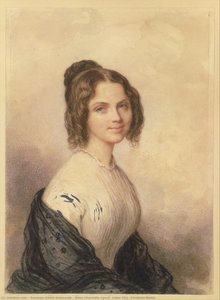
Henry Clay
 1845
1845 8.0 x 7.0 cm
 Afficher la suite
Giclées et impressions d'art
Impressions giclées ou sur toile de qualité musée, avec une production rapide et des finitions au choix. ( Acheter la peinture faite à la main Passer au format image numérique)




































Choisissez parmi nos formats prédéfinis qui respectent les proportions originales de l’œuvre.

Vous pouvez saisir vos propres dimensions pour vous adapter à un cadre ou à un espace spécifique. Si la taille sélectionnée ne correspond pas aux proportions de l'image originale, nous recadrerons l'œuvre ou étendrons l'image avec une bordure en miroir ou une couleur unie. Une maquette numérique vous sera envoyée pour approbation avant le début de la production.
Veuillez noter que l'aperçu à l'écran ne reflète pas le recadrage ou l'extension réelle. Seule la maquette montrera avec précision la composition finale.
Bien que des tailles personnalisées soient disponibles, nous vous recommandons de choisir une dimension dans la liste prédéfinie afin de préserver les proportions originales.
Livraison dans le monde entier () en 2 semaines au lieu des 4/5 semaines habituelles. (16 septembre)

Livraison express gratuite dans le monde entier

Toile de lin de haute qualité

Assurance transport complète

Garantie de remboursement des droits de douane

Garantie de fidélité des couleurs

Garantie de retour de 100 jours (uniquement en cas de défaut)

Garantie de remboursement à 100%

Tarifs dégressifs sur quantité
 L'option verre n'est disponible que pour les dimensions inférieures à 110 cm.

Henry Clay
Giclées et impressions d'art
Format de la reproduction
-


Prix total final
$ 80
Biographie de l'artiste
The Luminous Precision of Savinien Edme Dubourjal
In the delicate, translucent world of nineteenth-century portraiture, few artists possessed the ability to capture the psychological weight of a statesman with the same quiet grace as Savinien Edme Dubourjal. Born in Paris in 1795, Dubourjal emerged from the vibrant artistic atmosphere of France to become a master of watercolor and miniature painting. While his contemporaries often sought the grand, sweeping stages of the academic salons, Dubourjal carved out a distinguished niche through intimate commissions, focusing his gaze on the nuanced expressions of the era's most influential figures. His work serves as a window into a period of profound political transition, rendered with a technical finesse that turned mere likenesses into enduring historical documents.
The foundation of Dubourjal’s mastery can be traced back to his apprenticeship under Jean-Baptiste Camille Bouchardy, a respected watercolorist who imparted the essential secrets of the medium. From Bouchardy, Dubourjal learned that watercolor was not merely a tool for sketching, but a sophisticated vehicle for emotion and atmosphere. He mastered the art of building layers upon layers of translucent washes, a process requiring immense patience to achieve depth without obscuring the light. This training instilled in him a dedication to realism that was never clinical; rather, it was tempered by a Romantic sensitivity, allowing him to use subtle tonal gradations and soft edges to breathe life into his subjects.
A Bridge Between Continents and Cultures
Though deeply rooted in the French tradition, Dubourjal’s artistic legacy is inextricably linked to the American political landscape. His talent for capturing character made him a sought-after hand for portraits of prominent American statesmen, creating a visual dialogue between European technique and New World leadership. His ability to render the striking, unidealized features of figures such as John C. Calhoun demonstrates his commitment to truth in portraiture. In his depiction of Calhoun, Dubourjal utilized delicate cross-hatching and strategic touches of white gouache to emphasize the senator's piercing eyes and hollowed cheeks, eschewing flattery in favor of a profound, almost haunting, realism.
This connection to the American elite extended into the social fabric of New York’s literary and artistic circles. Through figures like Anne Charlotte Lynch—a pivotal salonnière whose home served as a gathering point for the era's intelligentsia—Dubourjal’s work found its way into the most influential collections in America. It is believed that artists such as George Peter Alexander Healy may have played a role in introducing Dubourjal to these vibrant social circles, further cementing his reputation as an artist capable of capturing both the political power and the social elegance of the mid-nineteenth century.
Technical Mastery and Lasting Legacy
The enduring allure of Dubourjal’s oeuvre lies in his technical command over the ephemeral qualities of watercolor. His approach to the medium was characterized by several key artistic elements:
- Luminous Layering: The use of multiple translucent washes to create an ethereal, glowing quality within the skin tones of his sitters.
- Textural Contrast: A sophisticated interplay between fine cross-hatching in backgrounds and the fluid, sinuous lines used for hair and drapery.
- Controlled Color: A disciplined use of pigment, often relying on a palette of subtle grays, blacks, and whites, punctuated by strategic bursts of color to draw the viewer's eye to the face.
- Psychological Depth: An ability to move beyond superficial likeness to capture the "inner" person, whether through the weary gaze of a politician or the delicate features of a socialite.
Savinien Edme Dubourjal passed away in 1853, leaving behind a body of work that remains a vital touchstone for historians and art lovers alike. His miniatures and watercolors do more than just document faces; they capture the very breath of an era. Through his meticulous observation and mastery of light, he ensured that the personalities of the nineteenth century would remain vibrant, luminous, and profoundly human for generations to come.
savinien edme dubourjal
1795 - 1853 , France
En bref
- Artistic Movement Or Style: Watercolor painting
- Date Of Birth: 1795
- Full Name: Savinien Edme Dubourjal
- Nationality: French
- Notable Artworks: ['John C. Calhoun']
- Place Of Birth: Paris, France