Aperçu en situation
 Partager
 Partager
 Détails
 Guide imprimable

 Télécharger
 Articles similaires
 Radiographie
 Voir le diaporama
 Statistiques
Primavera (Le Printemps)


 Afficher la suite
Giclées et impressions d'art
Impressions giclées ou sur toile de qualité musée, avec une production rapide et des finitions au choix. ( Acheter la peinture faite à la main Passer au format image numérique)




P118B €10

P118H €10

P118W €10

P438Z €10

P508JH €12

P508YH €12

P805H €10

P805Z €10

P919BZ €10

P919G €10

P919XJ €10

P959ZH €10

P968JZ €12

W106C €8

W218G €10

W218JH €8

W218Y €10

W307PJ €10

W316G €10

W316PJ €8

W316Y €10

W398PJ €8

W4111J €10

W500HY €15

W500JH €15

W692G €12

W849H €8

W940BG €15

W953PJ €8




Choisissez parmi nos formats prédéfinis qui respectent les proportions originales de l’œuvre.

Vous pouvez saisir vos propres dimensions pour vous adapter à un cadre ou à un espace spécifique. Si la taille sélectionnée ne correspond pas aux proportions de l'image originale, nous recadrerons l'œuvre ou étendrons l'image avec une bordure en miroir ou une couleur unie. Une maquette numérique vous sera envoyée pour approbation avant le début de la production.
Veuillez noter que l'aperçu à l'écran ne reflète pas le recadrage ou l'extension réelle. Seule la maquette montrera avec précision la composition finale.
Bien que des tailles personnalisées soient disponibles, nous vous recommandons de choisir une dimension dans la liste prédéfinie afin de préserver les proportions originales.
Livraison dans le monde entier () en 2 semaines au lieu des 4/5 semaines habituelles. (11 octobre)

Livraison express gratuite dans le monde entier

Toile de lin de haute qualité

Assurance transport complète

Garantie de remboursement des droits de douane

Garantie de fidélité des couleurs

Garantie de retour de 100 jours (uniquement en cas de défaut)

Garantie de remboursement à 100%

Tarifs dégressifs sur quantité
 L'option verre n'est disponible que pour les dimensions inférieures à 110 cm.

Primavera (Le Printemps)
Giclées et impressions d'art
Format de la reproduction
-


Prix total final
€ 69
Primavera (Botticelli): Une Symphonie de Couleur et d'Émotions Renaissance
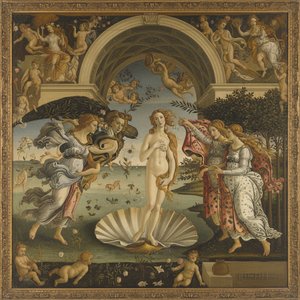
Sandro Botticelli’s *Primavera*, painted in Florence around 1482, stands as an emblem of the High Renaissance—a period characterized by a fervent revival of classical ideals and artistic innovation. More than just a depiction of springtime flora, it’s a complex allegory brimming with symbolism that speaks to themes of rebirth, fertility, and divine love.
- Subject Matter: The painting portrays nine figures—gods, goddesses, nymphs, and putti—gathered in an opulent orange grove. At its heart resides Venus, goddess of beauty and love, surrounded by the Graces (Charites), representing harmony, grace, and joy.
- Style: Botticelli’s style is instantly recognizable for its ethereal grace and delicate lines. He eschewed the muscular realism favored by earlier Renaissance artists like Michelangelo, opting instead for a fluid, lyrical aesthetic that prioritizes elegance and idealized forms.
- Technique: Executed in tempera paint on poplar wood—a technique known for its luminosity and permanence—*Primavera* showcases Botticelli’s meticulous attention to detail. The artist skillfully blended pigments to achieve subtle gradations of color, creating a breathtaking tapestry of hues that captures the vibrancy of springtime blossoms.
Historical Context: Commissioned by Lorenzo de Medici, *Primavera* reflects the humanist spirit of Florence during its golden age. Botticelli’s embrace of classical mythology aligns with the broader Renaissance fascination with Greco-Roman culture and philosophy—a movement that sought to recapture the grandeur and intellectual rigor of antiquity.
Symbolism: Each figure in *Primavera* carries profound symbolic significance. Venus embodies divine beauty and maternal love, while Zephyr and Chloris represent the winds of spring and symbolize marital union. The Graces embody harmony and grace, guiding humanity toward spiritual perfection. Cupid’s arrow signifies passion and desire, reminding viewers that love is a transformative force.
Emotional Impact: *Primavera* transcends mere visual representation; it evokes an overwhelming sense of wonder and delight. Its serene beauty inspires contemplation on themes of renewal, fertility, and the sublime—capturing the essence of springtime’s rejuvenating power. Botticelli's masterpiece continues to resonate with audiences today as a testament to the enduring allure of classical art and its ability to convey profound emotional truths.
- Uffizi Gallery: Admire this iconic artwork at the Uffizi Gallery in Florence, Italy—a must-visit destination for art enthusiasts.
- Reproductions: Enhance your home décor with a high-quality reproduction of *Primavera*, bringing Botticelli’s vision of springtime beauty into any space.
Botticelli's Primavera is more than just a painting; it's an invitation to immerse oneself in the splendor of Renaissance art and contemplate the timeless themes of love, harmony, and rebirth.
Questions et réponses
Où puis-je voir l'original de «Primavera (Le Printemps)» de Sandro Botticelli ?
L'original de «Primavera (Le Printemps)» de Sandro Botticelli est conservé au Galleria degli Uffizi, Florence, Italy. Une reproduction permet d'exposer l'œuvre chez soi.
À quel âge Sandro Botticelli a-t-il créé « Primavera (Le Printemps) » ?
Lorsque « Primavera (Le Printemps) » a été créé en 1482, Sandro Botticelli — né(e) en 1445 — était âgé(e) de 37 ans.
En quelle année «Primavera (Le Printemps)» de Sandro Botticelli a-t-il été créé ?
L'œuvre «Primavera (Le Printemps)» de Sandro Botticelli date de 1482.
Qui est l'artiste derrière « Primavera (Le Printemps) » ?
« Primavera (Le Printemps) » a été créé par Sandro Botticelli. Les informations présentes sur cette page décrivent l'œuvre originale de Sandro Botticelli.
L'œuvre « Primavera (Le Printemps) » est-elle restée dans le pays d'origine de son artiste ?
Non - l'œuvre est conservée à l'étranger. L'artiste est né en Italie ; l'œuvre originale se trouve en Italy.
Quand "Primavera (Le Printemps)" a-t-il été créé, et à quel mouvement appartient-il ?
«Primavera (Le Printemps)» a été réalisé en 1482, au sein du mouvement Early Renaissance.
Qui a créé « Primavera (Le Printemps) » et dans quel style s'inscrit cette œuvre ?
« Primavera (Le Printemps) » a été créé par Sandro Botticelli dans le style Early Renaissance. L'artiste et le mouvement définissent la tradition de l'œuvre.
Biographie de l'artiste
jeune vie et formation
Sandro Botticelli, né Alessandro di Mariano di Vanni Filipepi vers 1445, est une figure clé de la Renaissance italienne précoce. Initialement relégué à l'arrière-plan après sa mort, l'œuvre de Botticelli a été revitalisée au XIXe siècle par les préréfables, conduisant à une réévaluation de ses contributions artistiques. Botticelli est né à Florence, en Italie, et y a vécu toute sa vie dans le même quartier. Sa famille, dont son père Mariano di Vanni d'Amadeo Filipepi, était impliquée dans diverses professions, ce qui leur a permis de se rencontrer avec des artistes. Giorgio Vasari rapportait que Botticelli avait initialement été formé comme orfèvre.style artistique et œuvres notables
L'œuvre de Botticelli est caractérisée par une élégante linéarité, reliant le gothique italien tardif à la Renaissance précoce. Ses œuvres les plus célèbres, La Naissance de Vénus et *Primavera*, sont exposées à la Galerie des Offices à Florence, qui abrite une importante collection de ses œuvres. * La Naissance de Vénus (voir sur OriginalUniqueArt) * *Primavera* (explorer l'art de Sandro Botticelli sur OriginalUniqueArt) * Nativité mystique (National Gallery, Londres), datée 1501, est la seule œuvre de Botticelli avec une date claire.héritage et influence
Le style de Botticelli a évolué vers une approche plus personnelle dans les années 1490, s'écartant des contemporains comme Léonard de Vinci et du style de la Renaissance haute émergente. Son œuvre a été reconnue comme une contribution significative au mouvement artistique de la Renaissance italienne. * le mouvement artistique de la Renaissance italienne * Sandro Botticelli sur Wikipédia- Des artistes notables de la Renaissance italienne comprennent Sandro Botticelli, Léonard de Vinci, Michel-Ange et Titien.
- La Galerie des Offices à Florence abrite une importante collection d'œuvres de Botticelli.
- L'œuvre de Botticelli a été reconnue comme une figure clé de la Renaissance italienne précoce.
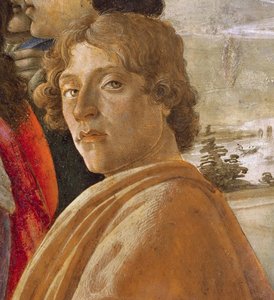
Sandro Botticelli
1445 - 1510 , Italie
En bref
- Artistes Influents:
- Fra Angelico
- Paolo Uccello
- Date De Décès: 1510
- Date De Naissance: c. 1445
- Lieu De Naissance: Florence, Italie
- Mouvement Artistique: Renaissance italienne
- Nationalité: Italienne
- Nom Complet: Sandro Botticelli
- Oeuvres Notables:
- La Naissance de Vénus
- Primavera
- Nativité mystique
Articles similaires
Les 10 Chefs-d'œuvre de la Renaissance Précoce : Artistes et Décor Intemporels
Plongez au cœur de la Renaissance italienne ! Découvrez les 10 chefs-d'œuvre de Botticelli, Léonard de Vinci et Raphaël. Histoire, techniques & inspiration déco. Reproductions tableaux sur
The Ethereal Beauty of Botticelli: A Journey Through the Grace and Symbolism of Italian Renaissance Masterpieces
Explore the ethereal beauty of Sandro Botticelli's masterpieces. Delve into the profound symbolism, mythological grace, and technical mastery that define the Italian Renaissance through an expert art-historical lens.
Botticelli : Les 25 Œuvres Maîtresses du Génie Florentin | OriginalUniqueArt
Plongez dans l'univers de Botticelli ! Découvrez les 25 œuvres majeures du maître florentin : La Naissance de Vénus, Primavera et bien plus. Histoire, technique & inspiration déco. Reproductions d'art haute qualité sur OriginalUniqueArt.com.
Uffizi : Les 25 Chefs-d'Œuvre Incontournables pour Embellir Votre Intérieur
Plongez au cœur de la Galerie des Offices à Florence ! Découvrez les 25 chefs-d'œuvre incontournables de Botticelli, Léonard de Vinci et autres maîtres italiens. Inspirez votre décoration avec l'art Renaissance : reproductions de qualité muséale sur OriginalUniqueArt.com
Echoes of Olympus: Mythological Narratives in Western Art Through the Ages
Explore the captivating history of mythological narratives in Western art! From ancient Greece to modern masterpieces, discover iconic artworks & symbolism. Expert analysis and high-quality reproductions at OriginalUniqueArt.