Aperçu en situation
 Envoyer
 Partager
 Détails de l'œuvre

 Télécharger
 Articles similaires
 Radiographie
 Diaporama
L'Annonciation de Cestello


 Lire la suite
Giclées et impressions d'art
Impressions giclées ou sur toile de qualité musée, avec une production rapide et des finitions au choix. ( Commander la reproduction peinte à la main Acheter l'image haute résolution)




P118B $10

P118H $10

P118W $10

P438Z $10

P508JH $12

P508YH $12

P805H $10

P805Z $10

P919BZ $10

P919G $10

P919XJ $10

P959ZH $10

P968JZ $12

W106C $8

W218G $10

W218JH $8

W218Y $10

W307PJ $10

W316G $10

W316PJ $8

W316Y $10

W398PJ $8

W4111J $10

W500HY $15

W500JH $15

W692G $12

W849H $8

W940BG $15

W953PJ $8




Choisissez parmi nos formats prédéfinis qui respectent les proportions originales de l’œuvre.

Vous pouvez saisir vos propres dimensions pour vous adapter à un cadre ou à un espace spécifique. Si la taille sélectionnée ne correspond pas aux proportions de l'image originale, nous recadrerons l'œuvre ou étendrons l'image avec une bordure en miroir ou une couleur unie. Une maquette numérique vous sera envoyée pour approbation avant le début de la production.
Veuillez noter que l'aperçu à l'écran ne reflète pas le recadrage ou l'extension réelle. Seule la maquette montrera avec précision la composition finale.
Bien que des tailles personnalisées soient disponibles, nous vous recommandons de choisir une dimension dans la liste prédéfinie afin de préserver les proportions originales.
Livraison dans le monde entier () en 2 semaines au lieu des 4/5 semaines habituelles. (4 septembre)

Livraison express gratuite dans le monde entier

Toile de lin de qualité supérieure

Assurance transport complète

Garantie de remboursement des droits de douane

Garantie de fidélité des couleurs

Politique de retour de 60 jours (uniquement en cas de défaut)

Garantie de remboursement à 100%

Offre de tarifs dégressifs
 L'option verre n'est disponible que pour les dimensions inférieures à 110 cm.

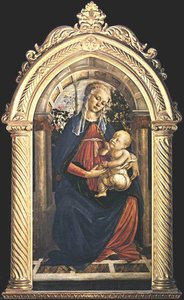
L'Annonciation de Cestello
Giclées et impressions d'art
Format de la reproduction
-


Prix total
$ 80
A Moment Suspended in Time: Botticelli’s *Cestello Annunciation*
Sandro Botticelli’s Cestello Annunciation, painted around 1489, is not merely a depiction of a biblical event; it’s an intimate and profoundly moving encounter frozen in time. The scene unfolds with a quiet grace that defines Botticelli’s signature style – the Archangel Gabriel delivering his momentous news to Mary, poised on the cusp of accepting her divine destiny. The painting, originally created for the chapel of the Florentine monastery of Cestello (now Santa Maria Maddalena de’Pazzi), immediately draws the viewer into a space both sacred and deeply human. It’s a testament to Botticelli’s ability to blend religious narrative with an exquisite sensitivity to form and emotion.
The Language of Line and Light
Botticelli, born Alessandro di Mariano di Vanni Filipepi in Florence, was a master of line. In the Cestello Annunciation, this mastery is strikingly evident. The figures are defined not by robust modeling or dramatic chiaroscuro, but by elegant, flowing contours that lend them an ethereal quality. The delicate drapery folds and the graceful gestures of Gabriel and Mary seem to ripple with a life of their own. He bridges the gap between the Gothic past and the burgeoning Renaissance aesthetic, retaining a certain decorative elegance while embracing emerging principles of perspective and naturalism. The use of tempera on wood contributes to the painting’s luminous quality; colors are applied in thin, translucent layers, creating a subtle interplay of light and shadow that enhances the scene’s serene atmosphere. Notice how Botticelli employs a limited palette – rich blues, reds, and golds – to create a harmonious visual experience.
Symbolism Woven into Every Detail
The Cestello Annunciation is rich in symbolic meaning. The lily held by Gabriel isn't simply a beautiful flower; it represents Mary’s purity and virginity, a traditional symbol within Christian iconography. The enclosed garden visible through the window alludes to Mary as the *hortus conclusus*, the “closed garden,” symbolizing her inviolate state. Even the architectural details contribute to the narrative – the room itself is sparsely furnished, drawing attention to the spiritual significance of the encounter rather than worldly possessions. The inscriptions in Latin, taken from the Gospel of Luke, further reinforce the theological weight of the scene. Botticelli doesn’t simply *show* us the Annunciation; he invites us to contemplate its profound implications.
A Reflection of Florentine Piety and Artistic Innovation
To fully appreciate the Cestello Annunciation, it's crucial to understand its historical context. Florence in the late 15th century was a city undergoing significant religious and political upheaval. The sermons of Girolamo Savonarola, a Dominican friar who preached against corruption and excess, had a profound impact on Florentine society. Botticelli himself was influenced by Savonarola’s austere piety, which is reflected in the painting’s restrained emotionality and emphasis on spiritual devotion. However, despite this religious fervor, Botticelli remained committed to artistic innovation. The use of linear perspective, borrowed from Flemish painters, demonstrates his engagement with contemporary artistic trends. This blending of traditional symbolism and modern technique makes the Cestello Annunciation a remarkable example of Early Renaissance art.
An Enduring Legacy
The emotional impact of Botticelli’s *Cestello Annunciation* lies in its ability to convey a sense of quiet reverence. It’s not a scene of dramatic fanfare, but rather an intimate moment of divine communication. The painting invites contemplation and offers a glimpse into the profound mystery of faith. For collectors and interior designers alike, a reproduction of this masterpiece brings a touch of Renaissance elegance and spiritual depth to any space. Its harmonious colors and graceful composition make it a versatile addition to a variety of décor styles, while its rich symbolism provides endless opportunities for conversation and reflection. The Cestello Annunciation is more than just a painting; it’s a window into the soul of the Renaissance, and a testament to Botticelli’s enduring artistic genius.
- Artist: Sandro Botticelli
- Birth Year: 1445
- Death Year: 1510
- Birth City: Florence
- Birth Country: Italy
Botticelli’s *Cestello Annunciation* is a tempera painting on wood created in 1489 for Benedetto di Ser Giovanni Guardi, moneychanger and Florentine noble family patron. The chapel of Santa Maria Maddalena de' Pazzi was Botticelli’s home during his formative years.
- Style: Early Renaissance
- Technique: Tempera on Wood
- Notable Features: Elegant Line Drawing, Sparse Furnishing, Minimal Chiaroscuro
The painting’s luminous quality stems from the application of thin, translucent tempera layers—a technique that Botticelli adopted from Flemish painters. This method prioritizes subtle tonal variations and enhances the serene atmosphere of the scene.
- Historical Context: Savonarola’s Sermons & Florentine Religious Upheaval
- Symbolism: Lily (Mary's Purity), Enclosed Garden (*Hortus Conclusus*)
Botticelli’s artistic vision was profoundly influenced by Savonarola’s moral fervor, resulting in a painting characterized by restrained emotion and an unwavering focus on spiritual devotion. This careful consideration of symbolism contributes to the enduring power of *Cestello Annunciation*.
A reproduction of this masterpiece adds a touch of Renaissance elegance and contemplative beauty to any interior space. Its harmonious palette and graceful composition resonate with timeless artistic principles.
Biographie de l'artiste
jeune vie et formation
Sandro Botticelli, né Alessandro di Mariano di Vanni Filipepi vers 1445, est une figure clé de la Renaissance italienne précoce. Initialement relégué à l'arrière-plan après sa mort, l'œuvre de Botticelli a été revitalisée au XIXe siècle par les préréfables, conduisant à une réévaluation de ses contributions artistiques. Botticelli est né à Florence, en Italie, et y a vécu toute sa vie dans le même quartier. Sa famille, dont son père Mariano di Vanni d'Amadeo Filipepi, était impliquée dans diverses professions, ce qui leur a permis de se rencontrer avec des artistes. Giorgio Vasari rapportait que Botticelli avait initialement été formé comme orfèvre.style artistique et œuvres notables
L'œuvre de Botticelli est caractérisée par une élégante linéarité, reliant le gothique italien tardif à la Renaissance précoce. Ses œuvres les plus célèbres, La Naissance de Vénus et *Primavera*, sont exposées à la Galerie des Offices à Florence, qui abrite une importante collection de ses œuvres. * La Naissance de Vénus (voir sur OriginalUniqueArt) * *Primavera* (explorer l'art de Sandro Botticelli sur OriginalUniqueArt) * Nativité mystique (National Gallery, Londres), datée 1501, est la seule œuvre de Botticelli avec une date claire.héritage et influence
Le style de Botticelli a évolué vers une approche plus personnelle dans les années 1490, s'écartant des contemporains comme Léonard de Vinci et du style de la Renaissance haute émergente. Son œuvre a été reconnue comme une contribution significative au mouvement artistique de la Renaissance italienne. * le mouvement artistique de la Renaissance italienne * Sandro Botticelli sur Wikipédia- Des artistes notables de la Renaissance italienne comprennent Sandro Botticelli, Léonard de Vinci, Michel-Ange et Titien.
- La Galerie des Offices à Florence abrite une importante collection d'œuvres de Botticelli.
- L'œuvre de Botticelli a été reconnue comme une figure clé de la Renaissance italienne précoce.
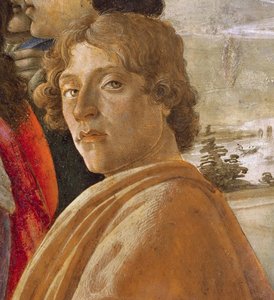
Sandro Botticelli
1445 - 1510 , Italie
L'essentiel de l'artiste
- Artistes Influents:
- Fra Angelico
- Paolo Uccello
- Date De Décès: 1510
- Date De Naissance: c. 1445
- Lieu De Naissance: Florence, Italie
- Mouvement Artistique: Renaissance italienne
- Nationalité: Italienne
- Nom Complet: Sandro Botticelli
- Oeuvres Notables:
- La Naissance de Vénus
- Primavera
- Nativité mystique
Articles connexes
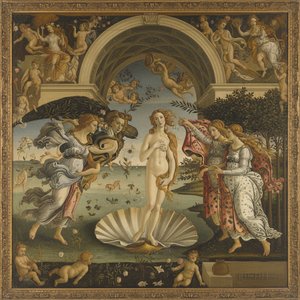
Botticelli : Les 25 Œuvres Maîtresses du Génie Florentin | OriginalUniqueArt
Plongez dans l'univers de Botticelli ! Découvrez les 25 œuvres majeures du maître florentin : La Naissance de Vénus, Primavera et bien plus. Histoire, technique & inspiration déco. Reproductions d'art haute qualité sur OriginalUniqueArt.com.
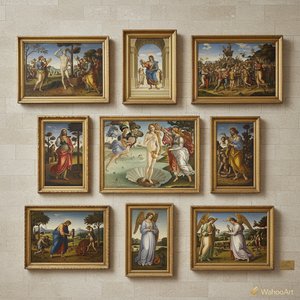
Les 10 Chefs-d'œuvre de la Renaissance Précoce : Artistes et Décor Intemporels
Plongez au cœur de la Renaissance italienne ! Découvrez les 10 chefs-d'œuvre de Botticelli, Léonard de Vinci et Raphaël. Histoire, techniques & inspiration déco. Reproductions tableaux sur
Les 10 Chefs-d'œuvre Légendaires à la Tempera sur Panneau qui ont Révolutionné l'Art
Plongez dans l'univers fascinant de la tempera sur panneau avec les 10 chefs-d'œuvre qui ont marqué l'histoire de l'art. Découvrez Giotto, Botticelli et Fra Angelico… Retrouvez ces icônes religieuses en reproductions d'exception sur OriginalUniqueArt.com !
Uffizi : Les 25 Chefs-d'Œuvre Incontournables pour Embellir Votre Intérieur
Plongez au cœur de la Galerie des Offices à Florence ! Découvrez les 25 chefs-d'œuvre incontournables de Botticelli, Léonard de Vinci et autres maîtres italiens. Inspirez votre décoration avec l'art Renaissance : reproductions de qualité muséale sur OriginalUniqueArt.com
L'Éclat Intemporel de la Tempera sur Panneau : Techniques Ancestrales et Héritage Artistique
Explorez l'art de la tempera : techniques ancestrales, maîtres italiens et héritage artistique exceptionnel. Découvrez les secrets de cette peinture durable et intemporelle.