

 Aperçu en situation
 Envoyer
 Partager
 Détails de l'œuvre
 Guide
Guide

 Télécharger l'image
 Articles similaires
 Radiographie
 Diaporama
 Statistiques
Sandal


 Lire la suite
L’œuvre d'art présentée sur cette page est protégée par le droit d'auteur, ce qui signifie que nous ne pouvons légalement créer ou vendre de reproduction identique. Cette protection est appliquée en vertu d'accords internationaux tels que la Convention de Berne et par les lois nationales, notamment celles énoncées par le Loi américaine sur le droit d'auteur - Titre 17.
Cette méthode est pleinement conforme aux réglementations sur le droit d'auteur car elle ne repose pas sur la copie ou la duplication de l'œuvre protégée. Il s'agit plutôt d'une réinterprétation créative — une nouvelle peinture qui s'inspire de l'original sans pour autant lui être identique.
Giclées et impressions d'art
Impressions giclées ou sur toile de qualité musée, avec une production rapide et des finitions au choix. ( Commander la reproduction peinte à la main Passer au format numérique)




P118B €10

P118H €10

P118W €10

P438Z €10

P508JH €12

P508YH €12

P805H €10

P805Z €10

P919BZ €10

P919G €10

P919XJ €10

P959ZH €10

P968JZ €12

W106C €8

W218G €10

W218JH €8

W218Y €10

W307PJ €10

W316G €10

W316PJ €8

W316Y €10

W398PJ €8

W4111J €10

W500HY €15

W500JH €15

W692G €12

W849H €8

W940BG €15

W953PJ €8




Choisissez parmi nos formats prédéfinis qui respectent les proportions originales de l’œuvre.

Saisissez la largeur et la hauteur souhaitées pour qu'elles s'adaptent à votre cadre ou à votre mur. Une impression peut être recadrée, mais jamais agrandie au-delà de l'image originale ; ainsi, un format de forme différente entraînera la perte d'une partie de l'image. Nous vous envoyons une maquette numérique pour approbation avant toute impression. L'image présentée sur cette page ne montre pas le recadrage réel — seule la maquette le permet.
Livraison dans le monde entier () en 2 semaines au lieu des 4/5 semaines habituelles. (28 octobre)

Livraison express gratuite dans le monde entier

Toile de lin de qualité supérieure

Assurance transport complète

Garantie de remboursement des droits de douane

Garantie de fidélité des couleurs

Politique de retour de 100 jours (uniquement en cas de défaut)

Garantie de remboursement à 100%

Offre de tarifs dégressifs
 L'option verre n'est disponible que pour les dimensions inférieures à 110 cm.

Sandal
Giclées et impressions d'art
Format de la reproduction
-


Prix total
€ 71
The Silent Echoes of Bonito: Salvatore Ferragamo’s Sandal – A Legacy Sculpted in Leather
Salvatore Ferragamo's sandal isn’t merely footwear; it embodies the spirit of innovation and artistic vision that defined a generation. Born in 1898 amidst the rugged landscapes of southern Italy, Ferragamo’s journey from humble beginnings to international acclaim is inextricably linked to this deceptively simple form – a testament to his unwavering belief that beauty could reside within functionality. Examining its design reveals layers of history, technique, and symbolism that continue to resonate with contemporary appreciation for craftsmanship and sculptural artistry.- Historical Context: The sandal’s genesis lies in the early 20th century, coinciding with Ferragamo's pioneering explorations into materials science and biomechanics. He recognized the limitations of conventional shoemaking techniques and sought to elevate comfort and aesthetics simultaneously – a pursuit that mirrored the broader cultural fascination with experimentation during the Jazz Age and Hollywood’s burgeoning glamour era. The sandal became synonymous with sophistication and daring style, particularly favored by figures like Judy Garland and Marlene Dietrich who embraced its unconventional elegance.
- Technique: Ferragamo's workshop in Florence revolutionized shoemaking through meticulous attention to detail and a masterful manipulation of leather. Unlike mass production methods prevalent at the time, Ferragamo’s artisans painstakingly crafted each sandal by hand, utilizing techniques honed over generations. The use of cork slabs layered with suede created unparalleled cushioning—a deliberate departure from rigid soles—while intricate metal straps adorned with geometric patterns showcased Ferragamo's fascination with mathematical precision and sculptural form.
- Material Innovation: Ferragamo’s breakthrough came with the introduction of the “Cage Heel,” a radical concept that challenged prevailing notions of footwear design. This innovative heel construction, utilizing a framework of metal struts encased in leather, prioritized stability without sacrificing grace—a bold statement against the constraints of traditional shoe construction. The cage heel became an emblem of Ferragamo’s commitment to pushing boundaries and redefining beauty standards.
- Symbolism: Beyond its physical form, the sandal carries profound symbolic weight. Representing freedom and movement, it embodies Ferragamo's ethos of defying convention and embracing creativity. The geometric patterns incorporated into the straps reflect his intellectual curiosity and fascination with mathematical principles—a subtle nod to the influence of Bauhaus design on his aesthetic sensibilities.
- Emotional Impact: Today, Ferragamo’s sandal evokes a sense of timeless elegance and understated confidence. Its enduring appeal stems from its ability to capture the spirit of an era defined by optimism and artistic experimentation – qualities that continue to inspire designers and collectors alike. Reproductions of this iconic shoe serve as tangible reminders of Ferragamo's legacy as a visionary craftsman who transformed footwear into art.
Questions et réponses
Les couleurs de «Sandal» de Salvatore Ferragamo sont-elles vives ou feutrées ?
Les couleurs de «Sandal» de Salvatore Ferragamo présentent une saturation Muted et une intensité Monochromatic.
Quelle est la situation du droit d'auteur pour «Sandal» de Salvatore Ferragamo ?
Le statut du droit d'auteur de « Sandal » - toujours protégé par le droit d'auteur - découle du décès de l'artiste en 1960.
«Sandal» de Salvatore Ferragamo est-il une composition en portrait, en paysage ou carrée ?
«Sandal» de Salvatore Ferragamo présente un format Landscape. Le format décrit les proportions de la composition.
Biographie de l'artiste
Un héritage forgé dans le cuir : La vie et la vision de Salvatore Ferragamo
Salvatore Ferragamo, un nom synonyme d'élégance, d'innovation et de l'âge d'or du glamour hollywoodien, est né dans l'humilité en 1898 à Bonito, en Italie. Loin du monde scintillant qu'il allait finir par définir, la jeunesse de Salvatore était imprégnée de simplicité rurale ; pourtant, c'est ici que son extraordinaire voyage a commencé. Onzième d'une fratrie de quatorze enfants, il manifesta une fascination innée pour la cordonnerie, passant des heures interminables à observer le artisan local — un métier initialement découragé par son père qui le considérait comme une profession de faible rang social. Cependant, la passion du jeune Salvatore s'avéra inébranlable ; à seulement neuf ans, il confectionna sa première paire de chaussures pour la première communion de sa sœur, témoignage de son talent naissant et de sa détermination. Cet acte ne fut pas simplement la création d'une chaussure ; ce fut le forgeage d'un destin. Il marqua la naissance d'une vision artistique qui allait remodeler le paysage de la mode.De Boston à Hollywood : Une ascension transatlantique
Poussé par l'ambition, Ferragamo émigra en Amérique en 1915, rejoignant ses frères à Boston avant de graviter vers l'industrie cinématographique florissante de la Californie. Ce mouvement s'avéra décisif. Il établit d'abord un atelier de réparation, mais reconnut rapidement un besoin non satisfait : des chaussures d'une exécution exquise, adaptées aux exigences du grand écran. Les stars d'Hollywood — Lillian Gish, Mary Pickford et bientôt tant d'autres — devinrent sa clientèle fidèle. Ferragamo ne se contentait pas de fabriquer des chaussures ; il façonnait des illusions, sublimant les personnages à l'écran qui captivaient une nation entière. Il comprit le pouvoir de la narration visuelle et la manière dont la chaussure pouvait contribuer au récit d'un personnage. Cette compréhension le poussa à étudier l'anatomie à l'Université de Californie du Sud, convaincu que le véritable confort et l'élégance découlaient d'une compréhension profonde de la structure du pied. Son utilisation innovante de semelles en acier pour le soutien de la voûte plantaire révolutionna la construction de la chaussure, privilégiant à la fois l'esthétique et le bien-être — une marque de fabrique de sa philosophie de design.Le retour aux sources : Renaissance florentine et épanouissement artistique
En 1927, Ferragamo retourna dans sa patrie, s'installant à Florence, une ville imprégnée de traditions artistiques et artisanales. Il y établit un atelier qui devint rapidement un laboratoire d'innovation. Malgré les difficultés financières durant la Grande Dépression, menant à une faillite en 1933, il persévéra, porté par une foi inébranlable en sa vision. En réétablissant son entreprise en 1938 au sein de l'historique Palazzo Spini Feroni, Ferragamo entama une période de créativité prolifique. Il expérimenta sans crainte des matériaux non conventionnels — le liège, la peau de poisson, et même le métal — repoussant les limites du possible dans la cordonnerie. Cette volonté de défier les conventions devint sa signature. Ses créations n'étaient pas de simples objets fonctionnels ; elles étaient des œuvres d'art sculpturales, reflétant une profonde appréciation de l'histoire et un esprit audacieux de modernité. L'emblématique semelle compensée, née de la pénurie de matériaux pendant la guerre, témoigne de sa débrouillardise et de son ingéniosité, lui valant le prestigieux prix Neiman Marcus en 1947.Une empreinte durable : Héritage et influence
L'impact de Salvatore Ferragamo s'étend bien au-delà du domaine de la chaussure. Il fonda Salvatore Ferragamo S.p.A., un empire du luxe qui continue de prospérer aujourd'hui, exploitant des centaines de boutiques à travers le monde. Bien que célébré pour ses créations destinées aux icônes d'Hollywood comme Marilyn Monroe — il créa son célèbre talon aiguille — et Audrey Hepburn, son influence résonne dans la mode contemporaine. Son engagement envers le confort anatomique, les matériaux innovants et les formes sculpturales a ouvert la voie à des générations de designers. Le Musée Ferragamo à Florence sert de tribut vivant à son héritage, exposant non seulement ses modèles de chaussures révolutionnaires, mais aussi ses intérêts artistiques plus larges, incluant des collections telles que La Collezione Bonello (Malte) et la Collection Palumbo-Fossati (Venise). Son travail transcende la simple mode ; c'est une célébration de l'art, de l'innovation et du pouvoir durable de l'artisanat italien. Bien qu'il se soit éteint en 1960, l'esprit de Salvatore Ferragamo continue d'inspirer, nous rappelant que le vrai style ne réside pas seulement dans ce que nous portons, mais dans l'histoire qu'il raconte.Œuvres et collections notables
- Pollicino : Une sculpture de chaussure Pop Art vibrante, mettant en avant des couleurs audacieuses et un design ludique.
- Sandale (1952) : Un exemple emblématique d'artisanat luxueux et de design géométrique, incarnant l'élégance de l'époque.
- Prototipo di sandalo (1938) : Une magnifique chaussure antique démontrant une broderie complexe et un savoir-faire artisanal.
- <La Collezione Bonello (Malte) : Une collection soigneusement sélectionnée présentant des œuvres de maîtres tels que Le Caravage et Alberto Morrocco, reflétant l'appréciation de Ferragamo pour les beaux-arts.
- <La Collection Palumbo-Fossati (Venise, Italie) : Un assemblage renommé de peintures européennes s'étendant sur plusieurs siècles, soulignant les intérêts culturels plus vastes de Ferragamo.

Salvatore Ferragamo
1898 - 1960 , Italie
L'essentiel de l'artiste
- Artistic Movement Or Style: Baroque
- Artists Or Movements Influenced By This Artist: ['Christian Dior']
- Artists Who Influenced This Artist: ['Luca Giordano']
- Date Of Birth: 5 juin 1898
- Date Of Death: 7 août 1960
- Full Name: Salvatore Ferragamo
- Nationality: Italien
- Notable Artworks:
- Pollicino
- Sandal (1952)
- Prototipo di sandalo (1938)
- Place Of Birth: Bonito, Italie
Articles connexes

OriginalUniqueArt.com F.A.Q. : Fusionner plusieurs photos en un chef-d'œuvre unique à l'huile
Transformez vos photos en chefs-d'œuvre à l'huile grâce à notre expertise unique. Créez votre portrait sur mesure dès maintenant.

Le Selfie Ultime : Transformez votre photo en un portrait Baroque spectaculaire et intemporel
Sublimez vos selfies avec OriginalUniqueArt. Transformez vos photos en portraits baroques spectaculaires grâce à nos peintres maîtres. Une fusion unique entre technologie et tradition pour créer un héritage artistique intemporel chez vous. Qualité muséale garantie.
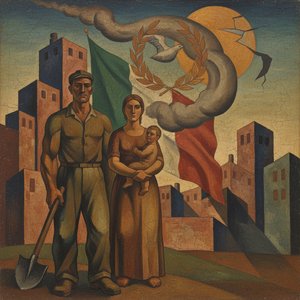
Mario Sironi: A Poetic of Modern Italian Identity Through Symbolism & Social Commentary
Explore the profound works of Mario Sironi, a key figure in Italian Modernism. Discover his evolution from Futurism to Metaphysical painting and his powerful social commentary. Learn about his legacy at OriginalUniqueArt.

Métamorphose Digitale : Transformez vos Photos en Chefs-d'œuvre Anime avec l'IA et la Noblesse de la Peinture à l'Huile
Sublimez vos souvenirs avec notre service exclusif : transformez vos photos et univers anime en véritables peintures à l'huile sur toile. Alliez la puissance de l'IA à la maîtrise de nos artistes pour créer un héritage artistique unique, durable et prestigieux.

Drama and Light: A Definitive Guide to the Italian Baroque Masterpieces and the Revolution of Chiaroscuro
Explore the dramatic world of Italian Baroque art. Discover how masters like Caravaggio used chiaroscuro and tenebrism to revolutionize painting through light, shadow, and profound realism. A definitive guide for history lovers and art collectors.


