

 Aperçu en situation
 Envoyer
 Partager
 Détails de l'œuvre
 Guide
Guide

 Télécharger l'image
 Articles similaires
 Radiographie
 Diaporama
 Q&A
Q&A Statistiques
Who comes?
 Oil
Oil- WallArt
 1908
1908- 19th Century
 542.0 x 810.0 cm
 Galerie Nationale d'Australie
 Lire la suite
Giclées et impressions d'art
Impressions giclées ou sur toile de qualité musée, avec une production rapide et des finitions au choix. ( Commander la reproduction peinte à la main Passer au format numérique)




P118B €10

P118H €10

P118W €10

P438Z €10

P508JH €12

P508YH €12

P805H €10

P805Z €10

P919BZ €10

P919G €10

P919XJ €10

P959ZH €10

P968JZ €12

W106C €8

W218G €10

W218JH €8

W218Y €10

W307PJ €10

W316G €10

W316PJ €8

W316Y €10

W398PJ €8

W4111J €10

W500HY €15

W500JH €15

W692G €12

W849H €8

W940BG €15

W953PJ €8




Choisissez parmi nos formats prédéfinis qui respectent les proportions originales de l’œuvre.

Saisissez la largeur et la hauteur souhaitées pour qu'elles s'adaptent à votre cadre ou à votre mur. Une impression peut être recadrée, mais jamais agrandie au-delà de l'image originale ; ainsi, un format de forme différente entraînera la perte d'une partie de l'image. Nous vous envoyons une maquette numérique pour approbation avant toute impression. L'image présentée sur cette page ne montre pas le recadrage réel — seule la maquette le permet.
Livraison dans le monde entier () en 2 semaines au lieu des 4/5 semaines habituelles. (30 octobre)

Livraison express gratuite dans le monde entier

Toile de lin de qualité supérieure

Assurance transport complète

Garantie de remboursement des droits de douane

Garantie de fidélité des couleurs

Politique de retour de 100 jours (uniquement en cas de défaut)

Garantie de remboursement à 100%

Offre de tarifs dégressifs
 L'option verre n'est disponible que pour les dimensions inférieures à 110 cm.

Who comes?
Giclées et impressions d'art
Format de la reproduction
-


Prix total
€ 71
Questions et réponses
L'artiste Rupert Charles Wulsten Bunny, créateur de « Who comes? », est-il connu sous d'autres noms ?
L'artiste Rupert Charles Wulsten Bunny, créateur de « Who comes? », est également connu sous d'autres noms, notamment Bunny.
Où puis-je voir un aperçu de « Who comes? » ?
La page Aperçu en situation de « Who comes? » vous permet de prévisualiser l'œuvre avant de passer commande.
L'œuvre « Who comes? » dispose-t-elle d'un aperçu en réalité augmentée ?
Visualisez «Who comes?» de Rupert Charles Wulsten Bunny sur votre propre mur grâce à la page Aperçu en RA de l'œuvre, en utilisant la réalité augmentée sur un appareil compatible.
Biographie de l'artiste
Early Life and Training
Rupert Charles Wolston Bunny (1864 – 1947) was born in Inkerman Street, St Kilda, Victoria, third son of Brice Frederick Bunny, barrister, and his wife Marie Hedwig Dorothea, née Wulsten. Educated at the Alma Road Grammar School, St Kilda, The Hutchins School, Hobart, and at other places, including, for a time, Melbourne University. An early ambition to become an actor was not encouraged by his father. Eventually he joined the National Gallery schools under O. R. Campbell and G. F. Folingsby; his fellow students included Frederick McCubbin, E. Phillips Fox and Louis Abrahams. In 1884 Bunny went to London and enrolled at P. H. Calderon's art school in St John’s Wood. Two years later he left for Paris to study under Jean-Paul Laurens. Bunny exhibited at the Salon de la Société des Artistes Français* (Old Salon) from 1888, becoming the first Australian painter to receive a mention honorable for his painting ‘The Tritons’. He also began exhibiting with British societies and galleries including the Royal Academy, the Royal Society of British Artists, the Institute of Painters in Oil-Colours, the Fine Art Society, and the New Gallery, Grosvenor, and Grafton galleries. His participation in the Carnegie Institute's 'Pittsburgh Internationals' was to continue for almost thirty years; he was awarded a bronze medal at the Paris Exhibition of 1900, and was represented in the Bendigo Victorian Gold Jubilee Exhibition of 1901-02. In 1901 he left the Paris Old Salon for the New (Société Nationale des Beaux-Arts). This coincided with a change in his work from large, idealized subject compositions drawn from the Bible and especially classical mythology, painted in a neo-classical style touched with Pre-Raphaelitism, to paintings of women, landscapes, and portraiture. His interest in music is reflected in his portraits of musicians, especially of fellow Australians Nellie Melba, Percy Grainger and Ada Crossley.Achievements and Accolades
Bunny's artistic prowess was recognized early, with an honourable mention at the Paris Salon of 1890 for his painting tritons. He further solidified his reputation by winning a bronze medal at the Paris Exposition Universelle in 1900 for Burial of St Catherine of Alexandria. The French state acquired 13 of his works for the Musée du Luxembourg and regional collections. He was a “sumptuous colourist and splendidly erudite painter of ideal themes,” as described by art critics.Artistic Style and Themes
Bunny’s artistic style was characterized by his masterful use of color—a hallmark of the Symbolist movement—and his profound understanding of classical mythology and humanist ideals. His canvases often depicted serene female figures immersed in tranquil waters, conveying a sense of dreamy contemplation and spiritual reflection. These images were imbued with symbolic meaning, exploring themes of beauty, innocence, and transcendence.Notable Works
Bunny’s oeuvre includes masterpieces such as ‘Endormies,’ which resides at the National Gallery of Victoria in Melbourne, Australia; ‘Sea Idyll,’ also housed in the National Gallery of Victoria; and ‘Pastoral,’ showcased at the National Gallery of Australia in Canberra. These paintings exemplify his distinctive aesthetic vision and continue to captivate audiences with their luminous colors and evocative compositions.Legacy and Online Presence
Rupert Bunny’s contribution to Australian art history is undeniable, establishing him as a pivotal figure in the Symbolist movement and securing his place among the most celebrated painters of his era. His works are now disseminated across prominent museums worldwide, ensuring that his artistic legacy persists for generations to come. For those eager to delve deeper into Bunny's oeuvre, [https://OriginalUniqueArt.com/@/rupert-charles-wulsten-bunny](https://OriginalUniqueArt.com/@/rupert-charles-wulsten-bunny) offers a comprehensive collection of his paintings—including ‘Endormies,’ ‘Sea Idyll,’ and ‘Pastoral’—available for purchase as museum-quality reproductions through /fr/art/show/art-8xyffg-fr/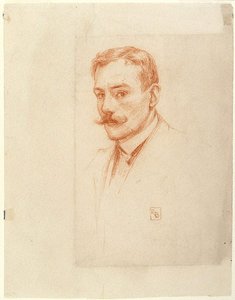
Rupert Charles Wulsten Bunny
1864 - 1947 , Australie
L'essentiel de l'artiste
- Artistic Movement Or Style: Symbolisme
- Artists Who Influenced This Artist:
- Calderon
- Laurens
- Date Of Birth: 29 septembre 1864
- Date Of Death: 25 mai 1947
- Full Name: Rupert Charles Wolston Bunny
- Nationality: Australien
- Notable Artworks:
- Endormies
- Idylle marine
- Pastorale
- Place Of Birth: St Kilda, Australie
Articles connexes
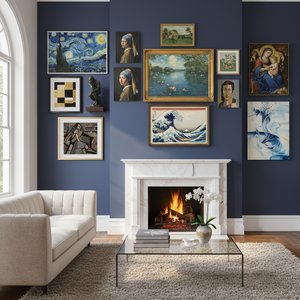
Élégance Intemporelle : 10 Chefs-d'Œuvre pour une Décoration Raffinée |
Plongez dans l'élégance intemporelle avec notre sélection de 10 chefs-d'œuvre classiques. Découvrez les histoires des artistes, leurs techniques et trouvez l'inspiration pour une décoration raffinée. Reproductions haute qualité sur !
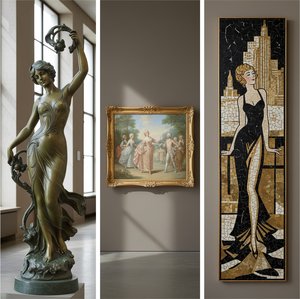
L'Allure de l'Élégance : Représentations Artistiques du Raffinement à Travers les Mouvements
Explorez l'évolution de l'élégance artistique à travers les grands mouvements : Rococo, Néoclassicisme et plus encore. Découvrez l'histoire, les artistes clés et trouvez l'œuvre parfaite pour sublimer votre intérieur.
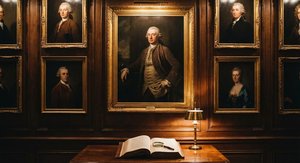
Sir Joshua Reynolds : Les 25 Chefs-d'Œuvre Incontournables pour une Décoration Raffinée
Plongez dans l'univers de Sir Joshua Reynolds ! Découvrez les 25 œuvres incontournables du maître anglais, ses portraits rococo et son héritage artistique. Inspirez votre décoration intérieure avec OriginalUniqueArt.com : reproductions haute qualité & collectionneur d'art.

The Allure of Elegance in Art: A Historical & Aesthetic Exploration of Refined Beauty
Explore the history of elegance in art! Discover Rococo masterpieces & key artists. Expert insights for discerning collectors seeking investment-worthy artworks and custom reproductions at OriginalUniqueArt.

The Allure of Elegance in Art: A Historical & Aesthetic Exploration of Refinement & Grace
Explore the exquisite world of Rococo art! Discover its history, masters (Watteau, Boucher & more), and defining elegance. Expert insights for collectors seeking museum-quality reproductions & custom portraits.

