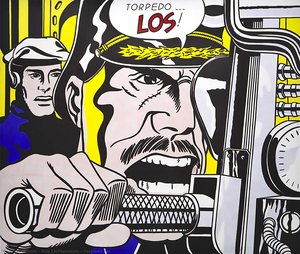
Aperçu en situation
 Envoyer
 Partager
 Détails de l'œuvre
 Guide
Guide

 Télécharger l'image
 Articles similaires
 Radiographie
 Diaporama
 Q&A
Q&A Statistiques
Citron et Pomme


 Lire la suite
L’œuvre d'art présentée sur cette page est protégée par le droit d'auteur, ce qui signifie que nous ne pouvons légalement créer ou vendre de reproduction identique. Cette protection est appliquée en vertu d'accords internationaux tels que la Convention de Berne et par les lois nationales, notamment celles énoncées par le Loi américaine sur le droit d'auteur - Titre 17.
Cette méthode est pleinement conforme aux réglementations sur le droit d'auteur car elle ne repose pas sur la copie ou la duplication de l'œuvre protégée. Il s'agit plutôt d'une réinterprétation créative — une nouvelle peinture qui s'inspire de l'original sans pour autant lui être identique.
Giclées et impressions d'art
Impressions giclées ou sur toile de qualité musée, avec une production rapide et des finitions au choix. ( Commander la reproduction peinte à la main Passer au format numérique)




P118B €10

P118H €10

P118W €10

P438Z €10

P508JH €12

P508YH €12

P805H €10

P805Z €10

P919BZ €10

P919G €10

P919XJ €10

P959ZH €10

P968JZ €12

W106C €8

W218G €10

W218JH €8

W218Y €10

W307PJ €10

W316G €10

W316PJ €8

W316Y €10

W398PJ €8

W4111J €10

W500HY €15

W500JH €15

W692G €12

W849H €8

W940BG €15

W953PJ €8




Choisissez parmi nos formats prédéfinis qui respectent les proportions originales de l’œuvre.

Saisissez la largeur et la hauteur souhaitées pour qu'elles s'adaptent à votre cadre ou à votre mur. Une impression peut être recadrée, mais jamais agrandie au-delà de l'image originale ; ainsi, un format de forme différente entraînera la perte d'une partie de l'image. Nous vous envoyons une maquette numérique pour approbation avant toute impression. L'image présentée sur cette page ne montre pas le recadrage réel — seule la maquette le permet.
Livraison dans le monde entier () en 2 semaines au lieu des 4/5 semaines habituelles. (29 octobre)

Livraison express gratuite dans le monde entier

Toile de lin de qualité supérieure

Assurance transport complète

Garantie de remboursement des droits de douane

Garantie de fidélité des couleurs

Politique de retour de 100 jours (uniquement en cas de défaut)

Garantie de remboursement à 100%

Offre de tarifs dégressifs
 L'option verre n'est disponible que pour les dimensions inférieures à 110 cm.

Citron et Pomme
Giclées et impressions d'art
Format de la reproduction
-


Prix total
€ 71
A Bold Encounter with Familiar Forms: Examining Roy Lichtenstein’s “Lemon and Apple”
Roy Fox Lichtenstein, born in Manhattan on October 27, 1923, irrevocably reshaped the trajectory of twentieth-century art. His emergence as a cornerstone figure within Pop Art wasn't merely about mirroring his era; it was an audacious act of interrogation—a transformation of commonplace visual elements into statements brimming with intellectual depth and artistic innovation. Lichtenstein’s formative years were steeped in cultural enrichment, nurtured by a family that valued both tradition and exposure to the avant-garde. Early experiences with museums and concerts, particularly jazz music, instilled within him a profound appreciation for musical complexity and aesthetic experimentation—sensibilities that would profoundly influence his artistic vision. Initially drawn to meticulous realism during his academic pursuits, Lichtenstein’s formal training commenced at the Art Students League in 1939 under Reginald Marsh, followed by studies at Ohio State University – interrupted briefly by wartime service in the Army. These formative experiences instilled a disciplined approach to craft and broadened his understanding of artistic expression beyond purely representational concerns.The Genesis of Ben-Day Dots: Lichtenstein’s Distinctive Style
At the heart of Lichtenstein's singular aesthetic lies the revolutionary technique known as Ben-Day dots—a halftone printing process popularized in comic strips during the 1930s and 40s. This method meticulously divides an image into tiny colored dots, varying their density to simulate shading and texture. Lichtenstein adopted this approach with unwavering conviction, elevating it from a mere stylistic device to a core component of his artistic language. The resulting canvases possess a mesmerizing visual quality—a shimmering surface punctuated by vibrant hues that capture the essence of color printing while simultaneously rejecting traditional oil painting methods. This deliberate choice wasn’t simply about novelty; it was a conscious rejection of academic conventions and an embrace of the immediacy and accessibility championed by Pop Art's core principles.Symbolism Within Simplicity: Interpreting “Lemon and Apple”
Despite its deceptively straightforward composition—a solitary lemon juxtaposed with a striped apple against a neutral backdrop—“Lemon and Apple” resonates with layers of symbolic significance. The lemon, traditionally associated with freshness, optimism, and vitality, stands in contrast to the apple’s historical connotations of temptation and knowledge – representing duality within the artwork. Lichtenstein's masterful use of color contributes to this nuanced interpretation; the bright yellow of the lemon commands attention while simultaneously conveying warmth and luminosity, balanced by the muted red stripes of the apple which evoke a sense of understated elegance. The inclusion of supporting objects—bananas and a chair—further enhances the painting’s narrative dimension, inviting viewers to contemplate themes of domesticity and observation.A Reflection of Its Time: Contextualizing Lichtenstein's Artistic Contribution
“Lemon and Apple” emerged during the fervent crucible of Pop Art – a movement that challenged artistic hierarchies and celebrated popular culture as worthy of serious consideration. Artists like Lichtenstein actively engaged with advertising imagery, comic strips, and mass media—subjects previously deemed unsuitable for high art—demonstrating a profound skepticism toward elitist traditions. This rebellious stance mirrored broader societal anxieties surrounding consumerism and the pervasive influence of commercial forces during the postwar era. By appropriating visual elements from everyday life and transforming them into stylized representations, Lichtenstein articulated a critique of cultural values while simultaneously establishing himself as one of the most influential artists of his generation.Emotional Resonance: The Enduring Appeal of Lichtenstein’s Vision
Ultimately, “Lemon and Apple” transcends its formal characteristics to evoke a palpable emotional response in the viewer. Lichtenstein's deliberate simplification—his rejection of illusionistic depth—forces us to confront the image directly, fostering contemplation about color, form, and texture. The painting’s quiet stillness contrasts with the dynamism inherent in comic strip aesthetics, creating an intriguing tension that compels engagement. More than just a visual spectacle, “Lemon and Apple” embodies Lichtenstein's conviction that art could communicate complex ideas through deceptively simple means—a legacy that continues to inspire artists and collectors alike.Questions et réponses
Quel est le niveau de contraste de «Citron et Pomme» de Roy Lichtenstein ?
Le niveau de contraste de «Citron et Pomme» de Roy Lichtenstein est Niveau de contraste.
Quelle est la luminance de «Citron et Pomme» de Roy Lichtenstein ?
«Citron et Pomme» de Roy Lichtenstein présente une luminance de Équilibre lumineux. La luminance décrit la quantité de lumière que les couleurs semblent réfléchir.
Quelle est la teinte dominante de « Citron et Pomme » ?
Une nuance De l'ambre au safran traverse «Citron et Pomme» de Roy Lichtenstein.
Biographie de l'artiste
jeune vie et éducation
roy fox lichtenstein, un artiste pop américain de premier plan, est né le 27 octobre 1923 à New York. Il a grandi dans une famille juive de milieu-classe supérieur, son père étant courtier en immobilier et sa mère femme au foyer. L'intérêt de Lichtenstein pour l'art et le design a commencé comme un passe-temps pendant ses années scolaires.carrière artistique
Après avoir terminé sa scolarité secondaire au Dwight School en 1940, Lichtenstein a étudié à l’Art Students League of New York sous la tutelle de Reginald Marsh. Il a ensuite obtenu une licence en arts plastiques de l'Ohio State University, interrompue par un service militaire de trois ans pendant la Seconde Guerre mondiale.- look mickey (1961, National Gallery of Art, Washington, D.C.), l'une des premières œuvres pop de Lichtenstein, a marqué le début de sa carrière influente.
- Son travail était fortement influencé par la publicité et les styles de bandes dessinées populaires, avec des œuvres notables telles que Wham!, drowning girl et oh, jeff...i love you, too...but...
- La pièce la plus chère de Lichtenstein, Masterpiece, a été vendue pour 165 millions de dollars en janvier 2017.
enseignement et influences
Lichtenstein a enseigné dans diverses institutions, notamment l'université d'État de New York à Oswego et l'université Rutgers. Son travail a été influencé par Allan Kaprow, un collègue professeur à Rutgers, ce qui a ravivé son intérêt pour les images proto-pop. Expositions notables :- the museum chambre de commerce (Toulouse, France), présentant diverses œuvres d'art, y compris celles du mouvement pop art.
- Le travail de Lichtenstein a été exposé à la Leo Castelli Gallery à New York, avec sa première exposition personnelle en 1962 ayant été entièrement achetée par des collectionneurs influents avant l'ouverture.
héritage et impact
Roy Lichtenstein est décédé le 29 septembre 1997, laissant derrière lui un héritage en tant que figure de proue du mouvement pop art. Son œuvre continue d’être célébrée pour son mélange innovant d’art haut et d’art populaire, ce qui la rend accessible à un public plus large.- Explorez davantage l'œuvre de Lichtenstein sur OriginalUniqueArt.com
- Découvrez le monde de l'art pop et de ses artistes influents sur pop art and beyond: navigating contemporary styles with OriginalUniqueArt.com
- Wikipedia : Roy Lichtenstein
- the museum chambre de commerce (Toulouse, France) sur OriginalUniqueArt.com

Roy Lichtenstein
1923 - 1997 , États-Unis d'Amérique
L'essentiel de l'artiste
- Artistes Influents:
- Reginald Marsh
- Allan Kaprow
- Date De Décès: 29 septembre 1997
- Date De Naissance: 27 octobre 1923
- Lieu De Naissance: Manhattan, États-Unis
- Mouvement Artistique: Pop Art
- Nationalité: Américaine
- Nom Complet: Roy Lichtenstein
- Oeuvres Notables:
- Look Mickey
- Whaam!
- Drowning Girl
- Masterpiece
Articles connexes

Points Ben-Day et Sérigraphie : Les Secrets de l'Esthétique Industrielle du Pop Art des Années 60
Découvrez les secrets techniques de la sérigraphie et des points Ben-Day dans le Pop Art. Explorez l'histoire du mouvement dès maintenant.

L'impact psychologique des couleurs de Roy Lichtenstein : décoder la théorie du Pop Art
Décryptez la psychologie des couleurs et les points Ben-Day de Lichtenstein. Explorez l'essence du Pop Art dès maintenant.

Beyond the Dot: Exploring the Bold Impact of Ben-Day Dots in Modern Art
Dive into the vibrant world of Ben-Day dots. Explore how Roy Lichtenstein transformed mass media imagery into high art, redefining modern aesthetics through the iconic textures of Pop Art and its enduring impact on contemporary visual culture.

Au-Delà des Points Ben-Day : La Révolution Pop Art de Roy Lichtenstein et son Héritage Durable
Explorez l'univers révolutionnaire de Roy Lichtenstein et le mouvement Pop Art. Découvrez les points Ben-Day, son héritage durable et des conseils avisés pour collectionner ses œuvres. Expertise OriginalUniqueArt.
Roy Lichtenstein : Les 25 Œuvres Maîtresses du Roi de la Pop Art | OriginalUniqueArt
Plongez dans l'univers vibrant de Roy Lichtenstein ! Découvrez les 25 œuvres emblématiques du Pop Art américain, de 'Look Mickey' à 'Whaam!'. Retrouvez l'histoire et la technique derrière chaque chef-d'œuvre. Reproductions d'art de qualité musée sur OriginalUniqueArt.com.