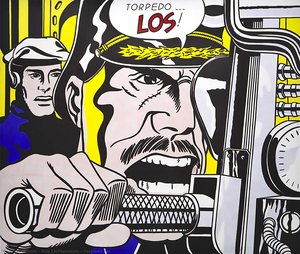
Aperçu en situation
 Partager
 Partager
 Détails

 Télécharger
 Articles similaires
 Radiographie
 Voir le diaporama
 Statistiques
Bathroom


 Afficher la suite
Reproduction à l'huile faite à la main
Huile sur toile peinte à la main, avec cadre et dimensions personnalisés, réalisée sur commande par nos artistes. ( Passer au format impression Passer au format image numérique)




P118B $10

P118H $10

P118W $10

P438Z $10

P508JH $12

P508YH $12

P805H $10

P805Z $10

P919BZ $10

P919G $10

P919XJ $10

P959ZH $10

P968JZ $12

W106C $8

W218G $10

W218JH $8

W218Y $10

W307PJ $10

W316G $10

W316PJ $8

W316Y $10

W398PJ $8

W4111J $10

W500HY $15

W500JH $15

W692G $12

W849H $8

W940BG $15

W953PJ $8




Choisissez parmi nos formats prédéfinis qui respectent les proportions originales de l’œuvre.

Vous pouvez saisir vos propres dimensions pour l'adapter à un cadre ou à un espace spécifique. Si la taille sélectionnée ne correspond pas aux proportions de l'image d'origine, nous recadrerons l'œuvre ou prolongerons la peinture avec des éléments peints à la main supplémentaires. Une maquette numérique vous sera envoyée pour approbation avant le début de la production.
Veuillez noter que l'aperçu à l'écran ne reflète pas le recadrage ou l'extension réels. Seule la maquette montrera fidèlement la composition finale.
Bien que des tailles personnalisées soient disponibles, nous vous recommandons de sélectionner une dimension dans la liste prédéfinie afin de préserver les proportions d'origine.
Après la commande, l’équipe OriginalUniqueArt.com contactera le client par e-mail pour recueillir ses instructions et lui fournira une maquette d’aperçu
Livraison dans le monde entier () en 3 à 4 semaines au lieu des 5 semaines habituelles. (13 septembre). Aucun compromis sur la qualité.

Livraison express gratuite dans le monde entier

Toile de lin de haute qualité

Assurance transport complète

Garantie de remboursement des droits de douane

Garantie de fidélité des couleurs

Garantie de retour de 100 jours (uniquement en cas de défaut)

Garantie de remboursement à 100%

Tarifs dégressifs sur quantité
 L'option verre n'est disponible que pour les dimensions inférieures à 110 cm.

Bathroom
Technique de reproduction
Format de la reproduction
-


Prix total final
$ 300
A Snapshot of Everyday Life Elevated
In the vast landscape of twentieth-century art, few works possess the immediate, graphic punch of Roy Lichtenstein’s 1961 masterpiece, "Bathroom." At first glance, the viewer is presented with a scene of profound mundanity—a simple, monochromatic interior featuring the essential fixtures of domestic life. Yet, beneath this seemingly banal surface lies a revolutionary interrogation of what constitutes "fine art." Lichtenstein does not merely depict a bathroom; he reconstructates it through the lens of mass media, transforming a private, utilitarian space into a striking icon of the Pop Art movement. This piece serves as an arresting testament to the era's fascination with elevating the commonplace into the realm of high artistic contemplation.
The brilliance of "Bathroom" lies in its seamless fusion of high culture and low-brow aesthetics. By adopting the visual language of comic strips and commercial advertisements, Lichtenstein disrupts the traditional boundaries of painting. The composition is rendered with a calculated, almost schematic clarity, utilizing an elevated perspective that looks down into the space as if observing a single panel from a larger, unseen narrative. There is no attempt at lush realism here; instead, we find a world defined by bold, thick outlines and flat, tonal areas that prioritize graphic impact over atmospheric depth. For the collector or interior designer, this creates a piece that is both intellectually stimulating and visually commanding, capable of anchoring a modern space with its clean, architectural energy.
The Alchemy of Technique and Texture
To truly appreciate "Bathroom," one must look closer at the meticulous craftsmanship hidden within its mechanical appearance. While the work mimics the industrial look of a printing press, it is actually a triumph of manual precision. Lichtenstein famously employed the Ben-Day dot technique—a method of using small, closely spaced dots to create shading and texture. In "Bathroom," these halftone patterns are painstakingly applied to suggest the tactile quality of a bath mat or the rhythmic pattern of tiled walls. This deliberate use of dotting creates an illusion of depth and texture that defies the inherent flatness of the medium, inviting the eye to linger on the subtle gradations of gray and black.
The monochromatic palette is a masterstroke of restraint. By stripping away color, Lichtenstein forces the viewer to focus entirely on form, line, and contrast. The interplay between the stark black outlines and the varying shades of gray creates a rhythmic movement across the canvas, guiding the gaze from the geometric precision of the sink to the patterned surfaces of the floor. This lack of color emphasizes the work's connection to the newsprint and pulp magazines of the postwar era, reinforcing its identity as an art object born from the pulse of popular culture. It is this tension between the mechanical aesthetic and the hand-crafted execution that gives the reproduction a sense of profound, lasting quality.
A Mirror to the Postwar Soul
Beyond its striking visual appeal, "Bathroom" carries a weight of historical significance that resonates with the spirit of the 1960s. Emerging from the shadow of World War II, the Pop Art movement sought to reject the intense, subjective emotionalism of Abstract Expressionism in favor of something more accessible and objective. Lichtenstein’s choice of subject matter—the domestic, the repetitive, and the mass-produced—serves as a subtle commentary on the rise of consumerism and the standardization of modern life. The bathroom, a site of private ritual, is here transformed into a public statement about the beauty found in the industrial and the everyday.
For those seeking to bring a piece of art history into their homes or galleries, "Bathroom" offers more than just decoration; it offers an invitation to reconsider our visual environment. It evokes a sense of nostalgia for the mid-century era while maintaining a timeless, avant-garde edge. The emotional impact is not one of heavy sentimentality, but rather a crisp, intellectual engagement—a playful yet profound recognition that art can be found in the most unexpected corners of our daily existence. Owning a high-quality reproduction of this work means possessing a fragment of the revolution that forever changed how we perceive the world around us.
Biographie de l'artiste
jeune vie et éducation
roy fox lichtenstein, un artiste pop américain de premier plan, est né le 27 octobre 1923 à New York. Il a grandi dans une famille juive de milieu-classe supérieur, son père étant courtier en immobilier et sa mère femme au foyer. L'intérêt de Lichtenstein pour l'art et le design a commencé comme un passe-temps pendant ses années scolaires.carrière artistique
Après avoir terminé sa scolarité secondaire au Dwight School en 1940, Lichtenstein a étudié à l’Art Students League of New York sous la tutelle de Reginald Marsh. Il a ensuite obtenu une licence en arts plastiques de l'Ohio State University, interrompue par un service militaire de trois ans pendant la Seconde Guerre mondiale.- look mickey (1961, National Gallery of Art, Washington, D.C.), l'une des premières œuvres pop de Lichtenstein, a marqué le début de sa carrière influente.
- Son travail était fortement influencé par la publicité et les styles de bandes dessinées populaires, avec des œuvres notables telles que Wham!, drowning girl et oh, jeff...i love you, too...but...
- La pièce la plus chère de Lichtenstein, Masterpiece, a été vendue pour 165 millions de dollars en janvier 2017.
enseignement et influences
Lichtenstein a enseigné dans diverses institutions, notamment l'université d'État de New York à Oswego et l'université Rutgers. Son travail a été influencé par Allan Kaprow, un collègue professeur à Rutgers, ce qui a ravivé son intérêt pour les images proto-pop. Expositions notables :- the museum chambre de commerce (Toulouse, France), présentant diverses œuvres d'art, y compris celles du mouvement pop art.
- Le travail de Lichtenstein a été exposé à la Leo Castelli Gallery à New York, avec sa première exposition personnelle en 1962 ayant été entièrement achetée par des collectionneurs influents avant l'ouverture.
héritage et impact
Roy Lichtenstein est décédé le 29 septembre 1997, laissant derrière lui un héritage en tant que figure de proue du mouvement pop art. Son œuvre continue d’être célébrée pour son mélange innovant d’art haut et d’art populaire, ce qui la rend accessible à un public plus large.- Explorez davantage l'œuvre de Lichtenstein sur OriginalUniqueArt.com
- Découvrez le monde de l'art pop et de ses artistes influents sur pop art and beyond: navigating contemporary styles with OriginalUniqueArt.com
- Wikipedia : Roy Lichtenstein
- the museum chambre de commerce (Toulouse, France) sur OriginalUniqueArt.com

Roy Lichtenstein
1923 - 1997 , États-Unis d'Amérique
En bref
- Artistes Influents:
- Reginald Marsh
- Allan Kaprow
- Date De Décès: 29 septembre 1997
- Date De Naissance: 27 octobre 1923
- Lieu De Naissance: Manhattan, États-Unis
- Mouvement Artistique: Pop Art
- Nationalité: Américaine
- Nom Complet: Roy Lichtenstein
- Oeuvres Notables:
- Look Mickey
- Whaam!
- Drowning Girl
- Masterpiece
Articles similaires
Pop Art : Les 10 Œuvres Maîtresses Qui Ont Révolutionné l'Art Moderne |
Plongez dans l'univers vibrant du Pop Art ! Découvrez les 10 œuvres maîtresses d'Andy Warhol, Roy Lichtenstein et autres artistes iconiques. Histoire, techniques & inspiration déco. Explorez la collection sur .

The Psychology of the Palette: Decoding Roy Lichtenstein's Bold Color Theory
Explore the psychological depth of Roy Lichtenstein's color theory. An expert analysis for art students and collectors on Ben-Day dots, primary palettes, and the intersection of Pop Art with mass media history.
The Psychology of the Palette: Decoding Roy Lichtenstein's Bold Color Theory
Explore the profound psychological depth of Roy Lichtenstein's color theory. Discover how his use of primary colors and Ben-Day dots revolutionized modern art, transforming mass media imagery into sophisticated fine art for the discerning collector.
Roy Lichtenstein : Les 25 Œuvres Maîtresses du Roi de la Pop Art | OriginalUniqueArt
Plongez dans l'univers vibrant de Roy Lichtenstein ! Découvrez les 25 œuvres emblématiques du Pop Art américain, de 'Look Mickey' à 'Whaam!'. Retrouvez l'histoire et la technique derrière chaque chef-d'œuvre. Reproductions d'art de qualité musée sur OriginalUniqueArt.com.

Pop Power: The High-Impact Color Theory of Roy Lichtenstein | A Visual Journey into Pop Art Mastery
Dive into the high-impact world of Roy Lichtenstein. Explore how his bold color theory, Ben-Day dots, and comic book aesthetics revolutionized modern art and continue to define contemporary visual culture.