Aperçu en situation
 Partager
 Partager
 Détails
 Guide imprimable

 Télécharger
 Articles similaires
 Radiographie
 Voir le diaporama
 Statistiques
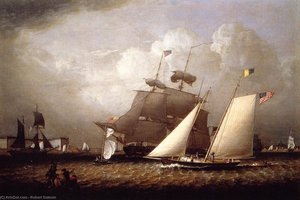
View of Greenock, Scotland


 Afficher la suite
Giclées et impressions d'art
Impressions giclées ou sur toile de qualité musée, avec une production rapide et des finitions au choix. ( Acheter la peinture faite à la main Passer au format image numérique)




P118B $10

P118H $10

P118W $10

P438Z $10

P508JH $12

P508YH $12

P805H $10

P805Z $10

P919BZ $10

P919G $10

P919XJ $10

P959ZH $10

P968JZ $12

W106C $8

W218G $10

W218JH $8

W218Y $10

W307PJ $10

W316G $10

W316PJ $8

W316Y $10

W398PJ $8

W4111J $10

W500HY $15

W500JH $15

W692G $12

W849H $8

W940BG $15

W953PJ $8




Choisissez parmi nos formats prédéfinis qui respectent les proportions originales de l’œuvre.

Vous pouvez saisir vos propres dimensions pour vous adapter à un cadre ou à un espace spécifique. Si la taille sélectionnée ne correspond pas aux proportions de l'image originale, nous recadrerons l'œuvre ou étendrons l'image avec une bordure en miroir ou une couleur unie. Une maquette numérique vous sera envoyée pour approbation avant le début de la production.
Veuillez noter que l'aperçu à l'écran ne reflète pas le recadrage ou l'extension réelle. Seule la maquette montrera avec précision la composition finale.
Bien que des tailles personnalisées soient disponibles, nous vous recommandons de choisir une dimension dans la liste prédéfinie afin de préserver les proportions originales.
Livraison dans le monde entier () en 2 semaines au lieu des 4/5 semaines habituelles. (27 septembre)

Livraison express gratuite dans le monde entier

Toile de lin de haute qualité

Assurance transport complète

Garantie de remboursement des droits de douane

Garantie de fidélité des couleurs

Garantie de retour de 100 jours (uniquement en cas de défaut)

Garantie de remboursement à 100%

Tarifs dégressifs sur quantité
 L'option verre n'est disponible que pour les dimensions inférieures à 110 cm.

View of Greenock, Scotland
Giclées et impressions d'art
Format de la reproduction
-


Prix total final
$ 80
A Panoramic Vision of Industry and Nature – Robert W. Salmon’s ‘View of Greenock’
Robert W. Salmon's 1816 painting, “View of Greenock, Scotland,” isn’t merely a landscape; it’s a meticulously observed snapshot of a burgeoning port city on the cusp of transformation. More than two centuries after its creation, this oil-on-canvas masterpiece offers a rare glimpse into the heart of a Scottish industrial awakening, blending the romantic ideals of the late 18th and early 19th centuries with a remarkably detailed depiction of everyday life and burgeoning maritime activity. The painting captures Greenock – then a vital trading hub on the River Clyde – not as a pristine wilderness but as an integrated part of its environment, showcasing the complex relationship between human settlement and the natural world.
Salmon’s artistic lineage is immediately apparent. He was deeply influenced by the Dutch masters of the 17th century, particularly their skill in rendering atmospheric perspective and capturing the subtle nuances of light and shadow. Furthermore, he drew inspiration from Italian *vedute* – landscape views – exemplified by artists like Claude Lorrain, whose emphasis on idealized landscapes and dramatic lighting resonates strongly within Salmon’s composition. This fusion of styles results in a painting that is both technically proficient and emotionally evocative, transporting the viewer to a specific moment in time and place.
The Scene Unfolds: A City in Transition
The painting immediately establishes a sense of depth and perspective through a carefully orchestrated arrangement of elements. The foreground features a small group of figures – likely travelers or laborers – resting near a cart and scattered belongings, providing a human scale to the vast landscape. These individuals are positioned strategically to draw the eye into the scene, leading us towards the sprawling cityscape nestled along the River Clyde. The buildings themselves—a mix of warehouses, factories, and residential structures—are rendered with remarkable precision, reflecting Salmon’s keen observational skills and his understanding of urban planning. Notice the linear arrangement of streets, mirroring a nascent grid system that would soon define Greenock's development.
Dominating the midground is the River Clyde, teeming with sailing vessels – evidence of Greenock’s thriving trade in timber, coal, and other commodities. The masts and sails create a dynamic interplay of lines, adding movement and vitality to the composition. The distant hills provide a dramatic backdrop, anchoring the scene within its geographical context. Salmon masterfully employs atmospheric perspective—the subtle shift in color and detail as objects recede into the distance—to convey the immense scale of the landscape and the sense of depth that stretches towards the horizon.
Symbolism and Historical Context
“View of Greenock” is more than just a topographical record; it’s imbued with symbolic meaning. The painting reflects a pivotal moment in Scottish history – the aftermath of the Napoleonic Wars and the rapid expansion of industrialization. Greenock, strategically located at the “Tail of the Bank,” where the Clyde deepens into the Firth of Clyde, was rapidly becoming a major port for exporting Scotland’s agricultural produce and importing manufactured goods. The presence of numerous ships signifies Greenock's growing importance as a commercial center, while the figures in the foreground represent the human cost – and potential benefits – of this economic transformation.
The painting also offers insights into the social fabric of Greenock at the time. The washerwomen depicted in the foreground are a common motif in 19th-century art, symbolizing hard work and domesticity. Their presence reminds us that even amidst the bustle of industrial activity, everyday life continued much as it always had.
A Legacy Preserved: Reproduction and Artistic Impact
Today, “View of Greenock” is held in the collection of the Museo Thyssen-Bornemisza in Madrid. Its enduring appeal lies not only in its technical brilliance but also in its ability to transport us back in time, offering a vivid glimpse into a rapidly changing world. Reproductions of this remarkable painting capture the essence of Salmon’s vision, allowing viewers to appreciate the intricate details and emotional depth of this historical masterpiece. When selecting a reproduction, consider the quality of materials used – oil on canvas is essential for achieving the authentic look and feel of the original—and the level of detail captured in the print.
Salmon's work stands as a testament to his skill and vision, offering a valuable window into the history of Greenock and the broader story of industrialization in Scotland. It’s a painting that continues to resonate with viewers today, reminding us of the enduring power of art to capture both the beauty and complexity of human experience.
Biographie de l'artiste
Jeunesse et Formation Artistique
- Origines : Salmon est né Robert Salomon de Francis Salomon, joaillier. Le port animé de Whitehaven a exercé une influence précoce sur son développement artistique.
- Influences Précoces : Sa formation n'est pas largement documentée, mais on pense qu'il a étudié les peintres marins néerlandais du XVIIe siècle, les artistes vedute italiens et Claude Lorrain.
- Premières Œuvres : Ses premières œuvres connues, “Deux Navires Marchands Armés Quittant le Port de Whitehaven” (1800) et “Le ‘Estridge’ au large de Douvres”, démontrent ses compétences précoces dans la capture de scènes maritimes.
- Début à la Royal Academy : Salmon a exposé pour la première fois à la Royal Academy en 1802, marquant une étape importante dans sa carrière.
Développement et Style Artistique
- Déménagement à Liverpool (1806) : Salmon s'est installé à Liverpool et a changé son nom en Salmon. Cette période a été marquée par la production de nombreuses peintures marines aujourd'hui conservées au National Maritime Museum de Londres.
- Portraits de Navires : Ses portraits de navires révèlent une connaissance approfondie des navires à voile et de leur mécanique, représentant souvent le même navire sous différents angles sur une seule toile.
- Popularité et Collectionneurs : Le travail de Salmon a gagné en popularité parmi les Bostonais éminents tels que Samuel Cabot, Robert Bennett Forbes et John Newmarch Cushing, ce qui indique sa reconnaissance croissante en Amérique.
- Pionnier du Luminisme : Il est considéré comme une figure clé dans le développement du Luminisme américain, influençant des artistes tels que William Bradford et Fitz Henry Lane. Son insistance sur la lumière et l'atmosphère créaient des scènes sereines et tranquilles.
Œuvres Notables et Importance Artistique
- Tableaux Clés : Parmi ses œuvres les plus reconnues figurent “Le Brig ‘Ariel’,” “Le Navire à Voile ‘Trelawney’,” et “Vue de Liverpool depuis Cheshire.” Ces peintures exemplifient son habileté à capturer la beauté et la complexité des navires à voile.
- Série du Port de Boston : Il a produit un ensemble important d'œuvres représentant le port de Boston, mettant en valeur la vie maritime et le Boston historique. “Boston Harbor from Castle Island (Ship Charlotte)” est un exemple notable.
- Influence sur l’Art Américain : Le style de Salmon a profondément influencé les générations futures de peintres de paysages marins américains, contribuant au développement du Luminisme en tant que mouvement artistique important.
Héritage et Reconnaissance
- Collections Muséales : Les œuvres de Salmon sont conservées dans des institutions prestigieuses telles que l'Académie Navale Américaine, le Museum of Fine Arts de Boston et le National Maritime Museum de Greenwich.
- Impact Durable : Ses peintures continuent d’inspirer les artistes aujourd’hui, témoignant de son habileté et de son art.
- Père du Luminisme Américain : L'héritage de Salmon est fermement établi en tant que pionnier du Luminisme américain, laissant une marque indélébile sur le monde de l'art.

Robert W. Salmon
1775 - 1845 , Royaume-Uni
En bref
- Artistes Influencés:
- William Bradford
- Fitz Henry Lane
- Artistes Influents:
- Peintres marins néerlandais
- Vedute italiennes
- Claude Lorrain
- Date De Naissance: 1775
- Lieu De Naissance: Whitehaven, Royaume-Uni
- Mouvement Artistique: Luminisme américain
- Nationalité: Britannique
- Nom Complet: Robert W. Salmon
- Oeuvres Notables:
- Le Brig 'Ariel'
- Sailing Ship 'Trelawney'
- Boston Harbor from Castle Island
Articles similaires
Robert W. Salmon: Navigating the Currents of Maritime Painting & American Realism
Explore the captivating maritime paintings of Robert W. Salmon, a pioneer of American Luminism. Discover his Boston Harbor scenes, legacy, and collecting guide at OriginalUniqueArt.

Les 10 Chefs-d'œuvre du Paysage Romantique : Artistes et Décor d'Intérieur
Plongez dans l'émotion du Romantisme avec les 10 plus beaux paysages de Friedrich, Turner & Delacroix. Découvrez leur histoire et trouvez l'inspiration déco idéale sur OriginalUniqueArt.com !
Alexander Nasmyth: Picturing Scotland's Romantic Landscape – Innovation & Identity
Explore the life & art of Alexander Nasmyth, a pivotal figure in Scottish Romantic landscape painting. Discover his iconic works, including portraits of Robert Burns, and learn about his lasting influence on national identity. Fine art reproductions available.

Évocations de lieux : Un voyage historique à travers l'art du paysage
Explorez l'histoire fascinante de la peinture de paysage à travers les chefs-d'œuvre du Romantisme. Découvrez Friedrich, Turner et Aivazovski et laissez-vous inspirer par la beauté sauvage et le sublime. Reproduction d'art de qualité chez OriginalUniqueArt.

David Roberts: A Scottish Pioneer of Topographical Art & Orientalist Vision
Explore the captivating world of David Roberts, a pioneering Scottish painter renowned for his detailed Orientalist scenes & stunning Egyptian landscapes. Discover his legacy and find museum-quality reproductions at OriginalUniqueArt.