Aperçu en situation
 Partager
 Partager
 Détails
 Guide imprimable

 Télécharger
 Articles similaires
 Radiographie
 Voir le diaporama
 Statistiques
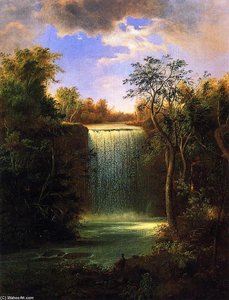
Landscape Mural
 Oil On Canvas
- WallArt
- Hudson River School
 1852
1852 280.0 x 221.0 cm
 Taft Museum of Art
 Afficher la suite
Reproduction à l'huile faite à la main
Huile sur toile peinte à la main, avec cadre et dimensions personnalisés, réalisée sur commande par nos artistes. ( Passer au format impression Passer au format image numérique)




P118B €10

P118H €10

P118W €10

P438Z €10

P508JH €12

P508YH €12

P805H €10

P805Z €10

P919BZ €10

P919G €10

P919XJ €10

P959ZH €10

P968JZ €12

W106C €8

W218G €10

W218JH €8

W218Y €10

W307PJ €10

W316G €10

W316PJ €8

W316Y €10

W398PJ €8

W4111J €10

W500HY €15

W500JH €15

W692G €12

W849H €8

W940BG €15

W953PJ €8




Choisissez parmi nos formats prédéfinis qui respectent les proportions originales de l’œuvre.

Saisissez la largeur et la hauteur souhaitées, pour s'adapter à votre cadre ou à votre mur. Cette œuvre est peinte à la main ; ainsi, pour un format de forme différente, l'artiste peut peindre un peu plus autour du tableau ou réduire légèrement les bords — c'est vous qui choisissez. Nous vous envoyons une maquette numérique pour approbation avant que la peinture ne commence. L'image présentée sur cette page ne reflète pas le résultat réel — seule la maquette le fait.
Après la commande, l’équipe OriginalUniqueArt.com contactera le client par e-mail pour recueillir ses instructions et lui fournira une maquette d’aperçu
Livraison dans le monde entier () en 3 à 4 semaines au lieu des 5 semaines habituelles. (22 octobre). Aucun compromis sur la qualité.

Livraison express gratuite dans le monde entier

Toile de lin de haute qualité

Assurance transport complète

Garantie de remboursement des droits de douane

Garantie de fidélité des couleurs

Garantie de retour de 100 jours (uniquement en cas de défaut)

Garantie de remboursement à 100%

Tarifs dégressifs sur quantité
 L'option verre n'est disponible que pour les dimensions inférieures à 110 cm.

Landscape Mural
Technique de reproduction
Format de la reproduction
-


Prix total final
€ 263
Robert Seldon Duncanson’s “Landscape Mural”: A Window into Romantic America
Robert Seldon Duncanson's "Landscape Mural," painted in 1852, isn’t merely a depiction of a serene vista; it’s a carefully constructed window into the heart of 19th-century American art and the evolving consciousness of its time. Commissioned by Nicholas Longworth, a prominent Cincinnati merchant and art patron, this monumental work—measuring an impressive 110 inches by 78 inches—represents a pivotal moment in Duncanson’s career and a significant contribution to the Hudson River School movement. More than just a pretty picture, it's a meditation on nature, spirituality, and the burgeoning sense of national identity taking shape within the United States.
The scene itself is deceptively simple: a winding river snakes through a densely wooded landscape, culminating in distant hills bathed in the soft light of a cloudy sky. Yet, beneath this apparent tranquility lies a complex layering of influences. Duncanson, deeply influenced by the European Romantic painters like Caspar David Friedrich and J.M.W. Turner, masterfully employs atmospheric perspective – a technique borrowed from the Northern Renaissance masters – to create an illusion of immense depth. The colors subtly shift with distance, suggesting both the vastness of the natural world and the limitations of human perception. The composition is carefully balanced, utilizing vertical elements like the trees to anchor the scene while the river provides a horizontal flow that guides the eye through the landscape.
A Pioneer’s Palette: Technique and Artistic Process
Duncanson's skill as a painter is evident in his meticulous attention to detail and his masterful use of oil paint. The brushstrokes are visible, contributing to the texture and richness of the scene—a hallmark of the Hudson River School style. He employed a layering technique, building up color gradually to achieve luminous effects and capturing the subtle nuances of light and shadow. Notably, Duncanson worked directly on the plaster walls of Longworth’s home, a practice known as “direct painting,” which allowed him to seamlessly integrate his artwork into the architecture. This method also meant that the mural was inherently tied to its environment, responding to the changing light and atmosphere within the room.
The choice of palette is particularly noteworthy. Duncanson favored muted earth tones—greens, browns, blues—creating a sense of quiet contemplation and harmony with nature. The subtle use of color evokes a feeling of nostalgia for a simpler time, reflecting the Romantic ideal of returning to nature as a source of spiritual renewal. He avoided dramatic contrasts or overly bright colors, opting instead for a more subdued and atmospheric approach that prioritized mood and emotion over literal representation.
Symbolism and the American Landscape
While superficially depicting a picturesque landscape, “Landscape Mural” is rich in symbolic meaning. The winding river can be interpreted as a metaphor for the journey of life, while the dense forest represents the mysteries and challenges that lie ahead. The distant hills symbolize aspiration and hope—a reminder of the potential for growth and fulfillment. Duncanson’s work reflects the growing American fascination with the natural world during this period, coinciding with westward expansion and the development of a distinct national identity.
Furthermore, Duncanson's background as an African American artist adds another layer of complexity to the mural's interpretation. Some scholars suggest that he subtly incorporated racial metaphors into his work, using the landscape to represent both the beauty and the challenges faced by Black Americans in a racially divided nation. The painting’s quiet dignity and contemplative mood can be seen as a powerful statement of resilience and hope in the face of adversity.
A Legacy of Beauty: Reproduction and Appreciation
Today, “Landscape Mural” stands as a testament to Duncanson's artistic vision and his enduring legacy. Reproductions offer a remarkable opportunity to experience the beauty and emotional depth of this iconic work. When selecting a reproduction, consider the quality of materials used—a high-quality print on archival paper will ensure that the colors remain vibrant for years to come. “Landscape Mural” continues to inspire artists and art lovers alike, reminding us of the power of nature to evoke emotion, stimulate contemplation, and connect us to something larger than ourselves.
Questions et réponses
Pour quel usage une reproduction de «Landscape Mural» de Robert Seldon Duncanson est-elle recommandée ?
L'utilisation recommandée d'une impression de « Landscape Mural » est Statement.
L'œuvre « Landscape Mural » présente-t-elle des contrastes ombre et lumière marqués ?
Le contraste clair-obscur de « Landscape Mural » est évalué à Gentle. Le contraste décrit l'intensité de la différence entre les zones claires et les zones sombres.
Quelle technique a été utilisée pour «Landscape Mural» de Robert Seldon Duncanson ?
Robert Seldon Duncanson a utilisé la technique du Oil On Canvas pour "Landscape Mural". Cette technique définit la nature matérielle de l'œuvre originale.
Biographie de l'artiste
Robert Seldon Duncanson : Une Vie et un Héritage
- Né: Fayetteville, New York (vers 1821)
- Décédé: 21 décembre 1872
- Origine: OriginalUniqueArt
Première Vie et Développement Artistique
- La famille de Duncanson était d'ascendance européenne et africaine. Son père, John Dean Duncanson, un commerçant noir libre, a inculqué à ses enfants la valeur du travail acharné et de l'éducation.
- La famille déménagea à Monroe, dans le Michigan, où Robert fit son apprentissage en menuiserie et en peinture. Il a démontré un talent précoce pour l'art, ce qui l'a conduit à se consacrer au portrait.
- En 1840, il s'installa à Cincinnati, Ohio, un centre culturel florissant connu sous le nom d'"Athènes de l'Ouest". Cet environnement a offert des opportunités de croissance artistique et d'exposition.
- Duncanson était largement autodidacte, étudiant les gravures et les estampes, esquissant à partir de la nature et copiant les œuvres d'autres artistes. Il n'a pas reçu de formation formelle mais a développé un œil aiguisé et une compétence technique.
Style Artistique et Influences
- Influence de l’École du fleuve Hudson : Le style de Duncanson était fortement influencé par l'École du fleuve Hudson, connue pour ses représentations romantiques des régions sauvages américaines. Des artistes comme Thomas Cole ont été une source d'inspiration importante.
- Concentration sur le paysage : Il s’est tourné vers les paysages, capturant des scènes de la vallée de l'Ohio et au-delà.
- Romantisme : Ses œuvres transmettaient souvent un sentiment de grandeur, de tranquillité et de connexion spirituelle avec la nature, caractéristique du romantisme.
- Palette de couleurs et technique : Duncanson employait une palette de couleurs riches et des détails méticuleux dans ses peintures, démontrant une maîtrise de la technique.
Réalisations Majeures et Reconnaissance
- Premières expositions : Ses œuvres ont été exposées à l'Académie des beaux-arts de Cincinnati dès 1842, ce qui lui a valu une reconnaissance au sein de la communauté artistique locale.
- Tournée européenne (1853-1854) : Un tournant important dans sa carrière fut un voyage en Europe où il étudia les maîtres européens et élargit ses horizons artistiques.
- Acclamation internationale : Duncanson a obtenu une reconnaissance internationale, exposant ses œuvres en Angleterre, en Écosse, au Canada et aux États-Unis. Il est devenu le premier artiste afro-américain à obtenir un tel éloge généralisé.
- Tradition de la vallée de l'Ohio : Il a joué un rôle clé dans le développement de la tradition du paysage de la vallée de l'Ohio, contribuant de manière significative à son identité artistique.
Signification Historique et Héritage
- Pionnier pour les artistes noirs : Le succès de Duncanson a brisé les barrières pour les artistes afro-américains à une époque de préjugés raciaux et de discrimination. Il a servi d'inspiration aux générations futures.
- Identité raciale dans l’art : Les historiens de l'art débattent de la mesure dans laquelle sa race a influencé son expression artistique, certains suggérant des représentations symboliques subtiles de thèmes raciaux au sein de ses paysages.
- Figure oubliée redécouverte : Pendant de nombreuses années, le travail de Duncanson a été largement négligé. Des recherches et expositions récentes ont permis de porter une nouvelle attention à ses contributions à l'histoire de l'art américain.
- Témoignage de résilience : Son histoire est un témoignage de la résilience et du talent des Afro-Américains face à l'adversité, démontrant leur capacité à atteindre l'excellence artistique malgré les défis systémiques.
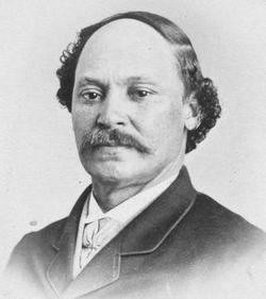
Robert Seldon Duncanson
1821 - 1872 , États-Unis d'Amérique
En bref
- Artistes Influents: ['Thomas Cole']
- Date De Décès: 21 décembre 1872
- Date De Naissance: c. 1821
- Lieu De Naissance: Fayetteville, États-Unis
- Mouvement Artistique: École du fleuve Hudson
- Nationalité: Américain
- Nom Complet: Robert Seldon Duncanson
- Oeuvres Notables:
- Roses Still Life
- Waterfall...
- Vulture and Its Prey
- Minnenopa Falls
Articles connexes
Robert Spencer: Luminism, Narrative & the American Landscape Tradition
Explore the captivating world of Luminism & the Hudson River School with our expert analysis. Discover the history, artists, and enduring beauty of 19th-century American landscape painting. Find museum-quality reproductions at OriginalUniqueArt.

Evoking Nature's Sublime: A Comprehensive Exploration of 19th-Century Landscape Painting
Explore the captivating world of 19th-century landscape painting! Discover renowned artists like Friedrich & Monet, key movements, and find the perfect artwork to bring nature's serenity into your home. Expert insights at OriginalUniqueArt.
L'École du fleuve Hudson : Romantisme américain et exploration d'un paysage national
Explorez l'École du fleuve Hudson : un mouvement artistique américain majeur célébrant la nature et le sublime. Découvrez ses peintres emblématiques, son histoire et son héritage durable avec OriginalUniqueArt.

L'École du fleuve Hudson : 10 chefs-d'œuvre incontournables pour sublimer votre intérieur
Plongez dans l'univers grandiose de l'École du fleuve Hudson ! Découvrez 10 chefs-d'œuvre emblématiques de Thomas Cole, Frederic Church et Albert Bierstadt. Inspirez votre décoration intérieure avec ces paysages américains romantiques. Explorez la collection complète sur OriginalUniqueArt.com.

Les 10 Chefs-d'œuvre du Paysage Romantique : Artistes et Décor d'Intérieur
Plongez dans l'émotion du Romantisme avec les 10 plus beaux paysages de Friedrich, Turner & Delacroix. Découvrez leur histoire et trouvez l'inspiration déco idéale sur OriginalUniqueArt.com !