

 Aperçu en situation
 Partager
 Partager
 Détails
 Guide imprimable

 Télécharger
 Articles similaires
 Radiographie
 Voir le diaporama
 Statistiques
X Within X Orange


 Afficher la suite
L’œuvre d'art présentée sur cette page est protégée par le droit d'auteur, ce qui signifie que nous ne pouvons légalement créer ou vendre de reproduction identique. Cette protection est appliquée en vertu d'accords internationaux tels que la Convention de Berne et par les lois nationales, notamment celles énoncées par le Loi américaine sur le droit d'auteur - Titre 17.
Cette méthode est pleinement conforme aux réglementations sur le droit d'auteur car elle ne repose pas sur la copie ou la duplication de l'œuvre protégée. Il s'agit plutôt d'une réinterprétation créative — une nouvelle peinture qui s'inspire de l'original sans pour autant lui être identique.
Giclées et impressions d'art
Impressions giclées ou sur toile de qualité musée, avec une production rapide et des finitions au choix. ( Acheter la peinture faite à la main Passer au format image numérique)




P118B €10

P118H €10

P118W €10

P438Z €10

P508JH €12

P508YH €12

P805H €10

P805Z €10

P919BZ €10

P919G €10

P919XJ €10

P959ZH €10

P968JZ €12

W106C €8

W218G €10

W218JH €8

W218Y €10

W307PJ €10

W316G €10

W316PJ €8

W316Y €10

W398PJ €8

W4111J €10

W500HY €15

W500JH €15

W692G €12

W849H €8

W940BG €15

W953PJ €8




Choisissez parmi nos formats prédéfinis qui respectent les proportions originales de l’œuvre.

Saisissez la largeur et la hauteur souhaitées pour qu'elles s'adaptent à votre cadre ou à votre mur. Une impression ne peut être que découpée, elle ne peut jamais être agrandie au-delà de l'image originale ; ainsi, un format de forme différente entraînera la perte d'une partie de l'image. Nous vous envoyons une maquette numérique pour approbation avant toute impression. L'image présentée sur cette page ne montre pas le recadrage réel — seule la maquette le permet.
Livraison dans le monde entier () en 2 semaines au lieu des 4/5 semaines habituelles. (21 octobre)

Livraison express gratuite dans le monde entier

Toile de lin de haute qualité

Assurance transport complète

Garantie de remboursement des droits de douane

Garantie de fidélité des couleurs

Garantie de retour de 100 jours (uniquement en cas de défaut)

Garantie de remboursement à 100%

Tarifs dégressifs sur quantité
 L'option verre n'est disponible que pour les dimensions inférieures à 110 cm.

X Within X Orange
Giclées et impressions d'art
Format de la reproduction
-


Prix total final
€ 70
The Genesis of a Geometric Echo
Robert Mangold’s “X Within X Orange,” created in 1981, isn't merely a painting; it’s an invitation to contemplate the very essence of visual perception. Born in North Tonawanda, New York, in 1937, Mangold emerged from the shadow of Abstract Expressionism not with explosive gestures but with a quiet, almost austere approach—a deliberate dismantling of traditional painting conventions that paved the way for a new era of minimalist inquiry. This particular work, housed within The Phillips Collection in Washington D.C., exemplifies this shift, presenting a deceptively simple composition: a large, vibrant orange rectangle bisected by two precisely drawn vertical lines, dividing it into four distinct sections. Yet, beneath this apparent simplicity lies a complex interplay of form, color, and the inherent tension between the visible and the implied—a meditation on space, line, and the fundamental nature of representation. The stark white background amplifies the boldness of the orange, creating a visual dialogue that immediately draws the viewer’s eye to the geometric core of the piece.A Study in Controlled Abstraction
Mangold's technique is characterized by meticulous precision and an almost engineering-like approach. He employed acrylic paint on canvas, applying it with a controlled hand—a deliberate departure from the looser brushstrokes of earlier movements. The lines are not merely painted; they’re drawn, creating a sense of crispness and definition that contrasts sharply with the fluidity often associated with abstract art. The choice of orange is particularly significant – it's a color brimming with energy and warmth, yet simultaneously grounded and stable. It acts as both a focal point and a subtle counterpoint to the void created by the lines, suggesting an inherent balance within the composition. The flatness of the surface, devoid of texture or illusionistic depth, reinforces the painting’s commitment to pure form and geometric relationships. This deliberate restraint is key to understanding Mangold's minimalist philosophy—to strip away all unnecessary elements and focus on the essential qualities of the artwork itself.Echoes of Minimalism and Beyond
“X Within X Orange” firmly situates itself within the broader context of Minimalist art, a movement that challenged traditional notions of painting by prioritizing geometric forms, industrial materials, and a reduction to their most basic elements. However, Mangold’s work transcends simple categorization. It shares affinities with constructive abstraction, a style championed by artists like Josef Albers, who similarly explored the relationships between shapes and colors. Furthermore, there's an intriguing dialogue with the concept of “negative space”—the area surrounding and between forms—a principle that is subtly emphasized here through the deliberate use of white. The painting invites viewers to actively engage with this negative space, completing the composition mentally and experiencing it as a dynamic interplay of positive and negative elements. The work’s influence can also be seen in later developments within minimalism and conceptual art, demonstrating Mangold's lasting impact on contemporary artistic practice.Symbolic Resonance: Void and Form
While seemingly straightforward, “X Within X Orange” carries a potent symbolic weight. The ‘X’ itself—a fundamental geometric shape—represents both connection and division, suggesting an inherent duality within the artwork. The lines bisecting it can be interpreted as boundaries, thresholds, or even divisions of consciousness. The orange rectangle, in turn, embodies warmth, energy, and vitality, while the white space represents emptiness, potential, and the unknown. Together, these elements create a visual metaphor for the human condition—the constant negotiation between opposing forces, the search for meaning within chaos, and the inherent tension between form and void. The painting’s simplicity belies its profound capacity to evoke contemplation and introspection.A Legacy of Quiet Innovation
Robert Mangold's work continues to resonate with audiences today, not only for its aesthetic qualities but also for its intellectual rigor and conceptual depth. “X Within X Orange” stands as a testament to his commitment to pushing the boundaries of painting while remaining true to its fundamental principles. Reproductions of this iconic piece offer an accessible way to experience Mangold’s vision—a chance to engage with a work that invites repeated viewing, each time revealing new layers of meaning and nuance. It's a reminder that art doesn't always need grand gestures or overt displays of emotion; sometimes, the most powerful works are those that quietly challenge our perceptions and invite us to contemplate the world around us in a fresh and insightful way.Questions et réponses
L'œuvre « X Within X Orange » se trouve-t-elle dans le pays de son créateur ?
Non - l'œuvre est conservée à l'étranger. « X Within X Orange » est conservée en États-Unis, tandis que Robert Mangold est né(e) en États-Unis d'Amérique.
Comment les couleurs de "X Within X Orange" s'harmonisent-elles entre elles ?
«X Within X Orange» de Robert Mangold présente une harmonie de couleurs Unified Palette.
Quelle émotion «X Within X Orange» de Robert Mangold dégage-t-il ?
L'atmosphère qui se dégage de «X Within X Orange» de Robert Mangold est Calm, et sa tonalité émotionnelle est Reflective.
Biographie de l'artiste
Robert Mangold : Un Pionnier du Minimalisme
Robert Mangold (né en 1937) est un peintre minimaliste américain très influent, célébré pour son approche innovante de la forme et de la couleur. Son œuvre remet en question les frontières traditionnelles de la peinture, en mettant l'accent sur les idées conceptuelles plutôt que sur l'exécution matérielle.
Jeunesse et Formation
Né à North Tonawanda, dans l’État de New York, Robert Mangold a initialement poursuivi des études d’ingénierie avant de se tourner vers l’art. Il a obtenu une licence en Beaux-Arts à l'Université de Buffalo en 1959 et un master en arts plastiques à l'École des Arts de Yale University en 1961.
Développement Artistique & Influences
Le parcours artistique de Mangold a commencé avec l’expressionnisme abstrait, mais il s’est rapidement tourné vers le minimalisme au début des années 1960. Il a été significativement influencé par des artistes tels que Kazimir Malevitch, Piet Mondrian et Barnett Newman, qui ont exploré l’abstraction pure et les formes réduites. Son œuvre reflète également une réaction contre l'intensité gestuelle de l'expressionnisme abstrait, en favorisant plutôt une approche plus retenue et intellectuelle.
Caractéristiques Clés & Style
Mangold est reconnu pour ses toiles façonnées – peintures qui ne sont pas rectangulaires mais prennent des formes irrégulières ou géométriques. Cette rupture avec les structures de support traditionnelles est devenue une caractéristique distinctive de son style. Ses peintures présentent généralement :
- Abstraction Géométrique : Des formes et lignes simplifiées dominent ses compositions.
- Champs de Couleurs Subtils : Il utilise des tons doux et pastel pour créer des effets atmosphériques.
- Esthétique Minimaliste : Un accent sur les formes essentielles et l’élimination des détails inutiles.
- Absence de Cadre Traditionnel : Ses toiles apparaissent souvent non encadrées, soulignant davantage leurs formes uniques.
Œuvres Majeures & Séries
Tout au long de sa carrière, Mangold a produit plusieurs séries importantes:
- Série Plan/Figure : Explore la relation entre forme et couleur à travers des compositions divisées en toile.
- Peintures Murales : Œuvres à grande échelle conçues pour interagir avec les espaces architecturaux.
- Série Anneaux : Présente des formes circulaires ou anneauées dans des champs rectangulaires.
- Série Colonne : Investigue la verticalité et les relations spatiales.
Réalisations & Reconnaissances
L'œuvre de Robert Mangold a été largement exposée dans des musées et des galeries du monde entier. Il a reçu de nombreux prix et distinctions, consolidant ainsi sa position en tant que figure de proue de l’art contemporain. Ses œuvres sont conservées dans des collections prestigieuses notamment :
- Le Museum of Modern Art, New York
- Le Metropolitan Museum of Art, New York
- La Tate Modern, Londres
Signification Historique & Héritage
Robert Mangold a joué un rôle crucial dans la formation du développement de la peinture minimaliste. Son exploration des toiles façonnées et des champs de couleurs subtils a élargi les possibilités de l’art abstrait et a remis en question les notions conventionnelles de représentation. Il, avec des artistes comme Robert Ryman, représente le cœur de la peinture minimaliste, privilégiant la rigueur conceptuelle et la réduction formelle. Son influence se fait encore sentir par les artistes contemporains travaillant avec l’abstraction et les formes géométriques.

Robert Mangold
1937 - , États-Unis d'Amérique
En bref
- Artistes Influents:
- Kazimir Malevich
- Piet Mondrian
- Barnett Newman
- Date Of Birth: 12 octobre 1937
- Full Name: Robert Mangold
- Influences Artistiques: ['Robert Ryman']
- Mouvement Artistique: Minimalisme
- Nationalité: Américain
- Place De Naissance: North Tonawanda, États-Unis
- Œuvres Notables:
- Plane/Figure Series
- Ring Series
Articles connexes

Beyond the Lines: The High-Impact Trend Forecast of Geometric Abstraction
Discover the high-impact world of Geometric Abstraction. From Cubist roots to modern urban trends, explore how bold shapes and colors redefine contemporary design. Elevate your space with expert art insights and custom-made abstract masterpieces.

Abstraction Géométrique : Les 10 Chefs-d'œuvre qui ont Marqué l'Histoire de l'Art
Plongez au cœur de l'abstraction géométrique avec OriginalUniqueArt.com ! Découvrez les 10 œuvres majeures de Mondrian, Malevitch et Kandinsky qui ont révolutionné l'art moderne. Inspirez votre décoration intérieure avec des reproductions de tableaux exceptionnelles. Explorez la collection en ligne !

Neo-Abstract Art: The High-Impact Evolution of Modern Visual Energy and Geometric Sophistication
Discover the power of Neo-Abstract art. Explore how bold geometric forms and high-impact visual energy are redefining modern design. Learn to curate sophisticated, high-energy spaces with the latest trends in contemporary abstraction and structural color.
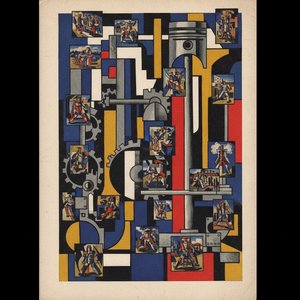
Fernand Léger : Les 25 Œuvres Maîtresses d'un Pionnier du Modernisme | OriginalUniqueArt
Plongez dans l'univers vibrant de Fernand Léger ! Découvrez les 25 œuvres majeures du cubisme et du tubisme, explorant formes géométriques et couleurs audacieuses. Retrouvez des reproductions d'art exceptionnelles sur OriginalUniqueArt.com.

The Beauty of Less: A Sophisticated Guide to the Soul of Minimalist Art and Geometric Harmony
Discover the profound elegance of minimalist art. Explore how geometric abstraction and the beauty of reduction create serene, sophisticated spaces through our expert guide to finding soul and harmony in every line and shape.