

 Aperçu en situation
 Envoyer
 Partager
 Détails de l'œuvre

 Télécharger
 Articles similaires
 Radiographie
 Diaporama
Gertrude Vanderbilt Whitney


 Lire la suite
Reproduction à l'huile faite à la main
Huile sur toile peinte à la main, avec cadre et dimensions personnalisés, réalisée sur commande par nos artistes. ( Commander l'impression Télécharger l'image haute résolution)




P118B $10

P118H $10

P118W $10

P438Z $10

P508JH $12

P508YH $12

P805H $10

P805Z $10

P919BZ $10

P919G $10

P919XJ $10

P959ZH $10

P968JZ $12

W106C $8

W218G $10

W218JH $8

W218Y $10

W307PJ $10

W316G $10

W316PJ $8

W316Y $10

W398PJ $8

W4111J $10

W500HY $15

W500JH $15

W692G $12

W849H $8

W940BG $15

W953PJ $8




Choisissez parmi nos formats prédéfinis qui respectent les proportions originales de l’œuvre.

Vous pouvez saisir vos propres dimensions pour l'adapter à un cadre ou à un espace spécifique. Si la taille sélectionnée ne correspond pas aux proportions de l'image d'origine, nous recadrerons l'œuvre ou prolongerons la peinture avec des éléments peints à la main supplémentaires. Une maquette numérique vous sera envoyée pour approbation avant le début de la production.
Veuillez noter que l'aperçu à l'écran ne reflète pas le recadrage ou l'extension réels. Seule la maquette montrera fidèlement la composition finale.
Bien que des tailles personnalisées soient disponibles, nous vous recommandons de sélectionner une dimension dans la liste prédéfinie afin de préserver les proportions d'origine.
Après la commande, l’équipe OriginalUniqueArt.com contactera le client par e-mail pour recueillir ses instructions et lui fournira une maquette d’aperçu
Livraison dans le monde entier () en 3 à 4 semaines au lieu des 5 semaines habituelles. (20 août). Aucun compromis sur la qualité.

Livraison express gratuite dans le monde entier

Toile de lin de qualité supérieure

Assurance transport complète

Garantie de remboursement des droits de douane

Garantie de fidélité des couleurs

Politique de retour de 60 jours (uniquement en cas de défaut)

Garantie de remboursement à 100%

Offre de tarifs dégressifs
 L'option verre n'est disponible que pour les dimensions inférieures à 110 cm.

Gertrude Vanderbilt Whitney
Technique de reproduction
Format de la reproduction
-


Prix total
$ 300
Description de l'œuvre
A Portrait of Poise: The Captivating Presence of Gertrude Vanderbilt Whitney
In the realm of American Impressionism and the gritty, soulful movement known as the Ashcan School, few portraits capture the intersection of aristocratic grace and modern vitality quite like Robert Henri’s 1916 masterpiece, Gertrude Vanderbilt Whitney. This oil on canvas is far more than a mere likeness; it is an intimate window into a moment of profound relaxation and self-assuredness. The subject, draped in a striking blue dress, sits upon a couch with her hands tucked behind her head—a pose that defies the stiff, formal conventions of traditional portraiture. Instead, she exudes an effortless confidence, inviting the viewer into a private sphere of leisure. The vibrant interplay between the deep blues of her attire and the warm, sun-drenched yellow of the blanket draped nearby creates a visual rhythm that breathes life into the composition, making the scene feel as though it were captured in a fleeting, beautiful heartbeat.
The technique employed by Henri is nothing short of masterful, characterized by the bold, expressive brushstrokes that became his signature. As a leading figure of the Ashcan School, Henri moved away from the polished, academic finish of his predecessors, opting instead for a tactile energy that emphasizes movement and emotion. In this work, one can sense the artist's hand in every stroke; the paint is applied with a certain bravado that lends texture to the fabric of the dress and depth to the surrounding shadows. This painterly approach does not merely describe the scene but interprets it, imbuing the atmosphere with a sense of spontaneity. For the discerning collector or interior designer, this piece offers a sophisticated balance of color and form, making it an ideal centerpiece for a room that seeks to evoke both classical elegance and modern dynamism.
Historical Resonance and Artistic Legacy
To understand the depth of this painting, one must look toward the cultural landscape of early 20th-century America. The subject herself, Gertrude Vanderbilt Whitney, was a figure of immense historical significance—a sculptor and philanthropist whose legacy would eventually culminate in the founding of the Whitney Museum of American Art. Through Henri’s eyes, we see not just a socialite, but a symbol of the burgeoning American spirit. The painting sits at a crossroads of history, reflecting a period when American art was beginning to break free from European constraints to find its own unique, rugged, and honest voice. The presence of other figures in the periphery, caught in moments of quiet repose, adds a layer of social complexity, suggesting a larger narrative of a generation enjoying the fruits of a transformative era.
For those looking to bring this piece into their personal collection through a high-quality reproduction, it is important to appreciate the emotional resonance it carries. A hand-painted oil reproduction from OriginalUniqueArt.com captures the very essence of Henri’s thick impasto and his ability to manipulate light. Whether placed in a contemporary gallery setting or a classic study, this artwork serves as a conversation starter—a testament to a time when art was used to capture the soul of the individual and the pulse of a nation. It is an investment in atmosphere, offering a sense of timelessness that transcends the decades since its creation.
Biographie de l'artiste
Un commencement tumultueux
Robert Henri, né Robert Henry Cozad le 24 juin 1865 à Cincinnati, Ohio, était un peintre et enseignant américain. Sa vie précoce fut marquée par la relation tumultueuse entre son père, John Jackson Cozad, joueur et promoteur immobilier, et sa mère, Theresa Gatewood Cozad. Cela mena à un événement significatif en 1882, qui allait modifier le cours de leur existence.L'École Ashcan et les Huit
Robert Henri devint une figure de proue de l’école ashcan du réalisme américain et un organisateur des Huit, une association informelle d’artistes qui protestaient contre les pratiques d’exposition restrictives de la puissante et conservatrice National Academy of Design. Ce groupe comprenait William Glackens, George Luks, Everett Shinn et John Sloan.Évolution artistique
Le parcours artistique d'Henri commença en 1886 à la Pennsylvania Academy of the Fine Arts de Philadelphie, sous la direction de Thomas Anshutz. Il se rendit ensuite à Paris en 1888 pour étudier à l’Académie Julian, où il fut influencé par William-Adolphe Bouguereau et François Millet, embrassant finalement l'impressionnisme.Enseignement et influence
Henri commença à enseigner à la Philadelphia School of Design for Women en 1892. Parmi ses élèves figuraient Joseph Stella, Edward Hopper, Rockwell Kent, George Bellows, Norman Raeben, Louis D. Fancher et Stuart Davis. En 1898, il épousa Linda Craige, une étudiante de son cours d'art privé. Après le décès de celle-ci en 1905, il se remarie avec Marjorie Organ en 1908. Ses dernières années furent marquées par son influence continue sur le réalisme américain.- Œuvres clés : "Woman in Manteau" (1899) et "La Neige" ("The Snow"), qui fut achetée par le gouvernement français pour être exposée au Musée du Luxembourg.
- Élèves notables : Joseph Stella, Edward Hopper, Rockwell Kent, George Bellows, Norman Raeben, Louis D. Fancher et Stuart Davis.
- Mouvement artistique : École ashcan du réalisme américain.
Héritage
L'impact de Robert Henri sur l’art américain est indéniable. Son engagement envers le réalisme et son influence sur la prochaine génération d’artistes ont laissé une marque indélébile. Explorez davantage Robert Henri et ses contemporains dans le mouvement artistique du réalisme américain ou plongez dans le monde d’Edward Hopper, l'un de ses élèves les plus notables.
Robert Henri
1865 - 1929 , États-Unis d'Amérique
L'essentiel de l'artiste
- Artistic Movement Or Style: Réalisme américain (Ashcan)
- Artists Or Movements Influenced By This Artist:
- Edward Hopper
- Rockwell Kent
- Artists Who Influenced This Artist:
- William-Adolphe Bouguereau
- François Millet
- Date Of Birth: 24 juin 1865
- Date Of Death: 1929
- Full Name: Robert Henri
- Nationality: Américain
- Notable Artworks:
- Woman in Manteau
- La Neige
- Place Of Birth (City And Country): Cincinnati, États-Unis
Articles connexes
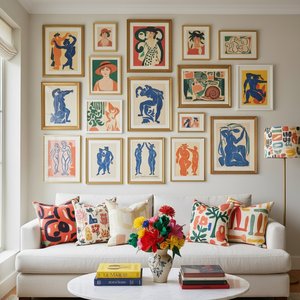
Henri Matisse : Les 25 Œuvres Maîtresses d'un Génie de la Couleur | OriginalUniqueArt
Plongez dans l'univers vibrant d'Henri Matisse ! Découvrez les 25 œuvres majeures du fauvisme et de la peinture moderne. Explorez La Danse, L'Atelier Rouge & plus encore. Reproductions de qualité musée sur OriginalUniqueArt.com.

Les 10 Chefs-d'œuvre Dominés par le Bleu Ardoise : Art, Histoire & Décor
Plongez dans l'univers fascinant des 10 plus beaux tableaux dominés par le bleu ardoise. Découvrez l'histoire, les artistes et les techniques de ces chefs-d'œuvre impressionnistes et contemporains. Inspirez votre décoration intérieure avec !
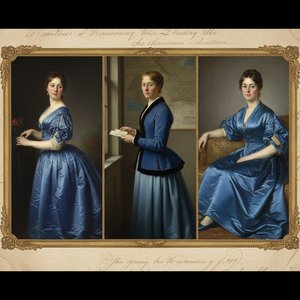
Azure Visions: Exploring Representations of the Blue Dress in Western Art History
Explore the rich history of the blue dress in Western art! Discover its symbolism, from Renaissance masterpieces to modern interpretations by artists like Martin & Schiele. Uncover cultural meanings and artistic techniques.
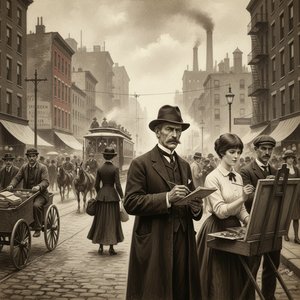
Robert Henri & the Spirit of American Realism: A Legacy of Urban Life and Artistic Independence
Explore the life & legacy of Robert Henri, a pivotal figure in American Realism. Discover his captivating portraits, influence on the Ashcan School, and enduring impact on art history. Learn more at OriginalUniqueArt.

The Allure of Azure: Exploring the Symbolic & Aesthetic Depths of Blue in Art History
Explore the rich history of blue in art! Discover its symbolism, from ancient pigments to modern masterpieces by Kandinsky & Seurat. Uncover the psychological impact and cultural meanings behind this captivating hue.



