Aperçu en situation
 Partager
 Partager
 Détails
 Guide imprimable

 Télécharger
 Articles similaires
 Radiographie
 Voir le diaporama
 Statistiques
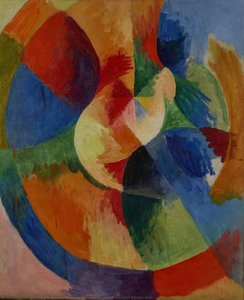
Study for the Cardiff Team
 Acrylic On Canvas
- WallArt
- Cubist Color Theory
 1922
1922 23.0 x 28.0 cm
 Musée Préfectoral d'Art de la Préfecture d'Aichi
 Afficher la suite
Giclées et impressions d'art
Impressions giclées ou sur toile de qualité musée, avec une production rapide et des finitions au choix. ( Acheter la peinture faite à la main Passer au format image numérique)




P118B €10

P118H €10

P118W €10

P438Z €10

P508JH €12

P508YH €12

P805H €10

P805Z €10

P919BZ €10

P919G €10

P919XJ €10

P959ZH €10

P968JZ €12

W106C €8

W218G €10

W218JH €8

W218Y €10

W307PJ €10

W316G €10

W316PJ €8

W316Y €10

W398PJ €8

W4111J €10

W500HY €15

W500JH €15

W692G €12

W849H €8

W940BG €15

W953PJ €8




Choisissez parmi nos formats prédéfinis qui respectent les proportions originales de l’œuvre.

Saisissez la largeur et la hauteur souhaitées pour qu'elles s'adaptent à votre cadre ou à votre mur. Une impression ne peut être que découpée, elle ne peut jamais être agrandie au-delà de l'image originale ; ainsi, un format de forme différente entraînera la perte d'une partie de l'image. Nous vous envoyons une maquette numérique pour approbation avant toute impression. L'image présentée sur cette page ne montre pas le recadrage réel — seule la maquette le permet.
Livraison dans le monde entier () en 2 semaines au lieu des 4/5 semaines habituelles. (21 octobre)

Livraison express gratuite dans le monde entier

Toile de lin de haute qualité

Assurance transport complète

Garantie de remboursement des droits de douane

Garantie de fidélité des couleurs

Garantie de retour de 100 jours (uniquement en cas de défaut)

Garantie de remboursement à 100%

Tarifs dégressifs sur quantité
 L'option verre n'est disponible que pour les dimensions inférieures à 110 cm.

Study for the Cardiff Team
Giclées et impressions d'art
Format de la reproduction
-


Prix total final
€ 70
Robert Delaunay: A Pioneer of Abstract Color – Exploring “Study for the Cardiff Team”
Robert Delaunay’s “Study for the Cardiff Team,” completed in 1922, stands as a cornerstone of Orphism and a testament to his groundbreaking approach to painting. More than just an architectural sketch—though its origins undoubtedly lie in visualizing urban spaces—this monochrome drawing delves into a profound exploration of color theory and geometric abstraction, influencing generations of artists.
The Birth of Orphism
Delaunay’s artistic trajectory began with Impressionism, but he swiftly rejected its focus on capturing fleeting impressions of light. Alongside Sonia Delaunay, he spearheaded the Orphism movement, rejecting representational art altogether in favor of a purely visual language centered around color and form. Inspired by Kandinsky's theoretical explorations into the spiritual significance of color, Orphists sought to express emotion directly through geometric shapes—circles, squares, triangles—arranged in vibrant combinations that defied traditional perspective.
Technique and Composition
"Study for the Cardiff Team" exemplifies Delaunay’s meticulous technique. The artist employed a dry pastel medium, applying delicate strokes of pigment onto paper to achieve remarkable tonal gradations. Notice the careful layering of colors—primarily shades of gray—creating an illusion of depth and texture that transcends mere depiction. The composition itself is deliberately asymmetrical, featuring two prominent clocks positioned strategically within the cityscape. These clocks aren’t merely decorative elements; they symbolize time's relentless march and serve as a visual metaphor for Delaunay’s preoccupation with capturing the essence of movement and dynamism.
Historical Context: Weimar Republic and Artistic Innovation
The painting emerged during the turbulent Weimar Republic, a period marked by political instability and social upheaval. However, amidst this uncertainty flourished an unprecedented surge of artistic innovation. Artists like Delaunay were actively dismantling established conventions, experimenting with new materials and approaches to challenge viewers’ perceptions of reality. Orphism represented a radical departure from academic traditions, aligning itself with the broader intellectual currents of Surrealism and Dada—movements that questioned rationality and embraced spontaneity.
Symbolic Resonance: Light, Time, and Urban Space
"Study for the Cardiff Team" resonates deeply on an emotional level. The monochrome palette evokes a sense of stillness and contemplation, inviting viewers to consider the underlying rhythms of urban life. Yet, the clocks—repeatedly appearing in Delaunay’s work—suggest a constant awareness of time's passage and its influence on human experience. Ultimately, this drawing transcends mere representation; it aspires to convey a profound understanding of color theory and geometric abstraction as tools for expressing emotion and capturing the spirit of an era.
A Legacy of Influence
Delaunay’s “Study for the Cardiff Team” continues to inspire artists and designers today. Its masterful use of pastel technique, its asymmetrical composition, and its symbolic references solidify its place among the most significant achievements of abstract art. Reproductions of this captivating piece offer a glimpse into Delaunay's visionary aesthetic—a timeless reminder that true artistic expression lies in embracing innovation and conveying emotion with unwavering conviction.
Questions et réponses
Quelle est la technique et la date de création de «Study for the Cardiff Team» de Robert Delaunay ?
La technique de «Study for the Cardiff Team» de Robert Delaunay est Acrylic On Canvas, et l'œuvre date de 1922.
À quel point les couleurs de «Study for the Cardiff Team» de Robert Delaunay sont-elles harmonieuses ?
L'harmonie colorée de « Study for the Cardiff Team » est décrite comme étant Unified Palette.
Quelle palette de couleurs utilise "Study for the Cardiff Team" ?
La palette de «Study for the Cardiff Team» de Robert Delaunay est décrite comme étant Neutrals. Il s'agit d'une description concise des couleurs de l'œuvre.
Biographie de l'artiste
Premières années et débuts artistiques
Robert Delaunay, un artiste français, est né le 12 avril 1885 à Paris. Il est surtout connu pour avoir cofondé le mouvement artistique orphique avec sa femme Sonia Delaunay et d'autres. Ce mouvement, caractérisé par l'utilisation de couleurs vives et de formes géométriques, visait à exprimer la vie moderne à travers des formes abstraites.Style artistique et influences
Le style artistique de Delaunay se distinguait par une utilisation audacieuse de la couleur et un amour clair pour l'expérimentation tant en termes de profondeur que de tonalité. Ses œuvres ultérieures étaient plus abstraites, rappelant celles de Paul Klee. L’influence clé de l’artiste était liée à l’utilisation de la couleur comme moyen expressif et structurel.- La série de la Tour Eiffel, qui capture l'essence de cet emblème parisien dans une forme unique et abstraite.
- Contrastes simultanés : soleil et lune, une peinture qui met en valeur l'art de Delaunay et son engagement théorique avec la couleur.
- Fenêtres ouvertes simultanément, 1ère partie, 3ème motif, une peinture qui démontre l'utilisation par Delaunay de blocs de couleurs pour créer de la profondeur et du mouvement.
Œuvres notables et héritage
Parmi les œuvres notables de Delaunay, on trouve :- La Tour Eiffel (126 x 93 cm, Solomon R. Guggenheim Museum, New York, États-Unis)
- Contrastes simultanés : soleil et lune (orphisme)
- Fenêtres ouvertes simultanément, 1ère partie, 3ème motif (orphisme)
Conclusion
Robert Delaunay, un pionnier de l’orphisme, a laissé une marque indélébile sur le monde de l'art avec son utilisation audacieuse de la couleur et ses formes abstraites. Son héritage continue d'inspirer les artistes et les amateurs d'art, faisant de lui une figure importante dans l'histoire de l'art moderne. Découvrez plus d’œuvres de Robert Delaunay sur OriginalUniqueArt
Robert Delaunay
1885 - 1941 , France
En bref
- Artistes Influents:
- Paul Klee
- Cézanne
- Date De Naissance: 12 avril 1885
- Influence Sur Les Artistes:
- Stanton Macdonald-Wright
- Morgan Russell
- Franz Marc
- Lieu De Naissance: Paris, France
- Mouvement Artistique: Orphisme, Cubisme
- Nationalité: Française
- Nom Complet: Robert Delaunay
- Oeuvres Notables:
- La Tour Eiffel
- Simultanés : Soleil et Lune
- Fenêtres ouvertes simultanément