
 Aperçu en situation
 Partager
 Partager
 Détails
 Guide imprimable

 Télécharger
 Articles similaires
 Radiographie
 Voir le diaporama
 Statistiques
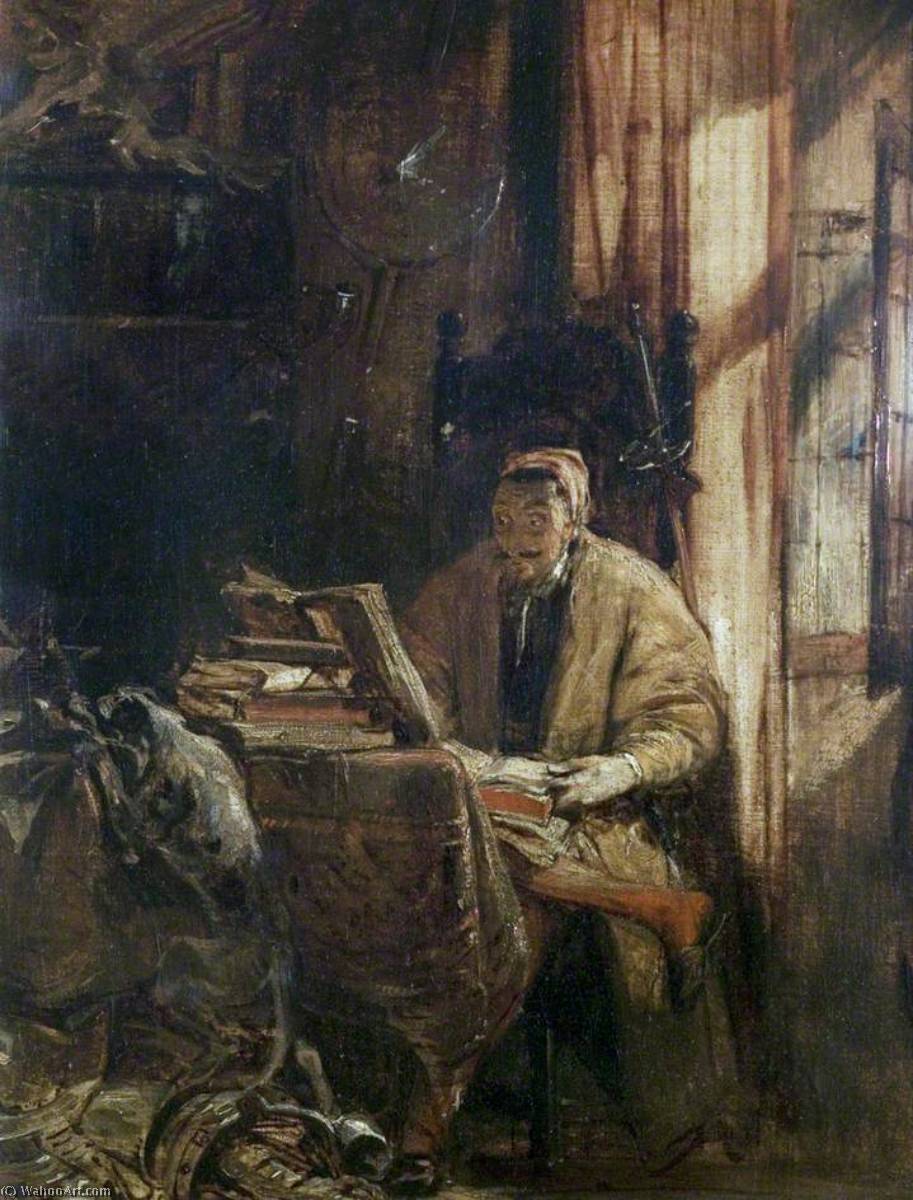
Don Quixote in His Study
 Acrylic On Canvas
- WallArt
- Romanticism
 1826
1826 41.0 x 33.0 cm
 Musée et Galerie d'Art du Château de Nottingham
 Afficher la suite
Acquérez une image numérique haute résolution et optimisée, d'une qualité bien supérieure à l'aperçu en ligne.
Chaque fichier est méticuleusement préparé par nos spécialistes internes à l'aide d'outils avancés et d'une retouche manuelle experte. Nous garantissons que chaque image possède une clarté exceptionnelle, une précision des couleurs irréprochable et un niveau de détail fin.
Le fichier final est livré par e-mail sous 72 heures, optimisé pour une utilisation immédiate dans des contextes professionnels, éditoriaux et d'impression. Il offre la même qualité de confiance que celle utilisée par les plus grands studios de création, éditeurs et galeries.
Image numérique
Téléchargez un fichier haute résolution pour votre usage personnel, l'impression et vos projets créatifs. ( Passer au format impression Acheter la peinture faite à la main)
Inclus avec chaque commande d'image numérique
Livraison numérique experte, garantie.
En choisissant OriginalUniqueArt.com, vous n'obtenez pas seulement une simple image : vous recevez une œuvre numérique sublimée avec professionnalisme, conçue avec précision et accompagnée d'une garantie de satisfaction. Voici tout ce qui accompagne automatiquement votre commande :

Livraison rapide par e-mail
Votre fichier d'image numérique haute résolution vous sera envoyé par e-mail sous 72 heures après votre commande — prêt à un usage immédiat.

Fichier numérique optimisé par l'IA
Votre œuvre d'art bénéficie d'une optimisation professionnelle grâce à des outils d'IA avancés et une retouche manuelle, garantissant un niveau maximal de détail, de clarté et de fidélité chromatique.

Réexpédition gratuite à vie
Vous avez accidentellement supprimé ou perdu votre fichier ? Pas d'inquiétude — nous vous le renverrons gratuitement, quand vous le souhaitez.

Aucuns frais de douane — À jamais
Profitez de votre œuvre d'art instantanément sans frais de douane ni de livraison — les téléchargements numériques sont toujours exonérés de taxes.

Garantie de fidélité des couleurs
Nous garantissons que votre image numérique reproduit les couleurs de l'original aussi fidèlement que possible grâce à des outils professionnels et une gestion rigoureuse des couleurs.

Garantie de satisfaction de 100 jours
Si vous n'êtes pas satisfait de votre image numérique, nous la retoucherons ou vous rembourserons 100% sous 100 jours — sans poser de questions.

Garantie de remboursement à 100%
Pas satisfait ? Obtenez un remboursement intégral dans les 100 jours suivant la réception de votre fichier numérique — sans aucune question posée.

Remises sur les commandes groupées
Achetez 3 images, économisez 10% - Achetez 5, économisez 15% - Achetez 10+, économisez 20%. Idéal pour les projets créatifs, les galeries et les agences.
A Portrait of Rustic Grandeur: Unpacking Bonington’s “Don Quixote in His Study”
Richard Parkes Bonington's "Don Quixote in His Study," painted in 1826, isn’t merely a depiction of an elderly man; it’s a carefully constructed tableau brimming with quiet contemplation and the weight of a life lived within the confines of memory and imagination. The painting immediately draws the viewer into a dimly lit interior, dominated by a rich, earthy palette – ochres, browns, and deep reds—that speaks to both the warmth of domesticity and the encroaching shadows of age. Bonington masterfully employs chiaroscuro, a dramatic contrast between light and dark, to sculpt the figure of Don Quixote, lending him an almost sculptural quality while simultaneously emphasizing his vulnerability. The scene is not one of heroic action, but rather of introspective stillness; we are invited to witness a moment of profound solitude.
- Compositional Harmony: The arrangement of objects—the stacked books, the overflowing bags, the ticking clock—creates a sense of controlled chaos, mirroring perhaps the mental landscape of the subject.
- Color Palette: The muted tones evoke a feeling of nostalgia and the passage of time, while the strategic use of red draws attention to the woman’s headscarf, subtly hinting at her character and story.
- Light & Shadow: Bonington's skillful manipulation of light creates depth and drama, highlighting the subject’s face and casting long shadows that suggest both age and a certain melancholy.
The Artist and His Influences: A Bridge Between Romanticism and Tradition
Richard Parkes Bonington stands as a fascinating figure in the transition between the last vestiges of English Romanticism and the burgeoning influences of French Realism. Born in Nottingham, England, in 1802, he spent much of his formative artistic years in France, absorbing the techniques and philosophies of masters like Jean-Auguste Dominique Ingres and, crucially, Eugène Delacroix. Bonington’s style is a unique synthesis of these influences; he retains the Romantic emphasis on light and atmosphere but grounds it in a meticulous observation of form and detail reminiscent of the Old Masters. His early training with François Louis Thomas Francia, who had returned from studying Girtin's watercolors in England, instilled in him a deep appreciation for the delicate handling of color and brushwork that would become hallmarks of his work.
Historical Context:** Bonington’s painting was created during a period of significant artistic change. The Romantic movement was waning, giving way to new approaches to representation. Bonington navigated this shift with remarkable grace, producing works that were both deeply personal and technically sophisticated. His brief but brilliant career is marked by a poignant sense of unrealized potential – he died at the young age of 26 from tuberculosis.Decoding Symbolism: Layers of Meaning in a Simple Scene
Beyond its immediate visual appeal, “Don Quixote in His Study” is rich with symbolic layers. The cluttered room itself represents the accumulated weight of memory and experience—the books, the bags, the clock all speak to a life lived fully, yet perhaps somewhat wistfully. Don Quixote’s posture – slumped slightly, his gaze fixed inward – suggests a man lost in thought, grappling with the remnants of a bygone era. The red headscarf is particularly intriguing; it could symbolize both resilience and vulnerability, hinting at the woman's strength and her own quiet struggles. The painting subtly evokes themes of aging, memory, solitude, and the enduring power of imagination.
A Legacy in Reproduction: Bringing Bonington’s Vision to Life
Reproductions of “Don Quixote in His Study” offer a remarkable opportunity to experience the depth and nuance of Bonington's artistry. The meticulous detail, the evocative lighting, and the subtle symbolism are all faithfully captured in high-quality reproductions. Whether adorning a study or a gallery wall, this painting invites contemplation and offers a glimpse into the mind of a truly exceptional artist. The rich textures and carefully rendered details translate beautifully to canvas, creating a timeless piece that speaks to the enduring power of art to transport us to another time and place.
Biographie de l'artiste
Première Vie et Formation
Richard Parkes Bonington, figure marquante du mouvement romantique britannique, est né le 25 octobre 1802 à Arnold, Nottinghamshire, au Royaume-Uni. Son père, également nommé Richard, était un homme aux multiples talents qui exerçait les fonctions de gaolier, maître de dessin et fabricant de dentelle. Cet environnement diversifié a probablement influencé les premières inclinations artistiques de Bonington. https://OriginalUniqueArt.com/@/richardparkesbonington, la plateforme en ligne pour les passionnés d'art, propose une vaste collection des œuvres de Bonington, mettant en valeur sa maîtrise des paysages et des scènes historiques.Évolution Artistique et Influences
Le parcours artistique de Bonington a débuté avec la peinture à l’aquarelle, enseignée par son père. Dès l’âge de onze ans, il exposait déjà à l'Académie de Liverpool. En 1817, sa famille déménagea à Calais, en France, où il prit des cours auprès de François Louis Thomas Francia, qui lui introduisit la technique aquarelle anglaise.- L’influence de Francia se retrouve dans les premières œuvres de Bonington, caractérisées par un mélange de styles anglais et français.
- Sa rencontre avec Eugène Delacroix https://OriginalUniqueArt.com/@/eugenedelacroix, peintre romantique français, a encore façonné son approche artistique.
- Son passage à l'École des Beaux-Arts à Paris, sous la direction d’Antoine-Jean, baron Gros, a consolidé ses compétences.
Œuvres Notables et Réalisations
Principales Œuvres :- Rouen, Normandie, vers 1823 (disponible sur /fr/art/show/art-8xyhdc-fr/
- Vue de la lagune près de Venise, 1827 (Louvre)
- Charles V. rend visite à François Ier après la bataille de Pavie, vers 1827
- Médaille d'or au Salon de Paris en 1824, aux côtés de John Constable et Anthony Van Dyke Copley Fielding.
- Le tribut de Delacroix à l’œuvre de Bonington dans une lettre à Théophile Thoré en 1861, soulignant sa légèreté d'exécution.
Héritage et Souvenir
La vie de Bonington a été interrompue par la tuberculose, qui lui ôta la vie le 23 septembre 1828, à l’âge de 25 ans. Malgré une carrière brève, il a laissé une marque indélébile sur le romantisme britannique.- Une statue à Nottingham School of Art, érigée par Watson Fothergill.
- Un théâtre et une école primaire dans sa ville natale d'Arnold portant son nom.
- La Wallace Collection abrite un ensemble important de 35 œuvres, présentant ses paysages et ses peintures historiques.

Richard Parkes Bonington
1802 - 1828 , Royaume-Uni
En bref
- Artistic Movement Or Style: Romantisme britannique
- Artists Or Movements Influenced By This Artist: ['Artistes britanniques ultérieurs']
- Artists Who Influenced This Artist:
- François Louis Thomas Francia
- Eugène Delacroix
- Date Of Birth: 25 octobre 1802
- Date Of Death: 23 septembre 1828
- Full Name: Richard Parkes Bonington
- Nationality: Britannique
- Notable Artworks:
- Rouen, Normandie
- Vue de la lagune près de Venise
- Charles V visite François Ier
- Place Of Birth (City And Country): Arnold, Royaume-Uni