Aperçu en situation
 Partager
 Partager
 Détails

 Télécharger
 Articles similaires
 Radiographie
 Voir le diaporama
 Statistiques
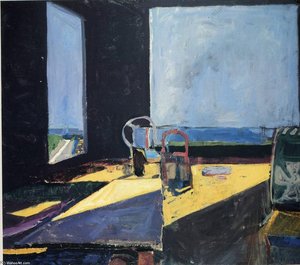
Ocean Park #27
 Oil On Canvas
- WallArt
- Color Field Painting
 1970
1970 254.0 x 203.0 cm
 Brooklyn Museum
 Afficher la suite
Giclées et impressions d'art
Impressions giclées ou sur toile de qualité musée, avec une production rapide et des finitions au choix. ( Acheter la peinture faite à la main Passer au format image numérique)




P118B $10

P118H $10

P118W $10

P438Z $10

P508JH $12

P508YH $12

P805H $10

P805Z $10

P919BZ $10

P919G $10

P919XJ $10

P959ZH $10

P968JZ $12

W106C $8

W218G $10

W218JH $8

W218Y $10

W307PJ $10

W316G $10

W316PJ $8

W316Y $10

W398PJ $8

W4111J $10

W500HY $15

W500JH $15

W692G $12

W849H $8

W940BG $15

W953PJ $8




Choisissez parmi nos formats prédéfinis qui respectent les proportions originales de l’œuvre.

Vous pouvez saisir vos propres dimensions pour vous adapter à un cadre ou à un espace spécifique. Si la taille sélectionnée ne correspond pas aux proportions de l'image originale, nous recadrerons l'œuvre ou étendrons l'image avec une bordure en miroir ou une couleur unie. Une maquette numérique vous sera envoyée pour approbation avant le début de la production.
Veuillez noter que l'aperçu à l'écran ne reflète pas le recadrage ou l'extension réelle. Seule la maquette montrera avec précision la composition finale.
Bien que des tailles personnalisées soient disponibles, nous vous recommandons de choisir une dimension dans la liste prédéfinie afin de préserver les proportions originales.
Livraison dans le monde entier () en 2 semaines au lieu des 4/5 semaines habituelles. (16 septembre)

Livraison express gratuite dans le monde entier

Toile de lin de haute qualité

Assurance transport complète

Garantie de remboursement des droits de douane

Garantie de fidélité des couleurs

Garantie de retour de 100 jours (uniquement en cas de défaut)

Garantie de remboursement à 100%

Tarifs dégressifs sur quantité
 L'option verre n'est disponible que pour les dimensions inférieures à 110 cm.

Ocean Park #27
Giclées et impressions d'art
Format de la reproduction
-


Prix total final
$ 80
A Shimmering California Dreamscape: Richard Diebenkorn’s *Ocean Park #27*
Richard Diebenkorn's *Ocean Park #27*, painted in 1970, isn’t merely a depiction of a coastal scene; it’s an immersion into the very essence of Californian light and mood. Born in Portland, Oregon, in 1922, Diebenkorn’s artistic journey was deeply rooted in the landscapes and cultural currents of his adopted home – San Francisco. Initially influenced by the rigorous formalism of European masters like Hopper and Matisse, he gradually developed a uniquely American style characterized by lyrical abstraction and an almost meditative quality. *Ocean Park #27* represents a pivotal moment in this evolution, marking a shift away from representational imagery towards a more purely expressive language. The painting’s genesis lies within Diebenkorn's own studio overlooking the Santa Monica coastline – a space that became synonymous with his artistic practice and provided the constant source of inspiration for this series.Color Field Harmony: Technique and Composition
The power of *Ocean Park #27* resides largely in its masterful execution of Color Field painting, a movement Diebenkorn embraced during the late 1960s. He eschewed sharp outlines and detailed rendering, instead employing broad washes of color to create an all-over visual field. The palette is remarkably restrained – primarily blues, greens, yellows, pinks, and oranges – yet these seemingly simple hues are layered with astonishing subtlety. Diebenkorn’s technique involved applying thin glazes of oil paint, allowing each layer to dry before adding the next, building up a complex surface texture that subtly shifts with the viewer's perspective. Notice how the colors bleed into one another, creating an almost hazy atmosphere. The composition itself is deceptively simple: a fragmented view of the ocean and coastline, reduced to its essential elements. Diebenkorn uses geometric shapes – rectangles, triangles, and curves – to organize the space, suggesting depth and movement without resorting to traditional perspective techniques. The subtle variations in tone and hue create an illusion of shimmering light reflecting off the water’s surface, capturing a fleeting moment of California beauty.Symbolism and Emotional Resonance
Beyond its purely visual qualities, *Ocean Park #27* is imbued with a profound sense of mood and emotion. The painting evokes feelings of tranquility, nostalgia, and perhaps even a touch of melancholy. The muted colors and hazy atmosphere suggest the passage of time and the ephemeral nature of beauty. Some art historians interpret the “ocean park” as a metaphor for the American dream – a vision of open spaces, freedom, and possibility. However, there’s also an underlying sense of isolation and introspection within the painting's composition. The fragmented view of the coastline hints at the difficulty of capturing a complete or definitive experience. The artist himself described his intention to communicate “a feeling of strength in reserve, tension beneath calm,” reflecting a complex interplay of emotions that are characteristic of the human condition.A Legacy of Lyrical Abstraction
*Ocean Park #27* stands as a cornerstone of Richard Diebenkorn’s oeuvre and a significant work within the broader context of Color Field painting. Its influence can be seen in the works of later abstract artists, and it continues to resonate with viewers today for its evocative beauty and emotional depth. The Brooklyn Museum holds one of the two original paintings from this series, testament to its enduring value. Reproductions, like those offered by OriginalUniqueArt.com, allow us to experience Diebenkorn’s vision in our own homes, bringing a touch of California light and serenity into any space. The painting's quiet power lies not just in its aesthetic qualities but also in its ability to transport the viewer to a place of contemplation and reflection – a shimmering reminder of the beauty and complexity of the natural world.Biographie de l'artiste
Première Vie et Formation
- Né: 22 avril 1922, Portland, Oregon
- Histoire Familiale: Sa famille a déménagé à San Francisco, Californie, lorsqu'il avait deux ans.
- Inclination Artistique Précoce: A montré une passion pour le dessin dès l'âge de quatre ou cinq ans.
- Formation Formelle: A fréquenté l'Université Stanford en 1940.
- Mentors Influents à Stanford: Victor Arnautoff (discipline formelle classique avec la peinture à l'huile) et Daniel Mendelowitz (partageaient une passion pour Edward Hopper).
- Influence de Hopper: Ses premiers travaux ont été influencés par le style d'Edward Hopper.
Développement du Style Artistique
- Influences d'Après-Guerre: Déplacement dans le monde de l'art de Paris vers les États-Unis, en particulier New York.
- Expressionnisme Abstrait: S'est inscrit à la California School of Fine Arts (aujourd'hui San Francisco Art Institute) et a adopté l'expressionnisme abstrait comme véhicule d'expression personnelle.
- Influences Précoces: Clyfford Still, Arshile Gorky, Hassel Smith et Willem de Kooning.
- Mouvement Figuratif de la Baie: Est devenu une figure de proue du mouvement figuratif de la baie aux côtés d'Elmer Bischoff, Henry Villierme, David Park et James Weeks. Ce mouvement représentait un retour à la peinture figurative après l'expressionnisme abstrait.
- Transition de l'Abstraction à la Figuration: A abandonné l'adhésion stricte à l'expressionnisme abstrait au milieu des années 1950, intégrant des éléments représentatifs dans son travail.
La Série Ocean Park et Œuvres Ultérieures
- Peintures Ocean Park: A commencé en 1967 et a continué jusqu'à sa mort. Ces peintures abstraites lyriques géométriques sont devenues un accomplissement marquant de sa carrière.
- Exploration de la Gravure: A commencé à explorer la gravure (drypoint) pendant l'été 1961 alors qu'il était à UCLA.
- Collaboration avec Crown Point Press: A établi une collaboration à long terme avec Kathan Brown chez Crown Point Press, produisant de nombreuses gravures de 1965 jusqu'en 1992.
Réalisations Majeures et Importance Historique
- Acclamation Critique: A obtenu une reconnaissance mondiale pour sa série Ocean Park.
- Rétrospective à Mi-Carrière: Une rétrospective importante a été présentée par le Pasadena Art Museum en 1960, suivie d'une variation au California Palace of the Legion of Honor à San Francisco plus tard cette année-là.
- Influence sur l'Art d'Après-Guerre: Le travail de Diebenkorn a comblé le fossé entre l'expressionnisme abstrait et l'abstraction lyrique, influençant de nombreux artistes qui ont suivi. Sa capacité à combiner des formes géométriques avec une couleur expressive en a fait une figure unique dans l'art américain d'après-guerre.
Décès et Héritage
- Décédé: 1993
- Impact Durable: L'héritage de Richard Diebenkorn réside dans son approche innovante de l'abstraction, sa capacité à capturer l'essence des paysages californiens et sa contribution tant à l'expressionnisme abstrait qu'à l'art figuratif. Sa série Ocean Park reste un témoignage de sa vision artistique et continue d'inspirer les artistes et les collectionneurs du monde entier.
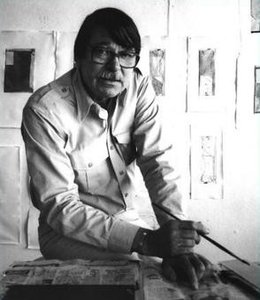
Richard Diebenkorn
1922 - 1993 , États-Unis d'Amérique
En bref
- Artistes Influents:
- Edward Hopper
- Clyfford Still
- Arshile Gorky
- Date De Décès: 1993
- Date De Naissance: 22 avril 1922
- Lieu De Naissance: Portland, États-Unis
- Mouvement Artistique:
- Expressionnisme abstrait
- Figuratif de la Baie
- Nationalité: Américain
- Nom Complet: Richard Clifford Diebenkorn Jr.
- Oeuvres Notables:
- A Day at the Races
- Ocean Park No. 32
- Ocean Park #54
- Berkeley No. 54
- Untitled 'M'
- Chabot Valley
- Berkeley No. 33
- Seawall
- Ocean Park No. 7
- View from the Porch
Articles similaires

Les 10 Chefs-d'œuvre Dominés par le Bleu Ardoise : Art, Histoire & Décor
Plongez dans l'univers fascinant des 10 plus beaux tableaux dominés par le bleu ardoise. Découvrez l'histoire, les artistes et les techniques de ces chefs-d'œuvre impressionnistes et contemporains. Inspirez votre décoration intérieure avec !

Expressionnisme Abstrait : Les 10 Chefs-d'Œuvre Incontournables pour Décorer avec Art et Histoire
Plongez au cœur de l'Expressionnisme Abstrait avec ! Découvrez les 10 œuvres majeures de Pollock, Rothko et De Kooning. Histoire, techniques & inspiration déco. Explorez la collection complète en ligne.
Richard Diebenkorn: A Poetics of Space & Form – Navigating Abstraction in California Modernism
Explore the evolution of Richard Diebenkorn's iconic art – from abstract expressionism to his celebrated Ocean Park series. Discover insights for collectors & enthusiasts.

Serene Blue Backgrounds: Discover Soulful Art to Transform Your Space with Timeless Elegance
Transform your home with soulful blue art. From serene Monet impressions to modern textured sculptures, discover curated masterpieces designed to inspire calm. Explore expert art consultations and bespoke hand-painted reproductions to create your personal sanctuary.
Color Field Painting: The Emotional Power of Pure Abstraction and Chromatic Depth
Explore the profound emotional depth of Color Field painting. Discover the history of mid-century abstraction, from Rothko to Newman, and learn how pure color transforms the viewer's experience through our expert art history guide.