 Aperçu en situation
 Envoyer
 Partager
 Détails de l'œuvre

 Télécharger
 Articles similaires
 Radiographie
 Diaporama
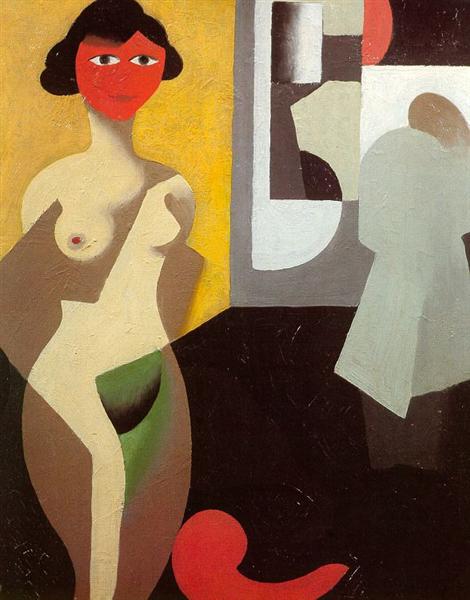
Woman bathing

 Lire la suite
Giclées et impressions d'art
Impressions giclées ou sur toile de qualité musée, avec une production rapide et des finitions au choix. ( Commander la reproduction peinte à la main Télécharger l'image haute résolution)




P118B $10

P118H $10

P118W $10

P438Z $10

P508JH $12

P508YH $12

P805H $10

P805Z $10

P919BZ $10

P919G $10

P919XJ $10

P959ZH $10

P968JZ $12

W106C $8

W218G $10

W218JH $8

W218Y $10

W307PJ $10

W316G $10

W316PJ $8

W316Y $10

W398PJ $8

W4111J $10

W500HY $15

W500JH $15

W692G $12

W849H $8

W940BG $15

W953PJ $8




Choisissez parmi nos formats prédéfinis qui respectent les proportions originales de l’œuvre.

Vous pouvez saisir vos propres dimensions pour vous adapter à un cadre ou à un espace spécifique. Si la taille sélectionnée ne correspond pas aux proportions de l'image originale, nous recadrerons l'œuvre ou étendrons l'image avec une bordure en miroir ou une couleur unie. Une maquette numérique vous sera envoyée pour approbation avant le début de la production.
Veuillez noter que l'aperçu à l'écran ne reflète pas le recadrage ou l'extension réelle. Seule la maquette montrera avec précision la composition finale.
Bien que des tailles personnalisées soient disponibles, nous vous recommandons de choisir une dimension dans la liste prédéfinie afin de préserver les proportions originales.
Livraison dans le monde entier () en 2 semaines au lieu des 4/5 semaines habituelles. (19 août)

Livraison express gratuite dans le monde entier

Toile de lin de qualité supérieure

Assurance transport complète

Garantie de remboursement des droits de douane

Garantie de fidélité des couleurs

Politique de retour de 60 jours (uniquement en cas de défaut)

Garantie de remboursement à 100%

Offre de tarifs dégressifs
 L'option verre n'est disponible que pour les dimensions inférieures à 110 cm.

Woman bathing
Giclées et impressions d'art
Format de la reproduction
-


Prix total
$ 80
Description de la pièce
René Magritte’s Enigmatic “Woman Bathing”: A Study in Hidden Realities
Rene Magritte's "Woman Bathing," painted around 1929, is not merely a depiction of a woman enjoying a moment of repose; it’s a carefully constructed puzzle designed to challenge our fundamental assumptions about perception and representation. This deceptively simple black-and-white image, now housed in various collections worldwide, embodies the core tenets of Surrealism – a movement Magritte helped define – by subtly disrupting the familiar relationship between what we see and what truly exists. The painting’s power lies not in overt drama or explicit narrative, but in its quiet insistence on questioning the very nature of reality itself.
The scene unfolds with an almost clinical detachment. A woman, her features partially obscured by a strategically placed red dress, is immersed in a stream. Her posture suggests relaxation and vulnerability, yet there’s an undeniable sense of unease. The background is sparsely populated – two indistinct figures hint at the presence of others, adding to the feeling that we are observing a private, almost staged moment. Magritte masterfully employs a stark monochrome palette, reminiscent of early 20th-century photography and film, further enhancing the painting’s unsettling atmosphere. This deliberate choice strips away any potential distractions, forcing the viewer to confront the image with raw intensity.
The Roots of Surrealism: Trauma and the Unseen
Understanding Magritte's artistic vision requires a glimpse into his personal history. Born René Ghislain Magritte in Lessines, Belgium, in 1898, he experienced a profoundly formative event at the age of thirteen – the suicide of his mother. The image of her body being recovered from the River Sambre, with her dress concealing her face, became a recurring motif throughout his oeuvre. This deeply personal tragedy instilled within him a lifelong fascination with concealment, loss, and the unsettling power of what remains hidden beneath the surface. It’s believed this early trauma fueled his exploration of the subconscious and his deliberate manipulation of visual reality.
Magritte's work is often described as “visual poetry,” prioritizing intellectual engagement over emotional expression. He wasn’t interested in simply replicating the world; he sought to expose its constructed nature, revealing the mechanisms by which we perceive and interpret it. "Woman Bathing" exemplifies this approach perfectly. The red dress, a seemingly minor detail, acts as a powerful symbol of concealment – obscuring the woman's face and suggesting that her true identity is deliberately hidden from view. This echoes his mother’s obscured visage, creating a subtle yet persistent link to his personal history.
Technique and Style: A Masterclass in Illusion
Magritte’s technique is characterized by meticulous detail and an almost photographic realism, despite the painting's surreal subject matter. He employed oil paints on canvas with a precision that belies the dreamlike quality of his work. The smooth gradations of tone, the subtle modeling of form, and the careful rendering of textures create a convincing illusion of depth and space. However, this apparent realism is deliberately undermined by the painting’s overall atmosphere of unease and ambiguity.
The composition itself contributes to the painting's unsettling effect. The woman is positioned slightly off-center, drawing the viewer’s eye across the canvas and creating a sense of imbalance. The lack of clear perspective further enhances this feeling of disorientation. Magritte’s deliberate use of line and form challenges our expectations of how things should look, forcing us to question what we are seeing.
Symbolism and Emotional Resonance: A Question of Perception
"Woman Bathing" is a profoundly ambiguous work, inviting multiple interpretations. The woman herself can be seen as representing vulnerability, innocence, or perhaps even the unknowable depths of the human psyche. The stream symbolizes transition, purification, or simply the flow of time. The red dress, as previously mentioned, represents concealment and the suppression of identity.
Ultimately, Magritte’s masterpiece is not about providing answers but about posing questions. It's a meditation on the nature of perception, the limitations of representation, and the enduring power of the subconscious. A high-quality reproduction of “Woman Bathing” offers a captivating glimpse into the mind of one of the 20th century’s most influential artists – a work that continues to resonate with viewers today, prompting us to reconsider our own understanding of reality.
Biographie de l'artiste
jeunesse et débuts artistiques
René François Ghislain Magritte, artiste surréaliste belge renommé, est né le 21 novembre 1898 à Lessines, province de la Haine, en Belgique. Sa jeunesse reste quelque peu mystérieuse, avec peu d'informations connues sur son enfance. Cependant, il est documenté qu’il a commencé des cours de dessin en 1910.évolution artistique et influences
Le style artistique de Magritte a évolué considérablement au fil des ans, influencé par divers mouvements tels que l’impressionnisme, le futurisme et le cubisme. Ses premières peintures, datant d'environ 1915, étaient de style impressionniste. De 1916 à 1918, il a étudié à l’Académie Royale des Beaux-Arts de Bruxelles, sous la direction de Constant Montald.période surréaliste et œuvres notables
En 1926, Magritte a produit sa première peinture surréaliste, Le jockey perdu (The Lost Jockey), marquant le début de son association avec le mouvement surréaliste. Son œuvre est caractérisée par des images stimulantes et provocatrices, souvent représentant des objets ordinaires dans des contextes inhabituels, remettant en question la perception de la réalité par les observateurs.- Les amants (1927-1928), une série de peintures mettant en scène des personnes dont les visages sont dissimulés par du tissu, est vraisemblablement inspirée par l'histoire de la mort de sa mère.
- Les amants, une autre œuvre emblématique, présente un couple s’embrassant avec les visages couverts de tissu blanc, invitant le spectateur à réfléchir sur l'amour et l'identité. (Disponible à l'achat en reproduction à l'huile artisanale ou impression sur toile à OriginalUniqueArt.com)
vie tardive et héritage
L’œuvre de Magritte a été exposée aux États-Unis en 1936 et à nouveau lors de deux expositions rétrospectives, l'une au Musée d'Art Moderne en 1965 et l'autre au Metropolitan Museum of Art en 1992. Il est resté engagé politiquement à gauche, mais a plaidé pour l’autonomie artistique. Musées notables présentant l'œuvre de Magritte :- Musées royaux des Beaux-Arts de Belgique, Bruxelles, en Belgique (Découvrez les chefs-d'œuvre des musées royaux des beaux-arts de Belgique à OriginalUniqueArt.com)
- Musée Magritte, intégré aux musées royaux des Beaux-Arts de Belgique, présentant la plus grande collection d'œuvres de Magritte au monde.
Conclusion
L’héritage de René Magritte en tant que maître surréaliste perdure, ses images stimulantes continuant à inspirer et à intriguer. Son œuvre, caractérisée par son mélange unique de l'ordinaire et du surprenant, reste un pilier essentiel de l'art surréaliste. En savoir plus sur René Magritte
René Magritte
1898 - 1967 , Belgique
L'essentiel de l'artiste
- Artistes Influents: ['Constant Montald']
- Date De Décès: 1967
- Date De Naissance: 21 novembre 1898
- Lieu De Naissance: Lessines, Belgique
- Mouvement Artistique: Surréalisme
- Nationalité: Belge
- Nom Complet: René Magritte
- Oeuvres Notables:
- Le Jockey Perdu
- Les Amants
- La Trahison des images
- Temps suspendu
Articles connexes
René Magritte : Les 25 Œuvres Incontournables du Maître du Surréalisme | OriginalUniqueArt
Plongez dans l'univers fascinant de René Magritte avec les 25 œuvres incontournables du maître surréaliste. Découvrez l'histoire, les techniques et la magie de tableaux célèbres comme 'L'Empire des Lumières'. Reproductions d'art de qualité muséale sur OriginalUniqueArt.com.

Les 10 Chefs-d'œuvre Noirs : Peintures Célèbres et Décoration d'Intérieur
Plongez dans l'univers fascinant des 10 plus beaux tableaux noirs de l'histoire de l'art. Découvrez les secrets de Goya, Manet, Rothko et autres maîtres. Inspirez votre décoration intérieure avec !
Surréalisme : Les 10 Chefs-d'Œuvre Indéfinissables pour une Déco d'Exception |
Plongez dans l'univers fascinant du Surréalisme avec . Découvrez les 10 chefs-d'œuvre de Dalí, Magritte & Miró qui ont marqué l'histoire de l'art. Reproductions haute définition et inspiration déco sur .
Les 10 Chefs-d'œuvre Dominés par le Noir : Art, Histoire & Décoration
Plongez dans l'univers fascinant des 10 plus beaux tableaux dominés par le noir. Découvrez les histoires, techniques et symbolisme de chefs-d'œuvre intemporels. Reproductions d'art de qualité musée sur !
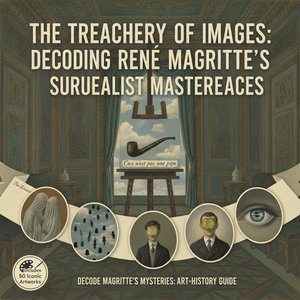
The Treachery of Images: Decoding René Magritte’s Surrealist Philosophy and the Paradox of Representation
Explore the profound mystery of René Magritte’s 'The Treachery of Images.' Dive into an expert analysis of his Surrealist philosophy, the paradox of representation, and how he challenged reality through the interplay of language and visual perception.