

 Aperçu en situation
 Envoyer
 Partager
 Détails de l'œuvre

 Télécharger
 Articles similaires
 Radiographie
 Diaporama
The endearing truth
 Acrylic On Canvas
- WallArt
- Surrealism
 1966
1966 89.0 x 130.0 cm
 Lire la suite
Giclées et impressions d'art
Impressions giclées ou sur toile de qualité musée, avec une production rapide et des finitions au choix. ( Commander la reproduction peinte à la main Acheter l'image haute résolution)




P118B $10

P118H $10

P118W $10

P438Z $10

P508JH $12

P508YH $12

P805H $10

P805Z $10

P919BZ $10

P919G $10

P919XJ $10

P959ZH $10

P968JZ $12

W106C $8

W218G $10

W218JH $8

W218Y $10

W307PJ $10

W316G $10

W316PJ $8

W316Y $10

W398PJ $8

W4111J $10

W500HY $15

W500JH $15

W692G $12

W849H $8

W940BG $15

W953PJ $8




Choisissez parmi nos formats prédéfinis qui respectent les proportions originales de l’œuvre.

Vous pouvez saisir vos propres dimensions pour vous adapter à un cadre ou à un espace spécifique. Si la taille sélectionnée ne correspond pas aux proportions de l'image originale, nous recadrerons l'œuvre ou étendrons l'image avec une bordure en miroir ou une couleur unie. Une maquette numérique vous sera envoyée pour approbation avant le début de la production.
Veuillez noter que l'aperçu à l'écran ne reflète pas le recadrage ou l'extension réelle. Seule la maquette montrera avec précision la composition finale.
Bien que des tailles personnalisées soient disponibles, nous vous recommandons de choisir une dimension dans la liste prédéfinie afin de préserver les proportions originales.
Livraison dans le monde entier () en 2 semaines au lieu des 4/5 semaines habituelles. (28 août)

Livraison express gratuite dans le monde entier

Toile de lin de qualité supérieure

Assurance transport complète

Garantie de remboursement des droits de douane

Garantie de fidélité des couleurs

Politique de retour de 60 jours (uniquement en cas de défaut)

Garantie de remboursement à 100%

Offre de tarifs dégressifs
 L'option verre n'est disponible que pour les dimensions inférieures à 110 cm.

The endearing truth
Giclées et impressions d'art
Format de la reproduction
-


Prix total
$ 80
The Enigmatic Allure of “The Endearing Truth”
René Magritte’s “The Endearing Truth,” painted in 1966, isn't merely a depiction of a table laden with fruit; it’s an invitation to question the very nature of reality and representation – a cornerstone of the artist’s enduring surrealist vision. This particular work, created near the end of his career, possesses a quiet intensity, reflecting both Magritte’s lifelong fascination with paradox and his growing contemplation on mortality. The painting immediately draws the eye with its deceptively simple composition: a brick wall serves as the backdrop for a stark white table, upon which rests an apple, a loaf of bread, and a cylindrical object – its purpose deliberately obscured. Yet, within this apparent stillness lies a profound sense of unease, a subtle disruption that compels us to look closer, to consider what’s *not* there.A Surrealist Dialogue with the Everyday
Magritte's work consistently challenged conventional perceptions by juxtaposing familiar objects in unexpected contexts. “The Endearing Truth” is no exception. The brick wall, typically associated with solidity and permanence, becomes a stage for an ephemeral tableau of food. The white tablecloth, a symbol of domesticity and order, seems to float unnaturally against the rough texture of the bricks, creating a visual dissonance. This deliberate contrast speaks directly to the core tenets of Surrealism – a movement that sought to unlock the creative potential of the unconscious mind by disrupting logical associations. Magritte wasn’t interested in fantastical imagery; instead, he aimed to expose the inherent strangeness within the familiar, prompting viewers to question their assumptions about how they perceive and interpret the world around them.Technique and Symbolism: A Masterful Blend
The painting's execution is remarkably precise, reflecting Magritte’s meticulous attention to detail. He employed a restrained palette of muted tones – primarily browns, whites, and greens – contributing to the work’s understated yet unsettling atmosphere. The apple, rendered with a subtle sheen, hints at both nourishment and decay; the bread, sliced open, suggests vulnerability and incompleteness. The unidentified cylindrical object is particularly intriguing, its shape ambiguous and its purpose deliberately withheld. Some art historians interpret it as a reference to the human form – perhaps a stylized representation of the artist himself – while others see it as a symbol of mystery or even death. The subtle integration of the table legs into the brickwork further blurs the boundaries between object and environment, reinforcing the painting’s central theme of illusion and perception.A Reflection on Mortality and the Unseen
Considering the timeframe in which “The Endearing Truth” was created – 1966 – it's impossible to ignore the context of Magritte’s own declining health. He was battling cancer at the time, and many believe this painting represents a poignant meditation on mortality and the things that remain hidden from view. The obscured face in his earlier works, often veiled by cloth, returns here in a more subtle form – the unseen object invites speculation about what lies beneath the surface, mirroring the mysteries of life and death. The title itself, “The Endearing Truth,” is laden with irony; it suggests that even the most cherished truths can be elusive and ultimately unknowable. It’s a final, enigmatic statement from an artist who dedicated his career to exposing the complexities of reality and inviting us to embrace the beauty of uncertainty.Bringing Magritte's Vision Home
OriginalUniqueArt offers meticulously crafted hand-painted reproductions of “The Endearing Truth,” allowing you to experience the depth and nuance of this iconic masterpiece in your own space. Our skilled artists faithfully recreate Magritte’s distinctive style, capturing the painting’s subtle details and evocative atmosphere with exceptional precision. Whether displayed as a statement piece in a contemporary setting or incorporated into a more traditional interior design scheme, a OriginalUniqueArt reproduction of “The Endearing Truth” will undoubtedly spark conversation and invite contemplation – a fitting tribute to one of art history's most enigmatic figures.Biographie de l'artiste
jeunesse et débuts artistiques
René François Ghislain Magritte, artiste surréaliste belge renommé, est né le 21 novembre 1898 à Lessines, province de la Haine, en Belgique. Sa jeunesse reste quelque peu mystérieuse, avec peu d'informations connues sur son enfance. Cependant, il est documenté qu’il a commencé des cours de dessin en 1910.évolution artistique et influences
Le style artistique de Magritte a évolué considérablement au fil des ans, influencé par divers mouvements tels que l’impressionnisme, le futurisme et le cubisme. Ses premières peintures, datant d'environ 1915, étaient de style impressionniste. De 1916 à 1918, il a étudié à l’Académie Royale des Beaux-Arts de Bruxelles, sous la direction de Constant Montald.période surréaliste et œuvres notables
En 1926, Magritte a produit sa première peinture surréaliste, Le jockey perdu (The Lost Jockey), marquant le début de son association avec le mouvement surréaliste. Son œuvre est caractérisée par des images stimulantes et provocatrices, souvent représentant des objets ordinaires dans des contextes inhabituels, remettant en question la perception de la réalité par les observateurs.- Les amants (1927-1928), une série de peintures mettant en scène des personnes dont les visages sont dissimulés par du tissu, est vraisemblablement inspirée par l'histoire de la mort de sa mère.
- Les amants, une autre œuvre emblématique, présente un couple s’embrassant avec les visages couverts de tissu blanc, invitant le spectateur à réfléchir sur l'amour et l'identité. (Disponible à l'achat en reproduction à l'huile artisanale ou impression sur toile à OriginalUniqueArt.com)
vie tardive et héritage
L’œuvre de Magritte a été exposée aux États-Unis en 1936 et à nouveau lors de deux expositions rétrospectives, l'une au Musée d'Art Moderne en 1965 et l'autre au Metropolitan Museum of Art en 1992. Il est resté engagé politiquement à gauche, mais a plaidé pour l’autonomie artistique. Musées notables présentant l'œuvre de Magritte :- Musées royaux des Beaux-Arts de Belgique, Bruxelles, en Belgique (Découvrez les chefs-d'œuvre des musées royaux des beaux-arts de Belgique à OriginalUniqueArt.com)
- Musée Magritte, intégré aux musées royaux des Beaux-Arts de Belgique, présentant la plus grande collection d'œuvres de Magritte au monde.
Conclusion
L’héritage de René Magritte en tant que maître surréaliste perdure, ses images stimulantes continuant à inspirer et à intriguer. Son œuvre, caractérisée par son mélange unique de l'ordinaire et du surprenant, reste un pilier essentiel de l'art surréaliste. En savoir plus sur René Magritte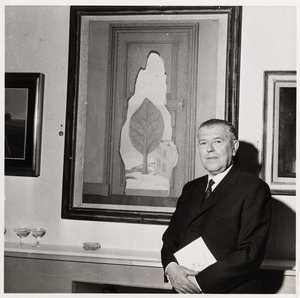
René Magritte
1898 - 1967 , Belgique
L'essentiel de l'artiste
- Artistes Influents: ['Constant Montald']
- Date De Décès: 1967
- Date De Naissance: 21 novembre 1898
- Lieu De Naissance: Lessines, Belgique
- Mouvement Artistique: Surréalisme
- Nationalité: Belge
- Nom Complet: René Magritte
- Oeuvres Notables:
- Le Jockey Perdu
- Les Amants
- La Trahison des images
- Temps suspendu
Articles connexes
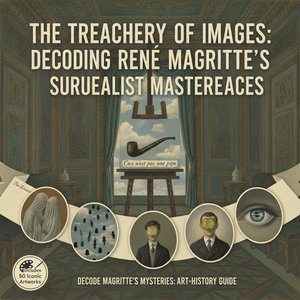
The Treachery of Images: Decoding René Magritte’s Surrealist Philosophy and the Paradox of Representation
Explore the profound mystery of René Magritte’s 'The Treachery of Images.' Dive into an expert analysis of his Surrealist philosophy, the paradox of representation, and how he challenged reality through the interplay of language and visual perception.
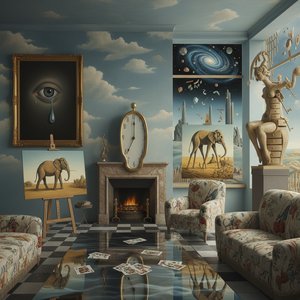
Surréalisme : Les 10 Chefs-d'Œuvre Indéfinissables pour une Déco d'Exception |
Plongez dans l'univers fascinant du Surréalisme avec . Découvrez les 10 chefs-d'œuvre de Dalí, Magritte & Miró qui ont marqué l'histoire de l'art. Reproductions haute définition et inspiration déco sur .
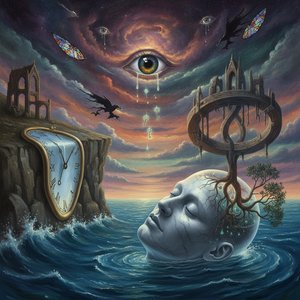
Surrealist Expression: Unlocking the Power of Dreams and the Subconscious through Art History
Explore the profound depths of Surrealism. From Dalí’s dreamscapes to Magritte’s enigmas, master the history of the subconscious mind through our expert art guide and discover museum-quality oil reproductions of the world's most iconic surrealist masterpieces.

The Treachery of Images: Decoding René Magritte’s Surrealist Vision and the Paradox of Representation
Delve into the profound mysteries of René Magritte’s Surrealism. Explore an expert analysis of 'The Treachery of Images,' decoding the philosophical paradoxes and visual subversions that redefined modern art history for collectors and connoisseurs alike.
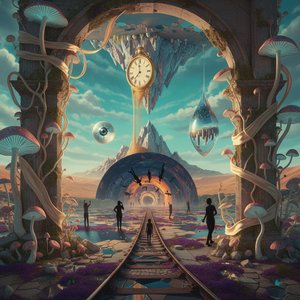
Dreamscapes & Disrupted Realities: Exploring Surrealism's Enduring Influence
Explore the fascinating world of Surrealism! Discover its origins, key artists like Dalí & Magritte, and enduring influence on art & culture. Expert insights & high-quality reproductions at OriginalUniqueArt.



