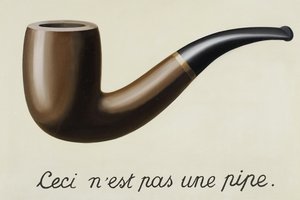
Aperçu en situation
 Envoyer
 Partager
 Détails de l'œuvre
 Guide
Guide

 Télécharger l'image
 Articles similaires
 Radiographie
 Diaporama
 Statistiques
L'art de vivre

 Lire la suite
L’œuvre d'art présentée sur cette page est protégée par le droit d'auteur, ce qui signifie que nous ne pouvons légalement créer ou vendre de reproduction identique. Cette protection est appliquée en vertu d'accords internationaux tels que la Convention de Berne et par les lois nationales, notamment celles énoncées par le Loi américaine sur le droit d'auteur - Titre 17.
Cette méthode est pleinement conforme aux réglementations sur le droit d'auteur car elle ne repose pas sur la copie ou la duplication de l'œuvre protégée. Il s'agit plutôt d'une réinterprétation créative — une nouvelle peinture qui s'inspire de l'original sans pour autant lui être identique.
Giclées et impressions d'art
Impressions giclées ou sur toile de qualité musée, avec une production rapide et des finitions au choix. ( Commander la reproduction peinte à la main Passer au format numérique)




P118B €10

P118H €10

P118W €10

P438Z €10

P508JH €12

P508YH €12

P805H €10

P805Z €10

P919BZ €10

P919G €10

P919XJ €10

P959ZH €10

P968JZ €12

W106C €8

W218G €10

W218JH €8

W218Y €10

W307PJ €10

W316G €10

W316PJ €8

W316Y €10

W398PJ €8

W4111J €10

W500HY €15

W500JH €15

W692G €12

W849H €8

W940BG €15

W953PJ €8




Choisissez parmi nos formats prédéfinis qui respectent les proportions originales de l’œuvre.

Saisissez la largeur et la hauteur souhaitées pour qu'elles s'adaptent à votre cadre ou à votre mur. Une impression peut être recadrée, mais jamais agrandie au-delà de l'image originale ; ainsi, un format de forme différente entraînera la perte d'une partie de l'image. Nous vous envoyons une maquette numérique pour approbation avant toute impression. L'image présentée sur cette page ne montre pas le recadrage réel — seule la maquette le permet.
Livraison dans le monde entier () en 2 semaines au lieu des 4/5 semaines habituelles. (28 octobre)

Livraison express gratuite dans le monde entier

Toile de lin de qualité supérieure

Assurance transport complète

Garantie de remboursement des droits de douane

Garantie de fidélité des couleurs

Politique de retour de 100 jours (uniquement en cas de défaut)

Garantie de remboursement à 100%

Offre de tarifs dégressifs
 L'option verre n'est disponible que pour les dimensions inférieures à 110 cm.

L'art de vivre
Giclées et impressions d'art
Format de la reproduction
-


Prix total
€ 70
The Enigmatic Beauty of René Magritte’s “The Art of Living”
René Magritte's "The Art of Living," painted in 1964, stands as a cornerstone of Surrealist art and continues to fascinate viewers with its deceptively simple yet profoundly unsettling composition. More than just an aesthetically pleasing image—though undeniably striking—the painting delves into fundamental questions about perception, reality, and the subconscious mind, cementing Magritte’s place among the most influential artists of the 20th century. This artwork resides in a private collection and exemplifies Magritte's signature style: meticulous realism juxtaposed with fantastical elements that challenge our assumptions about what we see.A Surrealist Symphony of Detail
Magritte expertly employs oil paint on canvas, utilizing a technique characterized by smooth blending and subtle gradations of color—a hallmark of his approach to capturing the textures and nuances of everyday objects. The artist’s meticulous attention to detail is evident in the rendering of the man's suit, the red tie, and even the apple positioned prominently on his nose. These elements are rendered with painstaking accuracy, creating a visual illusion that draws us into a seemingly ordinary scene. However, this realism is immediately disrupted by the surreal insertion of an orange head—a motif recurrent throughout Magritte’s oeuvre—which defies logical explanation and invites contemplation about its symbolic significance.Exploring Themes of Illusion and Representation
“The Art of Living” operates on multiple levels of interpretation, reflecting Magritte's preoccupation with dismantling conventional notions of representation. The apple, traditionally associated with knowledge and temptation in Western iconography, serves as a deliberate obfuscation—a visual paradox that obscures the face beneath it. This technique underscores Magritte’s belief that art should provoke thought rather than simply mirroring reality; instead, it aims to expose the constructed nature of perception itself. The muted blues and browns of the mountainous backdrop contribute to the painting's atmosphere of quiet contemplation and reinforce its exploration of hidden truths.Historical Context: Surrealism's Quest for Inner Truth
Magritte’s work emerged during the height of Surrealist experimentation in Europe, a movement spearheaded by André Breton and fueled by psychoanalytic theories pioneered by Sigmund Freud. Surrealists sought to liberate creativity from rational constraints, tapping into the realm of dreams and unconscious desires—a deliberate reaction against the anxieties of post-war society. Magritte’s artistic vision aligns perfectly with this intellectual climate, reflecting a desire to explore the irrational and confront viewers with unsettling images that disrupt their habitual ways of seeing. The painting embodies the Surrealist ethos: “Reality is illusion, and illusion reality.”Emotional Resonance: A Meditation on Identity
Ultimately, "The Art of Living" transcends mere visual spectacle; it prompts us to consider questions about identity and self-awareness. The man’s obscured face—hidden beneath the apple—represents a profound vulnerability, suggesting that our sense of self is often concealed from view. Magritte invites viewers to confront this hidden aspect of existence, prompting introspection and questioning accepted norms. Like other Magritte paintings, it lingers in the mind long after viewing, leaving an indelible impression on those who appreciate its subtle complexities and enduring artistic power.Questions et réponses
Qui a créé « L'art de vivre » et dans quel style s'inscrit cette œuvre ?
L'œuvre « L'art de vivre » est signée René Magritte et s'inscrit dans le mouvement Surrealist Painting.
L'œuvre «L'art de vivre» de René Magritte est-elle plutôt claire ou sombre ?
En termes de luminosité perçue, «L'art de vivre» de René Magritte est ombre.
Comment «L'art de vivre» de René Magritte lie-t-il Surrealist Painting au pays d'origine de l'artiste ?
L'œuvre Surrealist Painting « L'art de vivre » a été réalisée par un artiste né en Belgique.
Biographie de l'artiste
jeunesse et débuts artistiques
René François Ghislain Magritte, artiste surréaliste belge renommé, est né le 21 novembre 1898 à Lessines, province de la Haine, en Belgique. Sa jeunesse reste quelque peu mystérieuse, avec peu d'informations connues sur son enfance. Cependant, il est documenté qu’il a commencé des cours de dessin en 1910.évolution artistique et influences
Le style artistique de Magritte a évolué considérablement au fil des ans, influencé par divers mouvements tels que l’impressionnisme, le futurisme et le cubisme. Ses premières peintures, datant d'environ 1915, étaient de style impressionniste. De 1916 à 1918, il a étudié à l’Académie Royale des Beaux-Arts de Bruxelles, sous la direction de Constant Montald.période surréaliste et œuvres notables
En 1926, Magritte a produit sa première peinture surréaliste, Le jockey perdu (The Lost Jockey), marquant le début de son association avec le mouvement surréaliste. Son œuvre est caractérisée par des images stimulantes et provocatrices, souvent représentant des objets ordinaires dans des contextes inhabituels, remettant en question la perception de la réalité par les observateurs.- Les amants (1927-1928), une série de peintures mettant en scène des personnes dont les visages sont dissimulés par du tissu, est vraisemblablement inspirée par l'histoire de la mort de sa mère.
- Les amants, une autre œuvre emblématique, présente un couple s’embrassant avec les visages couverts de tissu blanc, invitant le spectateur à réfléchir sur l'amour et l'identité. (Disponible à l'achat en reproduction à l'huile artisanale ou impression sur toile à OriginalUniqueArt.com)
vie tardive et héritage
L’œuvre de Magritte a été exposée aux États-Unis en 1936 et à nouveau lors de deux expositions rétrospectives, l'une au Musée d'Art Moderne en 1965 et l'autre au Metropolitan Museum of Art en 1992. Il est resté engagé politiquement à gauche, mais a plaidé pour l’autonomie artistique. Musées notables présentant l'œuvre de Magritte :- Musées royaux des Beaux-Arts de Belgique, Bruxelles, en Belgique (Découvrez les chefs-d'œuvre des musées royaux des beaux-arts de Belgique à OriginalUniqueArt.com)
- Musée Magritte, intégré aux musées royaux des Beaux-Arts de Belgique, présentant la plus grande collection d'œuvres de Magritte au monde.
Conclusion
L’héritage de René Magritte en tant que maître surréaliste perdure, ses images stimulantes continuant à inspirer et à intriguer. Son œuvre, caractérisée par son mélange unique de l'ordinaire et du surprenant, reste un pilier essentiel de l'art surréaliste. En savoir plus sur René Magritte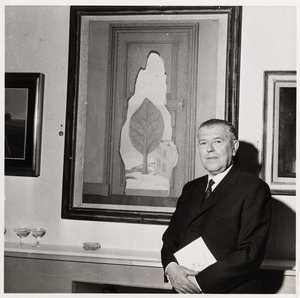
René Magritte
1898 - 1967 , Belgique
L'essentiel de l'artiste
- Artistes Influents: ['Constant Montald']
- Date De Décès: 1967
- Date De Naissance: 21 novembre 1898
- Lieu De Naissance: Lessines, Belgique
- Mouvement Artistique: Surréalisme
- Nationalité: Belge
- Nom Complet: René Magritte
- Oeuvres Notables:
- Le Jockey Perdu
- Les Amants
- La Trahison des images
- Temps suspendu
Articles connexes
Surréalisme : 10 Chefs-d'œuvre Révolutionnaires pour une Déco Inspirée
Plongez dans l'univers fascinant du surréalisme avec OriginalUniqueArt.com ! Découvrez 10 chefs-d’œuvre de Dalí, Magritte et autres artistes emblématiques. Inspirez votre déco avec des reproductions de tableaux exceptionnelles. Explorez la collection en ligne !
Surrealist Expression: Unlocking the Power of Dreams and the Subconscious through Art History
Explore the profound depths of Surrealism. From Dalí’s dreamscapes to Magritte’s enigmas, master the history of the subconscious mind through our expert art guide and discover museum-quality oil reproductions of the world's most iconic surrealist masterpieces.
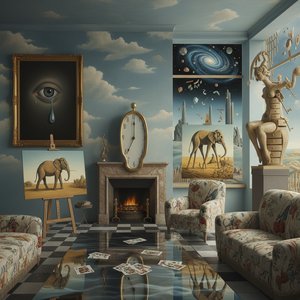
Surréalisme : Les 10 Chefs-d'Œuvre Indéfinissables pour une Déco d'Exception |
Plongez dans l'univers fascinant du Surréalisme avec . Découvrez les 10 chefs-d'œuvre de Dalí, Magritte & Miró qui ont marqué l'histoire de l'art. Reproductions haute définition et inspiration déco sur .
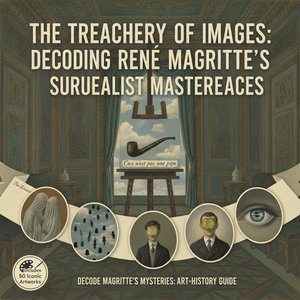
The Treachery of Images: Decoding René Magritte’s Surrealist Philosophy and the Paradox of Representation
Explore the profound mystery of René Magritte’s 'The Treachery of Images.' Dive into an expert analysis of his Surrealist philosophy, the paradox of representation, and how he challenged reality through the interplay of language and visual perception.
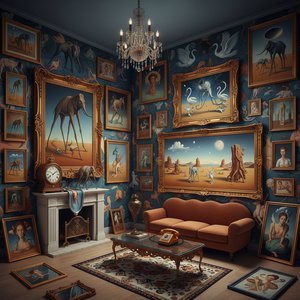
Salvador Dalí : Les 25 Œuvres Maîtresses d'un Génie Surréaliste | OriginalUniqueArt
Plongez dans l'univers fascinant de Salvador Dalí ! Découvrez les 25 œuvres surréalistes les plus emblématiques du maître espagnol. Histoire, symbolisme et reproduction haute définition sur OriginalUniqueArt.com. Explorez la collection en ligne.