Aperçu en situation
 Envoyer
 Partager
 Détails de l'œuvre
 Guide
Guide

 Télécharger l'image
 Articles similaires
 Radiographie
 Diaporama
 Statistiques
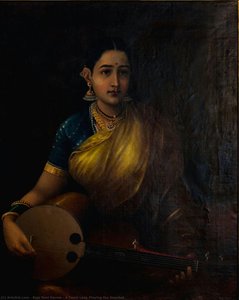
A Tamil Lady
 Oil
Oil- WallArt
- Indo-British Painting
 1900
1900- 19th Century
 48.0 x 32.0 cm
 La Fondation Héritage de Raja Ravi Varma
 Lire la suite
Giclées et impressions d'art
Impressions giclées ou sur toile de qualité musée, avec une production rapide et des finitions au choix. ( Commander la reproduction peinte à la main Passer au format numérique)




P118B €10

P118H €10

P118W €10

P438Z €10

P508JH €12

P508YH €12

P805H €10

P805Z €10

P919BZ €10

P919G €10

P919XJ €10

P959ZH €10

P968JZ €12

W106C €8

W218G €10

W218JH €8

W218Y €10

W307PJ €10

W316G €10

W316PJ €8

W316Y €10

W398PJ €8

W4111J €10

W500HY €15

W500JH €15

W692G €12

W849H €8

W940BG €15

W953PJ €8




Choisissez parmi nos formats prédéfinis qui respectent les proportions originales de l’œuvre.

Saisissez la largeur et la hauteur souhaitées pour qu'elles s'adaptent à votre cadre ou à votre mur. Une impression peut être recadrée, mais jamais agrandie au-delà de l'image originale ; ainsi, un format de forme différente entraînera la perte d'une partie de l'image. Nous vous envoyons une maquette numérique pour approbation avant toute impression. L'image présentée sur cette page ne montre pas le recadrage réel — seule la maquette le permet.
Livraison dans le monde entier () en 2 semaines au lieu des 4/5 semaines habituelles. (26 octobre)

Livraison express gratuite dans le monde entier

Toile de lin de qualité supérieure

Assurance transport complète

Garantie de remboursement des droits de douane

Garantie de fidélité des couleurs

Politique de retour de 100 jours (uniquement en cas de défaut)

Garantie de remboursement à 100%

Offre de tarifs dégressifs
 L'option verre n'est disponible que pour les dimensions inférieures à 110 cm.

A Tamil Lady
Giclées et impressions d'art
Format de la reproduction
-


Prix total
€ 70
The Radiance of Tradition: A Glimpse into Raja Ravi Varma’s Vision
In the quiet intimacy of A Tamil Lady, we encounter more than just a portrait; we enter a moment frozen in time by the masterful hand of Raja Ravi Varma. Painted around 1900, this oil on canvas serves as a breathtaking testament to the artist's unique ability to marry the grandeur of Indian heritage with the sophisticated realism of European academic traditions. The subject, a woman of profound grace, gazes toward the viewer with an expression that is both serene and deeply soulful. Her long, dark hair, gathered in a delicate ponytail, frames a face illuminated by a soft, natural light that seems to emanently from within the canvas itself. Clad in a vibrant red dress that symbolizes vitality and auspiciousness, she wears jewelry that speaks of her cultural identity and social standing, making the painting a window into the aristocratic elegance of turn-of-the-century India.
To behold this work is to witness a masterclass in chiaroscuro—the dramatic play between light and shadow. Varma utilizes oil paint to achieve a luminous quality, particularly in the way the light catches the sheen of her ornaments and the soft folds of her crimson attire. Every brushstroke is deliberate, contributing to a sense of tactile reality that allows the viewer to almost feel the weight of the gold and the smoothness of the silk. This meticulous attention to texture and light pulls the figure forward from the background, creating an immersive experience that transforms a simple portrait into a three-dimensional presence within any space.
A Legacy of Cultural Synthesis
To understand this piece is to understand the historical significance of Raja Ravi Varma himself. Born into the royal lineage of Kilimanoor, Varma acted as a cultural bridge during a transformative era in Indian history. He took the classical themes of Indian mythology and courtly life and infused them with a technique that resonated with the global art movements of his time. His ability to blend the Tanjore School traditions of his youth with the academic realism of the West allowed him to create an iconography that was both deeply familiar to the Indian soul and strikingly modern in its execution.
For the discerning collector or interior designer, A Tamil Lady offers more than mere decoration; it provides a focal point of profound historical depth. The painting carries an emotional weight that speaks of dignity, heritage, and the enduring beauty of tradition. Whether placed in a curated gallery setting or as a centerpiece in a sophisticated contemporary home, this reproduction brings with it the prestige of the Raja Ravi Varma Heritage Foundation and the timeless allure of a bygone era of Indian royalty.
Questions et réponses
Où puis-je télécharger «A Tamil Lady» de Raja Ravi Varma ?
Un téléchargement est disponible pour « A Tamil Lady » : la page Téléchargement de l'œuvre propose téléchargement d'une image numérique haute résolution.
À quel courant artistique «A Tamil Lady» de Raja Ravi Varma appartient-il ?
Le mouvement associé à «A Tamil Lady» de Raja Ravi Varma est Indo-British Painting. Cette classification situe l'œuvre parmi des artistes et des œuvres d'art apparentés.
Où puis-je voir un aperçu de « A Tamil Lady » ?
Pour prévisualiser une reproduction de «A Tamil Lady» de Raja Ravi Varma, consultez la page d'aperçu de l'œuvre : Aperçu en situation.
Biographie de l'artiste
Premières années et contexte familial
Raja Ravi Varma, un peintre indien célébré, est né le 29 avril 1848 à Kilimanoor, au Kerala, en Inde. Il était étroitement lié à la famille royale de Travancore et a plus tard adopté deux de ses petites-filles dans cette même famille royale.Carrière artistique
La carrière artistique de Varma se caractérise par son mélange unique des techniques européennes avec une sensibilité purement indienne. Ses œuvres sont considérées comme parmi les meilleurs exemples de cette fusion, faisant de lui l'un des plus grands peintres de l'histoire de l'art indien. Employant les dernières techniques artistiques académiques européennes, Varma a continué la tradition et l'esthétique de l'art indien.- Notamment pour avoir rendu ses peintures abordables grâce à des lithographies, ce qui a accru sa portée et son influence en tant que peintre et figure publique.
- Ses représentations des divinités hindoues et des épisodes des épopées et des Puranas ont reçu une acceptation profonde du public, souvent considérées comme des objets de culte à travers l'Inde.
Vie personnelle et liens royaux
Varma a épousé Bhageerthi Bayi, membre de la maison royale de Mavelikkara, en 1866. Cette connexion étroite avec la famille royale a conduit ses enfants à être considérés comme de la noblesse par naissance. Deux des filles de Varma ont ensuite été adoptées par la famille royale de Travancore, et leurs descendants constituent l'actuelle famille royale.Influences et développement artistique
Varma a reçu son enseignement initial du peintre de la cour, Rama Swami Naidu, puis de Theodor Jenson, un peintre britannique venu à Travancore en 1868 sur invitation du maharajah. Jenson lui a enseigné la peinture à l'huile. Varma était fasciné par la puissance et l'expression de la peinture occidentale. Il a voyagé dans toute l'Inde à la recherche de sujets pour ses peintures, représentant souvent les déesses hindoues sous les traits de femmes du sud de l'Inde, correspondant à son idéal de beauté.Œuvres majeures et héritage
L’héritage artistique de Varma est profond, son œuvre influençant l'art indien pendant plusieurs décennies. Son style unique, alliant des techniques européennes à une sensibilité indienne, en a fait un pionnier dans l'histoire de l'art indien. Œuvres importantes :- Mahaprabha Amma, l’une des peintures les plus célèbres de Varma, mettant en scène sa fille.
- Uma Amma, nommée d'après la mère de Varma, présentant son mélange de techniques européennes et indiennes.
Signification historique
Varma est reconnu pour avoir popularisé l’art indien en le rendant accessible à un public plus large grâce aux lithographies abordables. Son travail a contribué à la renaissance artistique du Bengale au début du XXe siècle, bien que certains artistes aient critiqué son style « occidentalisant ». Il est décédé de diabète le 2 octobre 1906 dans le palais de Kilimanoor. Certaines de ses œuvres sont exposées à la Sree Chithra Art Gallery du musée Napier à Thiruvananthapuram. Un film, *Rang Rasiya*, sorti en 2008 et réalisé par Ketan Mehta, lui est dédié.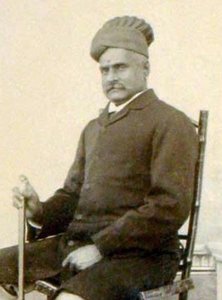
Raja Ravi Varma
1848 - 1906 , Inde
L'essentiel de l'artiste
- Artistes Influents:
- Theodor Jenson
- Rama Swami Naidu
- Date De Décès: 2 octobre 1906
- Date De Naissance: 29 avril 1848
- Influences Artistiques:
- Abanindranath Tagore
- Nandalal Bose
- Lieu De Naissance: Kilimanoor, Inde
- Nationalité: Indienne
- Nom Complet: Raja Ravi Varma
- Style Artistique: Académique indien
- Œuvres Notables:
- Mahaprabha Amma
- Uma Amma
Articles connexes
The Revival of Antiquity: Exploring Ideals of Beauty & Power in Neoclassical Portraiture
Explore the captivating world of Neoclassical portraiture! Discover the power & ideals behind masterpieces by David, Girodet & more. Expert analysis, custom reproductions & art appraisal at OriginalUniqueArt.
Le Réveil de l'Antiquité : Idéaux et Héritage Durable de l'Art Néoclassique
Explorez l'art néoclassique : ses origines, figures clés (David, Canova), et son héritage durable. Découvrez la simplicité, l'harmonie et la vertu de ce mouvement artistique majeur avec OriginalUniqueArt.
L'Écho Persistant de l'Antiquité : Les Idéaux Classiques dans l'Art de la Renaissance au Modernisme
Explorez l'influence durable de l'Antiquité sur l'art de la Renaissance au Modernisme. Découvrez les chefs-d'œuvre, les techniques et les artistes clés avec OriginalUniqueArt.com.
The Revival of Antiquity: Exploring the Neoclassical Movement & its Enduring Legacy
Explore the revival of classical art with our deep dive into Neoclassicism! Discover key artists like Jacques-Louis David, Enlightenment influences & lasting impact on art history. High-quality reproductions at OriginalUniqueArt.

Raja Ravi Varma: Bridging Tradition & Modernity in 19th-Century Indian Art
Explore the life & art of Raja Ravi Varma, a pioneer who fused European techniques with Indian iconography. Discover his iconic paintings, lasting legacy, and influence on modern Indian art at OriginalUniqueArt.