Menu

() ·

A painting made for you, by hand

Reproduction à l'huile faite à la main

Huile sur toile peinte à la main, avec cadre et dimensions personnalisés, réalisée sur commande par nos artistes. ( Passer au format impression Passer au format numérique)

Description de la pièce

Experience Qiu Ying's 'The Sixteen Luohans,' a stunning 16th-century Chinese handscroll showcasing masterful gongbi brushwork & intricate detail of Buddhist figures.

Biographie de l'artiste

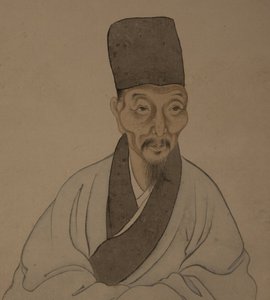
Qiu Ying (1494-1552) : Peintre de la dynastie Ming, célèbre pour son style gongbi exquis des paysages, des figures et des fleurs. L'un des Quatre Maîtres de l'art chinois.

from ·

Chapter 1

How large should it be?

Slide to change the size; the wall on the left shows it at its real scale. The proportions of the original are kept.

Format standard
sur mesure
CM
INCH

Choisissez parmi nos formats prédéfinis qui respectent les proportions originales de l’œuvre.

largeur
hauteur

Saisissez la largeur et la hauteur souhaitées, pour s'adapter à votre cadre ou à votre mur. Cette œuvre est peinte à la main ; ainsi, pour un format de forme différente, l'artiste peut peindre un peu plus autour du tableau ou réduire légèrement les bords — c'est vous qui choisissez. Nous vous envoyons une maquette numérique pour approbation avant que la peinture ne commence. L'image présentée sur cette page ne reflète pas le résultat réel — seule la maquette le fait.

Chapter 2

How should it arrive?

Choose the edges of the stretched canvas

Choose your frame

Corner sample of the WhiteWrap canvas edge finish, stretched on bois massif bars
White €1
Corner sample of the BlurSideWrap canvas edge finish, stretched on bois massif bars
Blurside €1
Corner sample of the ExtendedWrap canvas edge finish, stretched on bois massif bars
Extended €1
Corner sample of the P118B picture frame: polystyrène moulé, 5 cm wide and 3 cm thick
P118B €10
Corner sample of the P118H picture frame: polystyrène moulé, 5 cm wide and 3 cm thick
P118H €10
Corner sample of the P118W picture frame: polystyrène moulé, 5 cm wide and 3 cm thick
P118W €10
Corner sample of the P438Z picture frame: polystyrène moulé, 5.5 cm wide and 3.5 cm thick
P438Z €10
Corner sample of the P508JH picture frame: polystyrène moulé, 7 cm wide and 3.5 cm thick
P508JH €12
Corner sample of the P508YH picture frame: polystyrène moulé, 7 cm wide and 3.5 cm thick
P508YH €12
Corner sample of the P805H picture frame: polystyrène moulé, 5 cm wide and 3.5 cm thick
P805H €10
Corner sample of the P805Z picture frame: polystyrène moulé, 5 cm wide and 3.5 cm thick
P805Z €10
Corner sample of the P919BZ picture frame: polystyrène moulé, 7 cm wide and 3.5 cm thick
P919BZ €10
Corner sample of the P919G picture frame: polystyrène moulé, 7 cm wide and 3.5 cm thick
P919G €10
Corner sample of the P919XJ picture frame: polystyrène moulé, 7 cm wide and 3.5 cm thick
P919XJ €10
Corner sample of the P959ZH picture frame: polystyrène moulé, 5 cm wide and 3 cm thick
P959ZH €10
Corner sample of the P968JZ picture frame: polystyrène moulé, 6 cm wide and 4 cm thick
P968JZ €12
Corner sample of the W106C picture frame: bois massif, 5 cm wide and 3 cm thick
W106C €8
Corner sample of the W218G picture frame: bois massif, 5 cm wide and 3 cm thick
W218G €10
Corner sample of the W218JH picture frame: bois massif, 5 cm wide and 3 cm thick
W218JH €8
Corner sample of the W218Y picture frame: bois massif, 5 cm wide and 3 cm thick
W218Y €10
Corner sample of the W307PJ picture frame: bois massif, 6 cm wide and 3 cm thick
W307PJ €10
Corner sample of the W316G picture frame: bois massif, 6 cm wide and 3 cm thick
W316G €10
Corner sample of the W316PJ picture frame: bois massif, 6 cm wide and 3 cm thick
W316PJ €8
Corner sample of the W316Y picture frame: bois massif, 6 cm wide and 3 cm thick
W316Y €10
Corner sample of the W398PJ picture frame: bois massif, 5 cm wide and 3 cm thick
W398PJ €8
Corner sample of the W4111J picture frame: bois massif, 6.5 cm wide and 3.5 cm thick
W4111J €10
Corner sample of the W500HY picture frame: bois massif, 7 cm wide and 5 cm thick
W500HY €15
Corner sample of the W500JH picture frame: bois massif, 7 cm wide and 5 cm thick
W500JH €15
Corner sample of the W692G picture frame: bois massif, 8 cm wide and 4 cm thick
W692G €12
Corner sample of the W849H picture frame: bois massif, 5 cm wide and 3 cm thick
W849H €8
Corner sample of the W940BG picture frame: bois massif, 7.5 cm wide and 4.5 cm thick
W940BG €15
Corner sample of the W953PJ picture frame: bois massif, 6 cm wide and 3.5 cm thick
W953PJ €8
Corner sample of the H24-GOLD picture frame: bois sculpté et apprêté au gesso, 10 cm wide and 6 cm thick
H24-GOLD €30
Corner sample of the H24-SILVER picture frame: bois sculpté et apprêté au gesso, 10 cm wide and 6 cm thick
H24-SILVER €30
Corner sample of the H36-GOLD picture frame: bois sculpté et apprêté au gesso, 15 cm wide and 6.5 cm thick
H36-GOLD €45
Corner sample of the H36-SILVER picture frame: bois sculpté et apprêté au gesso, 15 cm wide and 6.5 cm thick
H36-SILVER €45
Aperçu du cadre
Sous cadre

Moulding: . Overall size with the frame: .

Chapter 3

Who paints it, and should anything change?

Examples of what can be changed: Replace face with customer photo; Add pet (e.g., replace cat with dog); Include hidden message in background; Change background landscape or elements.
After order, OriginalUniqueArt.com team will email client for instructions and provide a mockup preview

Livraison dans le monde entier () en 3 à 4 semaines au lieu des 5 semaines habituelles. (29 octobre). Aucun compromis sur la qualité.

Chapter 4

The finishing touches

A nameplate, as in a museum?

Détails de la plaque en bronze gravée

This elegant plaque features the artist's name and the title of the artwork, finely engraved for a timeless presentation.

It is made from bronze with a refined, elegant finish. The text is precisely laser-engraved for a sharp and permanent result. Measuring 9x2 cm, the plaque is compact yet easy to read. It's built to be durable and scratch-resistant, offering a professional, museum-quality look. Mounting is simple thanks to the included adhesive backing.

Détails de la plaque en acrylique transparent

The plaque includes essential engraved details such as the artist's name, the title of the artwork, the date it was created, the type of media used-like oil on canvas or watercolor-a brief description of the piece, and a QR code that links to the complete artwork information.

It is crafted from clear acrylic, offering a sleek, modern appearance. The text is UV-engraved in black to ensure strong visual contrast. With a size of 10x15 cm, it ensures optimal readability. It comes equipped with two metal hooks for secure wall mounting. The plaque is designed to be weather-resistant, making it suitable for various environments, and it includes interactive features that work seamlessly with smartphone scanning.

Détails de la plaque en acrylique noir

This elegant plaque includes engraved information such as the artist's name, the title of the artwork, the date it was created, the type of media used (like oil on canvas or watercolor), a short description of the artwork, and a QR code for quick access to more information.

The plaque itself is made from refined black acrylic with a premium finish. The text is laser-engraved in white for high contrast and readability. Its size is 10x15 cm, designed to be easy to read. It comes with two metal hooks for professional mounting. The design is sleek and fits any interior style. It is also weather-resistant and durable, with built-in digital integration for mobile compatibility.

A protective varnish?

When do you need it?

Chapter 5

Your painting, as you ordered it

Handscroll

Technique de reproduction

Format de la reproduction

-

Artiste de prestige

Plus de détails, de finesse et un temps de production accru

-

Cadre de reproduction

-

-

Pour les œuvres ou reproductions dont un côté mesure plus de 105 cm (environ 41 pouces), le cadre sera expédié sous forme de kit démonté. Cette méthode garantit une livraison sécurisée et prévient tout dommage pendant le transport.

Assemblage professionnel requis - ce produit n'est pas destiné au bricolage (DIY).
Le kit doit être assemblé et la toile tendue par un encadreur professionnel expérimenté, en utilisant de la colle à bois (non fournie), une pince à tendre la toile et des serre-joints pour maintenir les traverses d'équerre pendant le séchage de la colle. Un assemblage incorrect ou une tension inégale de la toile peut endommager l'œuvre de manière irréversible et n'est pas couvert par notre garantie.

  • Toutes les baguettes en bois massif sont incluses, découpées avec précision à la taille requise.

  • À assembler avec les vis fournies, ainsi qu'avec de la colle à bois pour les assemblages d'angles (non fournie), à prévoir par votre encadreur.

  • L'utilisation d'outils professionnels est requise et non incluse : une pince à tendre la toile (tendeur) et des serre-joints pour maintenir les baguettes bien d'équerre pendant le séchage de la colle.

Important :
L'assemblage des angles nécessite de la colle à bois, les barres doivent être maintenues avec des serre-joints jusqu'au séchage complet de la colle, et le tendage de la toile sur le châssis assemblé nécessite une pince à tendre la toile. Aucun de ces éléments n'est inclus dans le kit. Veuillez consulter un encadreur professionnel expérimenté avant de commander ce format.

Cartel

-

-

Vernis de protection

Vernis brillant (intensifie les couleurs, protège de la lumière et de l'humidité)

-

Personnaliser mon œuvre

Exemples de personnalisation : remplacer le visage par une photo du client ; ajouter un animal de compagnie (par exemple, remplacer un chat par un chien) ; inclure un message caché en arrière-plan ; modifier le paysage ou les éléments d'arrière-plan.

-

Livraison urgente

Livraison dans le monde entier () en 3 à 4 semaines au lieu des 5 semaines habituelles. (29 octobre). Aucune concession sur la qualité.

-

Livraison express

Livraison dans le monde entier () sous 5 semaines. (5 novembre).

Inclus

Prix total

€ 264

Prix total € 264

L'option verre n'est disponible que pour les dimensions inférieures à 110 cm.

Included with every order

  • Livraison express gratuite dans le monde entier
  • Toile de lin de qualité supérieure
  • Assurance transport complète
  • Garantie de remboursement des droits de douane
  • Garantie de fidélité des couleurs
  • Politique de retour de 100 jours (uniquement en cas de défaut)
  • Garantie de remboursement à 100%
  • Offre de tarifs dégressifs

Qiu Ying’s “Up the River During Qingming”: A Masterpiece of Ming Dynasty Serenity

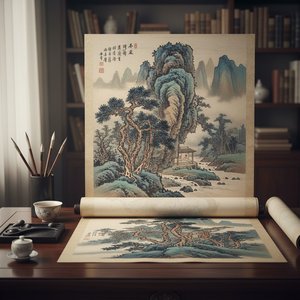
“Up the River During Qingming,” painted by Qiu Ying during the mid-16th century, is more than just a landscape; it's a carefully constructed meditation on harmony, leisure, and the enduring beauty of nature. Attributed to one of China’s Four Masters of the Ming Dynasty – alongside Shen Zhou, Tang Yin, and Wen Zhengming – this exquisite handscroll offers a rare glimpse into the refined aesthetic sensibilities of Suzhou during that era. The work, currently residing in the collection of the National Gallery of Canada, invites viewers into a tranquil scene brimming with subtle symbolism and masterful brushwork.

Qiu Ying’s artistic journey was remarkably unconventional for his time. Rather than pursuing formal training within established art circles, he began as a lacquer artisan, honing his skills in meticulous detail – a foundation that profoundly influenced the precision and control evident throughout “Up the River During Qingming.” This early experience instilled in him an unparalleled understanding of line and color, qualities he would later translate into his celebrated landscape paintings. His apprenticeship with Zhou Chen in Suzhou further solidified his technical abilities, exposing him to the techniques of the Wu School, known for its emphasis on ink washes and a more expressive approach to nature.

A Symphony of Detail: Technique and Style

The painting’s remarkable quality stems from Qiu Ying's mastery of the gongbi technique – a highly detailed, realistic style that was favored by court painters. Each element—from the meticulously rendered bamboo stalks to the delicate folds of the pavilions—is executed with painstaking precision, creating an illusion of incredible depth and texture. Notice the subtle gradations of color achieved through layering washes of ink and pigment; this creates a luminous quality that brings the scene to life. The composition is carefully balanced, drawing the eye across the landscape in a deliberate and engaging manner. The artist’s use of loose brushwork, particularly in depicting the distant mountains and flowing river, contrasts beautifully with the tightly controlled detail of the foreground elements, demonstrating Qiu Ying's versatility and his ability to seamlessly blend different artistic approaches.

Symbolism Woven into the Landscape

“Up the River During Qingming” is rich in symbolic meaning. The scene depicts a scholar leisurely enjoying a day by the river, surrounded by carefully arranged pavilions and gardens. This imagery reflects the Confucian ideals of scholarly pursuits, contemplation, and harmony with nature – values highly esteemed during the Ming Dynasty. The presence of the tavern and the farmer gathering water vegetables adds a touch of everyday life to the scene, reminding us that even amidst beauty and tranquility, human activity continues. The bamboo grove, a recurring motif in Chinese art, symbolizes resilience, integrity, and longevity—qualities admired in virtuous individuals. The distant mountains represent permanence and stability, while the flowing river embodies fluidity and change.

A Window into Ming Dynasty Culture

Beyond its aesthetic beauty, “Up the River During Qingming” offers a valuable insight into Ming Dynasty culture. It reflects the importance of gardens as spaces for contemplation, artistic expression, and social interaction. The lavish furnishings within the pavilions—including the exquisite celadon vase—demonstrate the wealth and sophistication of the era’s elite. The painting also reveals the influence of philosophical ideas, particularly those associated with Zhou Dunyi, whose “On the Love for the Lotus” inspired the scene's composition and symbolism. Qiu Ying’s ability to seamlessly integrate these diverse elements into a cohesive and harmonious whole is a testament to his artistic skill and cultural awareness.

Collecting a Legacy: Reproduction and Inspiration

Reproductions of “Up the River During Qingming” capture only a fraction of the painting's original impact. The subtle nuances of color, texture, and brushwork are difficult to replicate fully, but high-quality reproductions offer an accessible way to appreciate Qiu Ying’s artistry. This work serves as a powerful reminder of the enduring appeal of Chinese landscape painting—a genre that continues to inspire artists and captivate viewers with its beauty, symbolism, and profound sense of serenity.

Questions et réponses

Quelle technique a été utilisée pour « Handscroll » et quand cette œuvre a-t-elle été créée ?

«Handscroll» de Qiu Ying est une œuvre réalisée en Acrylic On Canvas, datant de 1530.

À quel point la palette de "Handscroll" est-elle saturée ?

Les couleurs de «Handscroll» de Qiu Ying présentent une saturation Balanced Soft. La saturation indique si les couleurs sont vives ou atténuées.

L'œuvre «Handscroll» de Qiu Ying est-elle plutôt claire ou sombre ?

En termes de luminosité perçue, «Handscroll» de Qiu Ying est shadow.

In numbers

  • 1530the year it was painted
  • 29frames to choose from
  • standard sizes, in its own proportions
  • 5weeks to paint and deliver it
Qiu Ying

Qiu Ying

1494 - 1552, Chine

L'essentiel de l'artiste

  • Artistic Movement Or Style: *Gongbi*
  • Artists Or Movements Influenced By This Artist: ['Song Dynasty masters']
  • Artists Who Influenced This Artist: ['Zhou Chen']
  • Date Of Birth: 1494
  • Date Of Death: 1552
  • Full Name: Qiu Ying
  • Nationality: Chinois
  • Notable Artworks:
    • En montant la rivière pendant le Qingming
    • Dame dans un bosquet de bambous
    • Les Sept Sages du bosquet de bambous
    • Matin printanier au palais Han
  • Place Of Birth: Taicang, Chine

Biographie de l'artiste

Qiu Ying : Vie et Héritage

Jeunesse et Éducation

Né en 1494 à Taicang (actuellement dans la province du Jiangsu), en Chine, Qiu Ying est issu d'une famille paysanne. Contrairement à de nombreux artistes établis de son temps qui venaient de milieux savants, le parcours artistique de Qiu Ying vers la notoriété a été largement auto-construit. Il a commencé sa formation formelle auprès de Zhou Chen à Suzhou, un centre culturel majeur de la dynastie Ming. Cette éducation fondamentale lui a fourni les compétences et les techniques qui allaient définir sa carrière.

Développement Artistique et Style

Alors que l'école de Wu à Suzhou privilégiait principalement la peinture à l'encre, Qiu Ying a démontré une remarquable versatilité, maîtrisant à la fois la technique délicate du gongbi – caractérisée par un souci du détail précis et des couleurs vives – et le style vert et bleu. Cette adaptabilité lui a permis de répondre aux demandes d'une clientèle diversifiée et d'établir sa propre voix artistique unique. Il a habilement incorporé diverses techniques dans son travail, démontrant une capacité exceptionnelle à synthétiser différentes approches.

Commandes et Œuvres Majeures

La carrière de Qiu Ying a prospéré grâce au soutien de commanditaires fortunés qui ont commissionné un large éventail de sujets. Ses peintures englobaient des paysages, des scènes religieuses, des représentations de fleurs et de jardins, ainsi que des compositions figuratives. Certaines de ses œuvres les plus célèbres comprennent :

  • En montant la rivière pendant le Qingming: Une représentation magistrale inspirée de l'original de la dynastie Song du Nord.
  • Dame dans un bosquet de bambous: Montrant sa compétence pour représenter des figures élégantes dans des paysages naturels.
  • Les Sept Sages du bosquet de bambous: Démontrant sa compréhension des thèmes littéraires classiques.
  • Matin printanier au palais Han: Une représentation vibrante de la vie courtoise.

Des commanditaires clés comprenaient Chen Guan de Suzhou, et plus tard Zhou Fenglai et Xiang Yuanbian, tous collectionneurs d'art importants qui ont considérablement soutenu ses efforts artistiques.

Influences et Caractéristiques Artistiques

L'œuvre de Qiu Ying reflète les influences des maîtres antérieurs, en particulier ceux de la dynastie Song. Il a habilement combiné ces précurseurs historiques avec l'esthétique Ming contemporaine. Ses peintures se distinguent par :

  • Maîtrise technique exceptionnelle du gongbi.
  • Une palette de couleurs raffinée et une attention méticuleuse aux détails.
  • La capacité de créer à la fois des paysages panoramiques grandioses et des scènes intimes et détaillées.
  • Versatilité dans le sujet et le style.

Signification Historique et Héritage

Qiu Ying’s talent et sa versatilité lui ont valu une reconnaissance en tant que l'un des "Quatre Maîtres" de la dynastie Ming – un témoignage de son impact profond sur la peinture chinoise. Il a comblé le fossé entre les styles traditionnels et les goûts contemporains, créant des œuvres à la fois techniquement brillantes et esthétiquement plaisantes. Son influence s'est étendue au-delà de sa vie, inspirant des générations d'artistes avec sa technique magistrale et son approche innovante. Il reste une figure célèbre dans l'histoire de l'art chinois, admirée pour sa capacité à capturer la beauté et à transmettre un sens à travers ses magnifiques peintures.

Informations clés

  • Influences: Li Tang
  • Title: The Sixteen Luohans
  • Artistic style: Landscape, Buddhist
  • Movement: Ming Dynasty
  • Medium: Ink & Color on Silk
  • Notable elements or techniques: Gongbi brushwork, intricate detail

Quiz d'art

Chaque question ne comporte qu'une seule bonne réponse.

Question 1:
What is the primary subject matter of Qiu Ying’s ‘Up the River During Qingming’?
Question 2:
Qiu Ying is considered one of the ‘Four Masters’ of which dynasty?
Question 3:
Which artistic technique is most prominently featured in Qiu Ying's paintings, as evidenced by ‘Up the River During Qingming’?
Question 4:
The presence of a scholar crossing a bridge in ‘Up the River During Qingming’ alludes to which philosophical concept?
Question 5:
What is the approximate date range during which Qiu Ying created ‘Up the River During Qingming’?

More about this painting

Aperçu en situation Visualiser en RA Passer au format impression Passer au format numérique Envoyer
Détails de l'œuvre Guide Ajouter aux favoris Télécharger l'image Articles similaires Radiographie Diaporama Q&A Statistiques