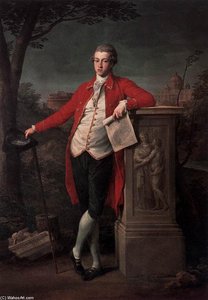
Aperçu en situation
 Envoyer
 Partager
 Détails de l'œuvre
 Guide
Guide

 Télécharger l'image
 Articles similaires
 Radiographie
 Diaporama
 Statistiques
Sir Charles Watson
 Oil On Canvas
- WallArt
- Neoclassicism
 75.0 x 99.0 cm
 Fondazione Cariplo
 Lire la suite
Giclées et impressions d'art
Impressions giclées ou sur toile de qualité musée, avec une production rapide et des finitions au choix. ( Commander la reproduction peinte à la main Passer au format numérique)




P118B €10

P118H €10

P118W €10

P438Z €10

P508JH €12

P508YH €12

P805H €10

P805Z €10

P919BZ €10

P919G €10

P919XJ €10

P959ZH €10

P968JZ €12

W106C €8

W218G €10

W218JH €8

W218Y €10

W307PJ €10

W316G €10

W316PJ €8

W316Y €10

W398PJ €8

W4111J €10

W500HY €15

W500JH €15

W692G €12

W849H €8

W940BG €15

W953PJ €8




Choisissez parmi nos formats prédéfinis qui respectent les proportions originales de l’œuvre.

Saisissez la largeur et la hauteur souhaitées pour qu'elles s'adaptent à votre cadre ou à votre mur. Une impression peut être recadrée, mais jamais agrandie au-delà de l'image originale ; ainsi, un format de forme différente entraînera la perte d'une partie de l'image. Nous vous envoyons une maquette numérique pour approbation avant toute impression. L'image présentée sur cette page ne montre pas le recadrage réel — seule la maquette le permet.
Livraison dans le monde entier () en 2 semaines au lieu des 4/5 semaines habituelles. (26 octobre)

Livraison express gratuite dans le monde entier

Toile de lin de qualité supérieure

Assurance transport complète

Garantie de remboursement des droits de douane

Garantie de fidélité des couleurs

Politique de retour de 100 jours (uniquement en cas de défaut)

Garantie de remboursement à 100%

Offre de tarifs dégressifs
 L'option verre n'est disponible que pour les dimensions inférieures à 110 cm.

Sir Charles Watson
Giclées et impressions d'art
Format de la reproduction
-


Prix total
€ 70
A Glimpse into Aristocratic Grandeur: Pompeo Batoni's Portrait of Sir Charles Watson
To stand before this portrait is to step directly into the gilded salons of eighteenth-century Rome, a place where culture, ambition, and artistry converged. Pompeo Batoni, master chronicler of the privileged elite, has captured not merely a likeness, but an entire moment in aristocratic life. The subject, Sir Charles Watson, gazes out with a composed intensity that speaks volumes of his station and the era's expectations for gentlemen of means. His bearing is one of assured refinement; the crisp lines of his ruffled collar contrast beautifully with the deep tones of his brown coat, anchoring the composition against the stark, dramatic backdrop.
The Allure of Fashion and Historical Echoes
What immediately draws the eye, beyond the sitter's steady gaze, is the costume itself. Batoni has dressed Sir Charles in what is described as the Van Dyck dress—a fashion choice that transports us back to the opulent courts of the early seventeenth century. The golden mantle and buttons evoke the grandeur associated with Antoon Van Dyck’s time at the court of Charles I, a style that held immense sway among the British aristocracy during this period. This deliberate nod to historical costume suggests more than mere vanity; it is a sophisticated cultural citation, a visual language understood only by those who navigated the intellectual currents of the Grand Tour. The feather held delicately in his hand serves as both an accessory and a subtle emblem of status.
Mastery of Technique and Atmosphere
Technically, this oil on canvas exemplifies Batoni's genius for portraiture. His ability to render texture—the soft sweep of the white beard against the dark fabric, the sheen of the gold trim—is breathtaking. The contrast between the richly detailed foreground and the almost monolithic black background is a masterful stroke. This simplicity forces the viewer’s entire attention onto the sitter's face and gesture. Batoni, whose style drew from Bolognese Classicism and Raphael, achieves here a balance: the formality of classical portraiture infused with the vibrant immediacy of contemporary life. It is art that feels both timelessly grand and intimately personal.
A Statement for the Modern Collector
For the discerning collector or designer seeking to infuse a space with historical depth and undeniable elegance, this piece offers profound resonance. Reproducing such an artwork allows one to own a tangible piece of cultural history. It speaks to themes of lineage, worldly success, and enduring style. Imagine this portrait gracing a library or drawing-room; it does not merely decorate—it narrates the story of those who shaped the world from within its most cultured circles. It is an object that commands conversation, whispering tales of Oxford graduations, naval supremacy, and the dazzling allure of Italian artistic patronage.
Questions et réponses
Comment puis-je visionner «Sir Charles Watson» de Pompeo Batoni sous forme de diaporama ?
Vous pouvez visionner «Sir Charles Watson» de Pompeo Batoni sous forme de diaporama sur la page Diaporama de l'œuvre.
D'où viennent les visiteurs de «Sir Charles Watson» de Pompeo Batoni ?
La page Statistiques de «Sir Charles Watson» de Pompeo Batoni présente les statistiques de visites publiques : le nombre de visites mensuelles de cette œuvre, une comparaison avec les œuvres les plus consultées de l'artiste, ainsi que la provenance des visiteurs.
Quelles couleurs dominent «Sir Charles Watson» de Pompeo Batoni ?
«Sir Charles Watson» de Pompeo Batoni arbore une palette Earthy, avec le Black (#151512) comme couleur dominante.
Biographie de l'artiste
Première Vie et Formation
- Né : Lucques, Italie (1708)
- Décédé : 1787
- Pompeo Batoni a déménagé à Rome en 1727.
- Il a été l'apprenti d'Agostino Masucci, Sebastiano Conca et/ou Francesco Imperiali.
- Sa première commande indépendante est survenue à la suite de pluies qui ont frappé Rome en avril 1732.
- La peinture "L'Extase de Sainte Catherine de Sienne" illustre son raffinement académique du style baroque tardif.
Style Artistique et Influences
- Le style de Batoni puisait son inspiration dans l'Antiquité classique, le rococo français, le classicisme bolonais et des artistes tels que Nicolas Poussin, Claude Lorrain et surtout Raphaël.
- Il est considéré comme un précurseur du néoclassicisme.
- Son œuvre peut être trouvée dans divers musées, dont la Pinacoteca di Brera à Milan, en Italie.
Œuvres Notables et Commandes
- Vierge et Enfant avec les Saints
- Un Chevalier à Rome : Charles Cecil Roberts – Un portrait célèbre d'un voyageur britannique sur fond de ruines romaines.
- Le Triomphe de Venise
- De nombreux retables pour des églises en Italie, tels que le Musée Duomo à Sienne.
- Il était très demandé pour les portraits, en particulier par les voyageurs britanniques du Grand Tour qui commandaient des portraits en pied dans des décors antiques.
Développement et Importance Historique
- Batoni est devenu un peintre très à la mode à Rome après le départ de son rival, Anton Raphael Mengs, pour l'Espagne en 1761.
- Il a été l’ami de Winckelmann et visait à restreindre le classicisme dans sa peinture.
- Ses portraits ont capturé l'esprit de l'ère du Grand Tour, reflétant la fascination pour l'Antiquité classique parmi les élites européennes.
- La capacité de Batoni à mélanger les techniques baroques avec les idéaux néoclassiques émergents l'a positionné comme une figure de transition dans l'histoire de l'art italien.
Héritage
- Pompeo Batoni est décédé le 4 février 1787 à Rome.
- Il a laissé derrière lui un héritage en tant que l'un des peintres italiens les plus renommés de son époque.
- Son œuvre continue d'être admirée pour sa compétence technique, ses compositions élégantes et ses portraits perspicaces d'individus dans leur contexte historique.

Pompeo Batoni
1708 - 1787 , Italie
L'essentiel de l'artiste
- Artistes Influents:
- Nicolas Poussin
- Claude Lorrain
- Raphaël
- Date De Décès: 4 février 1787
- Date De Naissance: 25 janvier 1708
- Lieu De Naissance: Lucques, Italie
- Mouvement Artistique: Néo-classicisme
- Nationalité: Italienne
- Nom Complet: Pompeo Girolamo Batoni
- Oeuvres Notables:
- Vierge et Enfant avec saints
- Un Chevalier à Rome
- Le Triomphe de Venise
Articles connexes

L'héritage durable de la peinture à l'huile : technique, histoire et pratique contemporaine
Explorez l'histoire fascinante de la peinture à l'huile, des techniques ancestrales aux pratiques contemporaines. Découvrez les maîtres, apprenez et trouvez votre œuvre d'art idéale chez .

The Enduring Legacy of Oil on Canvas: Technique, History & Aesthetic Impact
Explore the rich history & techniques of oil painting – from Renaissance masters to Impressionism. Discover pigments, layering methods, and why this timeless medium endures. Expert insights for artists & art enthusiasts.

L'Huile sur Toile : Exploration Historique et Technique d'un Médium Artistique Intemporel
Explorez l'histoire fascinante de la peinture à l'huile, des techniques ancestrales aux maîtres flamands comme Van Eyck. Découvrez les secrets des pigments, liants et glacis pour comprendre cet art intemporel.
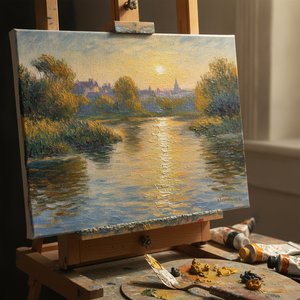
The Soul of Impressionism: Why Oil on Canvas Captures Eternal Light and Timeless Emotion
Discover the enchanting alchemy of Impressionism. Explore how the mastery of oil on canvas, through glazing and impasto, captures eternal light and emotion. Perfect for lovers of Monet and Van Gogh seeking the profound depth of hand-painted fine art.
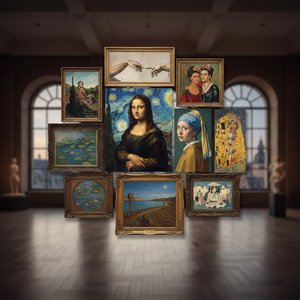
Top 10 Chefs-d'œuvre à l'Huile : L'Art qui a Révolutionné le Décor Intérieur
Plongez dans l'histoire de 10 chefs-d'œuvre à l'huile qui ont révolutionné l'art : Monet, Van Gogh, Rembrandt et plus. Découvrez les techniques, les émotions et trouvez l'inspiration déco sur ! Explorez la collection.