

 Aperçu en situation
 Partager
 Partager
 Détails
 Guide imprimable

 Télécharger
 Articles similaires
 Radiographie
 Voir le diaporama
 Statistiques
Galatea (?)
 1509
1509 63.0 x 100.0 cm
 Afficher la suite
Acquérez une image numérique haute résolution et optimisée, d'une qualité bien supérieure à l'aperçu en ligne.
Chaque fichier est méticuleusement préparé par nos spécialistes internes à l'aide d'outils avancés et d'une retouche manuelle experte. Nous garantissons que chaque image possède une clarté exceptionnelle, une précision des couleurs irréprochable et un niveau de détail fin.
Le fichier final est livré par e-mail sous 72 heures, optimisé pour une utilisation immédiate dans des contextes professionnels, éditoriaux et d'impression. Il offre la même qualité de confiance que celle utilisée par les plus grands studios de création, éditeurs et galeries.
Image numérique
Téléchargez un fichier haute résolution pour votre usage personnel, l'impression et vos projets créatifs. ( Passer au format impression Acheter la peinture faite à la main)
Inclus avec chaque commande d'image numérique
Livraison numérique experte, garantie.
En choisissant OriginalUniqueArt.com, vous n'obtenez pas seulement une simple image : vous recevez une œuvre numérique sublimée avec professionnalisme, conçue avec précision et accompagnée d'une garantie de satisfaction. Voici tout ce qui accompagne automatiquement votre commande :

Livraison rapide par e-mail
Votre fichier d'image numérique haute résolution vous sera envoyé par e-mail sous 72 heures après votre commande — prêt à un usage immédiat.

Fichier numérique optimisé par l'IA
Votre œuvre d'art bénéficie d'une optimisation professionnelle grâce à des outils d'IA avancés et une retouche manuelle, garantissant un niveau maximal de détail, de clarté et de fidélité chromatique.

Réexpédition gratuite à vie
Vous avez accidentellement supprimé ou perdu votre fichier ? Pas d'inquiétude — nous vous le renverrons gratuitement, quand vous le souhaitez.

Aucuns frais de douane — À jamais
Profitez de votre œuvre d'art instantanément sans frais de douane ni de livraison — les téléchargements numériques sont toujours exonérés de taxes.

Garantie de fidélité des couleurs
Nous garantissons que votre image numérique reproduit les couleurs de l'original aussi fidèlement que possible grâce à des outils professionnels et une gestion rigoureuse des couleurs.

Garantie de satisfaction de 100 jours
Si vous n'êtes pas satisfait de votre image numérique, nous la retoucherons ou vous rembourserons 100% sous 100 jours — sans poser de questions.

Garantie de remboursement à 100%
Pas satisfait ? Obtenez un remboursement intégral dans les 100 jours suivant la réception de votre fichier numérique — sans aucune question posée.

Remises sur les commandes groupées
Achetez 3 images, économisez 10% - Achetez 5, économisez 15% - Achetez 10+, économisez 20%. Idéal pour les projets créatifs, les galeries et les agences.
Questions et réponses
Puis-je examiner « Galatea (?) » plus en détail ?
La vue X de «Galatea (?)» de Pinturicchio se trouve sur la page Rayons X de l'œuvre : une exploration interactive de l'image à travers onze couches optiques.
Où puis-je acheter une impression de «Galatea (?)» de Pinturicchio ?
« Galatea (?) » est disponible en tant que une impression d'art sur toile de coton ou sur papier canvas d'archive. Les commandes s'effectuent sur sa page Impression d'art fine, dans le format de votre choix.
Comment puis-je découvrir des œuvres d'art proches de «Galatea (?)» de Pinturicchio ?
Les œuvres similaires à «Galatea (?)» de Pinturicchio sont regroupées sur la page Œuvres similaires de l'œuvre.
Biographie de l'artiste
La Grâce Énigmatique de Pinturicchio : Un Maître de la Renaissance
Bernardino di Betto, connu du monde entier sous le nom de Pinturicchio – un surnom affectueusement attribué en raison de sa petite stature – émergea du cœur artistique de Pérouse en 1454. Sa vie se déroula durant une période d'immense bouillonnement culturel, alors que la Haute Renaissance fleurissait à travers l'Italie ; pourtant, Pinturicchio se fraya un chemin unique, mêlant l'élégance persistante des traditions gothiques aux innovations naissantes de son époque. Tandis que des géants tels que Léonard de Vinci et Michel-Ange s'efforçaient d'atteindre la perfection anatomique et le réalisme dramatique, Pinturicchio cultiva un style caractérisé par une grâce raffinée, des détails complexes et une sensibilité décorative vibrante. Son parcours ne fut pas celui d'un bouleversement révolutionnaire, mais plutôt celui d'un raffinement exquis – un témoignage de son talent à transformer des formes établies en quelque chose d'unique et de captivant.Des Ateliers Ombriens aux Commandes Papales
La formation initiale de Pinturicchio demeure quelque peu enveloppée de mystère, bien que l'on pense qu'il ait perfectionné ses compétences sous la direction de maîtres pérougiens moins connus, tels que Bonfigli et Fiorenzo di Lorenzo. Un moment charnière survint lorsqu'il entra dans l'orbite de Pietro Perugino, figure de proue de l'école ombrienne. Selon Giorgio Vasari, Pinturicchio servit d'assistant à Perugino, une collaboration qui façonna indubitablement son développement artistique. Ce lien s'avéra crucial pour obtenir une commande pour la Chapelle Sixtine à Rome au début du XVIe siècle. Travaillant aux côtés de certains des artistes les plus célèbres de l'époque – Botticelli, Ghirlandaio et Signorelli entre autres – Pinturicchio contribua à ce projet monumental, bien que ses fresques aient malheureusement été détruites plus tard pour laisser place au Jugement Dernier de Michel-Ange. Cette expérience servit toutefois de tremplin essentiel, l'exposant à de nouvelles influences et consolidant sa réputation.Une Période Prolifique : Rome et les Appartements Borgia
Les années entre 1484 et 1492 marquèrent une période d'intense productivité pour Pinturicchio, principalement centrée à Rome. Il reçut des commandes de familles éminentes comme les Della Rovere, parant les chapelles de l'église Santa Maria del Popolo de son style distinctif. Ces œuvres témoignaient de sa maîtrise de la technique de la fresque, caractérisée par des figures délicates, des arrière-plans richement ornés et un penchant pour les motifs décoratifs complexes. Cependant, ce fut son travail pour le pape Alexandre VI – Rodrigo Borgia – qui ancra véritablement sa place dans l'histoire de l'art. Chargé de décorer les Appartements Borgia au sein du Palais du Vatican entre 1492 et 1494, Pinturicchio créa une suite de pièces luxueusement parées de fresques illustrant des scènes mythologiques, des portraits et des représentations allégoriques. Ces appartements, bien que controversés en raison de leur association avec la tristement célèbre famille Borgia, s'imposent comme un exemple remarquable de l'art décoratif de la Renaissance, révélant la capacité de Pinturicchimchio à fusionner les motifs classiques avec sa propre sensibilité esthétique. L'usage de la feuille d'or, des couleurs vibrantes et des techniques illusionnistes créa une atmosphère de splendeur opulente, reflétant la puissance et l'ambition de la cour papale.Héritage et Influence Durable
L'héritage artistique de Pinturicchio est celui d'une élégance raffinée et d'un savoir-faire méticuleux. Bien qu'il n'ait peut-être pas possédé la même renommée que certains de ses contemporains, son influence sur les générations suivantes d'artistes est indéniable. Son style unique – un mélange harmonieux de grâce gothique et d'innovation renaissante – trouva un écho auprès de ceux qui appréciaient la subtilité et le détail. Il fit preuve d'une capacité exceptionnelle à créer des compositions visuellement époustouflantes, à la fois esthétiquement plaisantes et intellectuellement stimulantes. Son travail dans la bibliothèque Piccolomini à Sienne, achevé peu avant sa mort en 1513, témoigne de son talent durable. Les fresques illustrant les scènes de la vie du pape Pie II présentent une clarté de forme et de couleur qui préfigure le style de la Haute Renaissance. L'art de Pinturicchio continue de captiver les spectateurs aujourd'hui, offrant un aperçu d'un monde de beauté, de raffinement et de maîtrise artistique – un monde où la touche délicate d'un « petit peintre » a laissé une marque indélébile sur le paysage de l'art de la Renaissance italienne.- Œuvres notables : Fresques de la Chapelle Sixtine (détruites), Appartements Borgia au Vatican, Bibliothèque Piccolomini à Sienne.
- Influences : Perugino, École de peinture ombrienne, traditions gothiques.
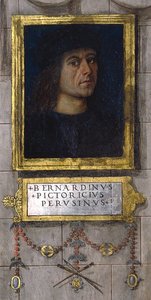
Pinturicchio
1454 - 1513 , Italie
En bref
- Artistic Movement Or Style: Renaissance Umbrian School
- Artists Who Influenced This Artist:
- Pietro Perugino
- Bonfigli
- Fiorenzo di Lorenzo
- Date Of Birth: 1454 Perugia Italie
- Date Of Death: 1513 Siena Italie
- Full Name: Bernardino di Betto
- Nationality: Italien
- Notable Artworks:
- Sistine Chapel frescoes
- Borgia Apartments decor.
- Saint Augustine
- Place Of Birth: Perugia Italie