
 Aperçu en situation
 Envoyer
 Partager
 Détails de l'œuvre

 Télécharger
 Articles similaires
 Radiographie
 Diaporama
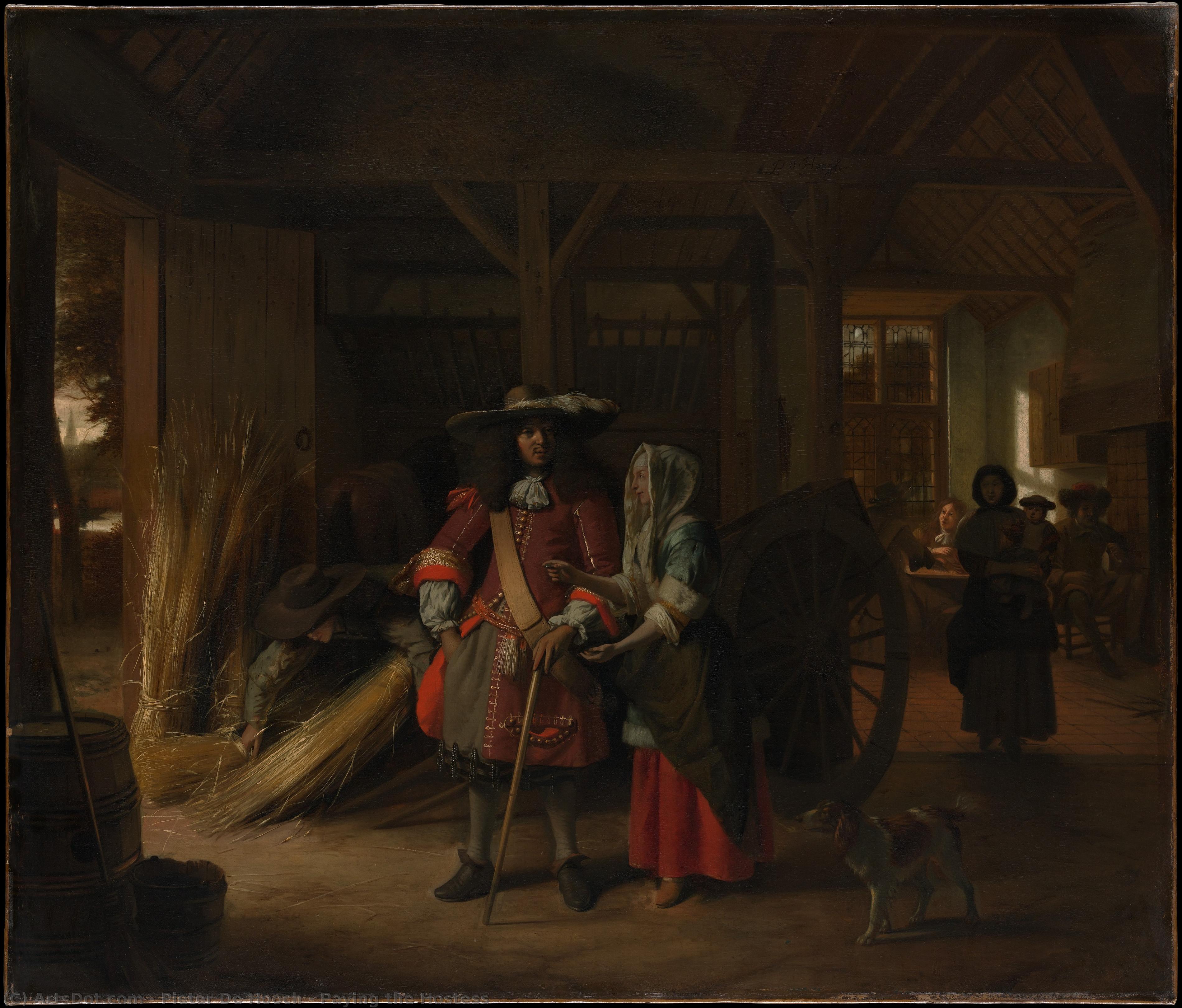
Paying the Hostess
 Oil On Canvas
- WallArt
- Baroque
 1670
1670 95.0 x 111.0 cm
 Metropolitan Museum of Art
 Lire la suite
Acquérez une image numérique haute résolution et optimisée, d'une qualité bien supérieure à l'aperçu en ligne.
Chaque fichier est méticuleusement préparé par nos spécialistes internes à l'aide d'outils avancés et d'une retouche manuelle experte. Nous garantissons que chaque image possède une clarté exceptionnelle, une précision des couleurs irréprochable et un niveau de détail fin.
Le fichier final est livré par e-mail sous 72 heures, optimisé pour une utilisation immédiate dans des contextes professionnels, éditoriaux et d'impression. Il offre la même qualité de confiance que celle utilisée par les plus grands studios de création, éditeurs et galeries.
Image numérique
Téléchargez un fichier haute résolution pour votre usage personnel, l'impression et vos projets créatifs. ( Commander l'impression Commander la reproduction peinte à la main)
Inclus avec chaque commande d'image numérique
Livraison numérique experte, garantie.
En choisissant OriginalUniqueArt.com, vous n'obtenez pas seulement une simple image : vous recevez une œuvre numérique sublimée avec professionnalisme, conçue avec précision et accompagnée d'une garantie de satisfaction. Voici tout ce qui accompagne automatiquement votre commande :

Envoi rapide par e-mail
Votre fichier d'image numérique haute résolution vous sera envoyé par e-mail sous 72 heures après votre commande — prêt à un usage immédiat.

Fichier numérique optimisé par l'IA
Votre œuvre d'art bénéficie d'une optimisation professionnelle grâce à des outils d'IA avancés et une retouche manuelle, garantissant un niveau maximal de détail, de clarté et de fidélité chromatique.

Réexpédition gratuite à vie
Vous avez accidentellement supprimé ou perdu votre fichier ? Pas d'inquiétude — nous vous le renverrons gratuitement, quand vous le souhaitez.

Aucun frais de douane - À jamais
Profitez de votre œuvre d'art instantanément sans frais de douane ni de livraison — les téléchargements numériques sont toujours exonérés de taxes.

Garantie de fidélité des couleurs
Nous garantissons que votre image numérique reproduit les couleurs de l'original aussi fidèlement que possible grâce à des outils professionnels et une gestion rigoureuse des couleurs.

Garantie satisfaction 60 jours
Si vous n'êtes pas satisfait de votre image numérique, nous la retoucherons ou vous rembourserons 100% sous 60 jours — sans poser de questions.

Garantie de remboursement à 100%
Pas satisfait ? Obtenez un remboursement intégral dans les 60 jours suivant la réception de votre fichier numérique — sans aucune question posée.

Remises sur les commandes groupées
Achetez 3 images, économisez 10% - Achetez 5, économisez 15% - Achetez 10+, économisez 20%. Idéal pour les projets créatifs, les galeries et les agences.
Description de la collection
A Quiet Moment in Delft: Pieter de Hooch’s “Paying the Hostess”
Pieter de Hooch's "Paying the Hostess," painted around 1670, isn’t merely a depiction of a transaction; it’s a masterful distillation of Dutch Golden Age life—a fleeting glimpse into the subtle social dynamics and quiet elegance of a Delft inn. The painting immediately draws the eye with its luminous quality, achieved through de Hooch's signature use of light and shadow, creating an atmosphere both intimate and subtly charged. It’s a scene brimming with unspoken narratives, inviting viewers to become silent observers of this private moment within a bustling world. De Hooch was a pivotal figure in the Delft School of painting, known for his ability to capture the essence of domestic life—not grand portraits or heroic scenes, but rather the everyday rituals and interactions that shaped the lives of the burgeoning middle class. His work stands apart through its remarkable realism, capturing not just appearances but also the nuances of human behavior and the play of light on surfaces.The Composition: A Dance of Observation
The composition itself is a testament to de Hooch’s skill. The scene unfolds within what appears to be a modest inn yard—a space simultaneously public and private. A smartly dressed gentleman, likely a wealthy merchant or official, stands poised before a young woman, presumably the hostess, as she presents him with a bill. Their hands are subtly overlapping, creating an immediate visual tension – a delicate dance of negotiation and perhaps even flirtation. The background is deliberately blurred, populated by other patrons engaged in their own conversations and activities—a lively tableau that hints at the inn’s vibrant atmosphere without distracting from the central drama. Notice how de Hooch uses architectural details—the rough-hewn beams of the barn, the simple wooden furniture, the straw bales – to ground the scene in a tangible reality. The placement of figures within the space is carefully considered, creating depth and guiding the viewer’s eye through the composition.Technique and Style: Light, Shadow, and Texture
De Hooch's technique is characterized by its meticulous attention to detail and his masterful manipulation of light. He employed a technique known as *chiaroscuro*, using strong contrasts between light and shadow to create a sense of volume and drama. The light streams in from the open doorway on the left, illuminating the figures and casting long shadows across the yard, adding depth and atmosphere. The artist’s brushwork is remarkably subtle—a delicate layering of paint that creates a rich texture without sacrificing clarity. You can almost feel the roughness of the wooden surfaces, the warmth of the straw bales, and the softness of the fabrics. This textured approach adds to the painting's realism and invites close inspection. The use of muted colors – browns, grays, and ochres – further enhances the sense of atmosphere and contributes to the painting’s overall mood.Symbolism and Context: A Glimpse into Dutch Society
“Paying the Hostess” offers a fascinating window into 17th-century Dutch society. The scene is not simply about settling an account; it's laden with symbolic meaning. The overlapping hands of the couple suggest a complex interplay of power, attraction, and social expectations. In Dutch art of this period, such interactions often carried connotations of flirtation and even illicit desire – a subtle commentary on the constraints and freedoms of the time. The presence of other guests in the background underscores the importance of social interaction within the community. The inclusion of the delivery boy with sheaves of wheat hints at the economic realities of rural life—the exchange of goods and services that underpinned the prosperity of the region. The painting reflects a shift towards a more secular, bourgeois culture, where commerce and social interactions were increasingly valued alongside religious piety.Emotional Resonance: A Moment Frozen in Time
Ultimately, “Paying the Hostess” is a profoundly evocative work of art. It’s not a grand statement or a dramatic event; it's a quiet moment—a snapshot of everyday life that captures something essential about the human condition. The painting invites us to contemplate the complexities of social interaction, the subtle nuances of human relationships, and the beauty found in the ordinary. It possesses a timeless quality, resonating with viewers across centuries because it speaks to universal themes of connection, negotiation, and the quiet dramas that unfold within our daily lives. It’s a piece that rewards careful observation and invites repeated viewing, revealing new layers of meaning with each encounter.Biographie de l'artiste
Premières années et formation
Pieter de Hooch, figure marquante du Siècle d'or néerlandais, est né le 20 décembre 1629 à Rotterdam, aux Pays-Bas. Il était l’aîné de cinq enfants de Hendrick Hendricksz de Hooch, maçon, et Annetge Pieters, sage-femme. On sait peu de choses sur sa vie précoce, mais il est supposé qu'il a travaillé à Rotterdam, Delft et Amsterdam. La formation artistique de De Hooch s’est déroulée à Haarlem sous la direction du peintre paysagiste Nicolaes Berchem, aux côtés de Jacob Ochtervelt. Cette période a jeté les bases de son succès ultérieur en tant que peintre de scènes domestiques paisibles avec une porte ouverte.Style artistique et thèmes
Le travail de De Hooch se caractérise par son souci du détail, son naturalisme et son utilisation de la lumière. Ses peintures représentent souvent la vie quotidienne, reflétant les valeurs et les aspirations de la classe moyenne émergente. Un exemple notable de ce style est « Le Cour de maison à Delft » (1658), qui met en valeur sa capacité à capturer les détails banals de la vie quotidienne. Le travail de De Hooch partage également des thèmes et des compositions avec Emanuel de Witte, mais son intérêt pour les personnes et leurs relations le distingue. Cela se manifeste dans « Femme allaitant » (1658) et « Femme avec un bébé sur ses genoux » (1658), qui témoignent de son intérêt pour les scènes domestiques.Évolution artistique et influences
Au début de sa carrière, De Hooch a été influencé par le style des peintres de genre tels que Hendrick Sorgh, comme en témoigne l'utilisation de couleurs sombres et d'ambiances intérieures dans ses premières œuvres. Cependant, il a rapidement développé son propre style distinctif, caractérisé par une attention particulière à la lumière et à la perspective. Son travail montre également une influence du courant artistique italien, notamment dans sa représentation des architectures et de la décoration intérieure. De Hooch s’est distingué par sa capacité à créer une atmosphère calme et sereine dans ses peintures, capturant l'intimité de la vie domestique avec une grande sensibilité.Œuvres notables et héritage
Parmi les œuvres les plus remarquables de De Hooch, on peut citer :- « Le Buveur Joyeux » (vers 1650)
- « Joueurs de cartes dans une pièce ensoleillée » (1658)
- « Une femme préparant du pain et du beurre pour un garçon » (1661)
- « Femme lisant une lettre » (1664)
Collections et reconnaissance
Les œuvres de De Hooch peuvent être admirées dans divers musées prestigieux, notamment :- Le Musée royal des beaux-arts d'Anvers, en Belgique, qui possède une vaste collection d'art européen du XVe au XXe siècle.
- La National Gallery de Londres.
- Le Rijksmuseum à Amsterdam.

Pieter de Hooch
1629 - 1694 , Pays-Bas
En bref
- Artistic Movement Or Style: Âge d'or néerlandais, Baroque
- Artists Or Movements Influenced By This Artist:
- Impressionnisme
- Réalisme
- Artists Who Influenced This Artist:
- Nicolaes Berchem
- Hendrick Sorgh
- Emanuel de Witte
- Date Of Birth: 20 décembre 1629
- Date Of Death: après 1683
- Full Name: Pieter de Hooch
- Nationality: Néerlandais
- Notable Artworks:
- Le Buveur Joyeux
- Joueurs de Cartes
- Femme préparant du pain
- Cour de maison à Delft
- Place Of Birth (City And Country): Rotterdam, Pays-Bas

