Format du texte

() ·

Une peinture faite pour vous, à la main

Place de la Concorde

Reproduction à l'huile faite à la main

Huile sur toile peinte à la main, avec cadre et dimensions personnalisés, réalisée sur commande par nos artistes. ( Passer au format impression Passer au format numérique)

Description de la pièce

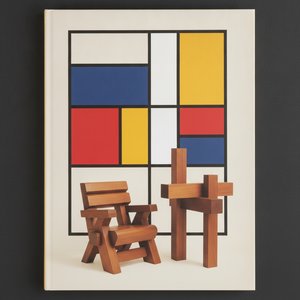
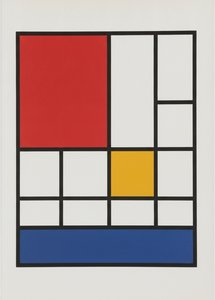
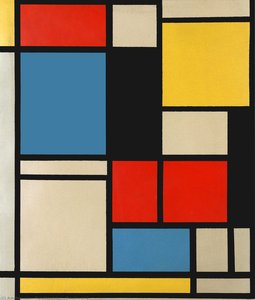
Place de la Concorde : Une œuvre emblématique de Mondrian capturée dans une magnifique photographie. Découvrez les lignes noires et les blocs couleurs primaires qui incarnent le néoplasticisme.

Biographie de l'artiste

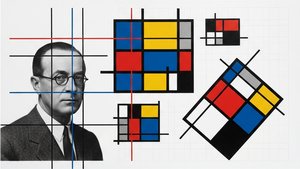
Explorez l'art de Piet Mondrian (1872-1944), un pionnier de l'art abstrait et du mouvement De Stijl. Découvrez ses peintures géométriques emblématiques, son style néoplasticiste et son influence durable sur le design moderne, l'architecture et l'art du 20e siècle.

à partir du ·

Chapitre 1

Quelle dimension choisir ?

Faites glisser pour modifier la taille ; l'image de gauche présente le cadre à sa largeur réelle. Les proportions de l'original sont conservées.

Format standard
sur mesure
CM
INCH

Choisissez parmi nos formats prédéfinis qui respectent les proportions originales de l’œuvre.

largeur
hauteur

Saisissez la largeur et la hauteur souhaitées, pour s'adapter à votre cadre ou à votre mur. Cette œuvre est peinte à la main ; ainsi, pour un format de forme différente, l'artiste peut peindre un peu plus autour du tableau ou réduire légèrement les bords — c'est vous qui choisissez. Nous vous envoyons une maquette numérique pour approbation avant que la peinture ne commence. L'image présentée sur cette page ne reflète pas le résultat réel — seule la maquette le fait.

Chapitre 2

Comment souhaitez-vous qu'il vous soit livré ?

Choisissez le type de bordure pour votre toile tendue

Choisissez votre cadre

Corner sample of the WhiteWrap canvas edge finish, stretched on bois massif bars
Bords blancs €1
Corner sample of the BlurSideWrap canvas edge finish, stretched on bois massif bars
Bords estompés €1
Corner sample of the ExtendedWrap canvas edge finish, stretched on bois massif bars
Bords imprimés €1
Corner sample of the P118B picture frame: polystyrène moulé, 5 cm wide and 3 cm thick
P118B €10
Corner sample of the P118H picture frame: polystyrène moulé, 5 cm wide and 3 cm thick
P118H €10
Corner sample of the P118W picture frame: polystyrène moulé, 5 cm wide and 3 cm thick
P118W €10
Corner sample of the P438Z picture frame: polystyrène moulé, 5.5 cm wide and 3.5 cm thick
P438Z €10
Corner sample of the P508JH picture frame: polystyrène moulé, 7 cm wide and 3.5 cm thick
P508JH €12
Corner sample of the P508YH picture frame: polystyrène moulé, 7 cm wide and 3.5 cm thick
P508YH €12
Corner sample of the P805H picture frame: polystyrène moulé, 5 cm wide and 3.5 cm thick
P805H €10
Corner sample of the P805Z picture frame: polystyrène moulé, 5 cm wide and 3.5 cm thick
P805Z €10
Corner sample of the P919BZ picture frame: polystyrène moulé, 7 cm wide and 3.5 cm thick
P919BZ €10
Corner sample of the P919G picture frame: polystyrène moulé, 7 cm wide and 3.5 cm thick
P919G €10
Corner sample of the P919XJ picture frame: polystyrène moulé, 7 cm wide and 3.5 cm thick
P919XJ €10
Corner sample of the P959ZH picture frame: polystyrène moulé, 5 cm wide and 3 cm thick
P959ZH €10
Corner sample of the P968JZ picture frame: polystyrène moulé, 6 cm wide and 4 cm thick
P968JZ €12
Corner sample of the W106C picture frame: bois massif, 5 cm wide and 3 cm thick
W106C €8
Corner sample of the W218G picture frame: bois massif, 5 cm wide and 3 cm thick
W218G €10
Corner sample of the W218JH picture frame: bois massif, 5 cm wide and 3 cm thick
W218JH €8
Corner sample of the W218Y picture frame: bois massif, 5 cm wide and 3 cm thick
W218Y €10
Corner sample of the W307PJ picture frame: bois massif, 6 cm wide and 3 cm thick
W307PJ €10
Corner sample of the W316G picture frame: bois massif, 6 cm wide and 3 cm thick
W316G €10
Corner sample of the W316PJ picture frame: bois massif, 6 cm wide and 3 cm thick
W316PJ €8
Corner sample of the W316Y picture frame: bois massif, 6 cm wide and 3 cm thick
W316Y €10
Corner sample of the W398PJ picture frame: bois massif, 5 cm wide and 3 cm thick
W398PJ €8
Corner sample of the W4111J picture frame: bois massif, 6.5 cm wide and 3.5 cm thick
W4111J €10
Corner sample of the W500HY picture frame: bois massif, 7 cm wide and 5 cm thick
W500HY €15
Corner sample of the W500JH picture frame: bois massif, 7 cm wide and 5 cm thick
W500JH €15
Corner sample of the W692G picture frame: bois massif, 8 cm wide and 4 cm thick
W692G €12
Corner sample of the W849H picture frame: bois massif, 5 cm wide and 3 cm thick
W849H €8
Corner sample of the W940BG picture frame: bois massif, 7.5 cm wide and 4.5 cm thick
W940BG €15
Corner sample of the W953PJ picture frame: bois massif, 6 cm wide and 3.5 cm thick
W953PJ €8
Corner sample of the H24-GOLD picture frame: bois sculpté et apprêté au gesso, 10 cm wide and 6 cm thick
H24-GOLD €30
Corner sample of the H24-SILVER picture frame: bois sculpté et apprêté au gesso, 10 cm wide and 6 cm thick
H24-SILVER €30
Corner sample of the H36-GOLD picture frame: bois sculpté et apprêté au gesso, 15 cm wide and 6.5 cm thick
H36-GOLD €45
Corner sample of the H36-SILVER picture frame: bois sculpté et apprêté au gesso, 15 cm wide and 6.5 cm thick
H36-SILVER €45
Aperçu du cadre
Sous cadre

Baguette : . Dimensions hors tout avec le cadre : .

Chapitre 3

Qui le peint, et y a-t-il des modifications à apporter ?

Exemples de personnalisation possibles : Remplacer le visage par la photo du client ; Ajouter un animal (ex: remplacer le chat par un chien) ; Inclure un message caché en arrière-plan ; Modifier le paysage ou les éléments de l'arrière-plan.
Après la commande, l'équipe de OriginalUniqueArt.com contactera le client par e-mail pour obtenir ses instructions et lui fournir un aperçu de la maquette

Livraison dans le monde entier () en 3 à 4 semaines au lieu des 5 semaines habituelles. (3 novembre). Aucun compromis sur la qualité.

Chapitre 4

Les dernières touches

Une plaque nominative, comme au musée ?

Détails de la plaque en bronze gravée

This elegant plaque features the artist's name and the title of the artwork, finely engraved for a timeless presentation.

It is made from bronze with a refined, elegant finish. The text is precisely laser-engraved for a sharp and permanent result. Measuring 9x2 cm, the plaque is compact yet easy to read. It's built to be durable and scratch-resistant, offering a professional, museum-quality look. Mounting is simple thanks to the included adhesive backing.

Détails de la plaque en acrylique transparent

The plaque includes essential engraved details such as the artist's name, the title of the artwork, the date it was created, the type of media used-like oil on canvas or watercolor-a brief description of the piece, and a QR code that links to the complete artwork information.

It is crafted from clear acrylic, offering a sleek, modern appearance. The text is UV-engraved in black to ensure strong visual contrast. With a size of 10x15 cm, it ensures optimal readability. It comes equipped with two metal hooks for secure wall mounting. The plaque is designed to be weather-resistant, making it suitable for various environments, and it includes interactive features that work seamlessly with smartphone scanning.

Détails de la plaque en acrylique noir

This elegant plaque includes engraved information such as the artist's name, the title of the artwork, the date it was created, the type of media used (like oil on canvas or watercolor), a short description of the artwork, and a QR code for quick access to more information.

The plaque itself is made from refined black acrylic with a premium finish. The text is laser-engraved in white for high contrast and readability. Its size is 10x15 cm, designed to be easy to read. It comes with two metal hooks for professional mounting. The design is sleek and fits any interior style. It is also weather-resistant and durable, with built-in digital integration for mobile compatibility.

Un vernis protecteur ?

Pour quand en avez-vous besoin ?

Chapitre 5

Votre tableau, tel que vous l'avez commandé

Place de la Concorde

Technique de reproduction

Format de la reproduction

-

Artiste de prestige

Plus de détails, de finesse et un temps de production accru

-

Cadre de reproduction

-

-

Pour les œuvres ou reproductions dont un côté mesure plus de 105 cm (environ 41 pouces), le cadre sera expédié sous forme de kit démonté. Cette méthode garantit une livraison sécurisée et prévient tout dommage pendant le transport.

Assemblage professionnel requis - ce produit n'est pas destiné au bricolage (DIY).
Le kit doit être assemblé et la toile tendue par un encadreur professionnel expérimenté, en utilisant de la colle à bois (non fournie), une pince à tendre la toile et des serre-joints pour maintenir les traverses d'équerre pendant le séchage de la colle. Un assemblage incorrect ou une tension inégale de la toile peut endommager l'œuvre de manière irréversible et n'est pas couvert par notre garantie.

  • Toutes les baguettes en bois massif sont incluses, découpées avec précision à la taille requise.

  • À assembler avec les vis fournies, ainsi qu'avec de la colle à bois pour les assemblages d'angles (non fournie), à prévoir par votre encadreur.

  • L'utilisation d'outils professionnels est requise et non incluse : une pince à tendre la toile (tendeur) et des serre-joints pour maintenir les baguettes bien d'équerre pendant le séchage de la colle.

Important :
L'assemblage des angles nécessite de la colle à bois, les barres doivent être maintenues avec des serre-joints jusqu'au séchage complet de la colle, et le tendage de la toile sur le châssis assemblé nécessite une pince à tendre la toile. Aucun de ces éléments n'est inclus dans le kit. Veuillez consulter un encadreur professionnel expérimenté avant de commander ce format.

Cartel

-

-

Vernis de protection

Vernis brillant (intensifie les couleurs, protège de la lumière et de l'humidité)

-

Personnaliser mon œuvre

Exemples de personnalisation : remplacer le visage par une photo du client ; ajouter un animal de compagnie (par exemple, remplacer un chat par un chien) ; inclure un message caché en arrière-plan ; modifier le paysage ou les éléments d'arrière-plan.

-

Livraison urgente

Livraison dans le monde entier () en 3 à 4 semaines au lieu des 5 semaines habituelles. (3 novembre). Aucune concession sur la qualité.

-

Livraison express

Livraison dans le monde entier () sous 5 semaines. (10 novembre).

Inclus

Prix total

€ 268

Prix total € 268

L'option verre n'est disponible que pour les dimensions inférieures à 110 cm.

Inclus avec chaque commande

  • Livraison express gratuite dans le monde entier
  • Toile de lin de qualité supérieure
  • Assurance transport complète
  • Garantie de remboursement des droits de douane
  • Garantie de fidélité des couleurs
  • Politique de retour de 100 jours (uniquement en cas de défaut)
  • Garantie de remboursement à 100%
  • Offre de tarifs dégressifs

A Symphony of Balance: Deconstructing Mondrian’s ‘Place de la Concorde’

Piet Mondrian’s *Place de la Concorde*, painted between 1938 and 1943, is far more than a geometric arrangement of color and line; it’s a distillation of an artistic philosophy, a visual poem born from a period of profound change and upheaval. While titled after the famed Parisian square, Mondrian doesn't offer a representational depiction. Instead, he presents us with an abstraction that *embodies* the energy and dynamism of modern urban life – a pulsating grid of black lines containing blocks of primary colors—red, yellow, and blue—set against a stark white background. This wasn’t merely about depicting a place; it was about capturing its essence, its underlying structure, and translating it into a universal visual language. The painting's evolution is particularly fascinating. Begun in Paris before Mondrian fled the looming threat of World War II, it continued to be reworked after his arrival in New York City, absorbing the influence of a new environment—a faster pace, bolder energy—resulting in adjustments to line weight and color placement that lend the work an even greater sense of vitality.

The Path to Neoplasticism: A Life Dedicated to Abstraction

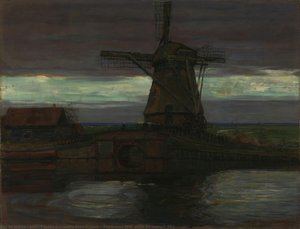
To truly appreciate *Place de la Concorde*, one must understand its place within Mondrian’s artistic journey. Born Pieter Cornelis Mondriaan in 1872, he initially trained as a teacher while simultaneously pursuing his passion for art. His early works were steeped in the traditions of Dutch landscape painting, reflecting the influence of the Hague School and Impressionism. Paintings like *The Red Mill* demonstrate this formative period, showcasing a naturalistic style that gradually gave way to experimentation with Pointillism and Fauvism. However, it was his move to Paris in 1912 that proved pivotal. Immersed in the avant-garde scene and captivated by Cubism, Mondrian began to deconstruct forms, moving away from representational art towards a more abstract vocabulary. This exploration culminated in the development of Neoplasticism – also known as De Stijl – a style predicated on the belief that pure abstraction could express universal harmony. Mondrian believed that through reducing painting to its most fundamental elements—horizontal and vertical lines, primary colors, and black, white, and gray—he could reveal the underlying structure of reality and achieve a spiritual ideal.

Decoding the Composition: Beyond Form and Color

The seemingly simple composition of *Place de la Concorde* is deceptively complex. The grid structure isn’t arbitrary; it represents Mondrian’s attempt to create a harmonious balance between opposing forces – horizontal versus vertical, static versus dynamic, individual elements versus the unified whole. The black lines act as boundaries and connectors, defining spaces while simultaneously creating a sense of flow and interconnectedness. The carefully placed blocks of color aren’t merely decorative; they represent specific energies and emotions. Red often symbolizes passion and intensity, blue evokes tranquility and spirituality, and yellow embodies joy and intellect. The white background isn't simply empty space but an essential element that allows the colors to breathe and resonate. It is important to note that Mondrian didn’t view these elements as isolated components but rather as integral parts of a larger, interconnected system—a microcosm of the universe itself. He saw his art not just as aesthetic expression but as a spiritual practice, a means of revealing underlying cosmic truths.

A Lasting Legacy: The Enduring Influence of Mondrian

*Place de la Concorde*, and indeed all of Mondrian’s Neoplastic work, has had an immeasurable impact on the course of 20th-century art and design. His reductive aesthetic profoundly influenced movements like Minimalism, Color Field painting, and Abstract Expressionism. Beyond the realm of fine art, his principles have permeated architecture, graphic design, fashion, and interior decoration. The clean lines, geometric forms, and bold color palettes found in Mondrian’s paintings continue to inspire designers seeking a sense of order, clarity, and modern elegance. A reproduction of *Place de la Concorde* isn’t just an acquisition; it’s an invitation to embrace a philosophy—a commitment to simplicity, balance, and the pursuit of universal beauty. It is a statement piece that transcends trends, offering a timeless aesthetic that will continue to resonate for generations to come.
  • Artist: Piet Mondrian
  • Born Year: 1872
  • Death Year: 1944
  • Birth City: Amersfoort
  • Birth Country: Netherlands
Additional Research:

Questions et réponses

Quelles sont les couleurs dominantes de «Place de la Concorde» de Piet Mondrian ?

L'identité chromatique de «Place de la Concorde» de Piet Mondrian : une palette Nuances neutres, dominée par le Gris moyen (#9f7a7c).

Qui a créé « Place de la Concorde », et en quelle année ?

Piet Mondrian a réalisé « Place de la Concorde » en 1943.

Comment puis-je visionner «Place de la Concorde» de Piet Mondrian sous forme de diaporama ?

Le diaporama de « Place de la Concorde » est disponible sur la page Diaporama de l'œuvre.

En savoir plus sur cette peinture

Aperçu en situation Visualiser en RA Passer au format impression Passer au format numérique Envoyer
Détails de l'œuvre Guide Ajouter aux favoris Télécharger l'image Articles similaires Radiographie Diaporama Questions et réponses Statistiques

En chiffres

  • 1943l'année de création
  • 29cadres au choix
  • formats standards, dans leurs propres proportions
  • 5semaines de travail et de livraison
Piet Mondrian

Piet Mondrian

1872 - 1944, Pays-Bas

Informations clés sur Piet Mondrian

  • Artistes Influents:
    • École de La Haye
    • Pointillisme
    • Fauvisme
    • Cubisme
  • Date De Naissance: 7 mars 1872
  • Influences Artistiques:
    • Color Field painting
    • Expressionnisme abstrait
    • Minimalisme
  • Lieu De Naissance: Amersfoort, Pays-Bas
  • Mouvement Artistique: De Stijl, Néoplasticisme
  • Nationalité: Néerlandais
  • Nom Complet: Piet Mondrian
  • Oeuvres Notables:
    • Composition avec Rouge, Jaune et Bleu
    • Broadway Boogie Woogie
    • Tableau n°2 Composition V
    • Arbres sur le Gein. Lever de lune

Biographie de l'artiste

**Je jeunesse et sa carrière aux Pays-Bas (1872-1911)**

pieter cornelis mondriaan, connu depuis 1911 sous le nom de piet mondrian, était un peintre et théoriciens de l'art néerlandais né le 7 mars 1872 à Amersfoort, aux Pays-Bas. Il a commencé sa carrière comme enseignant dans l'enseignement primaire tout en pratiquant la peinture, initialement dans le style impressionniste néerlandais de l'École de La Haye.
  • Ses premières œuvres, caractérisées par des paysages naturalistes, peuvent être vues dans des peintures telles que The Red Mill et Trees in Moonrise, exposées au Kunstmuseum Den Haag.
  • La recherche de Mondrian d'un style personnel l'a conduit à explorer divers mouvements artistiques, notamment le pointillisme et le fauvisme.
  • Sa première exposition en 1893 a marqué le début de sa carrière prolifique.

**L’évolution du style de Mondrian**

De la figure à l'abstraction La direction artistique de Mondrian s'est orientée vers un style de plus en plus abstrait, culminant dans une forme non-représentative qu'il a appelée néoplasticisme. Cette « art plastique pur » visait à créer « une beauté universelle », limitant son vocabulaire formel aux couleurs primaires (rouge, bleu et jaune), aux valeurs (noir, blanc et gris) et aux directions (horizontale et verticale).

**Héritage et influence**

L’héritage de Mondrian s’étend au-delà de son propre travail, influençant les grands styles et mouvements tels que la couleur field painting, l'expressionnisme abstrait et le minimalisme. L'historien d'art Stephen Bayley a noté que Mondrian est devenu un totem pour tout ce que le modernisme visait à être.
  • Découvrez davantage du travail de Mondrian sur OriginalUniqueArt.com.
  • Apprenez-en plus sur le mouvement De Stijl et son influence sur l'art moderne à wikipedia.
  • Découvrez d’autres artistes influents tels que Vincent van Gogh et leur impact sur le monde de l'art.

**Œuvres clés et expositions**

* Piet Mondrian: Apple Blossom (Cubisme) (voir sur OriginalUniqueArt.com) * Piet Mondrian: Still Life with Vase of Spices II (Cubisme) (voir sur OriginalUniqueArt.com) * Piet Mondrian: Passionflower (73 x 48 cm, Kunstmuseum Den Haag, post impressionisme, aquarelle) (voir sur OriginalUniqueArt.com)

Informations clés

  • Location: Dallas Museum of Art
  • Medium: Huile sur toile
  • Year: 1943
  • Dimensions: 37 x 37,3 cm
  • Title: Place de la Concorde
  • Artist: Piet Mondrian

Quiz d'art

Chaque question ne comporte qu'une seule bonne réponse.

Question 1:
Quel mouvement artistique est associé à cette œuvre ?
Question 2:
Pourquoi Mondrian a choisi une composition géométrique avec des lignes horizontales et verticales ?
Question 3:
Dans quelle période Mondrian a-t-il peint cette œuvre ?
Question 4:
Quel est le matériau utilisé pour créer cette peinture ?
Question 5:
Comment la couleur joue-t-elle dans cette œuvre selon Mondrian ?