

 Aperçu en situation
 Partager
 Partager
 Détails
 Guide
Guide

 Télécharger
 Articles similaires
 Radiographie
 Voir le diaporama
 Statistiques
Danse dans le Paysage
 Huile sur toile
- Art mural
- Impressionnisme
 XIXe siècle
 180.0 x 90.0 cm
 Grand Palais
 Afficher la suite
Reproduction à l'huile faite à la main
Huile sur toile peinte à la main, avec cadre et dimensions personnalisés, réalisée sur commande par nos artistes. ( Passer au format impression Passer au format image numérique)




P118B $10

P118H $10

P118W $10

P438Z $10

P508JH $12

P508YH $12

P805H $10

P805Z $10

P919BZ $10

P919G $10

P919XJ $10

P959ZH $10

P968JZ $12

W106C $8

W218G $10

W218JH $8

W218Y $10

W307PJ $10

W316G $10

W316PJ $8

W316Y $10

W398PJ $8

W4111J $10

W500HY $15

W500JH $15

W692G $12

W849H $8

W940BG $15

W953PJ $8




Choisissez parmi nos formats prédéfinis qui respectent les proportions originales de l’œuvre.

Vous pouvez saisir vos propres dimensions pour l'adapter à un cadre ou à un espace spécifique. Si la taille sélectionnée ne correspond pas aux proportions de l'image d'origine, nous recadrerons l'œuvre ou prolongerons la peinture avec des éléments peints à la main supplémentaires. Une maquette numérique vous sera envoyée pour approbation avant le début de la production.
Veuillez noter que l'aperçu à l'écran ne reflète pas le recadrage ou l'extension réels. Seule la maquette montrera fidèlement la composition finale.
Bien que des tailles personnalisées soient disponibles, nous vous recommandons de sélectionner une dimension dans la liste prédéfinie afin de préserver les proportions d'origine.
Après la commande, l’équipe OriginalUniqueArt.com contactera le client par e-mail pour recueillir ses instructions et lui fournira une maquette d’aperçu
Livraison dans le monde entier () en 3 à 4 semaines au lieu des 5 semaines habituelles. (21 septembre). Aucun compromis sur la qualité.

Livraison express gratuite dans le monde entier

Toile de lin de haute qualité

Assurance transport complète

Garantie de remboursement des droits de douane

Garantie de fidélité des couleurs

Garantie de retour de 100 jours (uniquement en cas de défaut)

Garantie de remboursement à 100%

Tarifs dégressifs sur quantité
 L'option verre n'est disponible que pour les dimensions inférieures à 110 cm.

Danse dans le Paysage
Technique de reproduction
Format de la reproduction
-


Prix total final
$ 325
A Moment of Rural Bliss: Exploring Renoir’s *Dance in the Country*
Dance in the Country*, painted around 1883 by Pierre-Auguste Renoir, is a captivating embodiment of Impressionist ideals – a celebration of beauty, fleeting moments, and the joy of human connection. Measuring 180 x 90 cm, this oil on canvas transports viewers to a sun-drenched countryside where romance blossoms amidst nature’s embrace.Subject & Composition
The painting depicts a couple engaged in an intimate dance beneath the dappled shade of a chestnut tree. The figures – Paul Lhôte and Aline Charigot (who would later become Renoir's wife) – are rendered life-size, dominating the canvas and drawing the viewer directly into their world. A subtle background hints at other revelers, suggesting a lively gathering, yet the focus remains firmly on the central pair. The composition is deliberately informal, capturing a spontaneous moment rather than a staged pose. Artists like Cot were inspired by Renoir's style.Impressionist Technique & Style
Renoir’s masterful application of Impressionistic techniques is immediately apparent. He employs loose, visible brushstrokes and a vibrant palette to capture the effects of light and atmosphere. Colors are not blended seamlessly but applied in broken touches, allowing the viewer's eye to mix them optically. This technique creates a sense of movement and vibrancy, imbuing the scene with life. The diffused lighting softens forms and adds to the painting’s dreamlike quality. This work exemplifies Renoir’s shift away from strict Impressionism towards a more structured style influenced by his study of Renaissance masters like Raphael.Historical Context & Commission
Commissioned in 1882 by the influential art dealer Paul Durand-Ruel, *Dance in the Country* is one of three paintings created on the theme of dancing – alongside *Dance in the City* and *Dance at Bougival*. Durand-Ruel sought works that would appeal to a broader audience, and Renoir’s depiction of joyful social scenes proved immensely popular. The painting reflects the growing leisure culture of late 19th-century France and the increasing emphasis on outdoor recreation and entertainment.Symbolism & Emotional Impact
Beyond its aesthetic beauty, *Dance in the Country* carries symbolic weight. The dance itself represents harmony, connection, and the celebration of life. The lush natural setting evokes feelings of tranquility and abundance. Aline Charigot’s direct gaze engages the viewer, inviting us to share in their happiness. The overall effect is one of warmth, nostalgia, and serene romance. The painting isn't merely a depiction of an event; it's an evocation of feeling – a longing for simpler times and genuine human connection.- Style: Impressionism
- Medium: Oil on Canvas
- Dimensions: 180 x 90 cm
- Current Location: Musée d'Orsay, Paris
A Life Bathed in Light: The World of Pierre-Auguste Renoir
Born in the provincial French city of Limoges in 1841, Pierre-Auguste Renoir’s journey from humble beginnings as a porcelain painter to becoming a celebrated master of Impressionism is a testament to his unwavering dedication and artistic vision. His early life was marked by a move to Paris with his family, seeking economic opportunity, an experience that would profoundly shape his artistic sensibilities. The bustling city, with its vibrant street life and diverse characters, became the wellspring of inspiration for much of his later work. Initially apprenticed to paint porcelain – a practical necessity dictated by financial constraints – young Renoir found solace in frequent visits to the Louvre, where he meticulously studied the Old Masters, absorbing their techniques and developing an appreciation for beauty that would become a hallmark of his style. This early exposure ignited within him a passion for capturing the ephemeral qualities of light and color—a core principle of Impressionism. He continued to develop his artistic skills through self-study and experimentation, honing his technique and refining his vision. Renoir's artistic development was significantly influenced by his friendship with Claude Monet and Frédéric Bazille, who shared his commitment to exploring new artistic approaches. Together, they formed a nucleus of the Impressionist movement, challenging academic conventions and advocating for a more subjective representation of reality. Despite facing periods of financial hardship and critical disapproval, Renoir persevered in his pursuit of artistic excellence, producing an impressive body of work that cemented his place as one of France's most beloved artists. His legacy extends beyond his paintings—he was also a devoted father and husband, embodying the values of family and compassion. He died peacefully in Paris in 1919, leaving behind a rich artistic heritage that continues to inspire admiration and fascination worldwide.Biographie de l'artiste
jeunesse et carrière
pierre-auguste renoir, un artiste français essentiel, est né le 25 février 1841 à Limoges, en France. Il a joué un rôle crucial dans la formation du mouvement impressionniste, réputé pour sa lumière vibrante et ses couleurs saturées. L'œuvre de Renoir célébrait la beauté, en particulier la sensualité féminine, le plaçant dans une lignée d'artistes allant de Rubens à Watteau.héritage artistique
L'héritage de Renoir s'est étendu au-delà de ses toiles, en tant que patriarche d'une famille où l'art prospérait sous diverses formes. Ses enfants, pierre renoir (1885–1952), le cinéaste jean renoir (1894–1979) et l'artiste céramiste claude renoir (1901–1969), ont chacun apporté des contributions significatives dans leurs domaines respectifs. Son petit-fils, le cinéaste claude renoir (1913–1993), a davantage fait progresser l'héritage artistique de la famille.œuvres notables et musées
* la danse à Bougival, une peinture notable de Renoir, illustre sa maîtrise de la capture de l'essence de l'art impressionniste. * Le musée des collettes, situé à Cagnes-sur-Mer, en France, est une destination incontournable pour les amateurs d'art. Ce musée, autrefois la maison de pierre-auguste renoir, témoigne de sa vie et de son œuvre, abritant quinze de ses peintures. * Le musée maurice denis, une autre perle cachée en France, présente une impressionnante collection de peintures post-impressionnistes françaises du XIXe et début du XXe siècle.explorez l'art de Renoir avec OriginalUniqueArt
- découvrez le charme du musée des collettes (France) et de son art impressionniste sur OriginalUniqueArt : [https://OriginalUniqueArt.com/@@/a@d3aupf](https://OriginalUniqueArt.com/@@/a@d3aupf)
- explorez les merveilles du musée maurice denis (France) avec OriginalUniqueArt : /fr/art/show/art-d3aue3-fr/
- visualisez les peintures de Renoir, y compris la danse à Bougival, sur OriginalUniqueArt : [https://OriginalUniqueArt.com/@/pierre-auguste renoir](https://OriginalUniqueArt.com/@/pierre-auguste%20renoir)
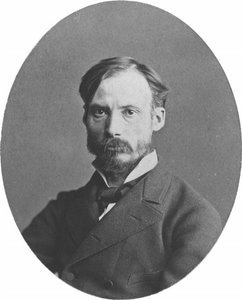
Pierre-Auguste Renoir
1841 - 1919 , France
En bref
- Artistes Influents:
- Rubens
- Watteau
- Camille Pissarro
- Édouard Manet
- Date De Décès: 3 décembre 1919
- Date De Naissance: 25 février 1841
- Influences Artistiques:
- Impressionnisme
- Post-impressionnisme
- Lieu De Naissance: Limoges, France
- Mouvement Artistique: Impressionnisme
- Nationalité: Française
- Nom Complet: Pierre-Auguste Renoir
- Oeuvres Notables:
- La Danse à Bougival
- Le Déjeuner des canotiers
- Bal au moulin de la Galette
- Après le bain
Articles similaires
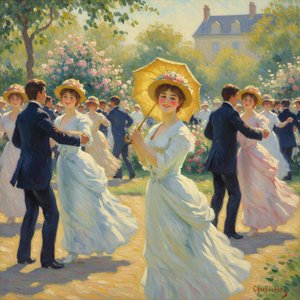
Capturing Light and Joy: A Definitive Guide to the Luminous Masterpieces of Pierre-Auguste Renoir
Discover the luminous world of Pierre-Auguste Renoir. Explore an expert guide to his mastery of light, color, and joy through the lens of Impressionist history, perfect for fine art enthusiasts and collectors seeking timeless elegance.

The Luminous World of Pierre-Auguste Renoir: An Exploration of Impressionism's Sensuous Embrace
Explore the captivating world of Pierre-Auguste Renoir! Discover his life, iconic Impressionist masterpieces & enduring legacy with our expert guide. High-quality reproductions available.
Les 10 Chefs-d'œuvre Impressionnistes qui ont Révolutionné l'Art : Décoration & Histoire
Plongez au cœur de l'Impressionnisme avec les 10 œuvres majeures de Monet, Renoir & Degas. Découvrez l'histoire et la lumière unique de ces chefs-d'œuvre. Reproductions d'art exceptionnelles sur OriginalUniqueArt.com.
Les 10 Chefs-d'œuvre Impressionnistes qui ont Révolutionné la Peinture | OriginalUniqueArt
Plongez au cœur de l'Impressionnisme avec les 10 chefs-d'œuvre incontournables de Monet, Renoir et Degas. Découvrez l'histoire, la technique & l'émotion derrière ces tableaux célèbres. Reproductions d'art de qualité musée sur OriginalUniqueArt.com !
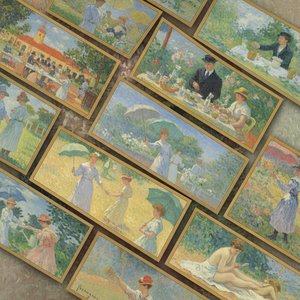
Renoir : 25 Chefs-d'œuvre Incontournables – L’Art de la Lumière
Plongez au cœur de l'univers vibrant de Pierre-Auguste Renoir ! Découvrez 25 chefs-d’œuvre emblématiques, explorant la lumière, les couleurs et la joie de vivre. Reproductions d'art de qualité musée sur OriginalUniqueArt.com.


