

 Aperçu en situation
 Envoyer
 Partager
 Détails de l'œuvre

 Télécharger
 Articles similaires
 Radiographie
 Diaporama
J.S. Bach


 Lire la suite
Reproduction à l'huile faite à la main
Huile sur toile peinte à la main, avec cadre et dimensions personnalisés, réalisée sur commande par nos artistes. ( Passer au tirage Passer à l'image)




































Choisissez parmi nos formats prédéfinis qui respectent les proportions originales de l’œuvre.

Vous pouvez saisir vos propres dimensions pour l'adapter à un cadre ou à un espace spécifique. Si la taille sélectionnée ne correspond pas aux proportions de l'image d'origine, nous recadrerons l'œuvre ou prolongerons la peinture avec des éléments peints à la main supplémentaires. Une maquette numérique vous sera envoyée pour approbation avant le début de la production.
Veuillez noter que l'aperçu à l'écran ne reflète pas le recadrage ou l'extension réels. Seule la maquette montrera fidèlement la composition finale.
Bien que des tailles personnalisées soient disponibles, nous vous recommandons de sélectionner une dimension dans la liste prédéfinie afin de préserver les proportions d'origine.
Après la commande, l’équipe OriginalUniqueArt.com contactera le client par e-mail pour recueillir ses instructions et lui fournira une maquette d’aperçu
Livraison dans le monde entier () en 3 à 4 semaines au lieu des 5 semaines habituelles. (1 août). Aucun compromis sur la qualité.

Livraison express gratuite dans le monde entier

Toile de lin de qualité supérieure

Assurance transport complète

Garantie de remboursement des droits de douane

Garantie de fidélité des couleurs

Politique de retour de 60 jours (uniquement en cas de défaut)

Garantie de remboursement à 100%

Offre de tarifs dégressifs
 L'option verre n'est disponible que pour les dimensions inférieures à 110 cm.

J.S. Bach
Technique de reproduction
Format de la reproduction
-


Prix total
$ 300
Biographie de l'artiste
Philippe Poitevin: A Sculptor Rooted in Classical Tradition
Philippe Poitevin (January 21, 1831 – September 15, 1907) stands as a prominent figure in late nineteenth-century French sculpture, particularly celebrated for his monumental works and meticulous busts that embody the ideals of Neoclassicism and Romanticism. Born in Saint-Maximin-la-Sainte-Baume, Provence, Poitevin’s artistic journey began under the tutelage of Joseph Marius Ramus and Armand Toussaint, establishing a foundation in sculptural technique and fostering an appreciation for classical forms—a sensibility that would permeate his entire oeuvre.Early Influences: The Seeds of Classical Inspiration
Philippe Poitevin's formative years were profoundly shaped by the teachings of Joseph Marius Ramus and Armand Toussaint. Recognizing the transformative power of artistic education, these mentors instilled in him a deep understanding of Greco-Roman sculpture, exposing him to the masterpieces of antiquity—the sculptures of Phidias, Polyclète et Praxitèle notamment—and guiding his stylistic preferences toward idealized beauty and conveying emotion through carefully crafted figures. This unwavering devotion to classical principles would become the cornerstone of Poitevin’s artistic vision throughout his career.Salon Exhibitions & Artistic Development: Ascending Parisian Artistic Circles
Poitevin's professional ascent commenced with his debut at the Salon of 1855, marking his entry into the vibrant Parisian artistic milieu. Immediately recognized for his exceptional talent—particularly in the genre of busts—he swiftly gained acclaim for his ability to render anatomical detail with breathtaking precision while simultaneously imbuing his subjects with psychological depth. His sculptures captured not merely physical likeness but also the inner spirit of their sitters, demonstrating a remarkable sensitivity to human emotion and intellectual nuance. This mastery of bust sculpture solidified Poitevin’s reputation as one of France's foremost sculptors of his time.Marseille: A Crucible of Monumental Sculpture & Civic Pride
Following a decade spent honing his skills in Paris, Philippe Poitevin relocated to Marseille in 1867—a city brimming with civic pride and artistic ambition—establishing himself as a sculptor of considerable renown. This move coincided with an era of significant cultural renewal within Provence, providing Poitevin with fertile ground for creative exploration. He became inextricably linked to the Palais Longchamp, where he undertook ambitious projects celebrating French intellectual heritage: two monumental sculptures depicting Georges Cuvier and Aristotle flanking the entrance to the Musée des Beaux-Arts. These works exemplify Poitevin’s unparalleled skill in bronze casting—a technique perfected over years of dedicated practice—and his unwavering commitment to portraying scientific figures with dignity and gravitas. He sculpted busts of Maximilien Constantin Désiré Auguste Comte and Jean François Mayor de Montricher, reflecting the intellectual currents of the time.- The Longchamp Nymphaeum: Poitevin’s contribution to the Palais Longchamp’s nymphaeum – a grand fountain honoring Apollon et Daphné – showcased his ability to conceive of monumental sculptures that harmoniously integrate with architectural spaces. He sculpted busts of Maximilien Constantin Désiré Auguste Comte and Jean François Mayor de Montricher, reflecting the intellectual currents of the time.
Technique & Style: Bridging Classical Rigor and Romantic Expression
Philippe Poitevin’s sculptural style is characterized by an unwavering adherence to Neoclassical principles—specifically, the pursuit of idealized beauty and anatomical accuracy. However, he skillfully blended these classical ideals with elements of Romanticism, injecting his sculptures with expressive gestures and conveying profound psychological nuance. His meticulous attention to detail—evident in the rendering of musculature, drapery folds, and facial expressions—underscores his commitment to capturing the essence of his subjects. He achieved this remarkable feat through masterful bronze casting techniques, ensuring that his works possessed both sculptural integrity and visual impact. This duality – a respect for classical form combined with an embrace of emotional depth – distinguishes Poitevin’s oeuvre from many of his contemporaries.Notable Achievements & Historical Significance: A Legacy Etched in Stone
Philippe Poitevin's sculptures stand as enduring symbols of French artistic excellence during the Belle Époque—a period marked by optimism and cultural dynamism. His monumental commissions—particularly those adorning Marseille's civic spaces—contributed significantly to shaping the city’s cultural identity and celebrating its intellectual achievements. Moreover, his work exemplifies the broader revival of classical art and humanist ideals that characterized the era, securing his place as one of the most influential sculptors of his time. His enduring legacy continues to inspire artists and scholars alike, reaffirming the power of sculpture to communicate timeless truths about human experience and artistic mastery—a testament to Poitevin’s profound contribution to French art history.
Philippe Poitevin
1831 - 1907 , France
L'essentiel de l'artiste
- Artistic Movement Or Style: Neoclassique
- Artists Or Movements Influenced By This Artist: ['Classical Art']
- Artists Who Influenced This Artist:
- Joseph Marius Ramus
- Armand Toussaint
- Country: France
- Date Of Birth: Janv. 21, 1831
- Date Of Death: Sept. 15, 1907
- Full Name: Philippe Poitevin
- Notable Artworks:
- Bustes
- Sculptures monumentales
- Place Of Birth: Saint-Maximin-la-Sainte-Baume
Articles connexes

The Enduring Legacy of Bronze Sculpture: Technique, Symbolism & Cultural Impact
Explore the rich history & enduring appeal of bronze sculpture with expert insights for collectors. Learn about casting techniques, iconic artists, collecting tips & contemporary interpretations at OriginalUniqueArt.
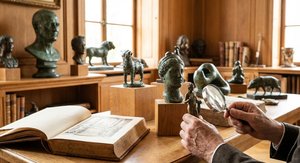
The Enduring Legacy of Bronze Sculpture: A Collector's Guide to Form & Cultural Significance
Explore the rich history & enduring appeal of bronze sculpture with expert insights for collectors at OriginalUniqueArt. Learn about casting techniques, iconic artists, and collecting tips to build a discerning art collection.
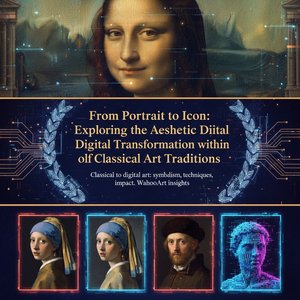
De Portrait à Icône : Exploration de la Transformation Esthétique et Numérique de la Représentation de Soi au Sein des Traditions Artistiques Classiques
Explorez l'évolution fascinante du portrait à travers l'histoire de l'art ! Découvrez les techniques, le symbolisme et les conseils d'experts pour collectionner ou créer votre propre chef-d’œuvre. OriginalUniqueArt : passion et savoir-faire.

Les 10 Chefs-d'œuvre en Bronze qui ont Révolutionné l'Art : Collection OriginalUniqueArt
Plongez dans l'univers fascinant des 10 chefs-d'œuvre en bronze qui ont marqué l'histoire de l'art. Découvrez Rodin, Degas et les secrets de ces sculptures iconiques. Reproductions d'art exceptionnelles sur OriginalUniqueArt.com – Explorez la collection !
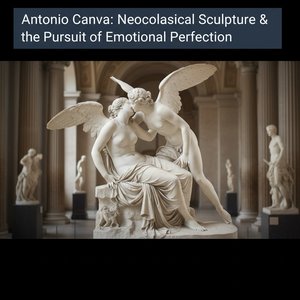
Antonio Canova: Neoclassical Sculpture & the Pursuit of Emotional Perfection
Explore the life & art of Antonio Canova, the greatest Neoclassical sculptor. Discover his masterpieces, innovative techniques, and lasting influence on fine art collecting. Expert insights for discerning investors.

