

 Aperçu en situation
 Partager
 Partager
 Détails
 Guide imprimable

 Télécharger
 Articles similaires
 Radiographie
 Voir le diaporama
 Statistiques
Design for a wall decoration
 Acrylic On Canvas
- WallArt
- Italian Renaissance Revival
 1540
1540 378.0 x 309.0 cm
 Musées d'État de Berlin
 Afficher la suite
Giclées et impressions d'art
Impressions giclées ou sur toile de qualité musée, avec une production rapide et des finitions au choix. ( Acheter la peinture faite à la main Passer au format image numérique)




P118B €10

P118H €10

P118W €10

P438Z €10

P508JH €12

P508YH €12

P805H €10

P805Z €10

P919BZ €10

P919G €10

P919XJ €10

P959ZH €10

P968JZ €12

W106C €8

W218G €10

W218JH €8

W218Y €10

W307PJ €10

W316G €10

W316PJ €8

W316Y €10

W398PJ €8

W4111J €10

W500HY €15

W500JH €15

W692G €12

W849H €8

W940BG €15

W953PJ €8




Choisissez parmi nos formats prédéfinis qui respectent les proportions originales de l’œuvre.

Vous pouvez saisir vos propres dimensions pour vous adapter à un cadre ou à un espace spécifique. Si la taille sélectionnée ne correspond pas aux proportions de l'image originale, nous recadrerons l'œuvre ou étendrons l'image avec une bordure en miroir ou une couleur unie. Une maquette numérique vous sera envoyée pour approbation avant le début de la production.
Veuillez noter que l'aperçu à l'écran ne reflète pas le recadrage ou l'extension réelle. Seule la maquette montrera avec précision la composition finale.
Bien que des tailles personnalisées soient disponibles, nous vous recommandons de choisir une dimension dans la liste prédéfinie afin de préserver les proportions originales.
Livraison dans le monde entier () en 2 semaines au lieu des 4/5 semaines habituelles. (12 octobre)

Livraison express gratuite dans le monde entier

Toile de lin de haute qualité

Assurance transport complète

Garantie de remboursement des droits de douane

Garantie de fidélité des couleurs

Garantie de retour de 100 jours (uniquement en cas de défaut)

Garantie de remboursement à 100%

Tarifs dégressifs sur quantité
 L'option verre n'est disponible que pour les dimensions inférieures à 110 cm.

Design for a wall decoration
Giclées et impressions d'art
Format de la reproduction
-


Prix total final
€ 69
Design for a Wall Decoration by FLÖTNER, Peter
Peter Flötner’s “Design for a Wall Decoration” stands as a testament to the burgeoning Renaissance Revival movement in Northern sculpture during the mid-fifteenth century—a period marked by an urgent desire to recapture the grandeur and humanist ideals of Italy. While overshadowed by luminaries like Albrecht Dürer, Flötner carved out a distinctive niche within German artistic circles, championing a stylistic approach that irrevocably altered decorative arts across Europe.Subject Matter & Composition
The painting depicts a meticulously rendered cave scene populated with figures engaged in contemplative activity. Five individuals are discernible—some standing upright, others seated or reclining—creating an ensemble that speaks to themes of piety and reflection. The cavern itself is portrayed as a natural landscape dominated by flowing water, suggesting both serenity and the transformative power of nature. Two birds grace the upper left corner and lower right side of the canvas, subtly reinforcing notions of aspiration and divine presence. At the center lies a simple cup—a symbol of communion and spiritual nourishment—further emphasizing the artwork’s contemplative core.Stylistic Influences & Technique
Flötner's artistic vision was profoundly shaped by the stylistic innovations emanating from Florence and Rome. He skillfully employed techniques characteristic of Italian Renaissance sculpture, notably precise modeling and drapery folds that imbue the figures with palpable realism. The artist’s meticulous attention to detail—evident in the depiction of textures and contours—demonstrates a mastery of sculptural craftsmanship honed under the tutelage of Adolf Daucher, Flötner's mentor. Furthermore, the muted palette—primarily earthy tones—reflects the prevailing aesthetic sensibilities of the time, aligning with the humanist preoccupation for naturalism and psychological depth.Historical Context & Significance
The painting emerged during a pivotal moment in European intellectual history—the rediscovery of classical texts and artistic precedents fueled by humanist scholarship. Artists like Flötner sought to emulate the monumental grandeur and moral seriousness of Roman sculpture, aiming to elevate German decorative arts beyond mere ornamentation. “Design for a Wall Decoration” exemplifies this ambition, serving as an emblem of the Renaissance Revival’s aspiration to infuse Northern European art with the spirit of Italian artistic excellence—a legacy that continues to inspire contemporary designers and collectors alike.Emotional Impact & Aesthetic Resonance
Ultimately, Flötner's masterpiece transcends mere visual representation; it evokes a profound sense of tranquility and spiritual contemplation. The carefully orchestrated composition invites viewers into a realm of serene beauty, mirroring the humanist conviction that art could cultivate virtue and illuminate the human condition. “Design for a Wall Decoration” remains an enduring symbol of artistic aspiration—a testament to Flötner’s ability to capture not only the visual splendor of his era but also its underlying ethos of intellectual curiosity and moral earnestness.Questions et réponses
Quel est le rapport entre le sujet de « Design for a wall decoration » et les thèmes habituels de Peter Flötner ?
«Design for a wall decoration» dépeint cave scene, renaissance, sculpture, decorative arts, landscape, bird imagery, fountain design, tandis que les thèmes récurrents de Peter Flötner sont italian renaissance style, patronage, decorative sculpture, landscape harmony, artist innovation. La comparaison des deux montre comment l'œuvre s'inscrit dans la lignée des sujets habituels de l'artiste.
Quelle palette de couleurs utilise "Design for a wall decoration" ?
Les couleurs de "Design for a wall decoration" forment une palette Neutrals. Cette classification décrit les familles de couleurs dominantes.
Quelle place occupe « Design for a wall decoration » dans l'œuvre de Peter Flötner ?
Dans l'œuvre de Peter Flötner, « Design for a wall decoration » s'inscrit dans le style Italian Renaissance Revival, tout en abordant les thèmes de italian renaissance style, patronage, decorative sculpture, landscape harmony, artist innovation.
Quel usage est suggéré pour «Design for a wall decoration» de Peter Flötner ?
Une reproduction de «Design for a wall decoration» de Peter Flötner est recommandée pour Accent. Cette suggestion découle du sujet, de l'atmosphère et des couleurs de l'œuvre.
Combien de personnes consultent « Design for a wall decoration » ?
Les statistiques concernant «Design for a wall decoration» de Peter Flötner se trouvent sur la page Statistiques de l'œuvre : visites mensuelles de l'œuvre, visites des œuvres de l'artiste, ainsi que la répartition par pays et par langue des visiteurs récents.
Puis-je voir «Design for a wall decoration» de Peter Flötner sous différents éclairages ?
La vue X de «Design for a wall decoration» de Peter Flötner se trouve sur la page Rayons X de l'œuvre : une exploration interactive de l'image à travers onze couches optiques.
Quel niveau de contraste présente «Design for a wall decoration» de Peter Flötner ?
Le contraste clair-obscur de « Design for a wall decoration » est évalué à Statement. Le contraste décrit l'intensité de la différence entre les zones claires et les zones sombres.
Comment le style de « Design for a wall decoration » s'inscrit-il dans l'époque de son créateur ?
Dans «Design for a wall decoration» de Peter Flötner, le mouvement Italian Renaissance Revival rencontre l'époque Renaissance.
Biographie de l'artiste
Peter Flötner : La Renaissance au cœur de la sculpture septentrionale
Peter Flötner (Flettner), né vers 1485 en Thurgovie, en Suisse, s'impose comme une figure charnière du paysage artistique du début du XVIe siècle. Il fut l'un des acteurs majeurs de ce mouvement naissant qui cherchait à insuffler à la sculpture et aux arts décoratifs allemands la grandeur des idéaux de la Renaissance italienne. Bien que souvent éclipsé par des contemporains illustres tels qu'Albrecht Dürer ou la famille Vischer, l'apport de Flötner fut pourtant immense : il fut le défenseur d'un basculement stylistique qui remodela fondamentalement l'expression artistique à travers toute l'Europe du Nord.- Jeunesse et formation : Peu de choses nous sont parvenues sur les années formatrices de Flötner, hormis sa naissance et son apprentissage à Augsbourg auprès d'Adolf Daucher. Ce dernier, orfèvre respecté, transmit à Flötner une compréhension fondamentale de l'artisanat et des techniques de travail du métal — des compétences qui s'avérèrent inestimables tout au long de sa carrière. Notamment, la participation de Flötner aux travaux d'orfèvrerie complexes de la chapelle Fugger témoigne de son aptitude précoce à marier vision artistique et maîtrise technique.
- <L'influence italienne et la métamorphose artistique : Un voyage en Italie au milieu des années 1520 marqua profondément la sensibilité esthétique de l'artiste. La découverte de la sculpture florentine et du design architectural éveilla en lui une passion pour les formes et les principes classiques, le propulsant vers un style résolument Renaissance. Cette influence est palpable dans ses œuvres ultérieures, où il adopta consciemment les techniques et les motifs caractéristiques des maîtres de la Renaissance italienne.
- <Nuremberg et le Bürgereid : Flötner s'établit comme sculpteur à Nuremberg en 1522, un tournant décisif dans sa trajectoire artistique. En prêtant le « bürgereid », ou serment de citoyen — une déclaration solennelle d'allégeance aux idéaux républicains de la ville — il affirma son engagement civique et consolida sa position au sein de la communauté artistique de Nuremberg.
Sculptures remarquables et prouesses artistiques
L'œuvre de Flötner embrasse une diversité de supports remarquable, mais deux sculptures s'imposent comme les emblèmes de son génie : la figure nue d'Adam, conservée au Kunsthistorisches Museum de Vienne, et l'Apollon décochant une flèche sur la fontaine d'Apollon à Nuremberg. La sculpture d'Adam, réalisée vers 1530, illustre la maîtrise de Flötron dans la taille du bois, un médium qu'il maniait avec brio pour transmettre précision anatomique et contemplation spirituelle. De même, la fontaine d'Apollon, conçue pour le Herrenschiesshaus de Nuremberg et coulée par Pankraz Labenwolf, révèle son esprit de collaboration et sa capacité à traduire des concepts architecturaux en créations artistiques tangibles.- La sculpture d'Adam : Cette représentation d'Adam en tilleul de 34,5 cm incarne le dévouement de Flötner envers l'exactitude anatomique et la beauté idéalisée, des traits qui s'inscrivent parfaitement dans les conventions sculpturales de la Renaissance.
- <La fontaine d'Apollon : Cette œuvre représente la contribution de Flötner à la sculpture monumentale, démontrant sa compréhension des techniques de fonte du bronze et de l'intégration architecturale.
L'estampe et la diffusion du style
Au-delà de la sculpture, Flötner excella en tant que graveur, produisant des modèles pour le mobilier, les retables, les panneaux ornementaux, les illustrations de livres, les jeux de cartes et même un alphabet décoratif. Ces estampes ne servaient pas uniquement d'expressions artistiques, mais agissaient comme de véritables vecteurs de diffusion du style Renaissance italien à travers l'Europe du Nord — une tendance amorcée par les gravures révolutionnaires de Dürer. Les plaques de Flötner apparurent dans divers métaux, principalement le laiton, faisant écho aux innovations stylistiques prônées par son illustre prédécesseur.- <Technique de l'estampe : Flötner utilisa avec talent les techniques de l'eau-forte et de la gravure pour capturer les dessins architecturaux et les motifs décoratifs avec une fidélité remarquable.
- <Influence sur les tendances artistiques : Ses estampes jouèrent un rôle pivot dans le façonnement des goûts artistiques et la promotion des idéaux de la Renaissance en Allemagne et au-delà.
Héritage et importance historique
L'héritage de Peter Flötner ne réside pas seulement dans ses œuvres individuelles, mais aussi dans son impact global sur le paysage artistique de son époque. Il demeure le témoignage du pouvoir transformateur des échanges culturels, démontrant comment l'exposition à l'art de la Renaissance italienne pouvait inspirer l'innovation et revitaliser les traditions artistiques germaniques. En défendant les formes et les techniques classiques, Flötner a aidé à inaugurer une ère de raffinement stylistique et de grandeur architecturale, s'assurant ainsi une place parmi les plus grands sculpteurs et graveurs du XVIe siècle.
Peter Flötner
1490 - 1546 , Suisse
En bref
- Artistic Movement Or Style: Renaissance italienisant
- Artists Or Movements Influenced By This Artist: ['Albrecht Dürer']
- Artists Who Influenced This Artist: ['Adolf Daucher']
- Date Of Birth: ca. 1485
- Date Of Death: 1546
- Full Name: Peter Flötner
- Nationality: Allemand
- Notable Artworks:
- Figure représentant Adam
- Fontaine d'Apollon
- Place Of Birth: Thurgau, Suisse
Articles similaires
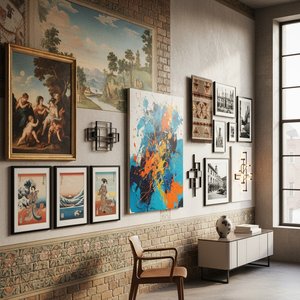
Transforming Spaces: A Comprehensive Exploration of Wall Decor Through Art History & Contemporary Practice
Explore the art of transforming spaces with our comprehensive guide to wall decor. From historical movements to contemporary trends, discover how to curate impactful interiors and commission bespoke artwork for a truly personalized aesthetic.

Les 10 Chefs-d'œuvre Bronzes Qui Ont Révolutionné la Sculpture | OriginalUniqueArt
Plongez dans l'univers fascinant des 10 sculptures en bronze les plus emblématiques de l'histoire de l'art. Rodin, Degas et autres maîtres révélés ! Découvrez leur histoire, leurs techniques et trouvez l'œuvre parfaite pour sublimer votre intérieur sur OriginalUniqueArt.com.

Les 10 Chefs-d'œuvre en Bronze qui ont Révolutionné l'Art : Collection OriginalUniqueArt
Plongez dans l'univers fascinant des 10 chefs-d'œuvre en bronze qui ont marqué l'histoire de l'art. Découvrez Rodin, Degas et les secrets de ces sculptures iconiques. Reproductions d'art exceptionnelles sur OriginalUniqueArt.com – Explorez la collection !

The Enduring Form: Sculpture Across History, Technique & Emotional Resonance
Explore the rich history of sculpture with OriginalUniqueArt. Discover key techniques, influential artists & investment potential for discerning collectors. Expert insights into valuing and collecting timeless masterpieces.

The Enduring Form: Exploring Themes & Techniques in Sculpture Across Historical Periods
Explore the rich history of sculpture from ancient masterpieces to contemporary innovations. Discover key techniques, influential artists & investment potential for discerning art collectors.