

 Aperçu en situation
 Partager
 Partager
 Détails

 Télécharger
 Articles similaires
 Radiographie
 Voir le diaporama
 Statistiques
Washing on the Ice
 Oil On Canvas
- WallArt
- Impressionism
 1900
1900- 19th Century
 180.0 x 125.0 cm
 Musée d'art Ateneum
 Afficher la suite
Giclées et impressions d'art
Impressions giclées ou sur toile de qualité musée, avec une production rapide et des finitions au choix. ( Acheter la peinture faite à la main Passer au format image numérique)




P118B $10

P118H $10

P118W $10

P438Z $10

P508JH $12

P508YH $12

P805H $10

P805Z $10

P919BZ $10

P919G $10

P919XJ $10

P959ZH $10

P968JZ $12

W106C $8

W218G $10

W218JH $8

W218Y $10

W307PJ $10

W316G $10

W316PJ $8

W316Y $10

W398PJ $8

W4111J $10

W500HY $15

W500JH $15

W692G $12

W849H $8

W940BG $15

W953PJ $8




Choisissez parmi nos formats prédéfinis qui respectent les proportions originales de l’œuvre.

Vous pouvez saisir vos propres dimensions pour vous adapter à un cadre ou à un espace spécifique. Si la taille sélectionnée ne correspond pas aux proportions de l'image originale, nous recadrerons l'œuvre ou étendrons l'image avec une bordure en miroir ou une couleur unie. Une maquette numérique vous sera envoyée pour approbation avant le début de la production.
Veuillez noter que l'aperçu à l'écran ne reflète pas le recadrage ou l'extension réelle. Seule la maquette montrera avec précision la composition finale.
Bien que des tailles personnalisées soient disponibles, nous vous recommandons de choisir une dimension dans la liste prédéfinie afin de préserver les proportions originales.
Livraison dans le monde entier () en 2 semaines au lieu des 4/5 semaines habituelles. (16 septembre)

Livraison express gratuite dans le monde entier

Toile de lin de haute qualité

Assurance transport complète

Garantie de remboursement des droits de douane

Garantie de fidélité des couleurs

Garantie de retour de 100 jours (uniquement en cas de défaut)

Garantie de remboursement à 100%

Tarifs dégressifs sur quantité
 L'option verre n'est disponible que pour les dimensions inférieures à 110 cm.

Washing on the Ice
Giclées et impressions d'art
Format de la reproduction
-


Prix total final
$ 80
A Quiet Resilience Amidst the Finnish Frost
In the hushed, crystalline atmosphere of Washing on the Ice, we are transported to the turn of the twentieth century, specifically to the frozen landscapes that defined the Finnish National Romantic era. Created by the master Pekka Halonen in 1900, this evocative piece was originally conceived as part of a prestigious twelve-painting series for the Finnish Pavilion at the Paris World Fair. The painting serves as more than just a landscape; it is a profound window into a way of life, capturing the rhythmic, seasonal endurance of the Finnish people. As we gaze upon the solitary figure of a woman dressed in muted grey, engaged in the arduous task of laundry amidst the snow, we feel the biting chill of the winter air and the quiet dignity of domestic labor performed against the backdrop of an unforgiving yet beautiful wilderness.
The composition is a masterclass in atmospheric perspective, guiding the viewer’s eye through a delicately layered world. In the foreground, the central figure anchors the scene, her presence a testament to human perseverance. Beyond her, the middle ground reveals the soft, organic shapes of snow-dusted trees and the distant, nestled farmhouses that suggest a community bound by the shared experience of the seasons. Halonen utilizes a shallow perspective that keeps our focus intimate, yet he achieves a sense of vastness through the use of light and color. The winter light in this masterpiece is uniquely ethereal; it lacks harsh shadows, instead casting a diffused, pearlescent glow over the ice, as if the sun itself were struggling to pierce through a heavy, overcast sky.
The Artistry of Impressionistic RealismTechnically, Washing on the Ice is a triumph of impressionistic technique blended with a realist's eye for detail. Halonen employs loose, expressive brushstrokes that lend a sense of movement to the falling snow and the frozen surface of the ice. The texture of the canvas is enriched by the layering of oil paints, creating a slightly grainy, tactile quality that mimics the frosted atmosphere of a subarctic morning. His palette is a sophisticated study in restraint, dominated by a spectrum of muted whites, icy blues, slate greys, and earthy browns. This limited color range does not diminish the painting's impact; rather, it intensifies the emotional resonance of the cold, creating a monochromatic harmony that feels both peaceful and somber.
For the discerning collector or interior designer, this artwork offers a profound sense of tranquility and timelessness. The symbolism of the woman’s labor—representing the strength and continuity of life in harsh conditions—provides a deep narrative layer that elevates the piece from a mere landscape to a soulful portrait of national identity. Whether placed in a contemporary gallery setting or as a focal point in a classically styled room, this reproduction brings with it an aura of quiet strength and historical depth. It is an invitation to pause, to breathe in the stillness of the Finnish winter, and to find beauty in the most humble of human endeavors.
Biographie de l'artiste
Pekka Halonen: A Pioneer of Finnish Landscape Painting
Pekka Halonen (1865-1933) stands as a pivotal figure in Finnish art history, recognized primarily for his masterful depictions of the Finnish landscape and its people during the National Romantic era. His artistic vision seamlessly blended realism with Impressionistic techniques, establishing him as one of Finland’s foremost painters and contributing significantly to the burgeoning sense of national identity at the turn of the century. Born September 23rd, 1865, in Linnasalmi, Lapinlahti, Finland, Halonen's upbringing profoundly shaped his artistic sensibilities. His father, Olli Halonen, was a farmer and amateur artist who instilled in Pekka a deep appreciation for craftsmanship and observation of the natural world – experiences that would become central to Halonen’s oeuvre. Notably, Olli Halonen frequently undertook decorative painting commissions on churches in neighboring districts, exposing young Pekka to artistic practice firsthand. This familial influence fostered an early fascination with color and form, laying the groundwork for his future explorations into landscape painting. Halonen pursued formal artistic training at Helsinki Art Society's Drawing School for four years, graduating with honors and securing a scholarship to study abroad. Recognizing the importance of broadening his horizons, he embarked on a journey to Paris in 1890, initially enrolling at the Académie Julian before gravitating towards the tutelage of Paul Gauguin at the Académie Vitti. Alongside these influential mentors, Halonen honed his skills at the École Supérieure des Beaux-Arts, immersing himself in the artistic currents of Impressionism and Post-Impressionism. This Parisian period proved transformative, exposing him to groundbreaking ideas about color theory and expressive brushwork – concepts that would permeate his subsequent paintings. His marriage to Maija Mäkinen in 1895 marked a significant chapter in Halonen’s personal life, establishing a home on Lake Tuusula where he cultivated an artist's community alongside fellow painters. The couple resided at ‘Halosenniemi,’ a magnificent pine villa designed collaboratively by Halonen and his brother Antti Halonen, completed in 1902. This architectural masterpiece served as both inspiration and studio space for Halonen’s artistic endeavors, embodying the ideals of Finnish national identity and reflecting the influence of Parisian villas. The villa's design prioritized natural light and expansive views of Lake Tuusula, mirroring Halonen’s dedication to capturing the essence of Finland’s landscape. Halonen’s artistic output is characterized by a distinctive blend of realism and Impressionistic color palettes. He meticulously rendered Finnish landscapes—particularly winter scenes—with remarkable accuracy, conveying atmospheric conditions and subtle tonal variations with exceptional skill. Simultaneously, he employed expressive brushstrokes and vibrant hues to infuse his paintings with emotion and dynamism – techniques borrowed from Gauguin’s stylistic innovations. His most celebrated works include “Sauna in the Snow,” a poignant portrayal of Finnish rural life imbued with symbolic resonance, and "Washing on the Ice," which exemplifies his masterful command of Impressionistic light and color. Furthermore, Halonen's contribution to fostering Finnish national identity through art is undeniable; he became an integral part of Tuusula’s artistic landscape, shaping its cultural heritage for generations to come. His legacy continues to inspire artists today, cementing his place as a cornerstone of Finnish visual culture.
Pekka Halonen
1865 - 1933 , Finlande
En bref
- Artistic Movement Or Style: National Romanticism
- Artists Who Influenced This Artist:
- Yrjö Aleksanterjö Ollila
- Paul Gauguin
- Date Of Birth: 1865
- Date Of Death: 1933
- Full Name: Pekka Halonen
- Nationality: Finnish
- Notable Artworks:
- Sauna in the Snow
- Washing on the Ice
- Place Of Birth: Linnasalmi, Finland
Articles similaires

Les 10 Chefs-d'œuvre Impressionnistes qui ont Révolutionné le Paysage
Plongez au cœur de l'Impressionnisme avec les 10 chefs-d'œuvre qui ont révolutionné le paysage. Découvrez Monet, Renoir et plus encore sur OriginalUniqueArt.com – reproductions d'art de qualité muséale pour sublimer votre intérieur.

Évocations de lieux : Un voyage historique à travers l'art du paysage
Explorez l'histoire fascinante de la peinture de paysage à travers les chefs-d'œuvre du Romantisme. Découvrez Friedrich, Turner et Aivazovski et laissez-vous inspirer par la beauté sauvage et le sublime. Reproduction d'art de qualité chez OriginalUniqueArt.

Les 10 Chefs-d'œuvre Impressionnistes qui ont Révolutionné le Paysage
Plongez dans l'univers vibrant de l'impressionnisme ! Découvrez les 10 chefs-d'œuvre de Monet, Renoir et autres maîtres qui ont révolutionné le paysage. Inspirez votre décoration intérieure avec OriginalUniqueArt.com : reproductions tableaux de qualité muséale.
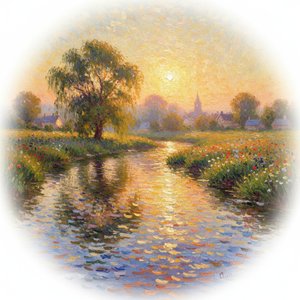
Capturing Light: A Masterclass in the Ethereal Beauty of Impressionistic Landscapes
Explore the ethereal beauty of Impressionist landscapes. Discover how masters like Monet captured fleeting light through color and texture, and learn to curate these timeless, luminous masterpieces for your home collection.

Les 10 Chefs-d'œuvre du Paysage Romantique : Artistes et Décor d'Intérieur
Plongez dans l'émotion du Romantisme avec les 10 plus beaux paysages de Friedrich, Turner & Delacroix. Découvrez leur histoire et trouvez l'inspiration déco idéale sur OriginalUniqueArt.com !