Aperçu en situation
 Envoyer
 Partager
 Détails de l'œuvre

 Télécharger
 Articles similaires
 Radiographie
 Diaporama
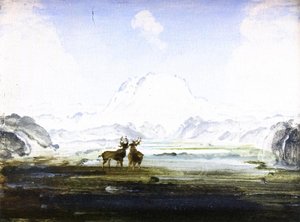
VUE D'ALTONA


 Lire la suite
Reproduction à l'huile faite à la main
Huile sur toile peinte à la main, avec cadre et dimensions personnalisés, réalisée sur commande par nos artistes. ( Commander l'impression Télécharger l'image haute résolution)




P118B $10

P118H $10

P118W $10

P438Z $10

P508JH $12

P508YH $12

P805H $10

P805Z $10

P919BZ $10

P919G $10

P919XJ $10

P959ZH $10

P968JZ $12

W106C $8

W218G $10

W218JH $8

W218Y $10

W307PJ $10

W316G $10

W316PJ $8

W316Y $10

W398PJ $8

W4111J $10

W500HY $15

W500JH $15

W692G $12

W849H $8

W940BG $15

W953PJ $8




Choisissez parmi nos formats prédéfinis qui respectent les proportions originales de l’œuvre.

Vous pouvez saisir vos propres dimensions pour l'adapter à un cadre ou à un espace spécifique. Si la taille sélectionnée ne correspond pas aux proportions de l'image d'origine, nous recadrerons l'œuvre ou prolongerons la peinture avec des éléments peints à la main supplémentaires. Une maquette numérique vous sera envoyée pour approbation avant le début de la production.
Veuillez noter que l'aperçu à l'écran ne reflète pas le recadrage ou l'extension réels. Seule la maquette montrera fidèlement la composition finale.
Bien que des tailles personnalisées soient disponibles, nous vous recommandons de sélectionner une dimension dans la liste prédéfinie afin de préserver les proportions d'origine.
Après la commande, l’équipe OriginalUniqueArt.com contactera le client par e-mail pour recueillir ses instructions et lui fournira une maquette d’aperçu
Livraison dans le monde entier () en 3 à 4 semaines au lieu des 5 semaines habituelles. (20 août). Aucun compromis sur la qualité.

Livraison express gratuite dans le monde entier

Toile de lin de qualité supérieure

Assurance transport complète

Garantie de remboursement des droits de douane

Garantie de fidélité des couleurs

Politique de retour de 60 jours (uniquement en cas de défaut)

Garantie de remboursement à 100%

Offre de tarifs dégressifs
 L'option verre n'est disponible que pour les dimensions inférieures à 110 cm.

VUE D'ALTONA
Technique de reproduction
Format de la reproduction
-


Prix total
$ 300
Description de l'œuvre
A Storm Unleashed: Peder Balke’s “VUE D’ALTONA”
Peder Balke's "VUE D’ALTONA," a dramatic seascape rendered in oil on canvas, isn’t merely a depiction of a coastal view; it’s an immersion into the raw, untamed heart of Norway. Painted around 1849, during a period of intense artistic and social change within the nation, this work embodies the Romantic spirit—a profound engagement with nature's power, coupled with a deep exploration of human emotion. The scene unfolds against a bruised and turbulent sky, dominated by swirling greys and blues that seem to writhe with an almost palpable energy. Below, the dark waters of the North Sea reflect this drama, punctuated by the distant silhouette of Altona, a Prussian fortress town nestled on a promontory – a strategic point caught in the eye of the storm. The inclusion of this fortified city hints at the political tensions simmering across Europe during Balke’s time, adding a layer of subtle commentary to the purely visual experience. The painting's scale is modest, yet its impact is monumental, drawing the viewer into the heart of the tempest.A Masterclass in Atmospheric Technique
Balke’s genius lies not just in his subject matter but in his masterful execution. He employs a loose, expressive brushstroke—an impasto technique where thick layers of paint are applied directly to the canvas—to create a remarkable sense of texture and movement. The sky isn't simply painted; it feels sculpted, with each cloud rendered as a dynamic mass of color and form. Notice how he uses atmospheric perspective – the subtle lightening and desaturation of colors in the distance – to convincingly convey depth and scale. This technique is particularly effective in depicting the distant cityscape, which appears almost spectral, swallowed by the swirling mist. The shoreline itself is treated with a more restrained hand, suggesting the ruggedness of the Norwegian coastline without overwhelming the drama of the sky. The careful layering of colors and the visible brushwork contribute to an immediate sense of immediacy, as if we are standing on that very shore, feeling the spray of the waves and the bite of the wind.Echoes of Romanticism and a Personal Journey
“VUE D’ALTONA” firmly places Balke within the tradition of Northern European landscape painting, echoing the works of J.M.W. Turner while retaining a distinctly Norwegian sensibility. Like Turner, Balke sought to capture not just the appearance of nature but its emotional resonance. However, unlike many of his contemporaries, Balke’s work is deeply rooted in the lived experience of Norway—a nation grappling with poverty, social upheaval, and the challenges of asserting its national identity. Born on a remote island in the middle of Lake Mjøsa, Balke's early life was marked by hardship and deprivation, experiences that profoundly shaped his artistic vision. His travels throughout Norway, meticulously documented through sketches and paintings like this one, were not merely expeditions but deeply personal journeys of discovery—a quest to understand and represent the soul of his homeland.Symbolism in Storm and Silhouette
Beyond its technical brilliance, “VUE D’ALTONA” is rich in symbolic meaning. The storm itself can be interpreted as a metaphor for inner turmoil or uncertainty – reflecting perhaps Balke's own struggles with poverty and artistic recognition. The distant silhouette of Altona, a Prussian fortress town, adds another layer of complexity. It represents the political tensions of the era, the threat of foreign invasion, and the precariousness of life in a small nation facing powerful empires. The painting’s overall mood is one of melancholy and awe—a reminder of humanity's vulnerability in the face of nature's overwhelming power. Yet, within this darkness, there’s also a sense of beauty and resilience – a testament to the enduring spirit of Norway.Bringing “VUE D’ALTONA” into Your Space
Today, "VUE D’ALTONA" stands as a powerful symbol of Norwegian Romanticism and a captivating example of Balke's unique artistic vision. OriginalUniqueArt offers high-quality reproductions that faithfully capture the painting’s dramatic intensity and atmospheric depth. Whether you are an art collector seeking to expand your collection or an interior designer looking for a statement piece, a reproduction of “VUE D’ALTONA” will bring a touch of Nordic drama and emotional resonance to any space. Consider its scale – a larger reproduction can dominate a wall, while a smaller one offers a more intimate connection to this evocative masterpiece. Explore the available sizes and formats on our website to find the perfect way to experience the power of Balke’s vision.Biographie de l'artiste
Peder Balke : Un Visionnaire Romantique Norvégien
- Né: Hegøy, Norvège (1804)
- Décédé: 1887
Jeunesse et Formation Artistique
- Peder Andersen Balke est né sur l’île de Helgøya dans le comté de Hedmark en Norvège. Il a grandi à Ringsaker.
- Sa famille était paysanne, mais il a reçu le soutien de la communauté locale pour poursuivre ses ambitions artistiques. Les agriculteurs de Toten ont payé ses études.
- Il a commencé sa formation comme apprenti auprès de Heinrich August Grosch en 1827 et a également étudié sous Jacob Munch.
- De 1829 à 1833, il était élève de Carl Johan Fahlcrantz à l’Académie Royale des Beaux-Arts de Suède à Stockholm.
- Il a ensuite étudié avec Johan Christian Dahl de 1843 à 1844.
Style Artistique et Œuvres Principales
- Peinture de Paysage Romantique : Balke est surtout connu pour ses représentations dramatiques du paysage norvégien, caractérisées par une sensibilité romantique. Ses œuvres présentent souvent un éclairage intense, des effets atmosphériques et un sentiment de grandeur sublime.
- Travail du Pinceau Unique : Il a développé un style distinctif avec des coups de pinceau texturés et une utilisation inhabituelle de la couleur, créant une qualité onirique dans ses peintures.
- Œuvres Notables : Parmi ses œuvres les plus célébrées figurent :
- Vue de Christiania (aujourd'hui Oslo) (1872) - Une vue urbaine dramatique capturant l’essence d’Oslo.
- Le Port de Skjervøy (1846) – Présente une scène portuaire captivante avec des détails réalistes.
- Vieux Arbres (1840) – Représente un paysage hivernal norvégien austère avec un éclairage puissant.
- Marine (1845) - Une marine dramatique mettant en valeur la beauté accidentée de la côte norvégienne.
- Fredrikshald (1852) – Présente un château côtier et des bateaux, démontrant sa maîtrise du réalisme.
- Le Cap Nord sous le clair de lune (1848) - Capture la beauté impressionnante du Cap Nord sous la lumière de la lune.
Activisme Social et Vie Ultérieure
- Défenseur de la Justice Sociale : Balke était non seulement un artiste, mais aussi un réformateur social engagé. Il s’est activement impliqué dans les questions de justice sociale.
- Projet Balkeby : Il a dirigé la construction de Balkeby, une nouvelle banlieue d'Oslo conçue pour améliorer les conditions de vie des travailleurs. Il fournissait des prêts et établissait des règles de construction strictes.
- Plaidoyer pour les Artistes : Balke a plaidé en faveur de subventions pour les artistes et de pensions tant pour les hommes que pour les femmes.
- Héritage Familial : Il était l'arrière-grand-père de l'actrice Turid Balke et l'arrière-arrière-grand-père du pianiste de jazz Jon Balke.
Signification Historique et Reconnaissance
- Redécouverte et Appréciation : Bien qu’initialement négligé, le travail de Balke a connu une résurgence significative de la reconnaissance au cours des dernières décennies.
- Expositions Internationales : De grandes expositions de son œuvre ont été présentées dans des institutions prestigieuses telles que la National Gallery de Londres (2014-2015) et le Metropolitan Museum of Art (2017).
- Influence sur l'Art Nordique : Le style unique et la vision de Balke ont contribué de manière significative au développement de l’art romantique en Norvège et dans la région nordique. Ses peintures sont désormais considérées comme des exemples importants de l’art norvégien du XIXe siècle, célébrées pour leurs paysages dramatiques et leur profondeur émotionnelle.
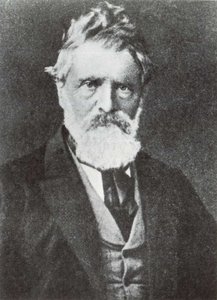
Peder Balke
1804 - 1887 , Norvège
L'essentiel de l'artiste
- Artistes Influents:
- Heinrich August Grosch
- Jens Funch
- Carl Johan Fahlcrantz
- Johan Christian Dahl
- Date De Décès: 5 février 1887
- Date De Naissance: 4 novembre 1804
- Lieu De Naissance: Hegøy, Norvège
- Mouvement Artistique: Romantisme
- Nationalité: Norvégien
- Nom Complet: Peder Balke
- Oeuvres Notables:
- Vue de Christiania (Oslo)
- Le port de Skjervøy
- Vieux arbres
- Marine
- Fredrikshald
- Cap Nord au clair de lune
Articles connexes
Top 10 Paysages Iconiques : Voyage Artistique & Décoration d'Intérieur
Découvrez les 10 plus beaux paysages de l'histoire de l'art : Monet, Van Gogh et bien d'autres. Explorez leur technique unique et trouvez l'inspiration pour votre décoration intérieure avec OriginalUniqueArt.com. Œuvres exceptionnelles à découvrir !

Les 10 Chefs-d'œuvre du Paysage Romantique : Artistes et Décor d'Intérieur
Plongez dans l'émotion du Romantisme avec les 10 plus beaux paysages de Friedrich, Turner & Delacroix. Découvrez leur histoire et trouvez l'inspiration déco idéale sur OriginalUniqueArt.com !

Constable : Les 25 Chefs-d'Œuvre du Maître Anglais | OriginalUniqueArt
Plongez dans l'univers de John Constable avec les 25 œuvres incontournables du maître anglais. Découvrez l'histoire, la technique et l'émotion derrière ses paysages romantiques. Reproductions de qualité muséale sur OriginalUniqueArt.com.

Évocations de lieux : Un voyage historique à travers l'art du paysage
Explorez l'histoire fascinante de la peinture de paysage à travers les chefs-d'œuvre du Romantisme. Découvrez Friedrich, Turner et Aivazovski et laissez-vous inspirer par la beauté sauvage et le sublime. Reproduction d'art de qualité chez OriginalUniqueArt.

Johan Christian Dahl: Pioneering Norwegian Romantic Landscape Painting
Explore the life & art of Johan Christian Dahl, Norway's first great Romantic painter. Discover his iconic landscapes, cultural impact, and lasting legacy with OriginalUniqueArt.