Aperçu en situation
 Partager
 Partager
 Détails
 Guide imprimable

 Télécharger
 Articles similaires
 Radiographie
 Voir le diaporama
 Statistiques
Concarneau (study)
 Oil On Canvas
- WallArt
- Impressionism
 1891
1891- 19th Century
 24.0 x 33.0 cm
 Afficher la suite
Reproduction à l'huile faite à la main
Huile sur toile peinte à la main, avec cadre et dimensions personnalisés, réalisée sur commande par nos artistes. ( Passer au format impression Passer au format image numérique)




P118B €10

P118H €10

P118W €10

P438Z €10

P508JH €12

P508YH €12

P805H €10

P805Z €10

P919BZ €10

P919G €10

P919XJ €10

P959ZH €10

P968JZ €12

W106C €8

W218G €10

W218JH €8

W218Y €10

W307PJ €10

W316G €10

W316PJ €8

W316Y €10

W398PJ €8

W4111J €10

W500HY €15

W500JH €15

W692G €12

W849H €8

W940BG €15

W953PJ €8




Choisissez parmi nos formats prédéfinis qui respectent les proportions originales de l’œuvre.

Saisissez la largeur et la hauteur souhaitées, pour s'adapter à votre cadre ou à votre mur. Cette œuvre est peinte à la main ; ainsi, pour un format de forme différente, l'artiste peut peindre un peu plus autour du tableau ou réduire légèrement les bords — c'est vous qui choisissez. Nous vous envoyons une maquette numérique pour approbation avant que la peinture ne commence. L'image présentée sur cette page ne reflète pas le résultat réel — seule la maquette le fait.
Après la commande, l’équipe OriginalUniqueArt.com contactera le client par e-mail pour recueillir ses instructions et lui fournira une maquette d’aperçu
Livraison dans le monde entier () en 3 à 4 semaines au lieu des 5 semaines habituelles. (21 octobre). Aucun compromis sur la qualité.

Livraison express gratuite dans le monde entier

Toile de lin de haute qualité

Assurance transport complète

Garantie de remboursement des droits de douane

Garantie de fidélité des couleurs

Garantie de retour de 100 jours (uniquement en cas de défaut)

Garantie de remboursement à 100%

Tarifs dégressifs sur quantité
 L'option verre n'est disponible que pour les dimensions inférieures à 110 cm.

Concarneau (study)
Technique de reproduction
Format de la reproduction
-


Prix total final
€ 262
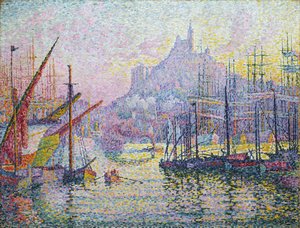
A Luminous Study in Coastal Light
To gaze upon this study of Concarneau is to be transported to a moment suspended between dawn and afternoon—a breath of salty air captured on canvas. The painting immerses the viewer in an atmosphere saturated with warm, golden hues, creating a luminous haze that seems to emanate from the water itself. It is not merely a depiction of a seaside vista; it is an evocation of light’s ephemeral dance upon liquid surfaces. The composition guides the eye across the calm expanse where sailboats drift like painted dreams toward a distant, softened horizon. Here, the artist masterfully prioritizes the feeling of movement and the play of reflected color over any need for sharp, photographic detail.
The Science and Soul of Impressionism
This work stands as a beautiful testament to the enduring spirit of Impressionism, filtered through the thoughtful lens of Paul Signac. While the scene speaks with the immediacy of Monet’s later works, the underlying structure hints at the systematic approach that defined his career. The visible brushstrokes—short, broken dabs of pure color—are not mere stylistic flourishes; they are records of perception itself. They capture how light fractures upon water and rock, giving texture to what might otherwise appear smooth. Notice the foreground: the rocky shoreline and large boulders are rendered with a palpable impasto, allowing one to almost feel the grit beneath the fingertips. This tactile quality is central to the painting’s power.
Rhythm, Reflection, and Form
The interplay between horizontal lines—the vast sweep of the water and sky—and the vertical accents provided by the masts and shoreline anchors the piece in a profound sense of rhythm. The sailboats themselves become rhythmic punctuation marks against the expansive canvas. Signac’s handling here suggests that the subject matter, while maritime, is deeply concerned with optical experience. The way the light catches the sails, making them glow against the deeper tones of the water, speaks to an understanding of color theory as a structural element. It is a study in atmospheric perspective, where distance softens edges until the cityscape recedes into a gentle wash of color.
Symbolism of Passage and Freedom
Beyond its technical brilliance, this painting resonates with universal themes. The sea, eternally restless yet momentarily calm, has always symbolized the journey of life itself. These graceful sailboats are potent symbols of freedom, of passage, and of humanity’s enduring connection to nature's vast, beautiful indifference. For the collector or designer, owning this piece means bringing into a space not just a painting, but a mood—a sense of open possibility and tranquil escape. It invites contemplation on journeys taken and those yet to come.
Questions et réponses
Quel espace est suggéré pour «Concarneau (study)» de Paul Signac ?
L'espace recommandé pour «Concarneau (study)» de Paul Signac est un Lounge. Cette suggestion peut bien entendu être adaptée à votre intérieur.
Pourquoi le statut du droit d'auteur de « Concarneau (study) » est-il tel qu'il est ?
«Concarneau (study)» de Paul Signac est dans le dans le domaine public - ses droits d'auteur ont expiré. La durée du droit d'auteur court à partir du décès de l'artiste, survenu en 1935.
À quelle période de la carrière de Paul Signac appartient « Concarneau (study) » ?
Au cours de la carrière de Paul Signac, « Concarneau (study) » s'inscrit dans la période Mature Period. Cette phase permet de le comparer aux autres œuvres de l'artiste.
Biographie de l'artiste
La Vision Harmonieuse de Paul Signac
Paul Victor Jules Signac, né à Paris en 1863, s'est imposé comme une figure charnière de l'évolution de l'art moderne, indissociablement lié à la naissance et au développement du Néo-Impressionnisme. Initialement attiré par l'architecture, une rencontre de jeunesse avec l'exposition de Claude Monet a allumé en lui une passion durable pour la peinture, le lançant sur une voie qui allait redéfinir la théorie des couleurs et l'expression artistique. Signac n'était pas seulement un peintre ; il était un explorateur dévoué de la lumière, de la couleur et de la science même qui sous-tend la perception visuelle. Ses premières œuvres, bien que manifestant des tendances impressionnistes, ont rapidement évolué sous l'influence profonde de Georges Seurat, forgeant un partenariat qui a donné naissance au Pointillisme – une technique caractérisée par l'application méticuleuse de minuscules points distincts de couleur pure, destinés à se mélanger optiquement dans l'œil du spectateur. Il ne s'agissait pas simplement d'esthétique ; c'était une tentative de systématiser la peinture, en l'ancrant dans des principes scientifiques et en défiant les normes artistiques conventionnelles.Un Dialogue avec Seurat et la Naissance du Néo-Impressionnisme
La rencontre entre Signac et Seurat en 1884 s'est révélée transformative pour les deux artistes. Ils partageaient une fascination pour les écrits d'Eugène Delacroix sur la théorie des couleurs, particulièrement son exploration des contrastes complémentaires et de l'impact émotionnel de la teinte. Ensemble, ils se sont lancés dans une investigation rigoureuse de ces principes, les traduisant en une technique picturale révolutionnaire. Signac a embrassé de tout cœur la vision de Seurat, abandonnant les touches fugaces de l'Impressionnisme pour l'application précise et calculée de points de couleur. Boulevard de Clichy (1886) constitue un premier témoignage de cette nouvelle approche, illustrant le style méticuleux de Signac et son engagement à capturer la vitalité de la vie urbaine à travers un prisme scientifique. Cependant, leur collaboration n'était pas seulement technique ; elle était intellectuelle, nourrie par le désir partagé d'élever la peinture au rang d'une science rigoureuse. Signac est devenu un fervent défenseur des idées de Seurat, promouvant sans relâche le Néo-Impressionnisme et défendant ses principes face aux critiques. La mort tragique et prématurée de Seurat en 1891 a laissé à Signac le rôle de principal champion de leur vision artistique commune, un rôle qu'il a assumé avec un dévouement inébranlable.Rêveries Côtières et Indépendance Artistique
Après la disparition de Seurat, le voyage artistique de Signac a pris une nouvelle dimension, profondément influencée par son amour profond pour la voile et l'attrait de la côte méditerranéenne. Il découvrit Saint-Tropez en 1892, y établissant une demeure qui devint un refuge pour les artistes et une source d'inspiration infinie. Les eaux scintillantes, les ports baignés de soleil et les villes côtières pittoresques offrirent un cadre idéal pour explorer l'interaction entre la lumière et la couleur. La Bouée Rouge, Saint-Tropez (1895) illustre parfaitement cette période, démontrant sa maîtrise du Pointillisme dans la capture des teintes vibrantes et de l'énergie dynamique de la mer. Sa technique a évolué, devenant plus fluide et expressive tout en conservant ses fondements scientifiques. Il commença à expérimenter avec des touches plus larges et une palette plus étendue, s'éloignant de l'adhésion stricte à la méthode de pointillé précis de Seurat. Les voyages de Signac s'étendirent au-delà de la France, englobant l'Italie, la Hollande et même Constantinople, chaque périple enrichissant son vocabulaire artistique et élargissant sa perspective.Un Mécène de l'Avant-Garde et un Héritage Durable
Au-delà de ses propres aspirations artistiques, Signac joua un rôle crucial dans la promotion du développement de l'art moderne grâce à son leadership au sein de la Société des Artistes Indépendants. En tant que président de 1908 jusqu'à sa mort en 1935, il fut le défenseur de la liberté artistique et offrit une plateforme aux talents émergents, notamment Henri Matisse, André Derain et d'autres pionniers du Fauvisme et du Cubisme. Il fut parmi les premiers à reconnaître et à soutenir leurs travaux novateurs, exposant des œuvres controversées qui défiaient les normes esthétiques conventionnelles. L'engagement de Signac envers l'inclusivité et sa volonté d'embrasser l'innovation ont aidé à façonner la trajectoire de l'art du XXe siècle. Ses écrits théoriques, notamment D'Eugène Delacroix au Néo-Impressionnisme (1899), ont davantage consolidé sa position de figure intellectuelle majeure dans le monde de l'art. L'héritage de Paul Signac s'étend bien au-delà de ses peintures captivantes ; il fut un artiste visionnaire, un théoricien dévoué et un mécène généreux qui influença profondément le cours de l'art moderne, laissant une marque indélébile sur les générations d'artistes à venir.Dates Clés et Réalisations
- 1863 : Naissance à Paris, France.
- 1884 : Cofondateur de la Société des Artistes Indépendants avec Georges Seurat.
- 1886 : Peint *Boulevard de Clichy*, un exemple clé du début du Pointillisme.
- 1895 : Création de *La Bouée Rouge, Saint-Tropez*, illustrant sa maîtrise des scènes côtières.
- 1899 : Publication de *D'Eugène Delacroix au Néo-Impressionnisme*, une œuvre séminale sur la théorie des couleurs.
- 1908 – 1935 : Président de la Société des Artistes Indépendants, défenseur des artistes d'avant-garde.
- 1935 : Décès à Paris à l'âge de 72 ans, laissant derrière lui un riche héritage artistique.

Paul Signac
1863 - 1935 , France
En bref
- Artistic Movement Or Style: Neo-Impressionism, Pointillism
- Artists Or Movements Influenced By This Artist:
- Henri Matisse
- Fauvism
- Artists Who Influenced This Artist:
- Claude Monet
- Georges Seurat
- Date Of Birth: 1863
- Date Of Death: 1935
- Full Name: Paul Victor Jules Signac
- Nationality: French
- Notable Artworks:
- Boulevard de Clichy
- The Red Buoy
- La Valleuse
- Place Of Birth: Paris
Articles connexes
L'alchimie de la lumière : La révolution scientifique de Seurat et Signac par le mélange optique
Explorez la science du pointillisme de Seurat et Signac. Découvrez les secrets du mélange optique dès maintenant.

Paul Klee : Les 25 Œuvres Maîtresses d'un Génie de la Couleur | OriginalUniqueArt
Plongez dans l'univers coloré de Paul Klee ! Découvrez les 25 œuvres maîtresses du peintre suisse, figures clés de l'art abstrait et du Bauhaus. Inspirez votre décoration intérieure avec OriginalUniqueArt.com – reproductions de qualité muséale & collection exclusive.

Paul Cézanne : Les 25 Œuvres Maîtresses d'un Génie Révolutionnaire | OriginalUniqueArt
Plongez dans l'univers de Paul Cézanne avec les 25 œuvres incontournables du maître post-impressionniste. Découvrez l'histoire, la technique et l'émotion derrière ses tableaux iconiques comme 'Les Baigneuses' ou 'Mont Sainte-Victoire'. Reproductions d'art haute qualité sur OriginalUniqueArt.com.

The Enduring Legacy of Oil on Canvas: Technique, History & Aesthetic Impact
Explore the rich history & techniques of oil painting – from Renaissance masters to Impressionism. Discover pigments, layering methods, and why this timeless medium endures. Expert insights for artists & art enthusiasts.

Paul Signac: Pointillism, Politics & the Pursuit of Harmony in Modern Art
Explore the life & art of Paul Signac, a key figure in Neo-Impressionism. Discover his Pointillist technique, anarchist beliefs, and stunning coastal scenes. Learn about his influence on modern art history.