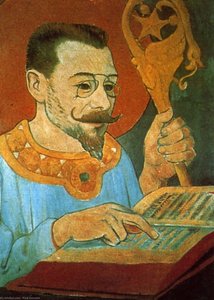
Aperçu en situation
 Partager
 Partager
 Détails
 Guide imprimable

 Télécharger
 Articles similaires
 Radiographie
 Voir le diaporama
 Statistiques
Celtic Tale
 Oil On Canvas
- WallArt
- Synthetist Painting
 1894
1894- 19th Century
 110.0 x 101.0 cm
 Dallas Museum of Art
 Afficher la suite
Reproduction à l'huile faite à la main
Huile sur toile peinte à la main, avec cadre et dimensions personnalisés, réalisée sur commande par nos artistes. ( Passer au format impression Passer au format image numérique)




P118B €10

P118H €10

P118W €10

P438Z €10

P508JH €12

P508YH €12

P805H €10

P805Z €10

P919BZ €10

P919G €10

P919XJ €10

P959ZH €10

P968JZ €12

W106C €8

W218G €10

W218JH €8

W218Y €10

W307PJ €10

W316G €10

W316PJ €8

W316Y €10

W398PJ €8

W4111J €10

W500HY €15

W500JH €15

W692G €12

W849H €8

W940BG €15

W953PJ €8




Choisissez parmi nos formats prédéfinis qui respectent les proportions originales de l’œuvre.

Saisissez la largeur et la hauteur souhaitées, pour s'adapter à votre cadre ou à votre mur. Cette œuvre est peinte à la main ; ainsi, pour un format de forme différente, l'artiste peut peindre un peu plus autour du tableau ou réduire légèrement les bords — c'est vous qui choisissez. Nous vous envoyons une maquette numérique pour approbation avant que la peinture ne commence. L'image présentée sur cette page ne reflète pas le résultat réel — seule la maquette le fait.
Après la commande, l’équipe OriginalUniqueArt.com contactera le client par e-mail pour recueillir ses instructions et lui fournira une maquette d’aperçu
Livraison dans le monde entier () en 3 à 4 semaines au lieu des 5 semaines habituelles. (24 octobre). Aucun compromis sur la qualité.

Livraison express gratuite dans le monde entier

Toile de lin de haute qualité

Assurance transport complète

Garantie de remboursement des droits de douane

Garantie de fidélité des couleurs

Garantie de retour de 100 jours (uniquement en cas de défaut)

Garantie de remboursement à 100%

Tarifs dégressifs sur quantité
 L'option verre n'est disponible que pour les dimensions inférieures à 110 cm.

Celtic Tale
Technique de reproduction
Format de la reproduction
-


Prix total final
€ 263
Paul Sérusier’s “Celtic Tale”: A Window into Synthetist Vision
Paul Sérusier's "Celtic Tale," painted in 1894, isn’t merely a depiction of a forest scene; it’s a profound exploration of light, color, and the nascent principles of abstract art. This oil on canvas, now residing within the Dallas Museum of Art, offers a captivating glimpse into the artist's innovative approach to capturing the essence of nature – a style he would later define as Synthetism. Born in Paris in 1864, Sérusier’s artistic journey was marked by a restless pursuit of new forms of expression, culminating in his groundbreaking work with the Nabis movement and his pioneering experiments with Cloisonnism.
The painting immediately draws the eye with its vibrant palette. Bold swathes of emerald green, sapphire blue, and ochre yellow dominate the composition, creating a sense of luminous intensity. These colors aren’t applied realistically; instead, Sérusier employs them in a flattened, almost geometric manner – a hallmark of Synthetism. He deliberately rejects traditional perspective, opting for simplified forms and strong contours that delineate shapes rather than mimicking their three-dimensional appearance. This technique, reminiscent of the decorative art of cloisonné enamelwork (hence “Cloisonnism”), creates an arresting visual effect, pulling the viewer into the heart of the scene.
The Spirit of Pont-Aven: Synthetism and its Roots
Sérusier’s artistic evolution was profoundly shaped by his summer sojourn in 1888 to Pont-Aven, a small village in Brittany. There, he encountered Paul Gauguin, who became a mentor and introduced him to the principles of Synthetism. Gauguin encouraged Sérusier to abandon academic realism and instead focus on capturing the *feeling* of a subject – its essence rather than its literal representation. This shift is powerfully evident in "Celtic Tale," where the forest itself becomes a symbolic entity, imbued with an almost mystical quality.
The painting’s composition echoes the work of Seurat and Signac, key figures in Pointillism and Neo-Impressionism, both movements that influenced Sérusier's development. However, unlike their meticulous application of tiny dots of color, Sérusier utilizes broader brushstrokes and bolder blocks of pigment to achieve a similar effect – creating an impression of light and atmosphere through the manipulation of color itself. The figures within the scene are deliberately simplified, almost dissolving into the surrounding landscape, further emphasizing the painting’s abstract qualities.
Symbolism Within the Scene: Nature, Community, and Mystery
Beyond its formal innovations, “Celtic Tale” is rich in symbolic meaning. The gathering of individuals amidst the forest evokes a sense of community and shared experience – a celebration of life and connection with nature. The two dogs present add to this feeling of warmth and conviviality. However, there’s also an underlying current of mystery and perhaps even melancholy. The cloaked figures, their faces obscured, suggest a ritualistic gathering, hinting at ancient Celtic traditions and the enduring power of myth.
The dappled sunlight filtering through the trees creates a sense of ethereal beauty, while the dark, rocky outcrop in the background provides a stark contrast, representing both obstacles and hidden depths. The painting’s overall mood is one of serene contemplation – an invitation to lose oneself in the beauty of the natural world and reflect on its timeless mysteries. It's a testament to Sérusier's ability to translate complex emotions and ideas into a visually arresting and deeply resonant work of art.
A Legacy of Innovation: Paul Sérusier’s Enduring Influence
Paul Sérusier’s “Celtic Tale” stands as a pivotal work in the history of modern art. It represents a crucial step towards abstraction, demonstrating the power of color and form to convey emotion and meaning independently of representational accuracy. His pioneering use of Synthetism paved the way for subsequent movements such as Fauvism and Cubism, solidifying his place as one of the most important figures in the development of 20th-century art. Reproductions of this captivating painting continue to inspire artists and collectors alike, offering a window into the visionary world of Paul Sérusier.
Questions et réponses
Quelle technique et quel style caractérisent «Celtic Tale» de Paul Sérusier ?
« Celtic Tale » est réalisé en Oil On Canvas, dans le style Synthetist Painting.
Quelle technique a été utilisée pour « Celtic Tale » et quand a-t-elle été créée ?
« Celtic Tale » a été créé en 1894 avec la technique du Oil On Canvas. Le matériau et la date décrivent comment et quand l'original a été réalisé.
Quelle émotion «Celtic Tale» de Paul Sérusier exprime-t-il au sein du mouvement Synthetist Painting ?
L'émotion Reflective de « Celtic Tale » accompagne son style Synthetist Painting.
Biographie de l'artiste
Premières années et formation
Louis-Paul-Henri Sérusier, plus connu sous le nom de Paul Sérusier, est né à Paris le 9 novembre 1864. Il a étudié à l'Académie Julian dans les années 1880 où il devint moniteur. Cette période marque le début de son parcours artistique qui le mènera à être un pionnier de l’art abstrait et à inspirer le mouvement d'avant-garde des Nabis, du synthétisme et du cloisonnisme.Carrière Artistique
Au cours de l'été 1888, Sérusier se rendit à Pont-Aven où il rejoignit un petit groupe d’artistes autour de Paul Gauguin. Sous la supervision étroite de Gauguin, Sérusier peignit "Le Talisman", un exercice extrême en cloisonnisme qui approchait l'abstraction pure. Cette œuvre mettait en valeur son style innovant et sa volonté d'expérimenter de nouvelles techniques. En tant que peintre post-impressionniste, Sérusier faisait partie du groupe Les Nabis, aux côtés de Pierre Bonnard, Édouard Vuillard et Maurice Denis. Bien qu’il ne soit pas aussi largement reconnu que certains de ses pairs, ses contributions au développement de l'art abstrait sont indéniables.Œuvres Notables et Héritage
Parmi les œuvres notables de Sérusier, on peut citer :- L'Averse (1893), Musée d’Orsay, Paris
- Portrait de Paul Ranson (1890), Musée d’Orsay, Paris
- Mélancolie (1890)
- Les Mangeurs de Serpents (1894), Muzeum Narodowe, Varsovie
Mouvement Artistique et Influence
Le travail de Sérusier a été influencé par le cloisonnisme, un style caractérisé par des formes audacieuses et plates séparées par des contours sombres. Ce mouvement, qui est apparu à la fin du XIXe siècle, a joué un rôle important dans le développement de l'art moderne.- Explorez davantage le cloisonnisme : le mouvement artistique du cloisonnisme
- Découvrez l'œuvre de Sérusier : Paul Sérusier | OriginalUniqueArt.com
- Apprenez à connaître le mouvement des Nabis : le mouvement des Nabis
- Paul Sérusier était un peintre français qui a ouvert la voie à l'art abstrait et inspiré le mouvement des Nabis.
- Il a étudié à l'Académie Julian puis a enseigné à l'Académie Ranson.
- Le travail de Sérusier a été influencé par le cloisonnisme, un style caractérisé par des formes audacieuses et plates.

Paul Sérusier
1864 - 1927 , France
En bref
- Artistes Influents:
- Paul Gauguin
- Émile Bernard
- Date De Décès: 7 octobre 1927
- Date De Naissance: 9 novembre 1864
- Influences Artistiques:
- Cloisonnisme
- Synthetisme
- Lieu De Naissance: Paris, France
- Mouvement Artistique: Post-impressionnisme, Nabi
- Nationalité: Française
- Nom Complet: Paul Sérusier
- Œuvres Notables:
- L'Averse (1893)
- Portrait de Paul Ranson (1890)
- Le Talisman (1888)
Articles connexes
Au-Delà de l'Impressionnisme : Exploration des Profondeurs Émotionnelles de la Peinture Postimpressionniste
Explorez les profondeurs émotionnelles du postimpressionnisme avec OriginalUniqueArt. Découvrez Cézanne, Van Gogh, Gauguin et l'évolution de l'art moderne. Reproductions d'exception et expertise pour collectionneurs.
Paul Klee : Les 25 Œuvres Maîtresses d'un Génie de la Couleur | OriginalUniqueArt
Plongez dans l'univers coloré de Paul Klee ! Découvrez les 25 œuvres maîtresses du peintre suisse, figures clés de l'art abstrait et du Bauhaus. Inspirez votre décoration intérieure avec OriginalUniqueArt.com – reproductions de qualité muséale & collection exclusive.
Paul Sérusier: Pioneering Synthetism & The Nabis’ Symbolic Revolution
Discover Paul Sérusier's pivotal role in the Nabis movement & the birth of Synthetism. Explore 'The Talisman,' his influence on modern art, and a deeper understanding of this symbolic revolution. Expert analysis & insights.

Paul Cézanne : Les 25 Œuvres Maîtresses d'un Génie Révolutionnaire | OriginalUniqueArt
Plongez dans l'univers de Paul Cézanne avec les 25 œuvres incontournables du maître post-impressionniste. Découvrez l'histoire, la technique et l'émotion derrière ses tableaux iconiques comme 'Les Baigneuses' ou 'Mont Sainte-Victoire'. Reproductions d'art haute qualité sur OriginalUniqueArt.com.

Impressionnisme : Top 10 des Œuvres Incontournables pour une Décoration Raffinée
Plongez dans l'univers vibrant de l'impressionnisme avec notre sélection des 10 œuvres les plus emblématiques : Monet, Renoir, Degas… Découvrez l'histoire et la magie de ces chefs-d'œuvre. Reproductions d'art de qualité muséale sur OriginalUniqueArt.com