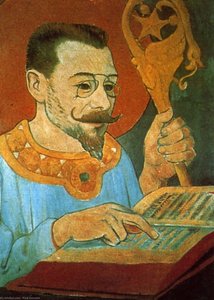
Aperçu en situation
 Partager
 Partager
 Détails
 Guide imprimable

 Télécharger
 Articles similaires
 Radiographie
 Voir le diaporama
 Statistiques
Avenue de Neuilly
 Oil On Panel
- Post-Impressionism
 19th Century
 51.0 x 65.0 cm
 Afficher la suite
Reproduction à l'huile faite à la main
Huile sur toile peinte à la main, avec cadre et dimensions personnalisés, réalisée sur commande par nos artistes. ( Passer au format impression Passer au format image numérique)




P118B €10

P118H €10

P118W €10

P438Z €10

P508JH €12

P508YH €12

P805H €10

P805Z €10

P919BZ €10

P919G €10

P919XJ €10

P959ZH €10

P968JZ €12

W106C €8

W218G €10

W218JH €8

W218Y €10

W307PJ €10

W316G €10

W316PJ €8

W316Y €10

W398PJ €8

W4111J €10

W500HY €15

W500JH €15

W692G €12

W849H €8

W940BG €15

W953PJ €8




Choisissez parmi nos formats prédéfinis qui respectent les proportions originales de l’œuvre.

Saisissez la largeur et la hauteur souhaitées, pour s'adapter à votre cadre ou à votre mur. Cette œuvre est peinte à la main ; ainsi, pour un format de forme différente, l'artiste peut peindre un peu plus autour du tableau ou réduire légèrement les bords — c'est vous qui choisissez. Nous vous envoyons une maquette numérique pour approbation avant que la peinture ne commence. L'image présentée sur cette page ne reflète pas le résultat réel — seule la maquette le fait.
Après la commande, l’équipe OriginalUniqueArt.com contactera le client par e-mail pour recueillir ses instructions et lui fournira une maquette d’aperçu
Livraison dans le monde entier () en 3 à 4 semaines au lieu des 5 semaines habituelles. (23 octobre). Aucun compromis sur la qualité.

Livraison express gratuite dans le monde entier

Toile de lin de haute qualité

Assurance transport complète

Garantie de remboursement des droits de douane

Garantie de fidélité des couleurs

Garantie de retour de 100 jours (uniquement en cas de défaut)

Garantie de remboursement à 100%

Tarifs dégressifs sur quantité
 L'option verre n'est disponible que pour les dimensions inférieures à 110 cm.

Avenue de Neuilly
Technique de reproduction
Format de la reproduction
-


Prix total final
€ 264
A Luminous Journey Through Parisian Life
To gaze upon Paul Sérusier's Avenue de Neuilly is to step directly into a sun-drenched moment of late nineteenth-century Paris, filtered through the vibrant lens of Post-Impressionism. This painting is far more than a mere depiction of an avenue; it is an immersion into atmosphere, energy, and the burgeoning spirit of modern art. The scene unfolds with remarkable vitality, capturing the rhythm of daily life—the gentle passage of horse-drawn carriages mingling with the purposeful stride of pedestrians. From the warm wash of yellows and oranges that seem to emanate from the very cobblestones, one feels the palpable warmth of a low sun casting long shadows across the urban expanse.
The Brushwork of Modern Vision
Technically, the work is a masterclass in expressive application. Sérusier’s visible brushstrokes are not incidental; they are integral to the painting's narrative texture. They lend a palpable physicality to the scene, allowing the viewer to sense the impasto and the energy with which the paint was laid down. This textural quality is a hallmark of the Post-Impressionist movement, signaling a shift where the act of painting itself became as important as the subject matter. The foliage lining the avenue, rendered with spirited dabs of color, seems almost alive, vibrating with captured light and shadow.
Echoes of Symbolism and Influence
As a key member of the Nabi movement, Sérusier was deeply engaged in pushing art beyond mere imitation. While the subject is recognizably urban—the architecture suggesting a grand, established Parisian thoroughfare—the emotional resonance elevates it to something symbolic. The composition guides the eye deep into the vanishing point, creating a sense of journey or destiny along the avenue. Influenced by masters like Gauguin, Sérusier imbues the scene with an inner light, suggesting that the beauty captured here is not just topographical, but deeply felt and interpreted.
Bringing Parisian Vibrancy Home
For the collector or designer seeking to infuse a space with artistic depth and historical romance, this reproduction offers unparalleled character. The combination of bold color theory, dynamic composition, and palpable texture makes it an immediate focal point. Owning a piece inspired by Avenue de Neuilly is acquiring not just art, but a tangible connection to the revolutionary spirit of early modernism—a vibrant echo of Parisian life captured forever in oil on panel.
Questions et réponses
Quelle taille de reproduction est suggérée pour «Avenue de Neuilly» de Paul Sérusier ?
Une reproduction en Medium est suggérée pour «Avenue de Neuilly» de Paul Sérusier. Le format peut être ajusté tout en conservant les proportions.
À quel point la palette de "Avenue de Neuilly" est-elle saturée ?
«Avenue de Neuilly» de Paul Sérusier est présenté avec une saturation de Clear Color Presence.
Est-ce que Paul Sérusier, créateur de « Avenue de Neuilly », est connu sous d'autres noms ?
Paul Sérusier apparaît sous les noms alternatifs Louis-Paul-Henri Sérusier.
Biographie de l'artiste
Premières années et formation
Louis-Paul-Henri Sérusier, plus connu sous le nom de Paul Sérusier, est né à Paris le 9 novembre 1864. Il a étudié à l'Académie Julian dans les années 1880 où il devint moniteur. Cette période marque le début de son parcours artistique qui le mènera à être un pionnier de l’art abstrait et à inspirer le mouvement d'avant-garde des Nabis, du synthétisme et du cloisonnisme.Carrière Artistique
Au cours de l'été 1888, Sérusier se rendit à Pont-Aven où il rejoignit un petit groupe d’artistes autour de Paul Gauguin. Sous la supervision étroite de Gauguin, Sérusier peignit "Le Talisman", un exercice extrême en cloisonnisme qui approchait l'abstraction pure. Cette œuvre mettait en valeur son style innovant et sa volonté d'expérimenter de nouvelles techniques. En tant que peintre post-impressionniste, Sérusier faisait partie du groupe Les Nabis, aux côtés de Pierre Bonnard, Édouard Vuillard et Maurice Denis. Bien qu’il ne soit pas aussi largement reconnu que certains de ses pairs, ses contributions au développement de l'art abstrait sont indéniables.Œuvres Notables et Héritage
Parmi les œuvres notables de Sérusier, on peut citer :- L'Averse (1893), Musée d’Orsay, Paris
- Portrait de Paul Ranson (1890), Musée d’Orsay, Paris
- Mélancolie (1890)
- Les Mangeurs de Serpents (1894), Muzeum Narodowe, Varsovie
Mouvement Artistique et Influence
Le travail de Sérusier a été influencé par le cloisonnisme, un style caractérisé par des formes audacieuses et plates séparées par des contours sombres. Ce mouvement, qui est apparu à la fin du XIXe siècle, a joué un rôle important dans le développement de l'art moderne.- Explorez davantage le cloisonnisme : le mouvement artistique du cloisonnisme
- Découvrez l'œuvre de Sérusier : Paul Sérusier | OriginalUniqueArt.com
- Apprenez à connaître le mouvement des Nabis : le mouvement des Nabis
- Paul Sérusier était un peintre français qui a ouvert la voie à l'art abstrait et inspiré le mouvement des Nabis.
- Il a étudié à l'Académie Julian puis a enseigné à l'Académie Ranson.
- Le travail de Sérusier a été influencé par le cloisonnisme, un style caractérisé par des formes audacieuses et plates.

Paul Sérusier
1864 - 1927 , France
En bref
- Artistes Influents:
- Paul Gauguin
- Émile Bernard
- Date De Décès: 7 octobre 1927
- Date De Naissance: 9 novembre 1864
- Influences Artistiques:
- Cloisonnisme
- Synthetisme
- Lieu De Naissance: Paris, France
- Mouvement Artistique: Post-impressionnisme, Nabi
- Nationalité: Française
- Nom Complet: Paul Sérusier
- Œuvres Notables:
- L'Averse (1893)
- Portrait de Paul Ranson (1890)
- Le Talisman (1888)
Articles connexes
Paul Klee : Les 25 Œuvres Maîtresses d'un Génie de la Couleur | OriginalUniqueArt
Plongez dans l'univers coloré de Paul Klee ! Découvrez les 25 œuvres maîtresses du peintre suisse, figures clés de l'art abstrait et du Bauhaus. Inspirez votre décoration intérieure avec OriginalUniqueArt.com – reproductions de qualité muséale & collection exclusive.

Les 10 Chefs-d'œuvre Post-Impressionnistes qui ont Révolutionné l'Art |
Plongez au cœur du post-impressionnisme avec ! Découvrez les 10 chefs-d'œuvre de Van Gogh, Monet, Cézanne et autres artistes célèbres. Reproductions tableaux haute qualité pour une décoration intérieure inspirée. Explorez la collection sur

À propos de nous
Découvrez notre univers artistique ! Nous mettons l’art de renommée mondiale à portée de main grâce à une sélection pointue, des créations sur mesure et des conseils personnalisés. Apprécié des particuliers et des professionnels depuis plus de 20 ans.

Paul Cézanne : Les 25 Œuvres Maîtresses d'un Génie Révolutionnaire | OriginalUniqueArt
Plongez dans l'univers de Paul Cézanne avec les 25 œuvres incontournables du maître post-impressionniste. Découvrez l'histoire, la technique et l'émotion derrière ses tableaux iconiques comme 'Les Baigneuses' ou 'Mont Sainte-Victoire'. Reproductions d'art haute qualité sur OriginalUniqueArt.com.

Goya : 25 Chefs-d'Œuvre Inoubliables d'un Maître de l'Âme
Plongez au cœur de l'œuvre inégalable de Goya ! Découvrez 25 chefs-d’œuvre emblématiques, des portraits saisissants aux scènes dramatiques. Explorez la vie et l'art du maître espagnol avec OriginalUniqueArt.com – reproductions d'art de qualité musée et inspirations déco.