

 Aperçu en situation
 Envoyer
 Partager
 Détails de l'œuvre
 Guide
Guide

 Télécharger l'image
 Articles similaires
 Radiographie
 Diaporama
 Statistiques
Susanna ( 2)

 Lire la suite
L’œuvre d'art présentée sur cette page est protégée par le droit d'auteur, ce qui signifie que nous ne pouvons légalement créer ou vendre de reproduction identique. Cette protection est appliquée en vertu d'accords internationaux tels que la Convention de Berne et par les lois nationales, notamment celles énoncées par le Loi américaine sur le droit d'auteur - Titre 17.
Cette méthode est pleinement conforme aux réglementations sur le droit d'auteur car elle ne repose pas sur la copie ou la duplication de l'œuvre protégée. Il s'agit plutôt d'une réinterprétation créative — une nouvelle peinture qui s'inspire de l'original sans pour autant lui être identique.
Giclées et impressions d'art
Impressions giclées ou sur toile de qualité musée, avec une production rapide et des finitions au choix. ( Commander la reproduction peinte à la main Passer au format numérique)




































Choisissez parmi nos formats prédéfinis qui respectent les proportions originales de l’œuvre.

Saisissez la largeur et la hauteur souhaitées pour qu'elles s'adaptent à votre cadre ou à votre mur. Une impression peut être recadrée, mais jamais agrandie au-delà de l'image originale ; ainsi, un format de forme différente entraînera la perte d'une partie de l'image. Nous vous envoyons une maquette numérique pour approbation avant toute impression. L'image présentée sur cette page ne montre pas le recadrage réel — seule la maquette le permet.
Livraison dans le monde entier () en 2 semaines au lieu des 4/5 semaines habituelles. (26 octobre)

Livraison express gratuite dans le monde entier

Toile de lin de qualité supérieure

Assurance transport complète

Garantie de remboursement des droits de douane

Garantie de fidélité des couleurs

Politique de retour de 100 jours (uniquement en cas de défaut)

Garantie de remboursement à 100%

Offre de tarifs dégressifs
 L'option verre n'est disponible que pour les dimensions inférieures à 110 cm.

Susanna ( 2)
Giclées et impressions d'art
Format de la reproduction
-


Prix total
€ 70
The Artist and His Style
Paul Manship was a prominent figure in the Art Deco movement, known for his mythological pieces that exuded elegance and sophistication. His unique style, characterized by flowing simplicity and linear compositions, set him apart from his contemporaries. Manship's work can be found in various museums, including the American Numismatic Society and the Smithsonian American Art Museum.The Significance of Susanna (2)
The Susanna (2) sculpture is a prime example of Manship's ability to create beautiful, intricate pieces that showcase his technical skill. The use of marble as the primary material adds a sense of timelessness and luxury to the work. This piece is not only a testament to Manship's artistry but also a reflection of the cultural and artistic values of the time.- View more artworks by Paul Manship on OriginalUniqueArt.com
- Learn more about the Smithsonian American Art Museum and its collection on Wikipedia
- Discover the beauty of handmade oil painting reproductions on OriginalUniqueArt.com
The Susanna (2) sculpture is a true masterpiece that showcases the skill and artistry of Paul Manship. Its timeless beauty and elegance make it a must-see for anyone who appreciates fine art. Visit OriginalUniqueArt.com to learn more about this incredible piece and discover the beauty of handmade oil painting reproductions.
Questions et réponses
Existe-t-il un guide pour «Susanna ( 2)» de Paul Manship ?
Une page Fiche pédagogique est disponible pour «Susanna ( 2)» de Paul Manship : une fiche pédagogique imprimable sur l'œuvre, conçue pour les étudiants et un usage en classe.
L'œuvre « Susanna ( 2) » présente-t-elle des contrastes ombre et lumière marqués ?
Le contraste clair-obscur de « Susanna ( 2) » est évalué à Statement. Le contraste décrit l'intensité de la différence entre les zones claires et les zones sombres.
Quelle intensité lumineuse les couleurs de "Susanna ( 2)" semblent-elles refléter ?
Les couleurs de « Susanna ( 2) » présentent une luminance Soft Shadow.
Biographie de l'artiste
Early Life and Artistic Beginnings
Paul Howard Manship (December 25, 1885 – January 31, 1966) was born in St. Paul, Minnesota, the son of Charles H. and Mary Etta (Friend) Manship. His father, a clerk for the St. Paul gas company, instilled in him an appreciation for craftsmanship and precision—traits that would profoundly shape Manship’s artistic vision. Growing up in a family home at 304 Nelson Avenue, he developed a keen interest in art from a young age, enrolling in the St. Paul School of Art where he honed his foundational skills. This early exposure to artistic principles foreshadowed his lifelong dedication to sculpting and exploring the expressive potential of form. His formative years were marked by an unwavering commitment to mastering sculptural techniques—a pursuit that would ultimately define his career trajectory.Formal Training and Influences
Manship’s formal education solidified his artistic sensibilities, propelling him toward Philadelphia where he pursued studies at the Pennsylvania Academy of Fine Arts. There, he immersed himself in classical art history and anatomy—subjects that would become central to his sculptural practice. Notably, he studied with George Bridgman, whose anatomical drawings provided invaluable insight into human form, and modeled under Hermon Atkins MacNeil, fostering a deep understanding of sculptural modeling techniques. Recognizing the importance of broadening his artistic horizons, Manship traveled to Rome in 1909, securing a prestigious Rome Prize—a pivotal moment that exposed him to the grandeur of European art and cemented his fascination with Archaic sculpture. He was particularly captivated by classical sculpture of India, which would infuse his work with an enduring spirit of timeless beauty.Collaboration and Artistic Style
Manship’s artistic journey gained momentum through collaborations with fellow sculptors—most notably Solon Borglum, whom he assisted during the creation of Monument to Lincoln. This experience honed his technical skills and exposed him to innovative sculptural approaches. He also partnered with Gaston Lachaise and Leo Friedlander, establishing a dynamic creative environment that nurtured experimentation and stylistic evolution. Manship’s artistic style is characterized by a remarkable blend of classical influences and modernist sensibilities—a harmonious fusion reflected in his sculptures' flowing lines and simplified forms. Rejecting the Beaux-Arts movement’s rigid formalism, he championed linear compositions imbued with understated elegance, prioritizing clarity and expressive power. “I like to express movement in my figures,” he said. “It’s a fascinating problem which I’m always trying to solve.” He also noted, “I'm not especially interested in anatomy, though naturally I've studied it. And, although I approve generally of normally correct proportions, what matters is the spirit which the artist puts into his creation—the vitality, the rhythm, the emotional effect.”Major Commissions and Notable Works
Manship achieved international acclaim through monumental public commissions—most notably the Prometheus statue for Rockefeller Center in New York City—a towering testament to Art Deco’s ambition and grandeur. His sculptural prowess extended beyond architectural projects, encompassing memorials honoring veterans of both World Wars—the St. Mihiel American Cemetery and Memorial at Thiaucourt, France, and the military cemetery at Anzio, Italy—each imbued with profound symbolic resonance. Furthermore, he designed the modern rendition of New York City’s official seal, demonstrating his versatility as an artist and his ability to translate complex ideas into compelling visual representations. His sculptures embody the spirit of classical art combined with modernist innovation, reflecting a profound engagement with artistic tradition while embracing stylistic experimentation. Recognized by the American Battle Monuments Commission for his monumental works commemorating wartime sacrifice, Manship’s legacy transcends mere aesthetic achievement; he represents an unwavering devotion to craftmanship and a steadfast belief in the transformative power of art—a testament to his enduring contribution to the visual arts.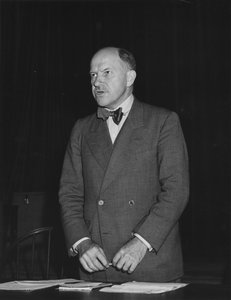
Paul Manship
1885 - 1966 , États-Unis
L'essentiel de l'artiste
- Artistic Movement Or Style: Art Déco sculpture
- Artists Who Influenced This Artist:
- George Bridgman
- Hermon Atkins MacNeil
- Date Of Birth: Décembre 25, 1885
- Date Of Death: Janvier 31, 1966
- Full Name: Paul Howard Manship
- Nationality: Américain
- Notable Artworks:
- Prometheus statue
- Monument à Lincoln
- Place Of Birth: Saint-Paul, Minnesota

