Aperçu en situation
 Envoyer
 Partager
 Détails de l'œuvre

 Télécharger
 Articles similaires
 Radiographie
 Diaporama
untitled (3729)

 Lire la suite
Reproduction à l'huile faite à la main
Huile sur toile peinte à la main, avec cadre et dimensions personnalisés, réalisée sur commande par nos artistes. ( Passer au tirage Passer à l'image)




P118B $10

P118H $10

P118W $10

P438Z $10

P508JH $12

P508YH $12

P805H $10

P805Z $10

P919BZ $10

P919G $10

P919XJ $10

P959ZH $10

P968JZ $12

W106C $8

W218G $10

W218JH $8

W218Y $10

W307PJ $10

W316G $10

W316PJ $8

W316Y $10

W398PJ $8

W4111J $10

W500HY $15

W500JH $15

W692G $12

W849H $8

W940BG $15

W953PJ $8




Choisissez parmi nos formats prédéfinis qui respectent les proportions originales de l’œuvre.

Vous pouvez saisir vos propres dimensions pour l'adapter à un cadre ou à un espace spécifique. Si la taille sélectionnée ne correspond pas aux proportions de l'image d'origine, nous recadrerons l'œuvre ou prolongerons la peinture avec des éléments peints à la main supplémentaires. Une maquette numérique vous sera envoyée pour approbation avant le début de la production.
Veuillez noter que l'aperçu à l'écran ne reflète pas le recadrage ou l'extension réels. Seule la maquette montrera fidèlement la composition finale.
Bien que des tailles personnalisées soient disponibles, nous vous recommandons de sélectionner une dimension dans la liste prédéfinie afin de préserver les proportions d'origine.
Après la commande, l’équipe OriginalUniqueArt.com contactera le client par e-mail pour recueillir ses instructions et lui fournira une maquette d’aperçu
Livraison dans le monde entier () en 3 à 4 semaines au lieu des 5 semaines habituelles. (7 août). Aucun compromis sur la qualité.

Livraison express gratuite dans le monde entier

Toile de lin de qualité supérieure

Assurance transport complète

Garantie de remboursement des droits de douane

Garantie de fidélité des couleurs

Politique de retour de 60 jours (uniquement en cas de défaut)

Garantie de remboursement à 100%

Offre de tarifs dégressifs
 L'option verre n'est disponible que pour les dimensions inférieures à 110 cm.

untitled (3729)
Technique de reproduction
Format de la reproduction
-


Prix total
$ 300
Description de l'œuvre
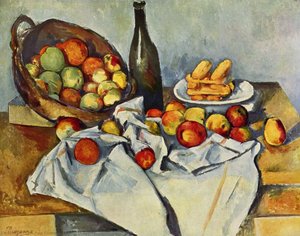
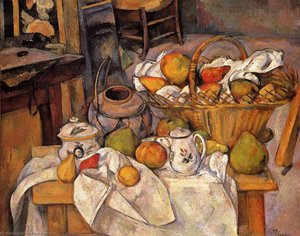
A Window Into Provence: Paul Cézanne’s *Rideau, Cruchon et Compotier*
Paul Cézanne's 1893 painting, *Rideau, Cruchon et Compotier* – “Curtain, Jug and Fruit Bowl” – isn’t merely a still life; it’s a meticulously constructed meditation on perception, form, and the very essence of seeing. More than just a depiction of everyday objects arranged on a table, this work represents a pivotal moment in art history, bridging the fleeting impressions of Impressionism with the nascent geometric explorations that would define Cubism. It's a piece that invites prolonged contemplation, revealing layers of meaning within its deceptively simple composition.
Cézanne’s approach to painting was revolutionary for his time. He rejected the traditional pursuit of capturing an immediate visual impression, instead focusing on distilling objects down to their fundamental shapes and structures. This is strikingly evident in *Rideau, Cruchon et Compotier*. The jug, the bowl, the curtain – each element isn’t rendered with photographic accuracy but rather as a series of interlocking planes and angles, suggesting depth and volume through careful manipulation of line and color. Notice how the curves of the jug mimic the contours of the fruit bowl, creating a visual harmony that transcends mere representation. This deliberate simplification wasn't about reducing reality; it was about revealing its underlying geometry – a principle he relentlessly pursued throughout his career.
The Painter’s Studio and the Pursuit of Harmony
Painted in Cézanne’s studio in Auvers-sur-Oise, just outside Paris, *Rideau, Cruchon et Compotier* offers a glimpse into the artist's working environment. The objects – a simple earthenware jug, a fruit bowl brimming with apples and oranges, and a draped curtain – were commonplace items, yet Cézanne imbued them with an extraordinary sense of significance. He often used his own possessions as subjects, creating a personal vocabulary of forms and colors that reflected his unique vision. The arrangement itself feels deliberately staged, almost theatrical, suggesting a carefully considered composition rather than a spontaneous snapshot.
Cézanne’s meticulous attention to detail is remarkable. The brushstrokes are visible, yet they don't create a sense of texture or surface quality. Instead, they contribute to the overall structure and form of the objects, acting as building blocks that define their shape and volume. The use of color is equally deliberate – muted tones dominate, creating a sense of stillness and tranquility. The subtle variations in hue and value suggest light and shadow, but without resorting to traditional shading techniques. This restrained palette allows the forms themselves to take center stage.
Symbolism and Emotional Resonance
While Cézanne avoided overt symbolism, *Rideau, Cruchon et Compotier* is rich with subtle visual cues that invite interpretation. The curtain, for example, can be seen as a barrier between the viewer and the objects within, creating a sense of distance and mystery. The jug, often associated with abundance and nourishment, hints at themes of life and sustenance. And the fruit itself – ripe and luscious – evokes feelings of pleasure and indulgence.
Beyond its formal qualities, *Rideau, Cruchon et Compotier* possesses a profound emotional resonance. It’s a painting that speaks to the quiet beauty of everyday objects, inviting us to slow down and appreciate the simple pleasures of life. Cézanne's masterful manipulation of form and color creates a sense of harmony and balance, suggesting a deep connection between the artist and his subject matter. The painting is not just about depicting a still life; it’s about capturing a feeling – a moment of contemplation and serenity.
A Legacy of Innovation
*Rideau, Cruchon et Compotier* stands as a crucial link in the chain that led to modern art. Cézanne's radical approach to painting—his emphasis on form, structure, and geometric abstraction—inspired generations of artists, including Picasso and Braque, who would go on to develop Cubism. This work demonstrates his pioneering spirit, pushing beyond the limitations of traditional representation and paving the way for a new era in art history. Reproductions of this iconic piece offer a tangible connection to Cézanne’s revolutionary vision, allowing viewers to experience firsthand the power and beauty of his groundbreaking style.
Biographie de l'artiste
jeune vie et influences
paul cézanne, peintre français post-impressionniste, est né le 19 janvier 1839 à Aix-en-Provence, en France. Sa jeune vie a été marquée par un fort attachement à sa famille, dont l'entreprise bancaire lui assurait une sécurité financière. Cela lui a permis de se consacrer à ses aspirations artistiques sans être entravé par des soucis financiers. les nabis, néo-impressionnisme et symbolisme ont influencé le travail de Cézanne au début, qui se caractérisait par son accent sur les formes géométriques et une palette de couleurs limitée. Son intérêt pour les œuvres de paul gauguin et georges seurat a renforcé son style post-impressionniste.style artistique et techniques
L'utilisation innovante de Cézanne des plans de couleurs et de petits coups de pinceau répétitifs a créé des champs complexes qui exprimaient son étude approfondie des sujets. Son approche souvent exploratoire de l'art a conduit au développement d'une nouvelle langue picturale, mettant l'accent sur la structure sous-jacente des objets dans une composition.- caractéristiques principales :
- formes géométriques et façonnage
- palette de couleurs réduite
- importance de l'essence constructive du monde physique
- perspective multiple et simultanéité
- œuvres influentes :
- le plan d'eau de Jas de Bouffan (1880)
- portrait d’Émile Zola (1866)
- forêt (1892)
- musées présentant l'œuvre de Cézanne :
- le musée Marmottan Monet à Paris, en France
- le musée des beaux-arts à Houston, aux États-Unis
héritage et impact
Le travail pionnier de Cézanne en post-impressionnisme a ouvert la voie à divers mouvements avant-gardistes, notamment le cubisme, le fauvisme et le surréalisme. Son influence se retrouve dans les œuvres de pablo picasso, henri matisse et georges braque. L'héritage de Cézanne continue d’inspirer les artistes et les amateurs d’art, consolidant ainsi sa place en tant que figure centrale de l’histoire de l’art moderne.- mouvements artistiques connexes :
- consultez les œuvres de Cézanne :
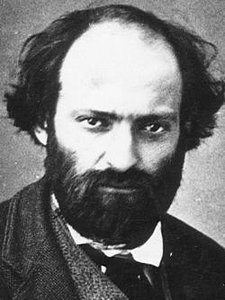
Paul Cézanne
1839 - 1906 , France
L'essentiel de l'artiste
- Artistes Influents:
- Paul Gauguin
- Georges Seurat
- Date De Décès: 22 octobre 1906
- Date De Naissance: 19 janvier 1839
- Influences Artistiques:
- Pablo Picasso
- Henri Matisse
- Georges Braque
- Lieu De Naissance: Aix-en-Provence, France
- Mouvement Artistique: Post-impressionnisme
- Nationalité: Français
- Nom Complet: Paul Cézanne
- Œuvres Notables:
- Le Plan d'eau à Jas de Bouffan
- Portrait d’Émile Zola
- Forêt
- Mont Sainte-Victoire
Articles connexes

Les 10 Chefs-d'œuvre Post-Impressionnistes qui ont Révolutionné l'Art |
Plongez au cœur du post-impressionnisme avec ! Découvrez les 10 chefs-d'œuvre de Van Gogh, Monet, Cézanne et autres artistes célèbres. Reproductions tableaux haute qualité pour une décoration intérieure inspirée. Explorez la collection sur

The Bountiful Still Life: Symbolism & Artistic Representation of Fruit Across Art History
Explore the rich history of still life painting & the symbolism of fruit across art movements. Discover masterpieces from Caravaggio to Cézanne with OriginalUniqueArt – expert guidance & museum-quality reproductions.
The Enduring Appeal of Still Life: A Historical & Contemporary Exploration
Explore the rich history & symbolism of still life painting with OriginalUniqueArt. Discover masterpieces from the Dutch Golden Age, learn about vanitas art, and find expert guidance for collecting timeless artworks.
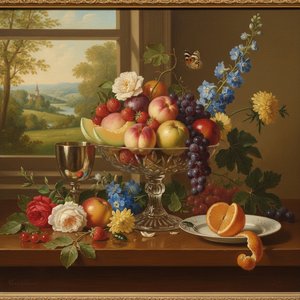
Severin Roesen: Evoking National Identity Through American Still Life Painting
Explore the captivating world of Severin Roesen, a major American still life painter influenced by Dutch masters. Discover his lush compositions and the symbolism within his art – a window into 19th-century America.

Paul Cézanne : Les 25 Œuvres Maîtresses d'un Génie Révolutionnaire | OriginalUniqueArt
Plongez dans l'univers de Paul Cézanne avec les 25 œuvres incontournables du maître post-impressionniste. Découvrez l'histoire, la technique et l'émotion derrière ses tableaux iconiques comme 'Les Baigneuses' ou 'Mont Sainte-Victoire'. Reproductions d'art haute qualité sur OriginalUniqueArt.com.