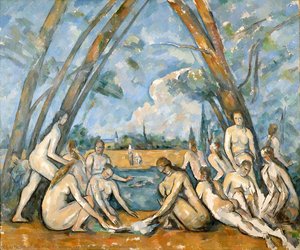
Aperçu en situation
 Envoyer
 Partager
 Détails de l'œuvre
 Guide
Guide

 Télécharger l'image
 Articles similaires
 Radiographie
 Diaporama
 Questions et réponses
 Statistiques
Trees and houses

- 54.0 x 73.0 cm


 Lire la suite
Giclées et impressions d'art
Impressions giclées ou sur toile de qualité musée, avec une production rapide et des finitions au choix. ( Commander la reproduction peinte à la main Passer au format numérique)




P118B €10

P118H €10

P118W €10

P438Z €10

P508JH €12

P508YH €12

P805H €10

P805Z €10

P919BZ €10

P919G €10

P919XJ €10

P959ZH €10

P968JZ €12

W106C €8

W218G €10

W218JH €8

W218Y €10

W307PJ €10

W316G €10

W316PJ €8

W316Y €10

W398PJ €8

W4111J €10

W500HY €15

W500JH €15

W692G €12

W849H €8

W940BG €15

W953PJ €8




Choisissez parmi nos formats prédéfinis qui respectent les proportions originales de l’œuvre.

Saisissez la largeur et la hauteur souhaitées pour qu'elles s'adaptent à votre cadre ou à votre mur. Une impression peut être recadrée, mais jamais agrandie au-delà de l'image originale ; ainsi, un format de forme différente entraînera la perte d'une partie de l'image. Nous vous envoyons une maquette numérique pour approbation avant toute impression. L'image présentée sur cette page ne montre pas le recadrage réel — seule la maquette le permet.
Livraison dans le monde entier () en 2 semaines au lieu des 4/5 semaines habituelles. (7 novembre)

Livraison express gratuite dans le monde entier

Toile de lin de qualité supérieure

Assurance transport complète

Garantie de remboursement des droits de douane

Garantie de fidélité des couleurs

Politique de retour de 100 jours (uniquement en cas de défaut)

Garantie de remboursement à 100%

Offre de tarifs dégressifs
 L'option verre n'est disponible que pour les dimensions inférieures à 110 cm.

Trees and houses
Giclées et impressions d'art
Format de la reproduction
-


Prix total
€ 72
Trees and Houses: A Symphony of Rural Tranquility
Paul Cézanne’s “Trees and Houses,” completed in 1886, transcends mere depiction; it embodies the very essence of Post-Impressionist philosophy—a deliberate rejection of fleeting optical impressions in favor of capturing underlying structure and emotion. This painting isn't simply a landscape; it’s an exploration of perception itself, reflecting Cézanne’s profound conviction that art should strive to represent not what we see but how we *feel* about what we see.Composition and Technique: Embracing Geometric Harmony
The artwork’s masterful composition immediately draws the eye inward. Cézanne eschews traditional perspective, opting instead for a flattened space where planes intersect and overlap—a technique characteristic of his groundbreaking approach to painting. Several trees dominate the scene, their branches reaching upwards with assertive curves that create a palpable sense of depth despite the absence of linear recession. These branches aren’t merely decorative; they are meticulously rendered to convey solidity and resistance, mirroring Cézanne's fascination with geological forms. Behind these monumental trees stand two houses—one positioned on the left side of the canvas and another slightly further to its center—creating a harmonious juxtaposition between organic and constructed elements. Cézanne achieves this balance through careful layering of paint, applying thin glazes over thicker impasto strokes to build up texture and luminosity. The resulting surface is rich with visual information, inviting contemplation and stimulating the imagination.Historical Context: Bridging Impressionism and Cubism
“Trees and Houses” stands as a pivotal moment in Cézanne’s artistic evolution—a decisive step away from Impressionistic idealism toward the more assertive geometric explorations that would foreshadow Cubism. Cézanne was reacting against the limitations of Impressionism's preoccupation with capturing atmospheric effects, arguing instead for a more fundamental understanding of visual reality. He sought to distill nature into its essential forms, prioritizing structure and solidity over fleeting color variations. This approach aligns perfectly with the burgeoning intellectual currents of the time—particularly Nietzsche’s philosophy of perspectivism—which questioned accepted notions of truth and championed subjective experience as paramount. The painting's placement in the Musée de l'Orangerie underscores its significance within the broader canon of Impressionist and Post-Impressionist art, alongside masterpieces by Monet and Matisse.Symbolism: Capturing the Spirit of Provence
Beyond its formal innovations, “Trees and Houses” resonates with deeper symbolic meanings rooted in Cézanne’s Provençal homeland. The trees represent resilience and permanence—symbols of enduring life against the backdrop of human endeavor. The houses symbolize domesticity and stability, yet they are rendered as simplified geometric shapes, subtly undermining their conventional associations. Cézanne's deliberate use of color—primarily yellows and greens—evokes the vibrancy of the Mediterranean landscape and imbues the scene with a feeling of tranquil serenity. It’s a visual meditation on the relationship between humanity and nature, suggesting that true beauty lies in recognizing the underlying order and harmony of both realms.Legacy: An Influence That Endures
“Trees and Houses” cemented Cézanne's reputation as an innovator who fundamentally reshaped the trajectory of modern art. His pioneering techniques—particularly his use of impasto and planar geometry—inspired generations of artists, including Picasso and Matisse, who would subsequently develop Cubism and other radical stylistic developments. More broadly, Cézanne’s insistence on capturing inner feeling alongside outward appearance continues to resonate with contemporary artists and viewers alike, reminding us that art's true power resides in its ability to communicate profound truths about the human condition.Questions et réponses
Combien de personnes consultent « Trees and houses » ?
La page Statistiques de «Trees and houses» de Paul Cézanne présente les statistiques de visites publiques : le nombre de visites mensuelles de cette œuvre, une comparaison avec les œuvres les plus consultées de l'artiste, ainsi que la provenance des visiteurs.
Quelle est la place de «Trees and houses» de Paul Cézanne dans l'histoire de l'art ?
Historiquement, « Trees and houses » est une œuvre Post-Impressionism de la grande époque Époque moderne.
En quelle année "Trees and houses" a-t-il été réalisé ?
«Trees and houses» de Paul Cézanne a été créé en 1886.
Biographie de l'artiste
jeune vie et influences
paul cézanne, peintre français post-impressionniste, est né le 19 janvier 1839 à Aix-en-Provence, en France. Sa jeune vie a été marquée par un fort attachement à sa famille, dont l'entreprise bancaire lui assurait une sécurité financière. Cela lui a permis de se consacrer à ses aspirations artistiques sans être entravé par des soucis financiers. les nabis, néo-impressionnisme et symbolisme ont influencé le travail de Cézanne au début, qui se caractérisait par son accent sur les formes géométriques et une palette de couleurs limitée. Son intérêt pour les œuvres de paul gauguin et georges seurat a renforcé son style post-impressionniste.style artistique et techniques
L'utilisation innovante de Cézanne des plans de couleurs et de petits coups de pinceau répétitifs a créé des champs complexes qui exprimaient son étude approfondie des sujets. Son approche souvent exploratoire de l'art a conduit au développement d'une nouvelle langue picturale, mettant l'accent sur la structure sous-jacente des objets dans une composition.- caractéristiques principales :
- formes géométriques et façonnage
- palette de couleurs réduite
- importance de l'essence constructive du monde physique
- perspective multiple et simultanéité
- œuvres influentes :
- le plan d'eau de Jas de Bouffan (1880)
- portrait d’Émile Zola (1866)
- forêt (1892)
- musées présentant l'œuvre de Cézanne :
- le musée Marmottan Monet à Paris, en France
- le musée des beaux-arts à Houston, aux États-Unis
héritage et impact
Le travail pionnier de Cézanne en post-impressionnisme a ouvert la voie à divers mouvements avant-gardistes, notamment le cubisme, le fauvisme et le surréalisme. Son influence se retrouve dans les œuvres de pablo picasso, henri matisse et georges braque. L'héritage de Cézanne continue d’inspirer les artistes et les amateurs d’art, consolidant ainsi sa place en tant que figure centrale de l’histoire de l’art moderne.- mouvements artistiques connexes :
- consultez les œuvres de Cézanne :
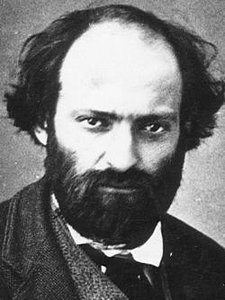
Paul Cézanne
1839 - 1906 , France
L'essentiel de l'artiste
- Artistes Influents:
- Paul Gauguin
- Georges Seurat
- Date De Décès: 22 octobre 1906
- Date De Naissance: 19 janvier 1839
- Influences Artistiques:
- Pablo Picasso
- Henri Matisse
- Georges Braque
- Lieu De Naissance: Aix-en-Provence, France
- Mouvement Artistique: Post-impressionnisme
- Nationalité: Français
- Nom Complet: Paul Cézanne
- Œuvres Notables:
- Le Plan d'eau à Jas de Bouffan
- Portrait d’Émile Zola
- Forêt
- Mont Sainte-Victoire
Articles connexes

Impressionnisme : Top 10 des Œuvres Incontournables pour une Décoration Raffinée
Plongez dans l'univers vibrant de l'impressionnisme avec notre sélection des 10 œuvres les plus emblématiques : Monet, Renoir, Degas… Découvrez l'histoire et la magie de ces chefs-d'œuvre. Reproductions d'art de qualité muséale sur OriginalUniqueArt.com

Les 10 Chefs-d'œuvre Impressionnistes qui ont Révolutionné le Paysage
Plongez dans l'univers vibrant de l'impressionnisme ! Découvrez les 10 chefs-d'œuvre de Monet, Renoir et autres maîtres qui ont révolutionné le paysage. Inspirez votre décoration intérieure avec OriginalUniqueArt.com : reproductions tableaux de qualité muséale.

Les 25 chefs-d'œuvre de John Constable : l'âme du paysage anglais
Explorez les 25 chefs-d'œuvre de John Constable et l'âme du romantisme anglais. Découvrez toute la collection sur OriginalUniqueArt.com.

Les 25 chefs-d'œuvre de Paul Cézanne : l'architecte de la forme
Explorez les 25 chefs-d'œuvre de Paul Cézanne et l'essence du postimpressionnisme. Découvrez ces trésors sur OriginalUniqueArt.com.
Au-Delà de l'Impressionnisme : Exploration des Profondeurs Émotionnelles de la Peinture Postimpressionniste
Explorez les profondeurs émotionnelles du postimpressionnisme avec OriginalUniqueArt. Découvrez Cézanne, Van Gogh, Gauguin et l'évolution de l'art moderne. Reproductions d'exception et expertise pour collectionneurs.