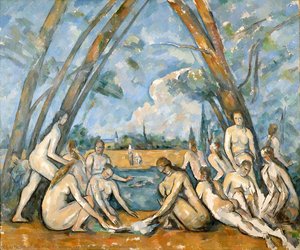
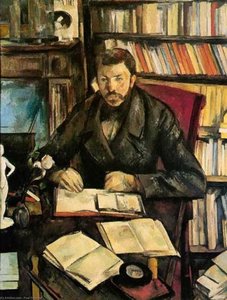
Aperçu en situation
 Partager
 Partager
 Détails
 Guide imprimable

 Télécharger
 Articles similaires
 Radiographie
 Voir le diaporama
 Statistiques
Still Life


 Afficher la suite
Giclées et impressions d'art
Impressions giclées ou sur toile de qualité musée, avec une production rapide et des finitions au choix. ( Acheter la peinture faite à la main Passer au format image numérique)




P118B €10

P118H €10

P118W €10

P438Z €10

P508JH €12

P508YH €12

P805H €10

P805Z €10

P919BZ €10

P919G €10

P919XJ €10

P959ZH €10

P968JZ €12

W106C €8

W218G €10

W218JH €8

W218Y €10

W307PJ €10

W316G €10

W316PJ €8

W316Y €10

W398PJ €8

W4111J €10

W500HY €15

W500JH €15

W692G €12

W849H €8

W940BG €15

W953PJ €8




Choisissez parmi nos formats prédéfinis qui respectent les proportions originales de l’œuvre.

Saisissez la largeur et la hauteur souhaitées pour qu'elles s'adaptent à votre cadre ou à votre mur. Une impression ne peut être que découpée, elle ne peut jamais être agrandie au-delà de l'image originale ; ainsi, un format de forme différente entraînera la perte d'une partie de l'image. Nous vous envoyons une maquette numérique pour approbation avant toute impression. L'image présentée sur cette page ne montre pas le recadrage réel — seule la maquette le permet.
Livraison dans le monde entier () en 2 semaines au lieu des 4/5 semaines habituelles. (23 octobre)

Livraison express gratuite dans le monde entier

Toile de lin de haute qualité

Assurance transport complète

Garantie de remboursement des droits de douane

Garantie de fidélité des couleurs

Garantie de retour de 100 jours (uniquement en cas de défaut)

Garantie de remboursement à 100%

Tarifs dégressifs sur quantité
 L'option verre n'est disponible que pour les dimensions inférieures à 110 cm.

Still Life
Giclées et impressions d'art
Format de la reproduction
-


Prix total final
€ 70
Paul Cézanne: Still Life – A Window Into Modern Art
Paul Cézanne’s Still Life isn't merely a depiction of fruit and vessels; it’s a cornerstone of artistic revolution—a deliberate dismantling of Impressionistic conventions to forge the path toward Cubism and beyond. Painted in 1877 and currently residing within the hallowed halls of the Metropolitan Museum of Art, this artwork transcends its visual elements to embody Cézanne's profound philosophical engagement with art itself. He wasn’t simply trying to represent what he saw; he was striving to capture the essence of form—the underlying structure that defines an object’s presence in space.The painting immediately confronts us with Cézanne’s signature technique: planar abstraction. Rather than painstakingly rendering individual contours and textures, Cézanne employs overlapping planes of color—primarily shades of green, brown, and red—to build up complex fields of visual information. This method prioritizes geometric simplification over realistic representation, mirroring Cézanne's belief that art should strive for permanence and universality. Notice how the apple’s form isn’t defined by shading; instead, it exists as a solid mass of color, subtly modulated to convey its volume.
Analyzing Cézanne’s Style and Technique
- Plane Shapes: Cézanne's method abandons traditional perspective, favoring flattened planes that suggest depth rather than accurately portraying spatial recession.
- Small Brushstrokes: The artist utilizes numerous tiny brushstrokes—often applied in a rhythmic manner—to create textured surfaces and build up tonal variations.
- Color Modulation: Cézanne skillfully blends colors to achieve harmonious compositions, emphasizing the interplay of light and shadow without resorting to conventional shading techniques.
The arrangement of objects within Still Life is equally deliberate. The fruits—apples, plums, peaches, and pears—are positioned on a tablecloth draped in muted tones, creating a sense of understated elegance. Two cups are strategically placed to anchor the composition, while a vase adds verticality and contributes to the overall balance.
Historical Context and Influence
Cézanne’s work emerged during a pivotal moment in art history—the waning days of Impressionism and the burgeoning excitement surrounding Cubism. He stood apart from his contemporaries, rejecting their focus on fleeting impressions of light and color in favor of exploring fundamental artistic principles. His influence extended far beyond Cézanne himself, inspiring artists like Henri Matisse and Pablo Picasso who embraced his innovative approach to form and perspective.
"The father of us all," Picasso famously declared, recognizing Cézanne’s transformative impact on modern art. Cézanne's insistence on simplifying forms—reducing objects to geometric shapes—laid the groundwork for Cubism’s groundbreaking exploration of multiple viewpoints simultaneously. This legacy continues to resonate within contemporary artistic discourse, demonstrating Cézanne’s enduring relevance as a pioneer of abstraction and a champion of artistic experimentation.
Relevance in Contemporary Art Market
- Reproductions: OriginalUniqueArt offers high-quality reproductions of Cézanne's Still Life, meticulously crafted by skilled artists to capture the essence of the original masterpiece.
- Decorative Appeal: These reproductions can elevate any interior space with Cézanne’s timeless aesthetic—a testament to his artistic vision and enduring legacy.
Investing in a OriginalUniqueArt reproduction allows you to experience the beauty and intellectual depth of Cézanne's Still Life—a painting that continues to inspire artists and captivate audiences worldwide.
Questions et réponses
«Still Life» de Paul Cézanne est-il une composition en portrait, en paysage ou carrée ?
«Still Life» de Paul Cézanne est une composition en Paysage. Il convient de vérifier les proportions avant de choisir un format d'impression.
Puis-je examiner « Still Life » plus en détail ?
La page Rayons X de «Still Life» de Paul Cézanne est un visionneur interactif qui vous permet de parcourir onze couches optiques de l'image de l'œuvre, incluant une vue de style radiographie.
Quel niveau de contraste présente «Still Life» de Paul Cézanne ?
Le contraste clair-obscur de « Still Life » est évalué à Équilibré. Le contraste décrit l'intensité de la différence entre les zones claires et les zones sombres.
Biographie de l'artiste
jeune vie et influences
paul cézanne, peintre français post-impressionniste, est né le 19 janvier 1839 à Aix-en-Provence, en France. Sa jeune vie a été marquée par un fort attachement à sa famille, dont l'entreprise bancaire lui assurait une sécurité financière. Cela lui a permis de se consacrer à ses aspirations artistiques sans être entravé par des soucis financiers. les nabis, néo-impressionnisme et symbolisme ont influencé le travail de Cézanne au début, qui se caractérisait par son accent sur les formes géométriques et une palette de couleurs limitée. Son intérêt pour les œuvres de paul gauguin et georges seurat a renforcé son style post-impressionniste.style artistique et techniques
L'utilisation innovante de Cézanne des plans de couleurs et de petits coups de pinceau répétitifs a créé des champs complexes qui exprimaient son étude approfondie des sujets. Son approche souvent exploratoire de l'art a conduit au développement d'une nouvelle langue picturale, mettant l'accent sur la structure sous-jacente des objets dans une composition.- caractéristiques principales :
- formes géométriques et façonnage
- palette de couleurs réduite
- importance de l'essence constructive du monde physique
- perspective multiple et simultanéité
- œuvres influentes :
- le plan d'eau de Jas de Bouffan (1880)
- portrait d’Émile Zola (1866)
- forêt (1892)
- musées présentant l'œuvre de Cézanne :
- le musée Marmottan Monet à Paris, en France
- le musée des beaux-arts à Houston, aux États-Unis
héritage et impact
Le travail pionnier de Cézanne en post-impressionnisme a ouvert la voie à divers mouvements avant-gardistes, notamment le cubisme, le fauvisme et le surréalisme. Son influence se retrouve dans les œuvres de pablo picasso, henri matisse et georges braque. L'héritage de Cézanne continue d’inspirer les artistes et les amateurs d’art, consolidant ainsi sa place en tant que figure centrale de l’histoire de l’art moderne.- mouvements artistiques connexes :
- consultez les œuvres de Cézanne :
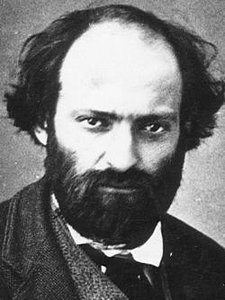
Paul Cézanne
1839 - 1906 , France
En bref
- Artistes Influents:
- Paul Gauguin
- Georges Seurat
- Date De Décès: 22 octobre 1906
- Date De Naissance: 19 janvier 1839
- Influences Artistiques:
- Pablo Picasso
- Henri Matisse
- Georges Braque
- Lieu De Naissance: Aix-en-Provence, France
- Mouvement Artistique: Post-impressionnisme
- Nationalité: Français
- Nom Complet: Paul Cézanne
- Œuvres Notables:
- Le Plan d'eau à Jas de Bouffan
- Portrait d’Émile Zola
- Forêt
- Mont Sainte-Victoire
Articles connexes

Paul Cézanne : Les 25 Œuvres Maîtresses d'un Génie Révolutionnaire | OriginalUniqueArt
Plongez dans l'univers de Paul Cézanne avec les 25 œuvres incontournables du maître post-impressionniste. Découvrez l'histoire, la technique et l'émotion derrière ses tableaux iconiques comme 'Les Baigneuses' ou 'Mont Sainte-Victoire'. Reproductions d'art haute qualité sur OriginalUniqueArt.com.

Impressionnisme : Top 10 des Œuvres Incontournables pour une Décoration Raffinée
Plongez dans l'univers vibrant de l'impressionnisme avec notre sélection des 10 œuvres les plus emblématiques : Monet, Renoir, Degas… Découvrez l'histoire et la magie de ces chefs-d'œuvre. Reproductions d'art de qualité muséale sur OriginalUniqueArt.com
Paul Klee : Les 25 Œuvres Maîtresses d'un Génie de la Couleur | OriginalUniqueArt
Plongez dans l'univers coloré de Paul Klee ! Découvrez les 25 œuvres maîtresses du peintre suisse, figures clés de l'art abstrait et du Bauhaus. Inspirez votre décoration intérieure avec OriginalUniqueArt.com – reproductions de qualité muséale & collection exclusive.
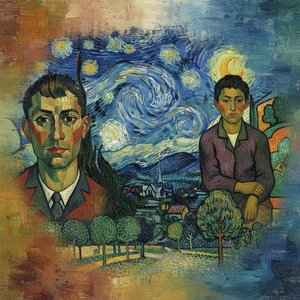
Beyond Impressionism: Exploring Emotional Depth & Formal Innovation in Post-Impressionist Art
Explore the profound emotional depth & formal innovations of Post-Impressionism with our expert guide. Discover Cézanne, Van Gogh, Gauguin & more. Learn about art history, collecting, and investing in this pivotal movement.

Au-Delà de l'Impressionnisme : Exploration des Profondeurs Émotionnelles de la Peinture Postimpressionniste
Explorez les profondeurs émotionnelles du postimpressionnisme avec OriginalUniqueArt. Découvrez Cézanne, Van Gogh, Gauguin et l'évolution de l'art moderne. Reproductions d'exception et expertise pour collectionneurs.